

The First Light on the Steppe
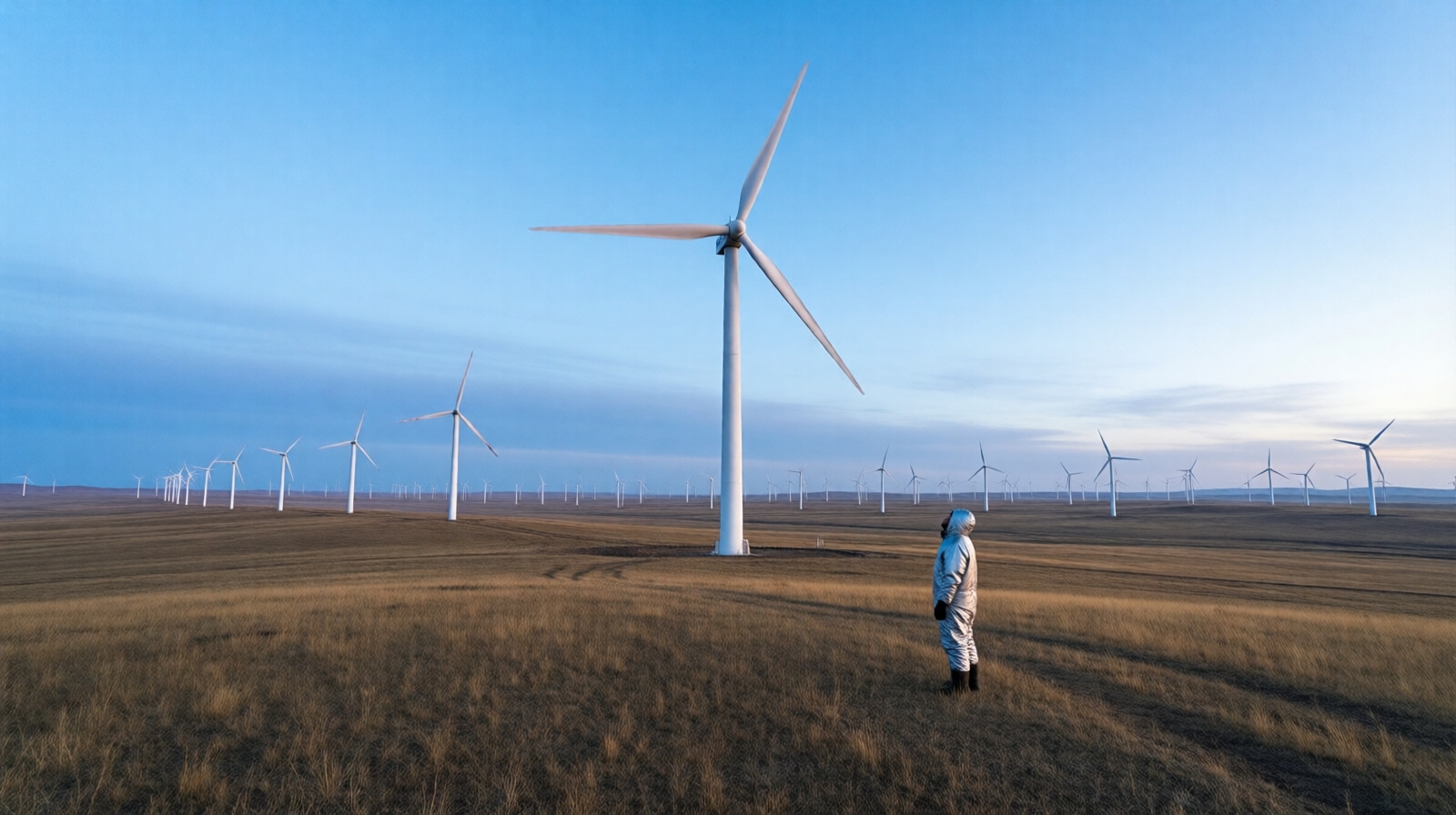
The alarm goes off at 5:30 a.m. in the dormitory trailer. Outside, the wind is already up—a steady, dry gust that shakes the thin metal walls. I pull on my insulated coveralls, grab a thermos of hot tea, and step out into the gray dawn. The temperature reads minus 12°C, but the real cold is in the wind chill. The sky is a pale, washed-out blue, and the grass—brown and brittle this late autumn—stretches flat to the horizon. There, lined up like silent giants, are the turbines: 80 of them, each with a hub height of 80 meters, their blades turning slowly, almost lazily, in the morning current.
This is the Baoying Wind Farm, about 200 kilometers north of Hohhot, the capital of Inner Mongolia. I’m Li Wei, a 34-year-old field engineer responsible for the operation and maintenance of 20 of these machines. I’ve been here for three years, and every day starts the same way—walking the perimeter of the first turbine, listening for abnormal sounds, checking the oil level in the gearbox, and climbing the ladder to the nacelle if the data log shows a vibration spike.
Why Inner Mongolia? The Wind and the Grid
To understand why I’m here, you have to look at a map of China’s wind resources. The best wind—strong, steady, and consistent—blows across the northern grasslands, from Xinjiang in the west to Heilongjiang in the east. Inner Mongolia alone holds about 30% of China’s total onshore wind potential. In 2023, the region’s installed wind capacity reached 52 gigawatts, making it the largest wind power base in the country, and the second-largest in the world after Texas. But the challenge isn’t just catching the wind; it’s getting the electricity to the coastal cities where it’s needed. That’s why we have a 110-kilovolt substation just a kilometer from the farm, and a brand-new ultra-high-voltage (UHV) line that sends power directly to Beijing and Shandong—a 900-kilometer journey that takes less than a second.
Every morning, I check the real-time output on the SCADA screen in the control room. The farm’s total capacity is 200 megawatts. On a good day, with wind speeds around 10 meters per second, we generate enough electricity to power about 100,000 homes for a day. But the wind doesn’t always behave. In summer, the winds drop, and we sometimes idle at 10% capacity. In winter, the cold brings ice on the blades, forcing us to shut down for de-icing. That’s when the maintenance work really piles up.
A Close-Up: Climbing the Tower
Today, we have a scheduled inspection on Turbine 14. The turbine’s pitch system has been throwing a warning code for the past three days. I sign the safety log, put on my harness, and start the climb. The ladder inside the tower is a narrow steel cage, with a rest platform every 15 meters. The first 30 meters are the hardest—your legs burn, your breath comes in fog, and the only sound is the clang of your boots on the rungs. Above 50 meters, the tower starts to sway—a gentle, rhythmic motion that takes some getting used to. I’ve been climbing for years, but I still feel a flutter in my stomach every time.
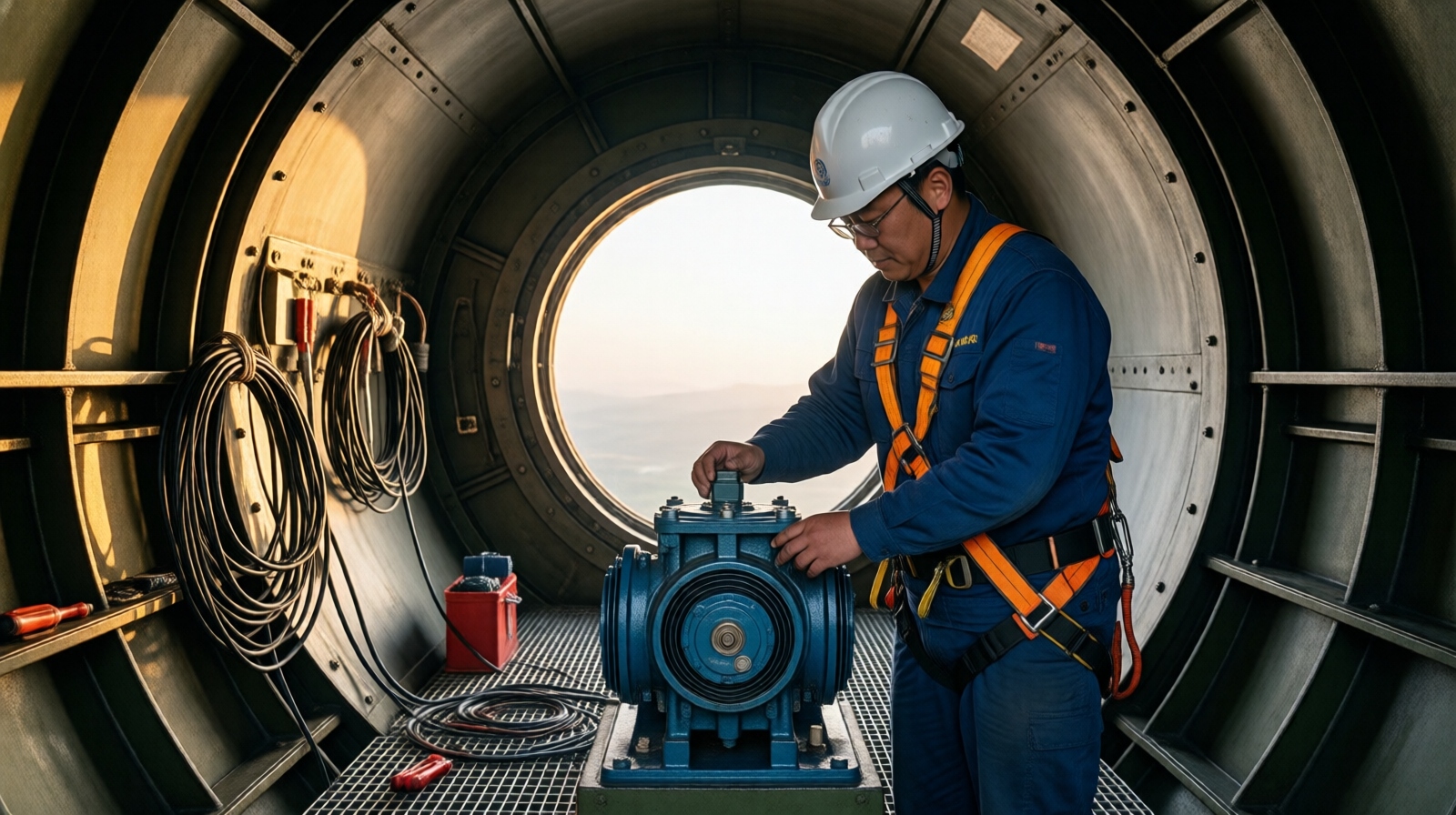
At the top, the nacelle is a cramped metal box filled with a gearbox, generator, and a maze of hydraulic lines. The wind roars outside, but inside it’s almost quiet. I check the pitch actuator—a small hydraulic cylinder that rotates the blade to control the angle. Sure enough, there’s a slow leak at the seal. I replace the O-ring, test the pressure, and log the repair. The whole job takes about two hours.
From the top of the tower, I can see the entire farm: the white blades sweeping in unison, the gravel roads like veins, and the distant hills where the grassland meets the sky. It’s a strange kind of beauty—industrial, repetitive, but also deeply connected to the natural forces around us. I think about the coal mines I used to see on my way here, and the fact that a single turbine can replace 10,000 tons of coal over its 20-year life. That’s why I do this job.
Life on the Farm: The People Behind the Numbers
We’re a team of 12 engineers and technicians, living in a converted shipping container compound. We share a kitchen, a common room with a TV, and a workshop. The nearest town is 40 kilometers away, a small place called Qingshan with a few convenience stores and a noodle shop. Once a week, a truck brings supplies from Hohhot. On weekends, we play cards or watch movies on a laptop. It’s a simple life, but it’s not lonely. Everyone here is driven by the same idea—that clean energy isn’t just a slogan, it’s a job that keeps the lights on.
I think about the people on the other end of the line. My parents live in Shandong, a seaside province that’s one of the biggest consumers of electricity in China. My father used to work in a coal-fired power plant. He retired last year, just as the plant was being phased out. Now, when I call him, he jokes that I’m sending him electricity from the clouds. It’s not entirely wrong.
Evening: The Wind Dies Down
By 6 p.m., the sun is low, painting the turbines in long shadows. The wind has dropped to a whisper, and the blades slow to a crawl. I finish my shift report: three turbines inspected, one minor repair, total output for the day: 1.8 gigawatt-hours. Not bad for a Tuesday. I walk back to the compound, the grass crunching under my boots. The stars are already coming out, crisp and bright in the dry air. Tomorrow, we’ll do it all over again.
China’s energy transition is often talked about in terms of targets and gigawatts. But for me, it’s measured in climbed ladders, greasy hands, and the quiet hum of a machine that turns the wind into light. It’s real. It’s happening. And I’m glad to be part of it.
Start the discussion at forum.chinacomes.com