

Two diners, four “big dishes,” and a table they couldn’t finish
It’s 6:40 on a Saturday evening in Tunxi, the old riverside quarter of Huangshan, in southern Anhui province. Two travelers take the last free table in a restaurant with dark wooden beams and a fish tank humming by the door.
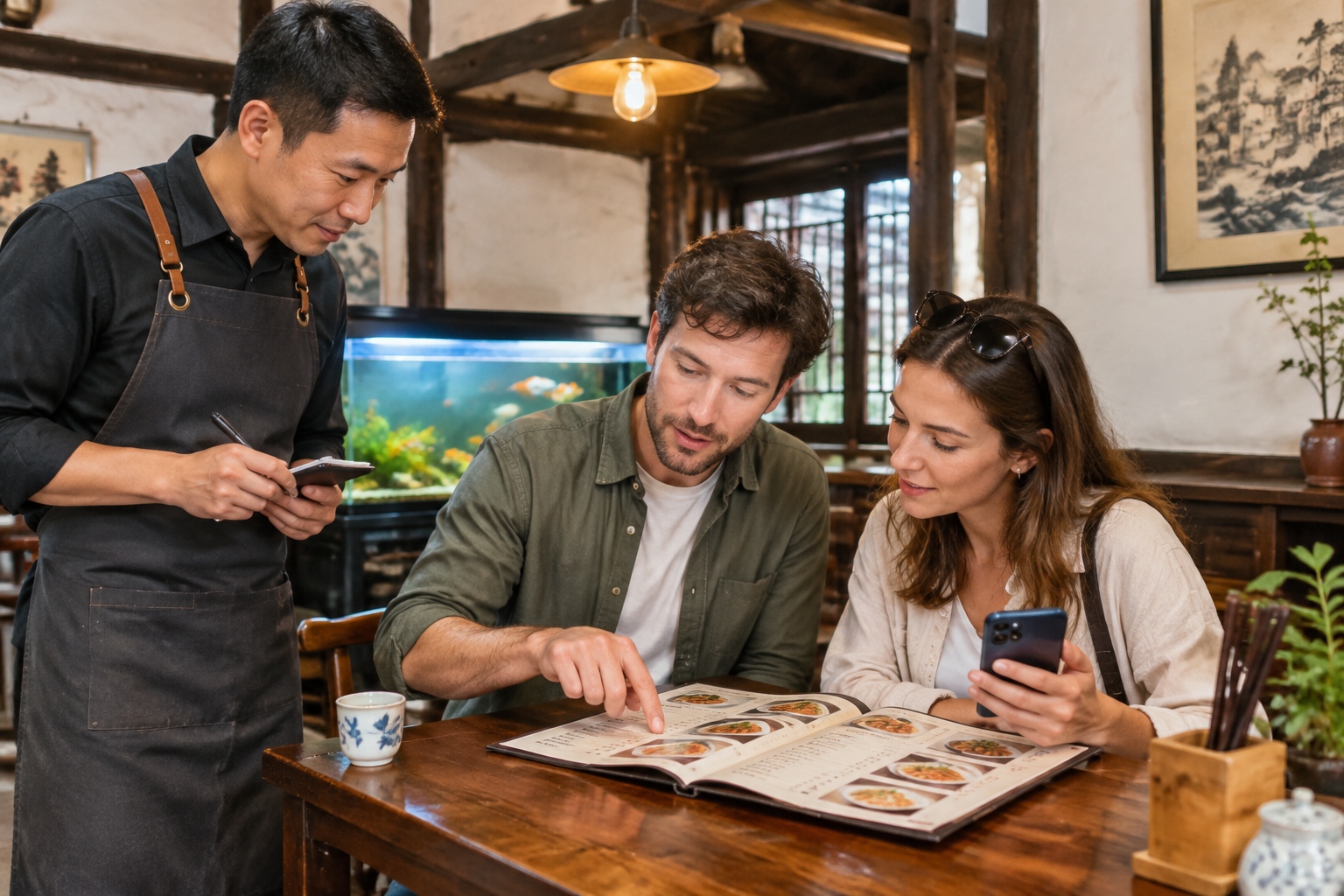
The menu is divided the way most Anhui restaurants divide it: cold dishes, quick stir-fries, soups, staples, and then a page headed 大菜 — “big dishes.” Whole fish. Clay pots. Cured pork. The waitress leans over and recommends four of them.
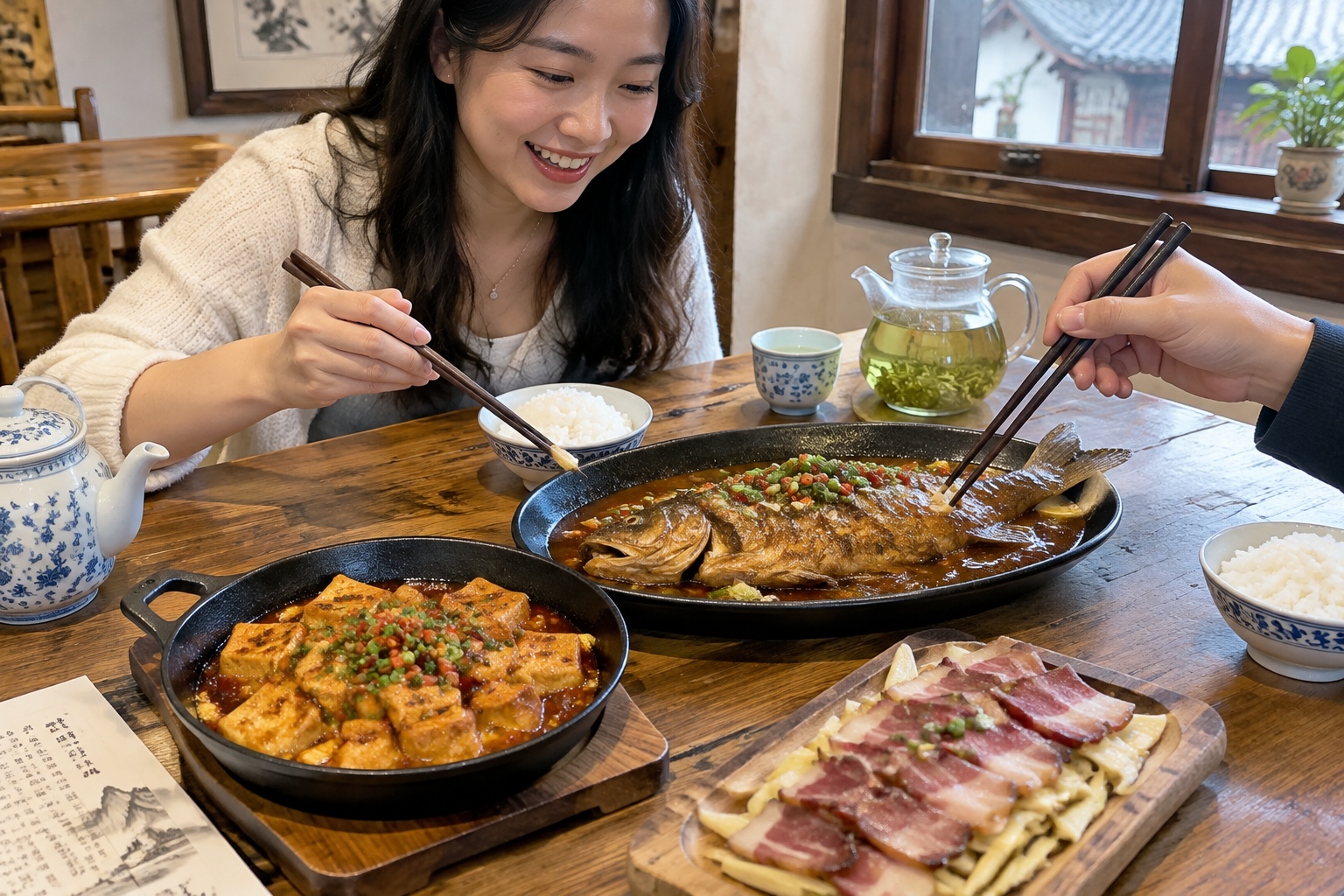
Thirty minutes later the food arrives. A fish as long as a forearm. A cast-iron pan of tofu with a dark crust. A wooden board of sliced cured pork. A clay pot stacked with eight layers of food. The bill is around 380 yuan, about $53 for two people. They finish maybe a third of it.
This is the most common first-timer mistake in a Huizhou restaurant, and it isn’t about taste. It’s arithmetic. Huizhou cooking — the food of the old Huizhou prefecture in the mountains of southern Anhui — is built for family tables of eight and banquet halls. Ordering it the way you’d order two pastas and a salad is how a very good meal turns into a doggy-bag problem.
Here’s what to order, how much of it, and how to say it out loud.
First, what Huizhou cuisine actually is
Huizhou (徽州) isn’t a province. It’s a historical region in the hills south of the Yangtze, covering today’s Shexian, Yixian and Jixi counties around Huangshan, plus Wuyuan, which now sits across the border in Jiangxi. Huizhou cuisine is counted among China’s eight great regional cuisines, and it’s the one most visitors have never heard of.
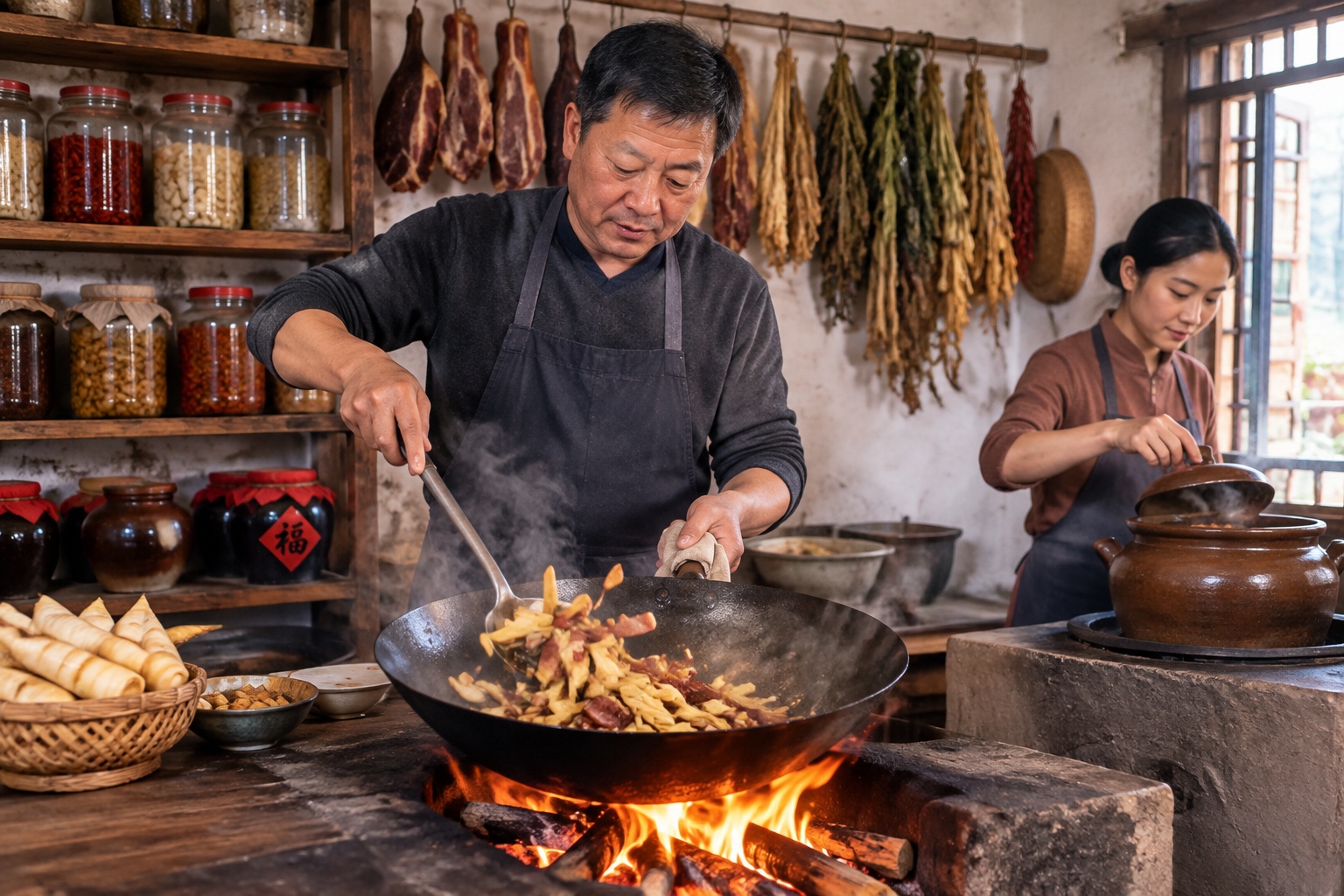
The local saying is “eight parts mountain, one part water, one part farmland,” which explains most of the food. With little flat land and long winters, people preserved what they had. Pork was salted and air-dried into ham and cured belly. Tofu was fermented. Vegetables were dried. Bamboo shoots were dug in spring and eaten fresh while they lasted.
Cooking happened over wood fires, for a long time, with plenty of oil and soy sauce. Chefs sum up the style in six characters: 重油、重色、重火功 — heavy oil, deep colour, serious time on the fire.
That gives you two quite different menus in the same restaurant. The everyday dishes — stir-fried bamboo shoots, tofu skin with greens, egg with dried shrimp, a bowl of noodles — are light, cheap and easy. The “big dishes” are the banquet layer: fermented fish, layered clay pots, cured pork steamed on a board. They’re the reason to come. They’re also the reason two people can accidentally order dinner for six.
Four mistakes almost everyone makes
1. Ordering nothing but big dishes. Four rich, salty, oily plates in a row is exhausting by the second bite. You need something plain in between.
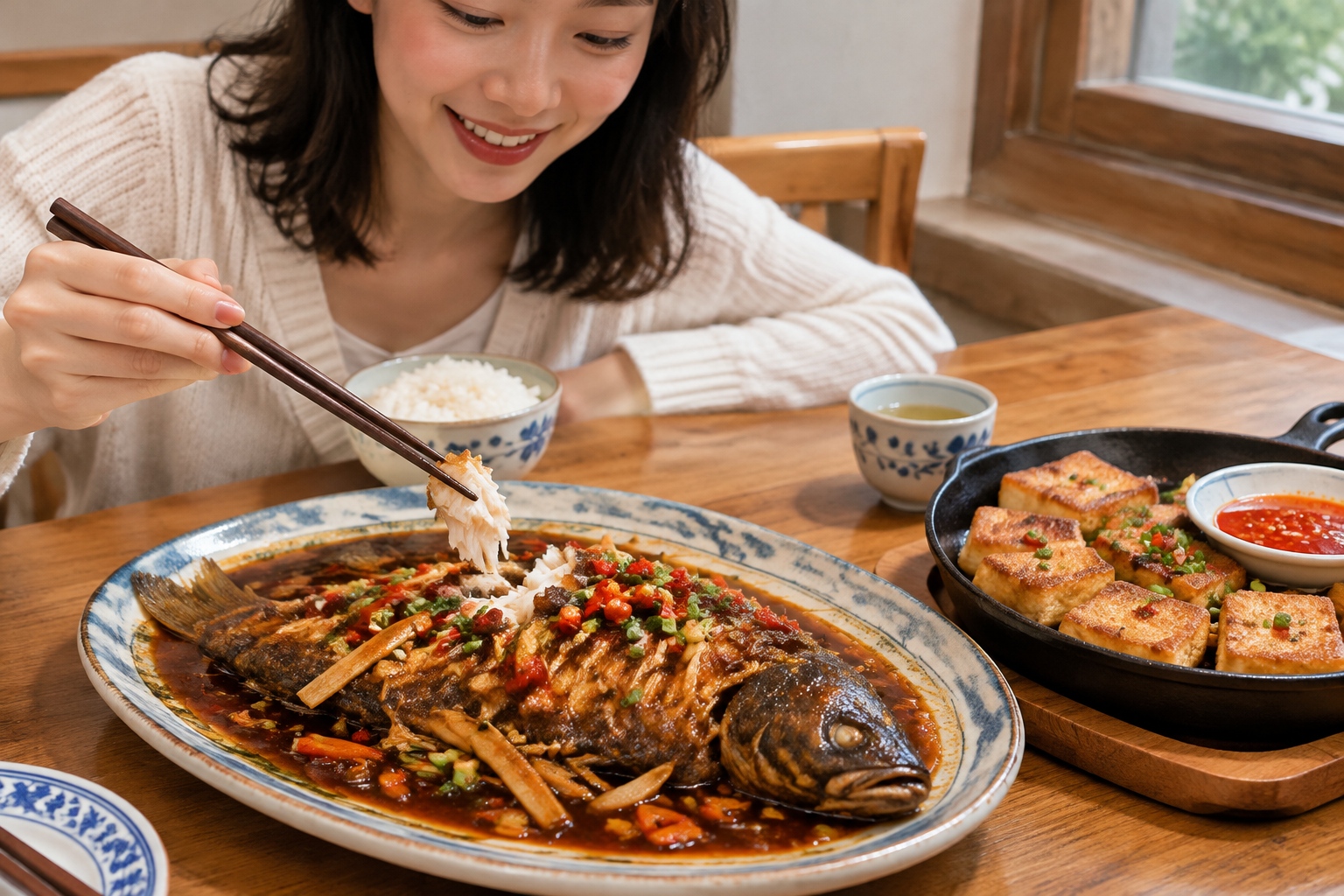
2. Misreading stinky mandarin fish. 臭鳜鱼 isn’t rotten food and it isn’t a dare. It’s freshwater fish salted and fermented in wooden barrels for about a week, then braised with pork belly, bamboo shoots and chilli. The smell is sharp; the flesh is firm, mild and flakes into neat “garlic clove” segments. Plenty of people who hate blue cheese love this.
3. Misreading hairy tofu. 毛豆腐 is tofu deliberately fermented until it wears a white fuzzy coat, then pan-fried. The inside is creamy, closer to a soft cheese than to normal tofu. With chilli sauce it’s excellent — but if you’re expecting crispy fried tofu, you’ll be surprised.
4. Not asking about portion size and 时价. Many big dishes come as 例份 (standard portion) or 大份 (large). Fish and seasonal bamboo shoots are often 时价 — market price — and the number printed on the menu may be a placeholder. Ask before you nod.
The big dishes, ranked by how easy they are to like
Easy: 徽州圆子, Huizhou pork balls
Pork balls rolled in glutinous rice, fried, then steamed until soft. Savoury, slightly sticky, no strong flavours. Around 40–60 yuan. Good insurance if someone at the table is nervous.
Easy: 问政山笋, Wenzheng Mountain bamboo shoots
Spring shoots from a specific mountain near Shexian, braised with cured ham. Tender, sweet, faintly smoky. 60–120 yuan in season. This is the dish that convinces people Huizhou food isn’t all heavy.
Medium: 刀板香, cured pork on a wooden board
Salt-cured pork belly, steamed on a camphor wood board with bamboo shoots underneath so the fat drips into them. Salty, rich, smoky. Wonderful with plain rice, overwhelming on its own. 60–90 yuan.
Medium: 臭鳜鱼, stinky mandarin fish
The signature dish. 120–200 yuan depending on size; ask for a smaller fish if there are only two of you. Order it early in the meal, because it takes time to cook, and eat it hot.
Medium-hard: 毛豆腐, hairy tofu
One portion (usually 30–50 yuan) is enough to share, not one per person. Best from a small kitchen or street stall where it’s fried to order.
Hardest to finish: 胡适一品锅, Hu Shi’s layered pot
A cultural showpiece named after the scholar Hu Shi, who served it to guests at home. A clay pot is packed in layers — dried vegetables, tofu skin, pork, chicken, meatballs, egg dumplings — and simmered for hours. 180–380 yuan, and genuinely a dish for four to six people.
How much to order, by table size
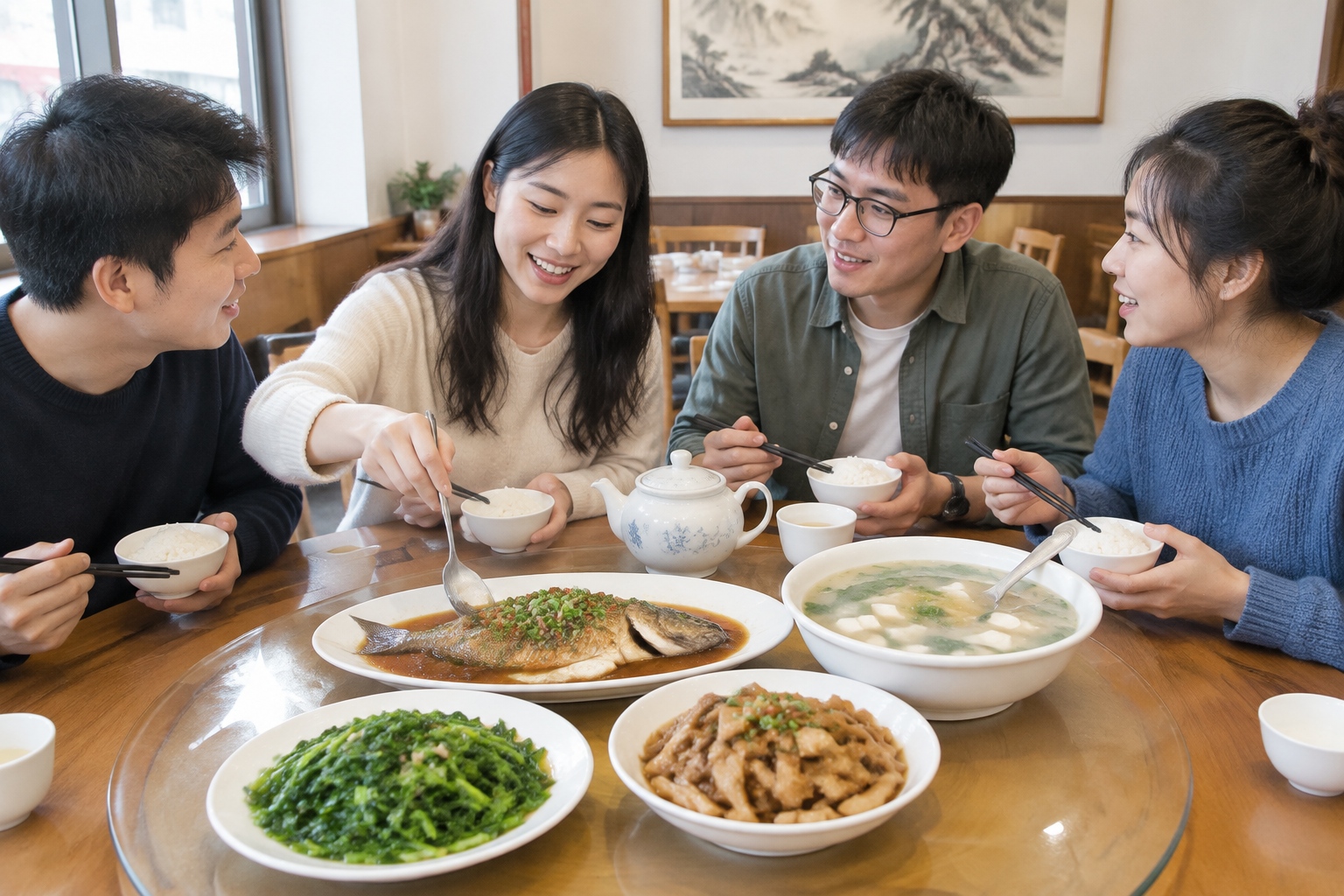
A workable rule for Huizhou food: one big dish for two people, two for four, three at most for six — plus lighter plates around them. Chinese tables are built for sharing, so the total number of dishes matters more than the number of courses.
Two people
One big dish, one vegetable, one staple. Example: a small stinky mandarin fish, stir-fried greens with garlic, two bowls of rice. Roughly 180–250 yuan. If you also want to try hairy tofu, use it as your vegetable and skip the greens.
Four people
Two big dishes, one half-meat dish, one clean vegetable, one soup, rice. Example: stinky mandarin fish plus 刀板香, then bamboo shoots, a plate of seasonal greens and a tofu soup. Around 350–500 yuan.
Six people
Two or three big dishes — this is where 一品锅 makes sense — plus two vegetables, a cold dish, a soup, and rice or noodles. 600–900 yuan is normal in a mid-range restaurant.
Ask for 例份 or 小份 where it exists. And don’t be shy about 打包 — takeaway boxes are completely normal here, and nobody at the next table will find it odd.
What to say when you order
The sequence matters more than the vocabulary. Start with the specialties, lock in the big dish, then build light plates around it.
Useful phrases, short enough to show on a phone screen:
- 我们两个人,有什么招牌菜?— “There are two of us. What are your signature dishes?”
- 这个有小份或者例份吗?— “Is there a smaller portion of this?”
- 这个时价是多少?— “What’s the market price on this today?”
- 能不能少放点盐?— “Could you use less salt?”
- 微辣就行 — “Just mildly spicy.”
- 帮我们配两个清口的菜 — “Add two light dishes to balance it out.”
One more question is worth asking: 这个菜是怎么做的?—“How is this cooked?” It isn’t rude. Cooks in regional restaurants usually enjoy answering, and you’ll know whether the pork is steamed or braised before it reaches the table.
Cheap canteen or banquet hall?
Both exist, and they serve different meals. A family-run 小馆 near the old streets of Shexian might charge 60 yuan for a fish and 15 for a plate of greens, with plastic stools and a TV in the corner. A banquet-style restaurant in Huangshan city or Hefei will charge double or triple, with proper service and private rooms.
Lunch is the underrated slot. Many places serve the same dishes at lower prices at midday, and the pace is calmer. If you only have one Huizhou meal in you, make it lunch: one big dish, three small ones, then a walk.
How to eat it
Stinky mandarin fish: eat it hot, starting at the belly. The flesh should come away in firm chunks; the sauce is for rice, not for drinking. Order a pot of tea — Huangshan maofeng if it’s on the list — and it will reset your palate between bites.
Hairy tofu: hot, straight from the pan, dipped in chilli sauce. Once it cools, the creaminess turns gluey.
刀板香: one slice of pork on top of one piece of bamboo shoot, then rice. Not three slices on their own.
一品锅: eat from the top down, layer by layer, without stirring. The broth at the bottom has been collecting everything for hours. That’s the best part, and it’s why you save some rice for the end.
The point isn’t to prove you can handle it
Huizhou food rewards a mixed table. One fermented fish, one clean vegetable, one plate of bamboo shoots, a bowl of rice and a pot of tea is a better introduction to Anhui cooking than five famous dishes eaten in silence. If you’re travelling with someone who doesn’t like strong flavours, order the pork balls and the bamboo shoots first, and let the stinky fish be the experiment rather than the whole meal.
Start the discussion at forum.chinacomes.com