
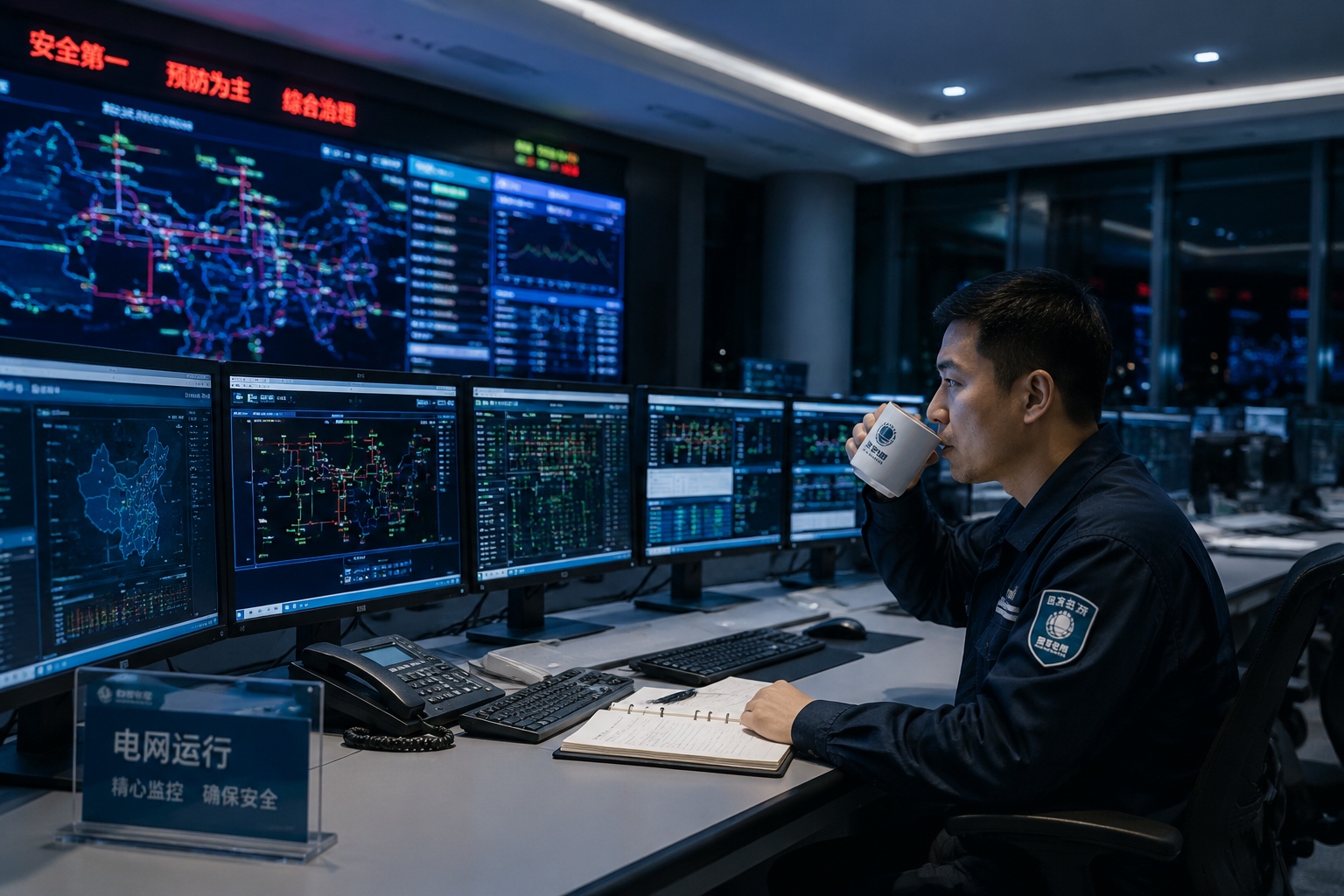

Morning Coffee and a 50-Million-Watt Balancing Act
At 7:45 AM, Zhang Wei walks into the provincial dispatch center in eastern China. The room is quiet except for the hum of servers and the faint click of keyboards. On the wall, a 20-meter-wide screen shows a live map of the grid – thousands of nodes pulsing with green, yellow, and red dots. “Red means a transformer is near its limit,” Zhang explains, grabbing a cup of tea. “We have about 15 minutes to decide before it trips.”
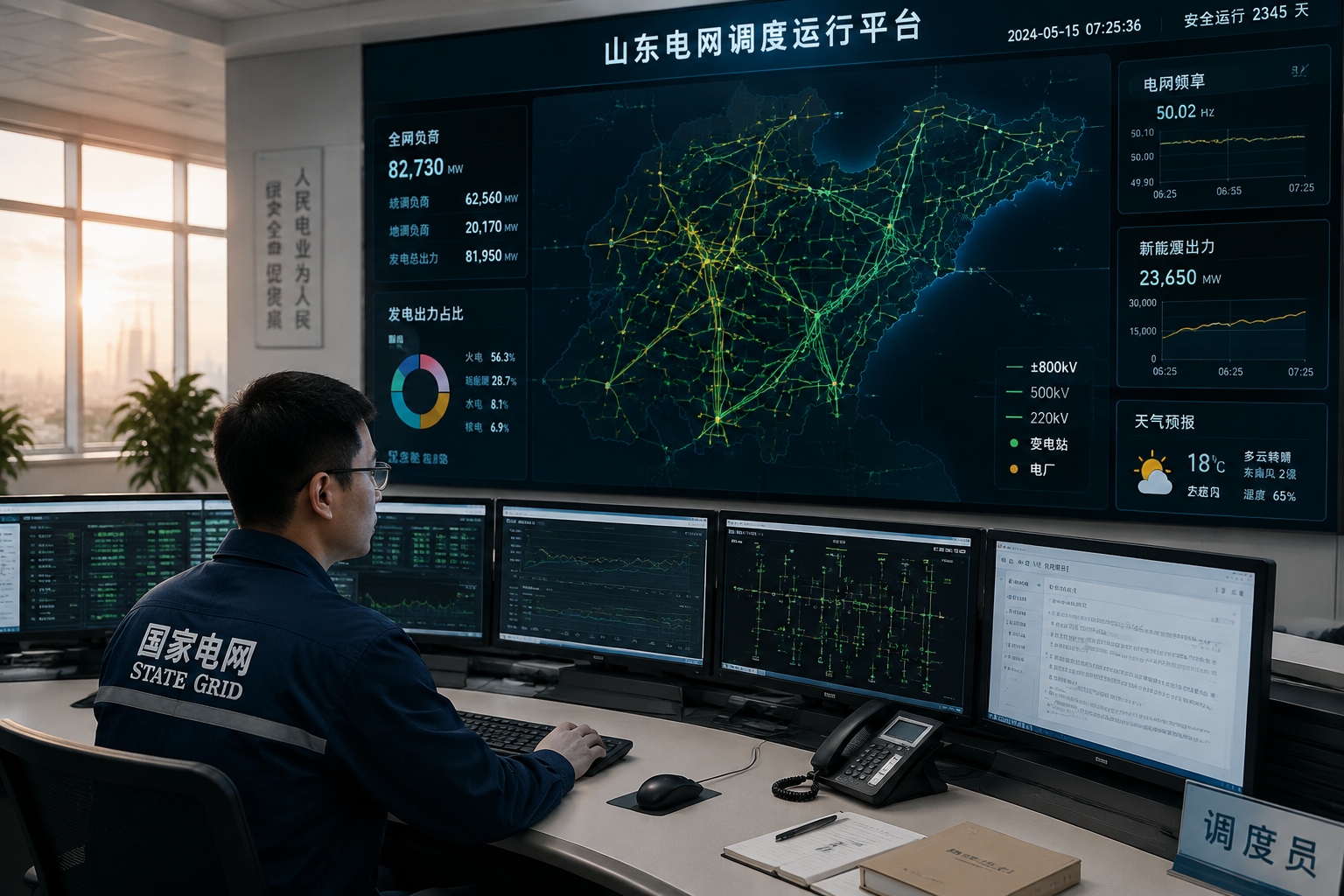
Zhang is one of about 20 dispatchers on shift. His job is to keep the grid stable – a task that involves balancing electricity generation and consumption in real time, across a province of 100 million people. Unlike many countries where factories can face sudden blackouts due to supply shortages, China’s industrial sector enjoys remarkably stable power. The reason isn’t magic – it’s a combination of sophisticated dispatch systems, demand-side management, and a massive investment in grid infrastructure.
How China’s Grid Dispatch Works – A Simple Analogy
Think of the grid as a national highway network. Power plants are on-ramps, factories are off-ramps, and the grid dispatcher is the traffic controller. The key is to keep the flow steady – not too fast, not too slow – and to avoid any sudden jams or crashes. In China, the dispatcher has a powerful tool: they can remotely adjust the output of most power plants, and even ask large factories to temporarily reduce consumption (a practice called “demand response”).
This is very different from the “rolling blackouts” that some countries experience during heatwaves or gas shortages. Chinese factories are not immune to power cuts, but they are rare because the system is designed to prevent them. The dispatcher constantly forecasts demand based on weather, holidays, and industrial schedules. If a heatwave is coming, they will pre-arrange extra generation – often from pumped-storage hydro or natural gas – to cover the peak.
Real-Time Control: From 30 Seconds to 30 Minutes
China’s grid operates at the “millisecond” level for frequency control, but the dispatcher’s daily decisions happen in minutes. “We have a three-tier system,” Zhang says. “The national dispatch center handles cross-region flows, the provincial center balances local supply and demand, and the city-level centers manage distribution.”
When a large factory suddenly needs to increase production, it sends a request to the dispatch center. Zhang checks the grid’s margin: if there’s enough spare capacity, he approves; if not, he asks the factory to shift the load to a different time. This is possible because most factories have signed contracts that allow the grid to cut their power (with compensation) during critical moments. In return, they get a lower electricity tariff.
This voluntary load-shedding is far less disruptive than a forced blackout. It’s a key reason why China’s industrial output rarely suffers from sudden power loss.
The Role of Renewables: Managing the Sun and Wind
In recent years, China has added massive amounts of solar and wind power. But renewables are unpredictable – a cloud can suddenly cut solar output by 50%. Dispatchers like Zhang have to compensate by ramping up coal or gas plants, or by drawing on battery storage. China now has the world’s largest battery storage fleet, and it’s growing fast.
“We have a dedicated team that monitors weather forecasts and adjusts the renewable output forecast every 15 minutes,” Zhang explains. “If a storm is coming, we start preparing backup generation an hour in advance.”
This proactive approach – combined with a nationwide ultra-high-voltage (UHV) transmission network that can move electricity from sunny provinces to cloudy ones – means that factory blackouts are exceedingly rare.
What Happens When a Crisis Hits?
Even the best system can fail. In 2021, a coal shortage and extreme weather caused power shortages in some parts of China, leading to brief curbs on industrial users. But those were exceptions, not the norm. The government quickly responded by boosting coal production and accelerating the construction of UHV lines. Since then, the grid has become even more resilient.
Today, a factory in China can expect about 99.99% power availability – a level comparable to the best in the world. The cost is high: China spends hundreds of billions of dollars annually on grid upgrades and maintenance. But the payoff is predictable electricity for manufacturers, which is one reason why so many global supply chains depend on Chinese factories.
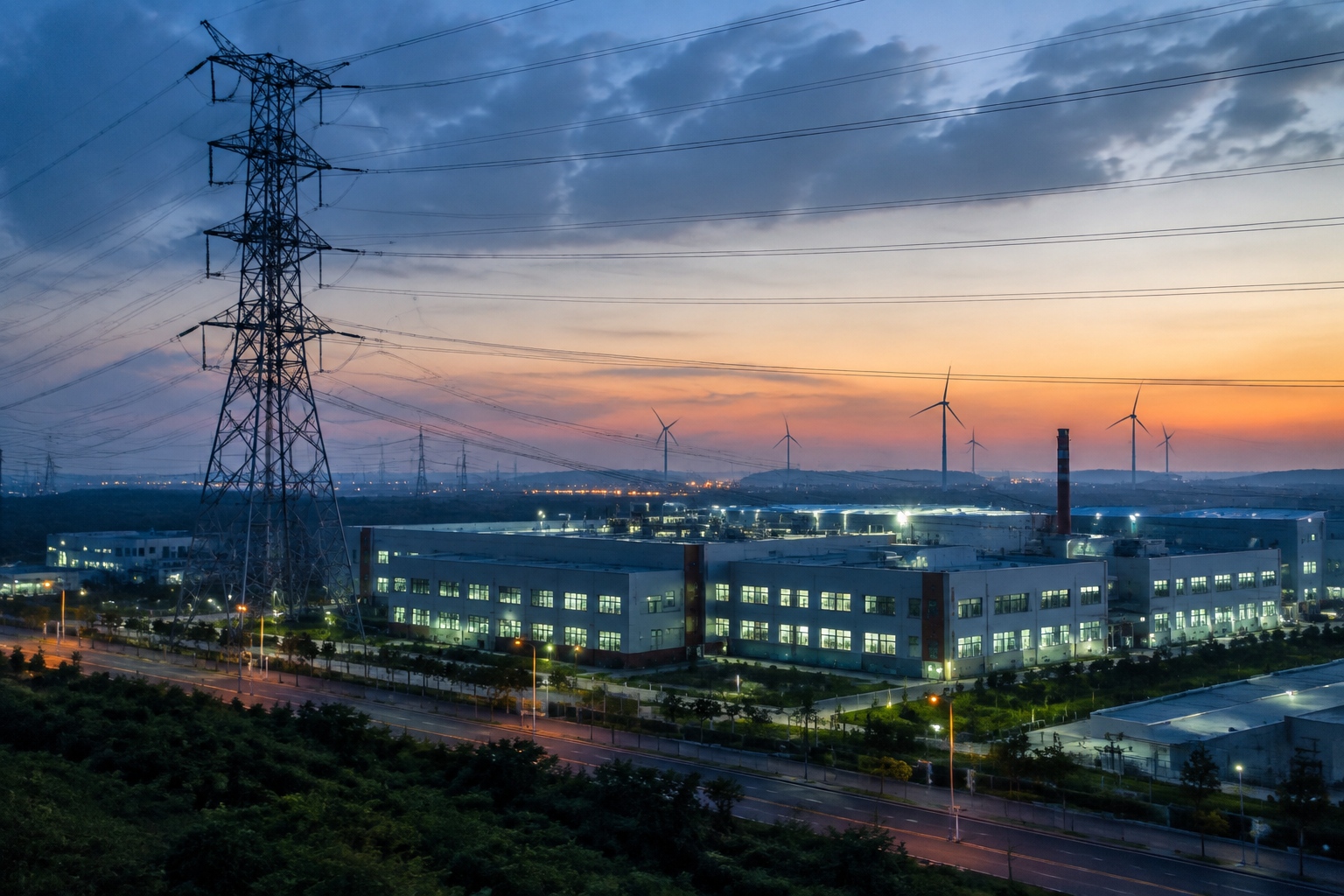
Conclusion: A Quiet, Invisible Superpower
Zhang Wei finishes his shift at 8 PM. The grid stayed stable all day, with no factory interruptions. “People don’t notice us until something goes wrong,” he says with a smile. “But when everything works, it means businesses can focus on making things, not worrying about power.”
China’s grid dispatch is a quiet, invisible superpower – a system that keeps the world’s largest manufacturing machine humming. It’s not perfect, but it’s one of the most advanced and reliable in the world. And it’s built by thousands of dispatchers like Zhang, who watch the screen every second, ready to act.
Start the discussion at forum.chinacomes.com