

Introduction
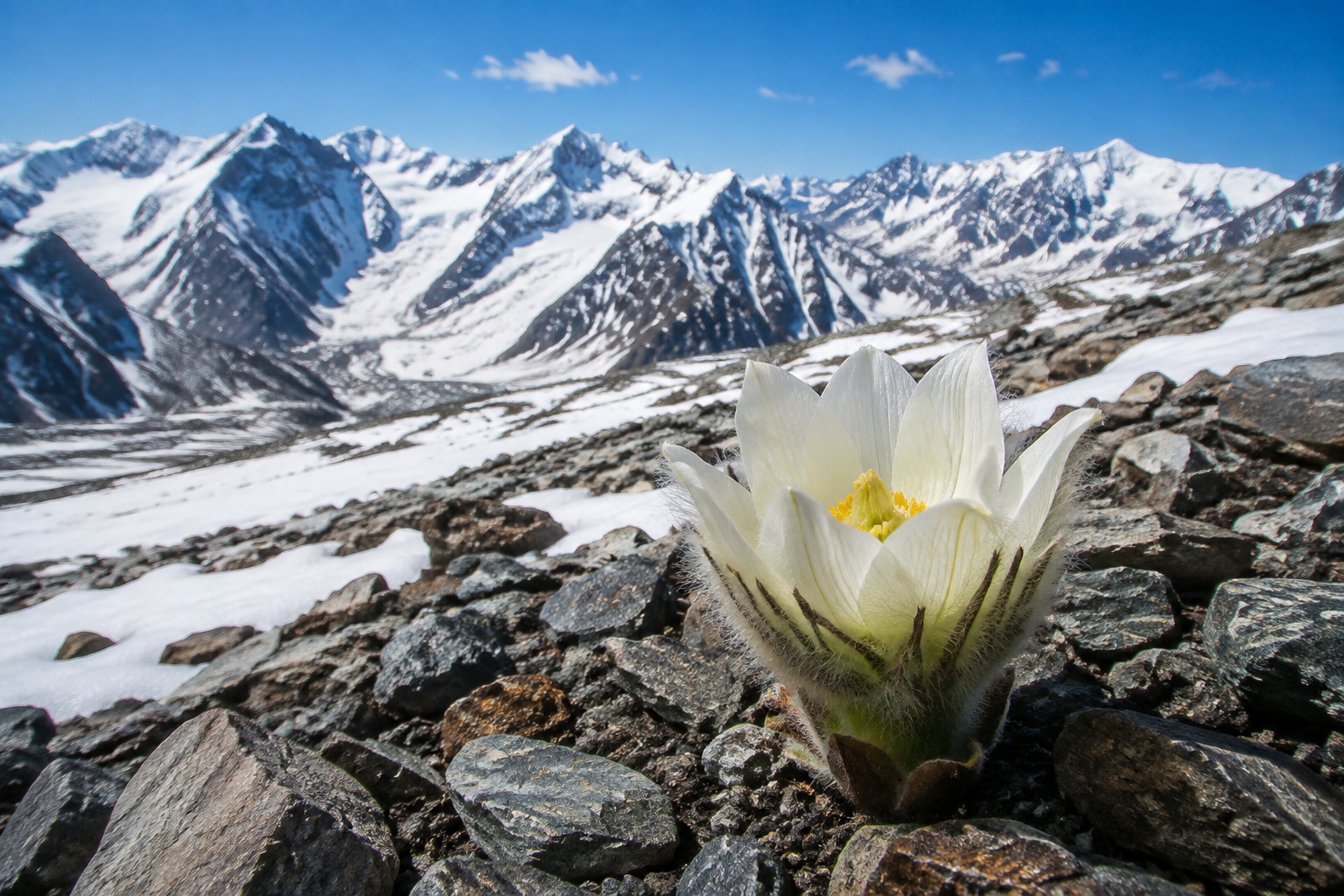
At 4,000 meters above sea level, oxygen is thin and the growing season lasts only a few weeks. The mountains of China’s Xinjiang region—part of the great Tianshan range—look hostile to anything fleshy. Yet in gravel fields and rock crevices, a striking white plant pushes through: the snow lotus (Saussurea involucrata).
Aygul Batur, a young herder from a village near Badaling Pass, remembers first seeing it as a child. “My grandmother told me it could cure bone pain and give energy,” she says. “We always left one flower behind for the next year. That was the rule.”
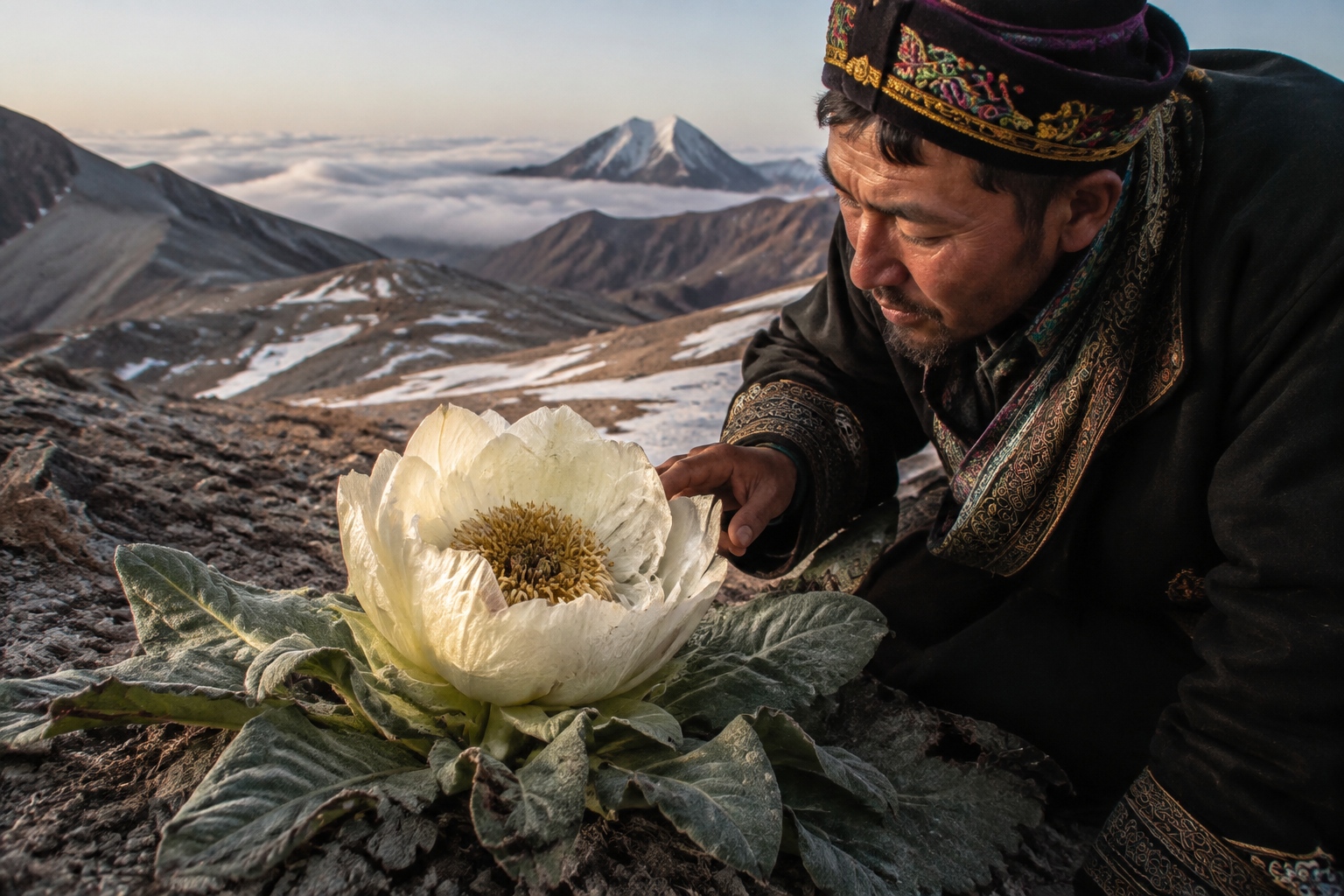
Today, Aygul is part of a cooperative that grows thousands of snow lotus plants in a greenhouse more than 2,000 meters below the frost line. The rule of “leave one behind” has given way to a different approach: plant a hundred and harvest most, but never touch the wild ones. This transformation is happening across Xinjiang, turning a fragile wild plant into a sustainable industry.
What Makes Snow Lotus Special?
The snow lotus is not a single species but a group of alpine plants in the sunflower family. They are adapted to extreme cold, strong sun, and poor soil. Their hairy, translucent bracts shield the central flower from frost and ultraviolet radiation. In Chinese tradition, the plant’s use dates back centuries. Ancient texts describe it as a tonic for rheumatism, coughs, and even altitude sickness. Modern research suggests that certain compounds may fight inflammation and protect cells from cold stress, though trials are ongoing.
Because it grows so slowly and unpredictably, wild snow lotus became a victim of its own fame. By the 1990s, collectors were pulling up entire plants, often with roots, and selling them to herb traders. Numbers plunged. In 1995, the species was listed as an endangered plant in China, and wild harvesting was banned.
From Wild Harvesting to Cultivation
The ban stopped illegal picking but also created a supply gap. Herbal medicine shops still wanted snow lotus, and farmers struggled to find a new way to earn. Scientists at Xinjiang’s Institute of Ecology and Geography saw an opportunity: if they could cultivate snow lotus on a large scale, they could take pressure off wild populations and give communities a legal source of income.
For over a decade, researchers experimented with seeds from different altitudes, designed cold frames that mimicked alpine temperatures, and adjusted soil pH and moisture. They discovered that snow lotus seeds germinate best after a frost-like cold treatment and that young plants demand a sharp temperature swing between day and night. The first greenhouse harvests were small, but by the mid-2010s, yield improved enough for commercial trials.
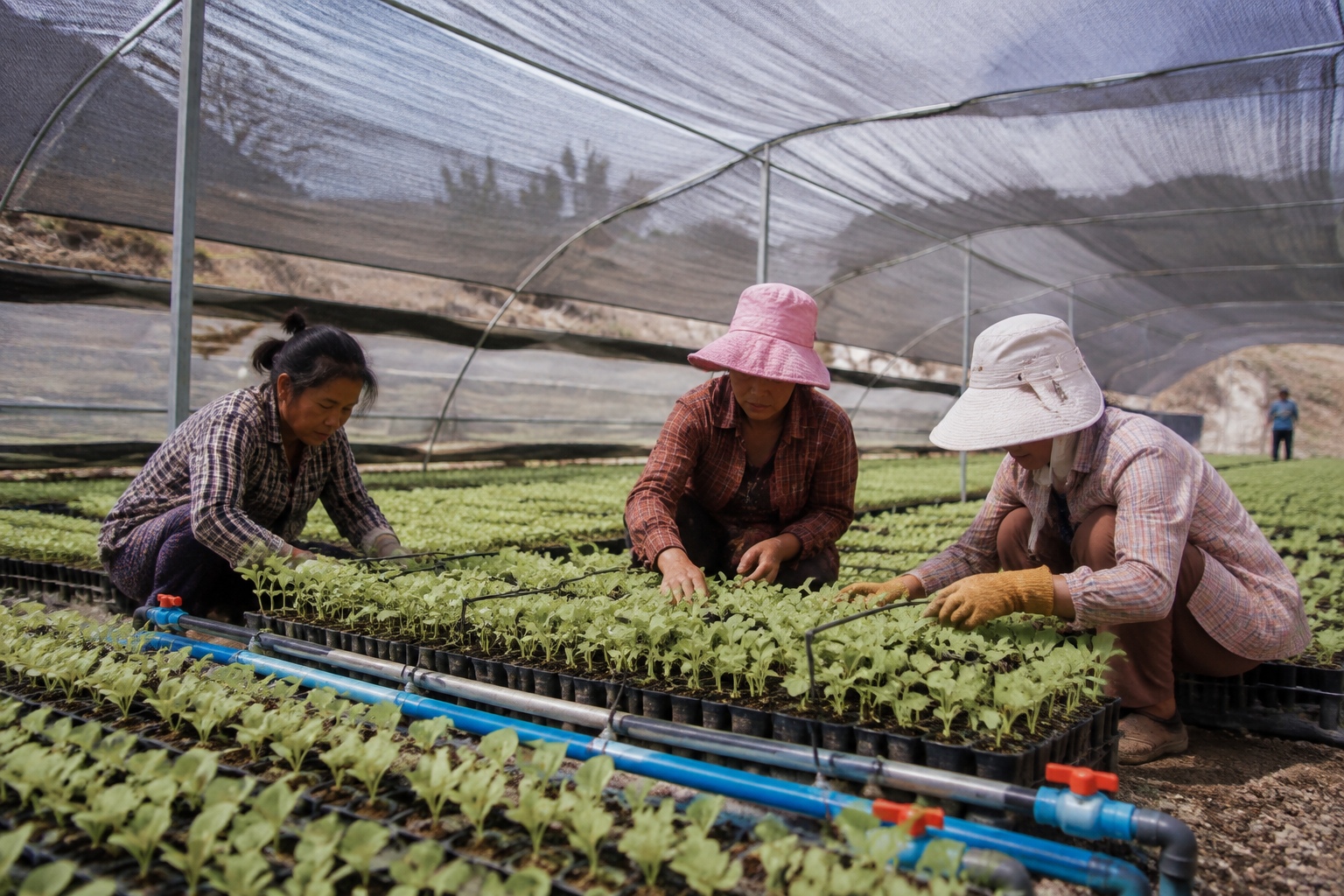
One of the first demonstration farms was built in Qitai County, at the edge of the Gobi Desert. There, at 1,800 meters above sea level, farmers learned to grow snow lotus under shade nets and drip irrigation. “It felt strange to grow a mountain flower next to a desert,” jokes local farmer Tulson. “But the technique worked.”
How Cultivation Works
Modern snow lotus farming is a delicate, labor-intensive process. Seeds come only from greenhouses or certified farms to ensure genetic diversity. After a one-month cold treatment, they are planted in trays with a special compost mix. Four months later, seedlings are moved outdoors under white mesh. The mesh blocks 30 percent of sunlight, reducing scorching. Farmers hand-water each plant twice a day and prune side buds to direct energy to the main flower.
Flowering begins in early summer, when the temperature shifts from 5°C at night to 25°C during the day. This natural “stress” triggers the production of protective compounds. Harvesters cut the bloom at the stem base, leaving roots in the ground. In a good year, one farm can produce hundreds of kilograms of dried flowers.
Building a Local Industry
The transition to farming has spawned a supply chain beyond raw herbs. In Urumqi, a regional capital, several companies now process snow lotus into teas, ointments, and cosmetics. One such firm, Tianshan Herbs, buys from 14 cooperatives. Its best-selling product is a foot bath powder that mixes snow lotus with mint and epsom salt. “People used to think of snow lotus as a mysterious tonic for the elderly,” says marketing manager Zhu Lin. “Our goal is to make it part of everyday health and beauty.”
Export is small but growing. Tianshan Herbs ships sample batches to Europe and Southeast Asia. The company highlights its sustainable sourcing in labels, complete with a QR code that traces each batch to a farm and greenhouse. “Customers in Germany and Japan care about wild collection,” Zhu adds. “We have nothing to hide.”
Other businesses have found a different route: ecotourism. Around Sayram Lake, snow lotus farms give short tours where visitors can photograph blooms and learn about the plant’s life cycle. Local herders earn extra income as guides and hosts. During the summer peak, tour buses arrive almost daily.

People Behind the Plants
No one has embraced the industry more than shepherd families. Aygul’s cooperative has 38 members, almost all of whom used to raise sheep or yaks. The switching cost was high: training, building greenhouses, and waiting two years for the first harvest. But the payoff proved more reliable than livestock, whose prices fluctuate with the seasons. “We still keep a small flock,” Aygul says. “But now the plant pays for school fees and new clothes.”
Young people are returning to the area. Dilnur, a 22-year-old agricultural technician, learned about snow lotus in university. She came back to the village to run the cooperative’s social media and quality checks. “I used to think I would have to move to Beijing,” she says. “Now I can stay home and be a part of the project. It feels more real.”
Older herders, too, have found new roles. Batur, 58, now trains new farmers. “When I was young, we thought snow lotus was magic. Now I understand it’s a plant like any other—it just needs time and care.”
Challenges and Conservation
The snow lotus industry is not without critics. Some conservationists worry that large-scale farming might create a weed problem or encourage illegal picking of wild specimens for comparison. There is also the risk of homogenizing the plant’s genetics if farmers rely on too few varieties. So far, researchers are watching closely. The Institute’s geo-surveys in 2025 found that protected wild snow lotus populations have stabilized in key areas.
Legislation also plays a role. In 2021, China established a system of National Park and Nature Reserve where snow lotus thrives. Rangers now work with farm cooperatives to share data on wild bloom counts. Farmers who report illegal collectors receive a small subsidy. This gives local people an incentive to guard nature rather than strip it.
Prices remain volatile. In 2023, dried snow lotus sold for about 300 yuan per kilogram; a year earlier, it was double. To keep farmers solvent, cooperatives sign long-term agreements with processors, guaranteeing a minimum price. Still, the industry is new, and both sides are learning to adapt.
Looking Ahead
By 2030, Xinjiang could have over 10,000 acres of snow lotus under cultivation, if market demand holds. Researchers are now breeding more robust varieties with higher flavone content, which is the active compound that gives the plant its medicinal power.
Aygul is full of hope. She plans to turn the cooperative’s courtyard into a small educational center where schoolchildren can experience the flower’s life cycle. “My grandmother would be surprised that snow lotus is no longer a mystery,” she says. “But she was right: we always leave one behind. Now we plant many, and still leave one behind.”
Start the discussion at forum.chinacomes.com