

Six A.M. in a Lanzhou Noodle Shop
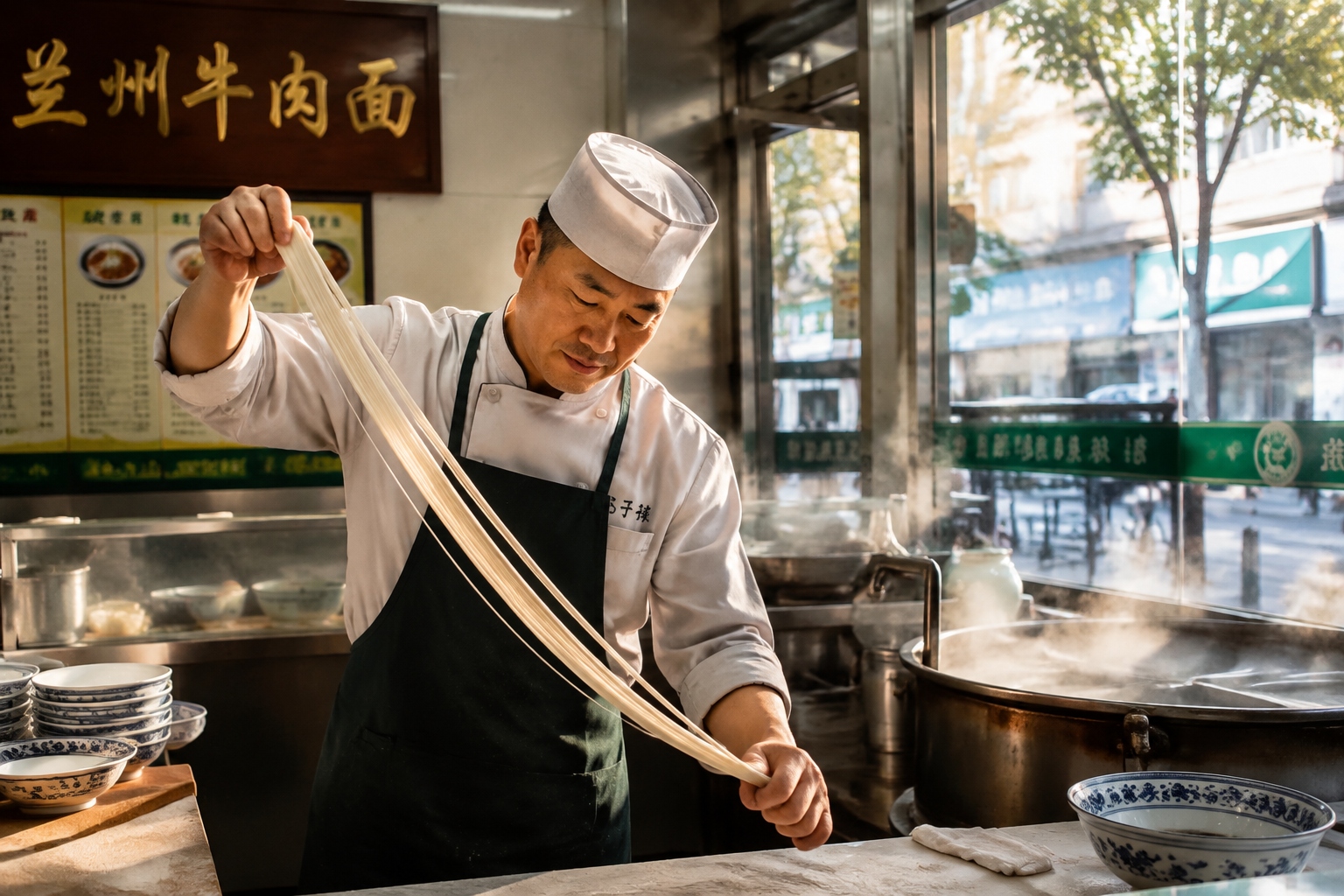
The shutters roll up at 6 a.m. sharp. Inside the tiny shop, the steamy breath of the boiling broth meets the cool morning air. Master Ma, a 45-year-old from Gansu province, ties on his apron and begins the ritual he has repeated thousands of times. From the back room comes the thud of dough being slapped against the counter—the first sound of the city waking up, for many Chinese people, is the sound of hand-pulled noodles.
Lanzhou beef noodles—or lanzhou lamian—are everywhere in China. From small street stalls in Shenzhen to shopping-mall food courts in Beijing, this single dish from a faraway city has become a national staple. Today, I joined Master Ma for a few hours to understand not just how the noodles are made, but how this one bowl became a national icon.
The Chef’s Ritual: Dough, Broth, and Muscle Memory
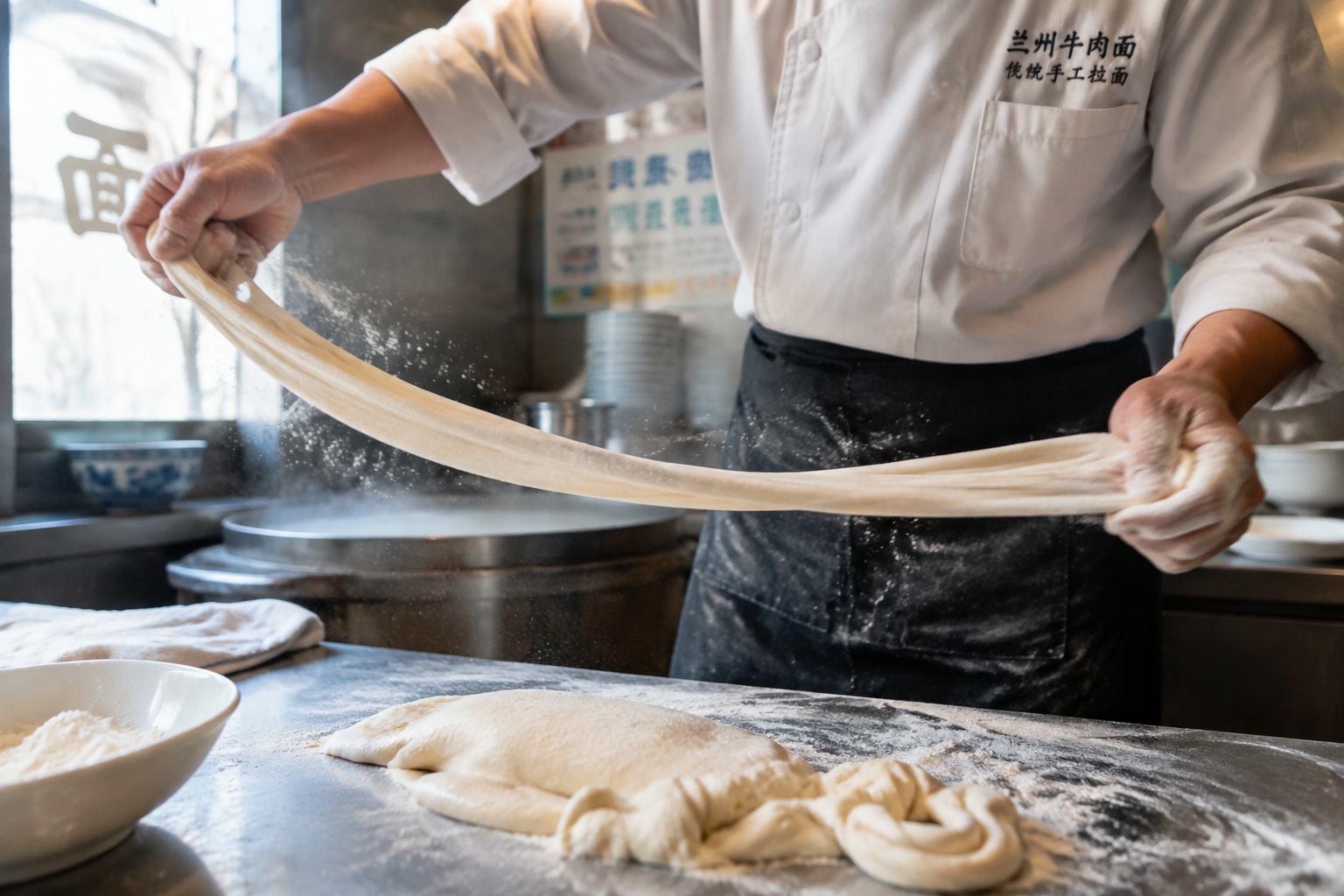
“The dough needs to rest, just like people do,” Master Ma says, rubbing a piece of pale dough that feels like silk. He has been working with flour and water for 25 years. “If you rush it, the noodles tear. If you rest it enough, they stretch into fine threads.”
By 6:30, the big pot of beef broth is already rolling. Bones from yellow beef (a local breed from the plateau) have been simmering since 3 a.m. with a simple spice bag: star anise, cinnamon, fennel, and a secret pinch of something Ma won’t disclose. The aroma fills the room, rich and savory but not overwhelming.
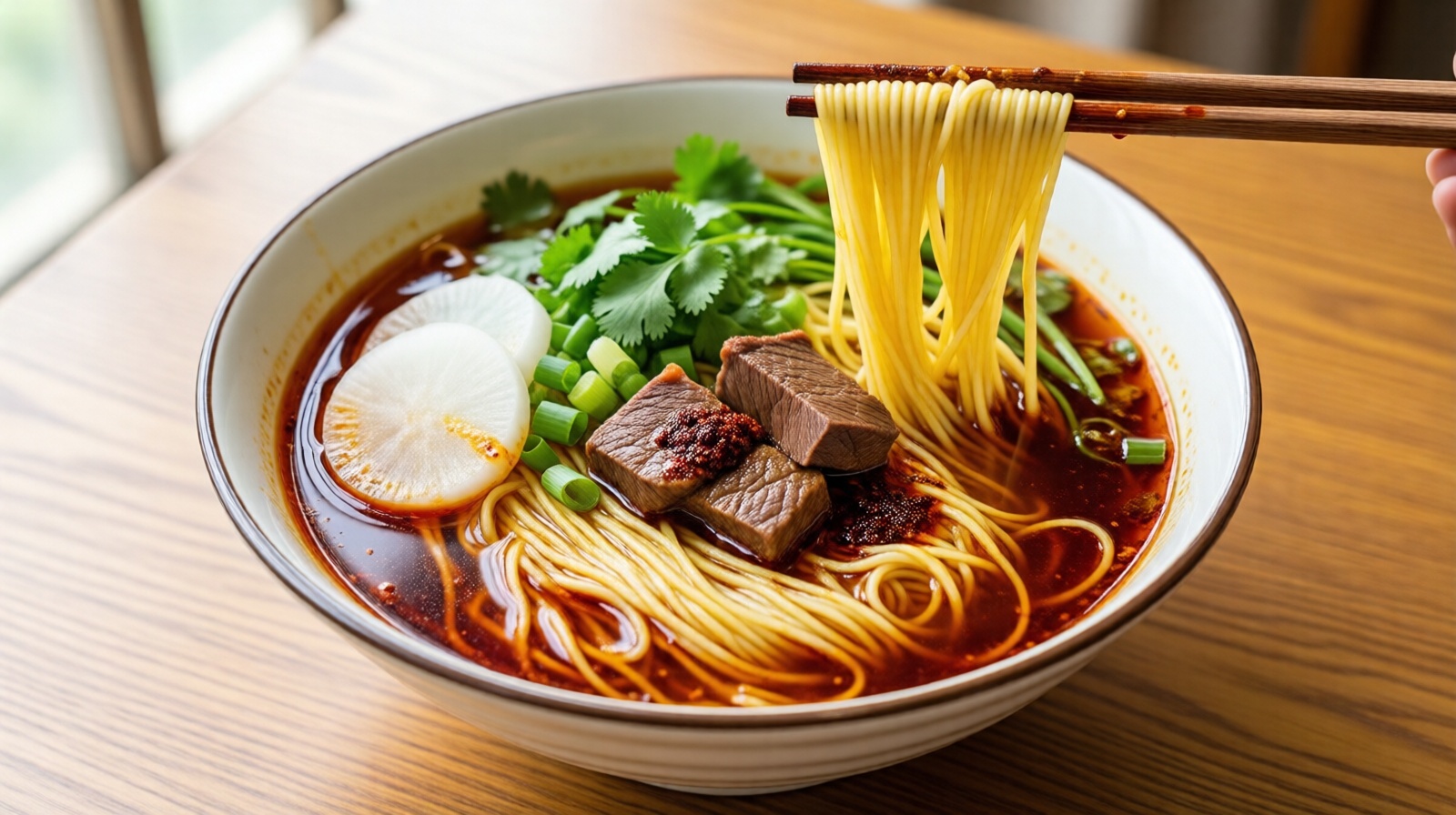
The real show starts when the first customer walks in. Ma takes a fist-sized piece of rested dough, presses it flat, then folds and stretches it in a smooth rhythm. Slap, fold, stretch. In about twenty seconds, the lump becomes dozens of thin, uniform noodles, flying through the air like a white ribbon. He clips the ends with quick snips and drops them into the boiling water. Ninety seconds later, they land in a bowl, topped with a ladle of clear soup, two slices of beef, white radish, a sprinkle of cilantro and green onion, and a spoonful of bright red chili oil—if you ask for it.
“Everyone says the chili is the soul,” Ma laughs. “But the soup is the heart.”
The Journey from Local Breakfast to National Fast Food
Lanzhou beef noodles began as a breakfast for locals in Lanzhou, the capital of Gansu Province. In the 1980s, Gansu was one of China’s less developed regions. To earn a living, many farmers and workers from the area moved to other provinces, bringing their food skills with them. They opened small shops across the country—often with the simple sign “Lanzhou Beef Noodles.” The dish was inexpensive, filling, and quick to serve. A hungry worker could get a steaming bowl for two or three yuan (less than a dollar) and be back on the job within fifteen minutes.
The expansion was neither planned nor branded. It was grassroots entrepreneurship, driven by a simple need: making a living. Today, there are estimated to be over 40,000 Lanzhou beef noodle shops in China, many run by families from Gansu. These shops have become a familiar landscape on nearly every Chinese street, regardless of city size or wealth.
What Makes a Bowl “Lanzhou”?
Authentic Lanzhou beef noodles are defined by the “one clear, two white, three red, four green, five yellow” rule: clear soup, white radish, red chili oil, green cilantro and onion, and yellow noodles. The noodles can be ordered in different thicknesses—some prefer them as thin as hair, others as wide as a belt. This customization makes the dish feel personal, even in an assembly-line setting.
But not every shop is strictly authentic. In many small cities, the version served is adapted to local taste: extra vegetables, heavier seasoning, or even halal certification to appeal to Muslim customers. That flexibility is part of its genius. It remains recognizable yet allows for regional variety.
A Cross-Section of Urban China at the Counter
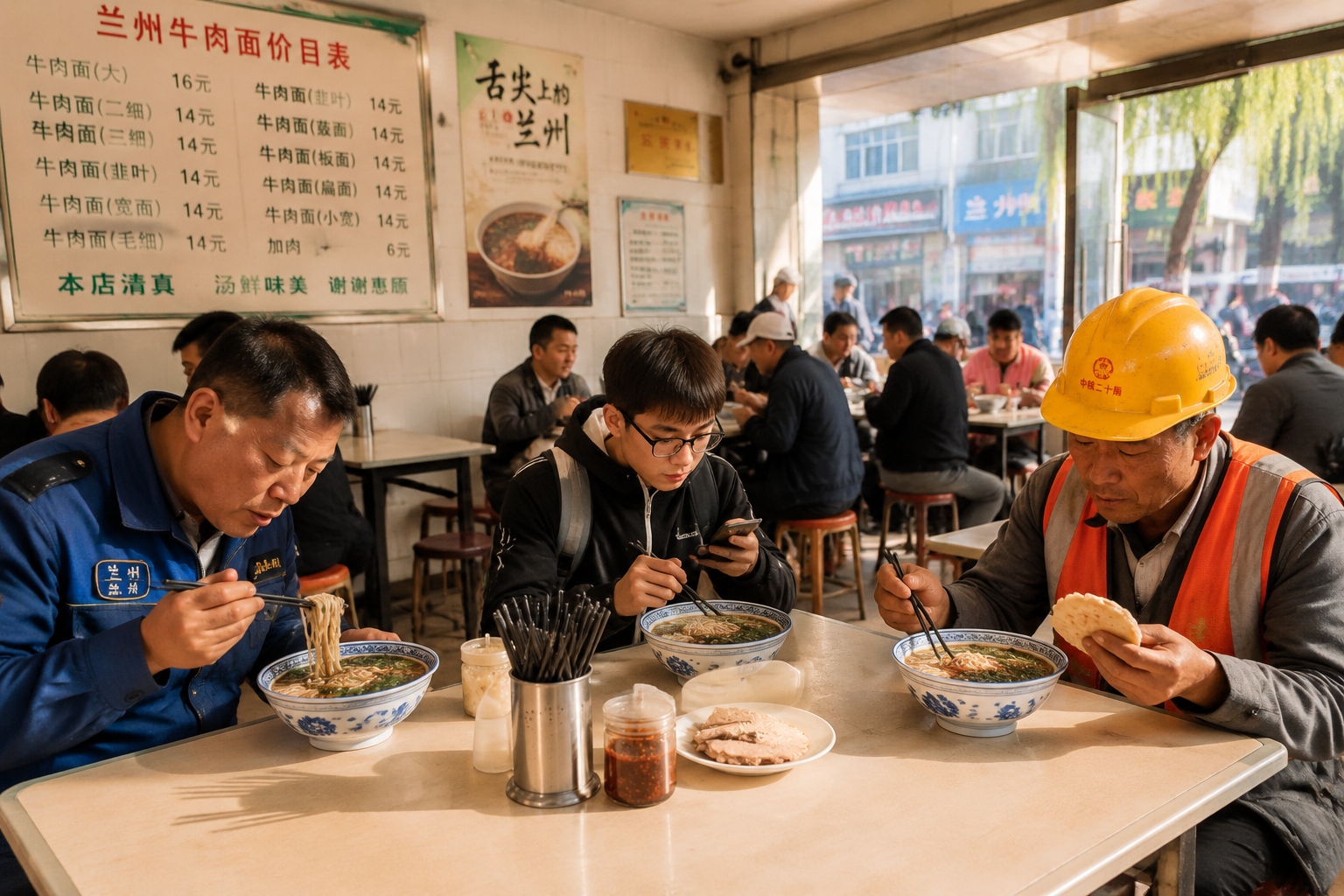
By 7:30, the shop is humming. A taxi driver in a padded jacket wolfs down a bowl of erxiye (noodles as thick as a rubber band), wiping his mouth with a napkin and ordering another. A college student with a backpack stirs her noodles slowly, checking her phone between bites. A construction worker, still wearing a safety helmet, stands at the counter and drinks the soup in loud gulps.
“I’ve been here for three years,” Ma says, sliding a stack of bowls toward the window. “The faces change, but the orders don’t: most want the second-thickest noodle, no chili, let me have a little more soup. Some people are in a rush. Some just want to sit and watch the street.”
For many customers, the ritual of eating Lanzhou beef noodles is familiar and comforting. It is not a fancy meal, but it carries a sense of belonging. In a country where millions live far from their hometowns, this bowl has become a kind of portable home—a taste that reminds people of the northwest, or simply of the morning when everything is still possible.
Behind the Bowl: A Regional Economy
The popularity of Lanzhou beef noodles has had a measurable economic impact. In Gansu alone, the industry is said to support over one million jobs through direct employment, training, and supply chains. Some local governments have even set up training programs to teach young people the exact skill of pulling noodles, turning a street craft into a certified vocation. In 2023, the city of Lanzhou issued a set of local standards for the dish—ingredients, soup density, noodle thickness—to protect the “brand” and improve quality control.
Yet the road has not been smooth. In the 1990s and 2000s, the market became crowded with shops using the Lanzhou name without following the craft. Some served instant noodles in a beef-flavored soup. That dilution led to consumer complaints and a push for authenticity. Now, many shop owners are part of associations that promote training and reputation. Still, the tension between authenticity and adaptation remains a live debate, and visiting a noodle shop in Shanghai today might give you a very different experience than the original in Lanzhou.
Why This Noodle Bowl Still Matters
By 9 a.m., the breakfast rush is over. Master Ma wipes down the counter and finally sits down with his own bowl. He drinks the soup slowly, in deep silence. Then he tells me, “Everyone asks if I’m tired of making noodles after 25 years. But look—every morning, I see people start their day with this bowl. That never gets old.”
Lanzhou beef noodles are not the most sophisticated dish in Chinese cuisine, but they represent something important: how a local food can travel across a vast country and become a shared daily ritual. It is a story of migration, hard work, and the simple human need for a hot, satisfying meal at sunrise.
If you ever visit China, find a small noodle shop with steam rising from the window before you even reach the door. Sit down, order a bowl of erxiye, and watch the chef’s hands dance. You’ll be tasting not just noodles, but a century of resilience and a nation’s everyday life.
Start the discussion at forum.chinacomes.com