

A City That Wakes Up Moving
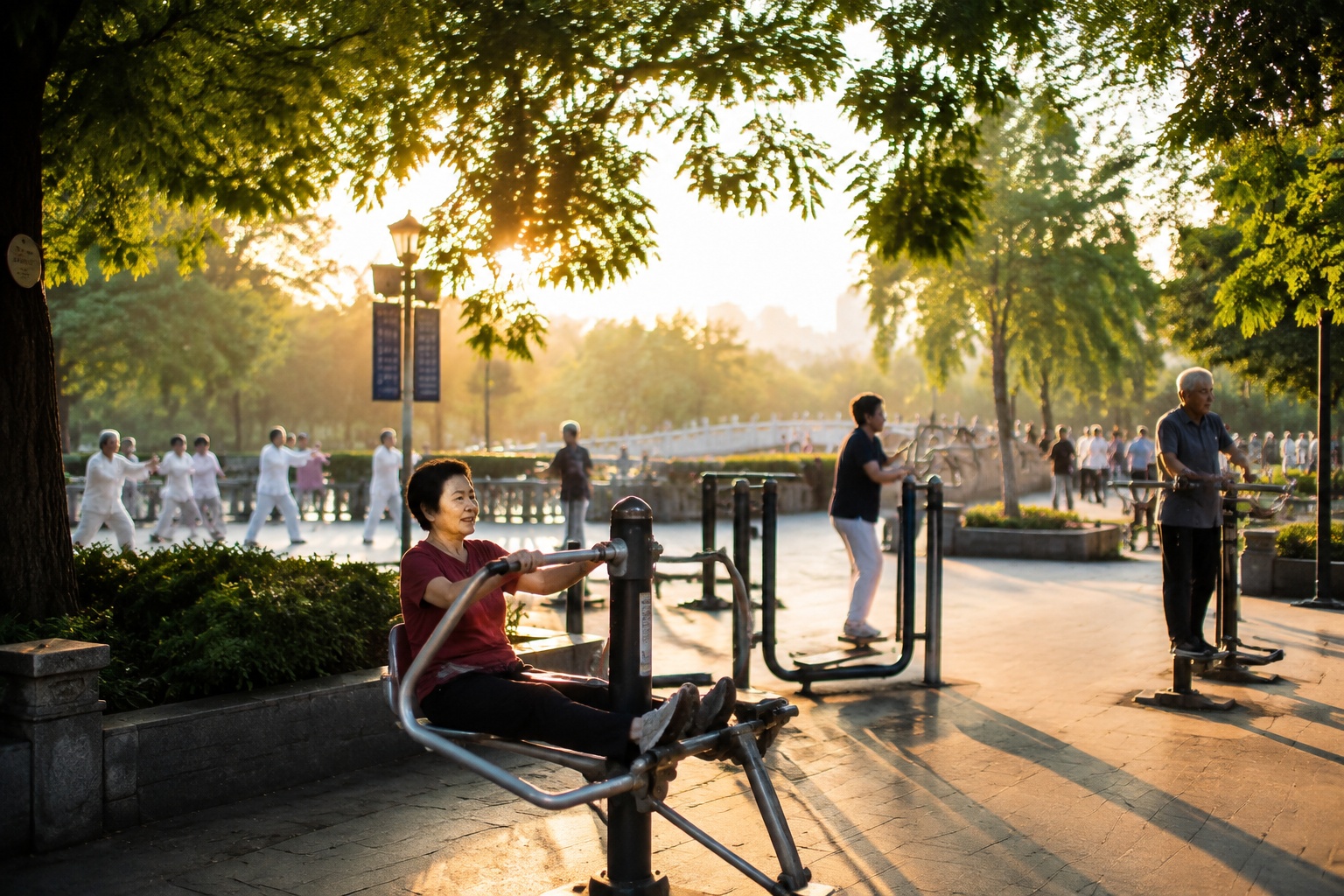
At 6 a.m., the air is still cool and the streetlights are about to switch off. In almost every Chinese city park, something remarkable is already happening. Under the plane trees, an old man in a white shirt is slowly shifting his weight through tai chi postures. A few meters away, a woman swings her arms on a yellow-and-blue outdoor exercise machine, her legs kicking forward as if walking on air. Farther on, someone is practicing a high-pitched opera aria, voice bouncing off the morning mist.
This is China’s free outdoor gym — not a single building, but the park itself. It’s open all day, but the magic happens between dawn and 9 a.m. No membership fees, no mirrors, no neon lights. Just fresh air, a little sweat, and a community of people who believe the day begins with movement.
What Is a Free Outdoor Gym?
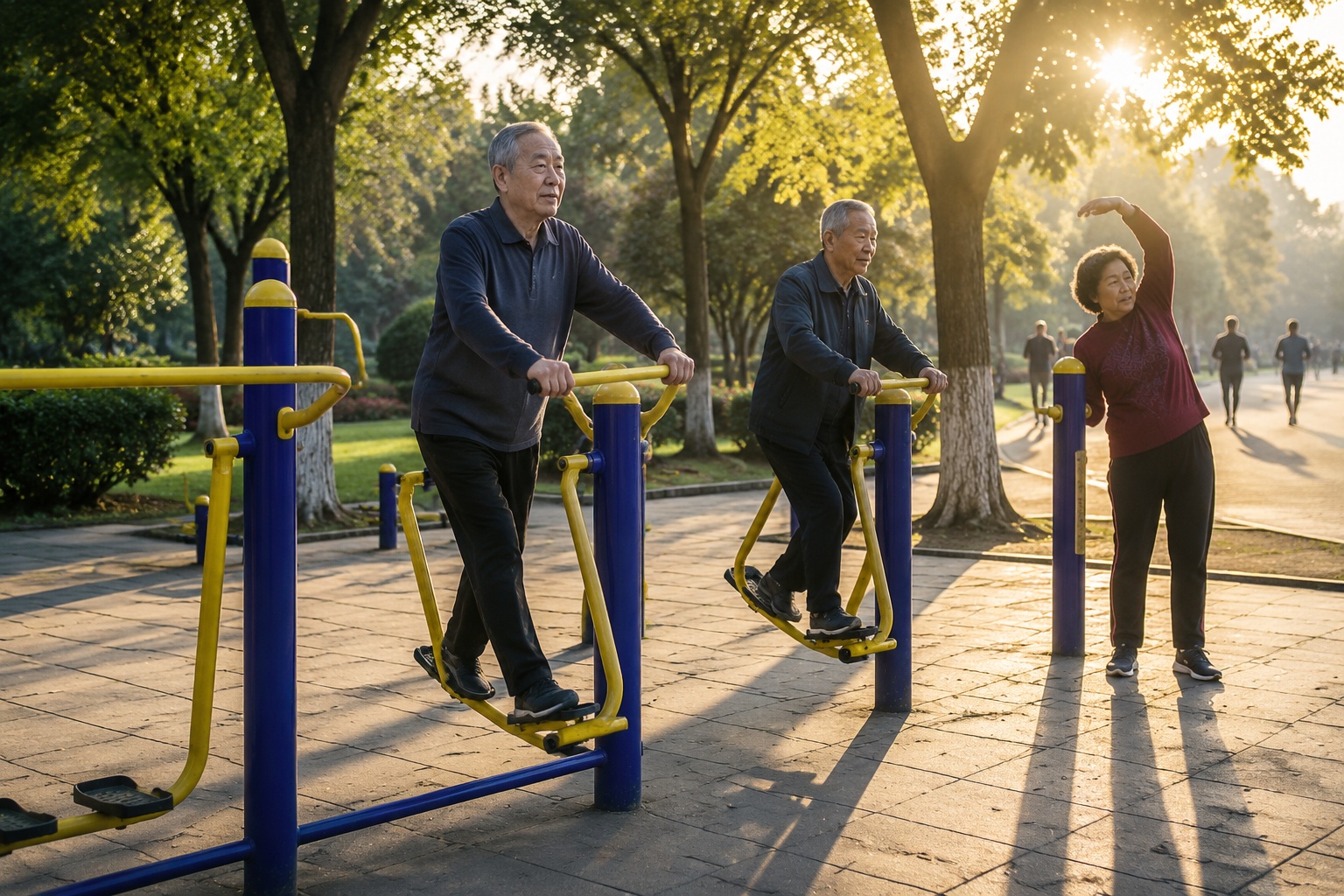
Since the 1990s, Chinese cities have installed public fitness equipment in nearly every neighborhood park. These are simple, sturdy machines: combination pull-up bars, waist-twisters, leg stretchers, and the ever-popular “space walker” that lets you swing your legs back and forth. They are funded by local governments and meant for everyone — grandpas, office workers, kids on school holidays. In China, these areas are called 健身苑 (fitness courts) or simply 公共健身器材 (public fitness equipment).
What makes them special is not the machines themselves, but how people use them. A park at 6 a.m. is a living encyclopedia of exercise traditions: some are ancient, some are modern, and all are open to anyone who shows up.
The Tai Chi Zone: Flowing Like Water
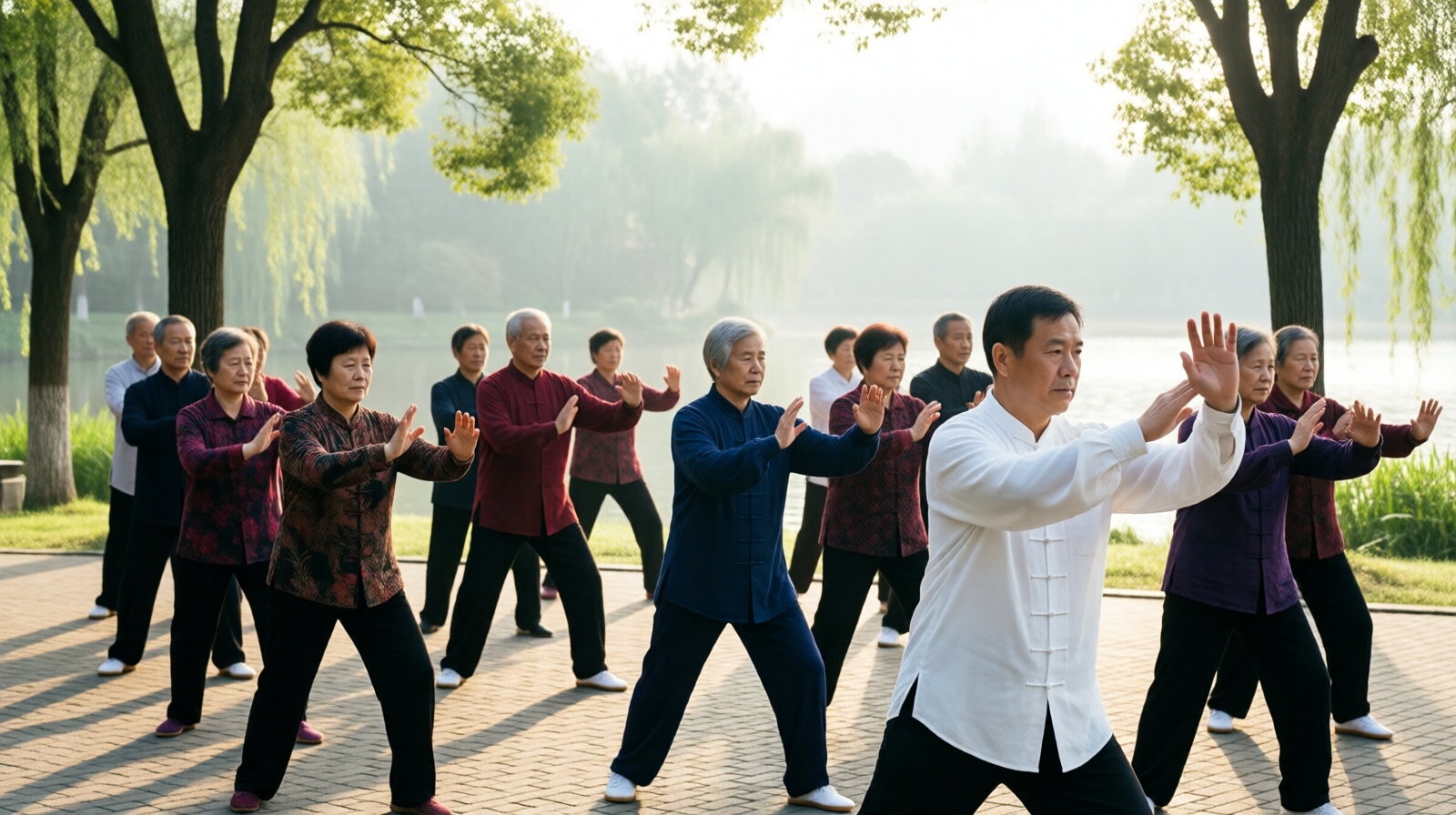
Look for a cluster of people moving slowly in unison, often near a quiet corner or a bambo grove. That’s the tai chi zone. Most groups start around 6:30 a.m. and practice for about an hour. Some follow a teacher with a small speaker playing traditional Chinese instrumental music; others simply flow on their own.
Tai chi is a martial art that looks like slow-motion dance. It improves balance, flexibility, and breathing. If you want to join, just stand at the back and copy the movements. Nobody will mind. A friendly nod or a smile works wonders. Don’t worry about getting it right — the goal is not perfection, but the feeling of energy moving through your body.
If you’re shy, find a spot a few meters away and imitate on your own. Many locals are flattered when a foreign visitor shows interest. Some even offer to teach you a few moves. Just remember: wear comfortable shoes, and don’t walk through the middle of a practice circle.
The Diabolo Players: Spinning Art and Exercise
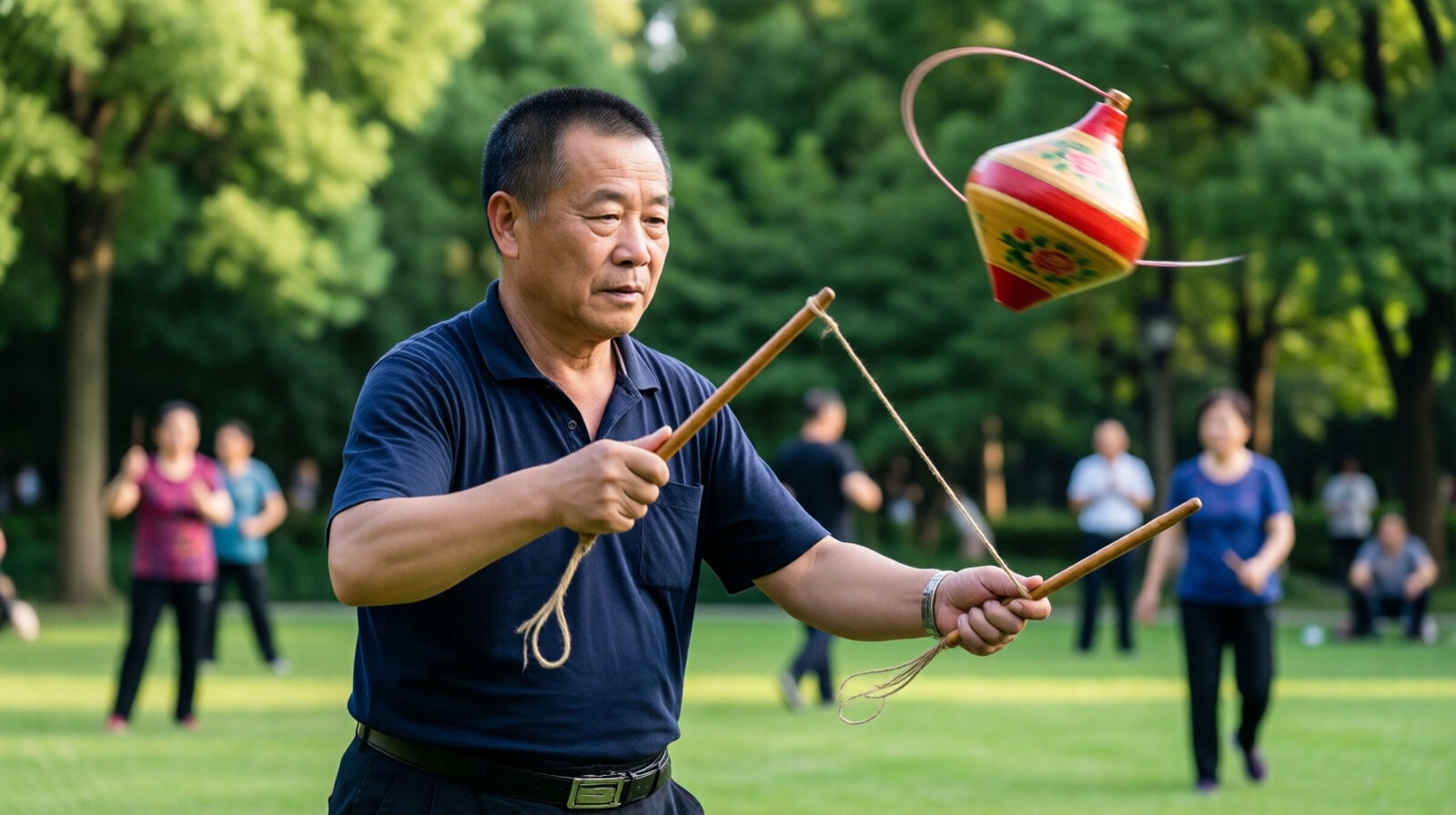
Now follow the sharp whistling sound. You’ll see an old man tossing a small top — a diabolo, or 空竹 (kōngzhú) — into the air and catching it on a string tied to two sticks. The diabolo spins at high speed, sometimes giving off a loud hum. He whips it up, lets it fall, catches it again, and spins the string to keep it going. It’s part circus act, part workout, and totally mesmerizing.
Diabolo playing is a traditional Chinese hobby that has almost disappeared from daily life, but it thrives in morning parks. Many players are retired men in their 60s and 70s. They practice for hours, perfecting tricks like throwing the diabolo high over their head or catching it on the back of the stick.
Can you try it? Absolutely. Approach during a break and ask in Mandarin or via gestures: “Can I have a try?” Most players are delighted to hand over the equipment. Be prepared — it’s harder than it looks. The diabolo will likely fall on the ground within seconds. That’s normal. They’ll laugh, show you again, and offer tips. The first time I tried, I spent ten minutes chasing the spinning top across the grass.
The Voice Projection Booth: Singing to the Sky
A few paths away, you might hear a sudden, loud sustained note — aahhh — that sounds like someone is either in pain or enthusiastically opening a concert. This is “raising the voice” (吊嗓子, diào sǎngzi), a practice common among Chinese opera enthusiasts and amateur singers. They stand in a clearing, face a tree or an open space, and project their voice as loudly as possible to strengthen their vocal cords and work on resonance.
For outsiders, it can be surprising. In many countries, you might call the police if someone yells in a park at 7 a.m. But in China, this is accepted and even admired. If you’re not used to it, just smile and walk by. If you’re curious, stand at a respectful distance and listen. You might hear everything from Peking Opera arias to pop songs, delivered with a boldness that most professional singers would envy.
Some singers practice alone, others in small groups with a teacher. They don’t mind an audience, but they usually don’t include newcomers. Enjoy the show, take a few photos (ask first), and move on.
The Equipment Zone: Free Machines for All
The heart of the free outdoor gym is the equipment area, usually a small paved square lined with metal and plastic machines. At 6 a.m., it’s already busy. There’s no sign-up sheet, no reservation system. The unwritten rule is simple: first come, first served. If someone is using a machine, wait nearby. Most people use a machine for 5 to 15 minutes, then move on to another one.
Here are a few common machines and how to use them:
Space Walker (太空漫步机)
Hold the handles and place your feet on the flat pedals. Pump your legs forward and backward in a walking-like motion. It’s excellent for joint mobility. Don’t go too fast — you’ll lose balance.
Waist Twister (腰背按摩器)
Stand on the round platform, hold the horizontal bar, and rotate your hips back and forth. It helps loosen up the lower back. Some models have rollers that massage your back while you lean against them.
Pull-Up Bars and Parallel Bars
Usually located at the edge of the area. Men in their 60s will do ten clean pull-ups as if it’s nothing. You can do assisted negatives or just hang. Don’t feel pressured — park regulars have been training for decades.
Leg Stretch Machine (腿部按摩器)
You sit on a small seat and push your legs against padded rollers. It works the calves and thighs. Many older users also use it as a comfortable spot to rest.
Safety and Etiquette Rules
No matter which zone you choose, keep these tips in mind:
- Check the equipment: Most machines are well maintained, but after rain or extreme heat, metal parts can get rusty or hot. Give the surface a quick touch before committing.
- Warm up first: Spring into action without a few gentle stretches is a bad idea at any age.
- Respect personal space: In the tai chi area, don’t walk through the middle of a practice group. Wait for a break in the movement.
- Don’t hog the machines: If someone is waiting, it’s polite to finish your set soon.
- Dress comfortably: Loose clothes and flat, closed-toe shoes are best. Avoid flip-flops.
- Bring water: Some parks have public drinking fountains, but not all. A small bottle can save you.
- Smile and nod: Eye contact and a friendly greeting go a long way. You might make a local friend.
What Time to Go
The park has a natural rhythm. If you’re a late riser, you’ll miss the peak.
5:00 – 6:00 a.m. The Early Birds
The first arrivals are the hardcore: brisk walkers, joggers, and a few tai chi masters who practice alone in the dark. The air is still, and the park is nearly empty.
6:00 – 7:30 a.m. Rush Hour
This is the busiest window. Tai chi groups gather, diabolo players claim their spots, and the equipment zone is full. You’ll hear a mix of music: traditional Chinese instruments, pop songs from a portable speaker, and occasional opera snippets.
7:30 – 9:00 a.m. The Second Shift
As the early crowd heads home for breakfast, a new wave arrives: office workers on their way to the subway, parents with strollers, and middle-aged women doing fan dances or aerobics. The equipment zone frees up a little.
After 9 a.m.
Most morning exercises wind down by 9. Some older people stay longer, but the intensity drops. If you prefer quiet, come early.
A Park Is a Community
In china, these morning parks are more than just a place to exercise. They are social hubs where retirees trade news, laugh, and keep each other company. For a visitor, joining a morning session is a chance to see a side of Chinese life that doesn’t appear in guidebooks. No ticket needed, no VIP pass — just a little courage and an open mind.
So next time you’re in a Chinese city, set your alarm for 6 a.m. Walk into a park that’s already buzzing with life. Pick a spot, watch for a few minutes, and then gently join in. The machines are free, the coaches are friendly, and the joy is contagious.
Start the discussion at forum.chinacomes.com