

One Scan, Done
Li Mei, 67, moved from Bengbu in Anhui Province to Shanghai three years ago to help care for her grandson. When she needed surgery for gallbladder disease last November, her son braced for a familiar headache: paying the entire hospital bill upfront, keeping every receipt, and later mailing the documents back to Bengbu to claim reimbursement. That was the standard routine for decades.
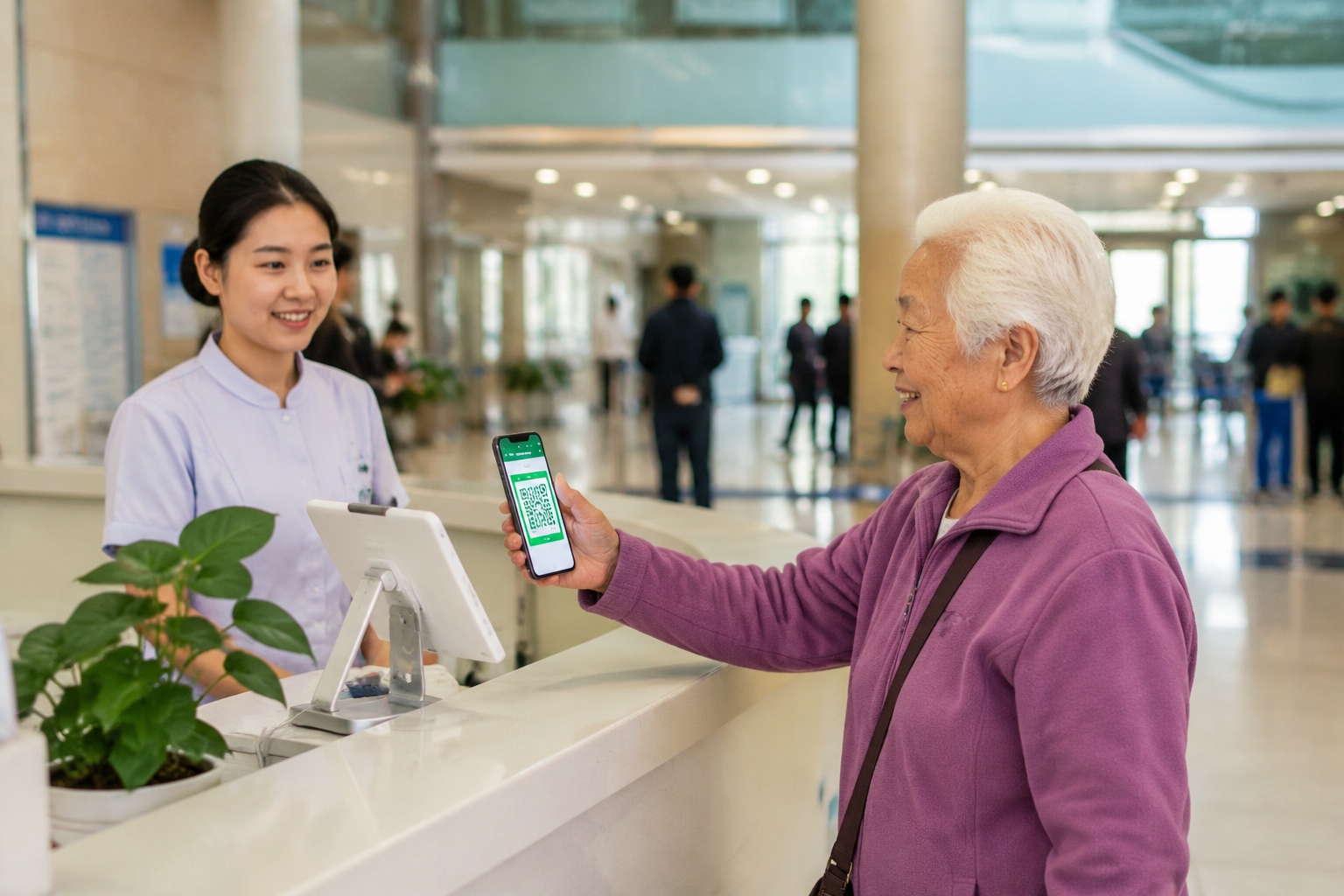
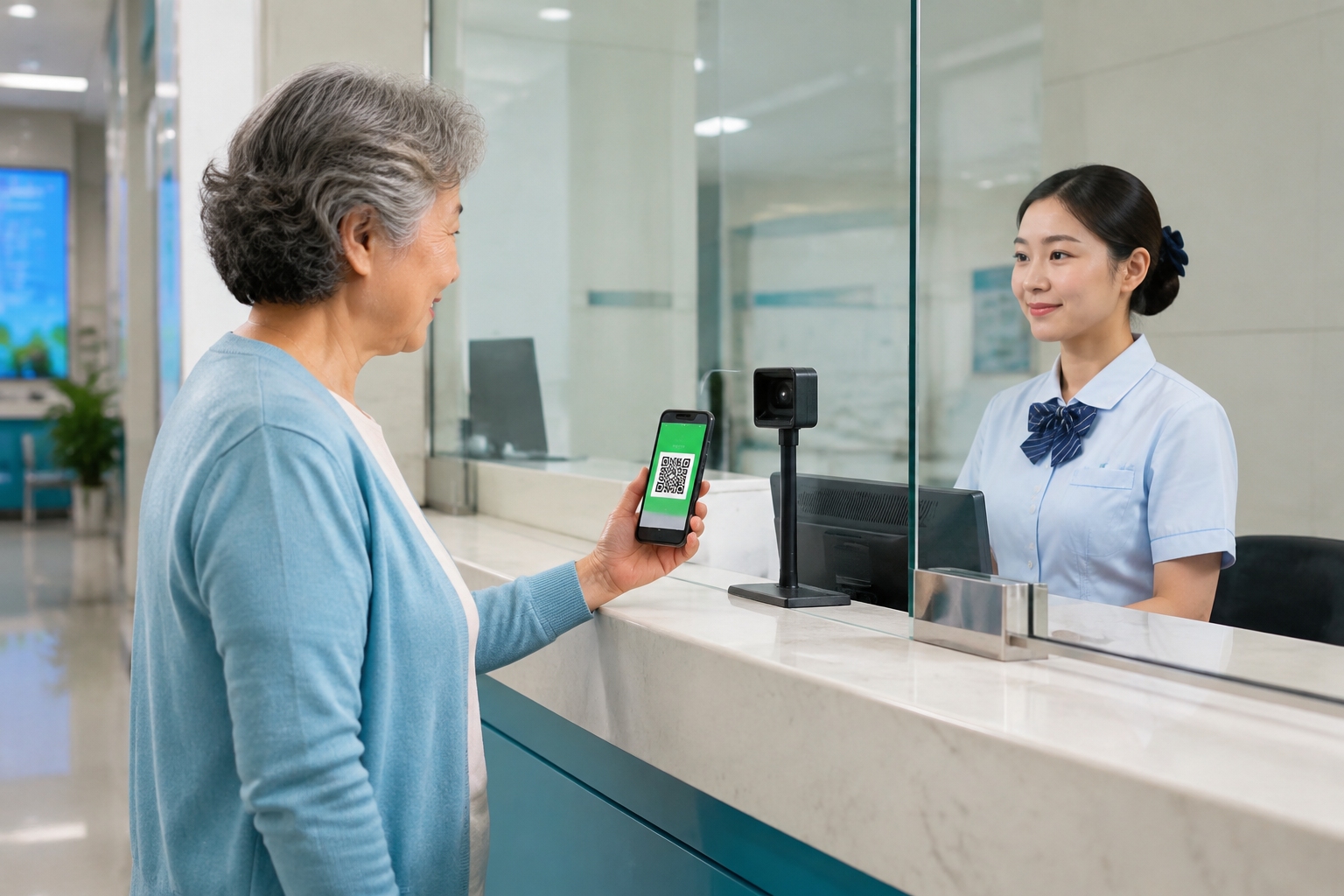
But this time, it never happened. At the hospital, Li simply opened a health insurance app on her phone and showed a QR code at the admissions desk. The admission staff scanned it, and the system automatically checked her with Anhui’s medical insurance authority. At discharge, the bill was settled immediately. Her family paid about 30 percent of the total; the rest was covered by her home-province insurance fund. No receipt-sorting, no train tickets back to Anhui.
This is the new normal for cross-province medical care in China. Under a system called “cross-province direct settlement,” patients can use their medical insurance wherever they are in the country if they have done a simple online registration. It’s a major shift that has made life easier for millions of migrants, retirees and their families.
Why It Used to Be a Nightmare
To understand the change, you need to know how China’s health insurance is organized. The system is not one single national pool. Instead, contributions are collected and managed by local governments, usually at the city level, sometimes the province. Each city has its own reimbursement rates, drug lists and rules. That means a person from Anhui who lives in Shanghai technically cannot use their Anhui insurance at a Shanghai hospital, because the two systems don’t automatically talk to each other.
Before the national platform was built, if you lived outside your registered area (often called 户籍), you faced three painful problems. First, you had to pay the full bill in advance, which could be tens of thousands of dollars for serious procedures. Second, you had to keep every piece of paper—admission records, itemized bills, diagnosis certificates, lab reports—and bring them back to your home city’s insurance bureau for manual review. Third, approval was slow. It was not unusual to wait three to six months for reimbursement.
And there was a hidden cost: if you went outside your home city without permission, the reimbursement rate could be massively reduced. For example, a rural retiree might be reimbursed 80 percent in her hometown, but only 50 percent if she used a hospital in another region without filing a prior request. That caused many people to postpone surgery or take long trips home just to keep their coverage.
The Digital Bridge: How It Works
The turning point came in 2018, when the Chinese government created the National Healthcare Security Administration (NHSA). Its mandate was to modernize the whole system. The NHSA’s first major project was to build a single digital platform to connect all local insurance systems. After pilot programs in a few provinces, the new national platform went live in 2021.
The platform works as a central clearing house. When you show a QR code at a hospital, the hospital sends your personal identifier and medical information to the national platform. The platform checks which provincial insurance fund you belong to, retrieves your coverage and reimbursement entitlement, and calculates your co-payment amount. This all happens within seconds. Then the hospital collects only your co-payment and receives the rest from the insurance fund through a bank transfer. There’s no paper receipt you need to mail anywhere.
The user-facing part is simple. You file a “cross-province medical treatment filing” (异地就医备案) before your trip or at the hospital. Filing is usually done on a smartphone app, the national medical insurance service (国家医保服务), or through WeChat or Alipay mini-programs. In many provinces, you can also call a hotline. The filing is not a request for permission—it’s more like a quick notification. It tells the system, “I am temporarily in another province and will use my insurance here.” You can file even when you arrive at the hospital, and in emergencies many places let you file retroactively.
What Has Changed for Ordinary People
The impact is hard to overstate. China has one of the largest migrant workforces on Earth. According to the National Bureau of Statistics, there are about 300 million migrant workers who hold household registration in one place and work in another. Many retirees also move to join their adult children in the city. Students live out-of-province. Travelers fall ill while on the road.
For all these people, the new system removes a financial cliff. A construction worker from Sichuan with kidney stones used to worry about how to pay for an emergency hospital stay in Guangdong. Now he can be treated immediately and the insurance fund will wire the payment directly to the hospital. A retired teacher from Wuhan who lives with her daughter in Beijing can schedule an outpatient surgery without an advance fee. Diabetes patients can go to a pharmacy in a different province and buy medication instantly using their insurance.
Beyond the money, there is the mental relief. Getting sick away from home is scary enough—the last thing you want is a mountain of paperwork in a language you may not fully understand, or a wait for reimbursement that pushes your family to the edge. As Li Mei told her son after the surgery, “I couldn’t believe it. I thought the worst part would be the bills. It ended up being nothing.”
What Still Needs Work
The system is not perfect, and it’s important to be honest about its rough edges.
First, cross-province reimbursement rates are not always identical to local ones. Some provinces deliberately set slightly lower rates for cross-province patients, partly to discourage people from hopping to expensive superstar hospitals to use other provinces’ funds. It’s still a better deal than the old no-approval penalty, but it means the government has not fully equalized health care access across regions.
Second, coverage for different types of care is uneven. Inpatient care and general outpatient visits are available almost everywhere. But some special outpatient treatments—for example, certain chronic diseases, chemotherapy, hemodialysis—are only covered in a growing number of pilot hospitals. If you have a rare condition, check the list before you travel.
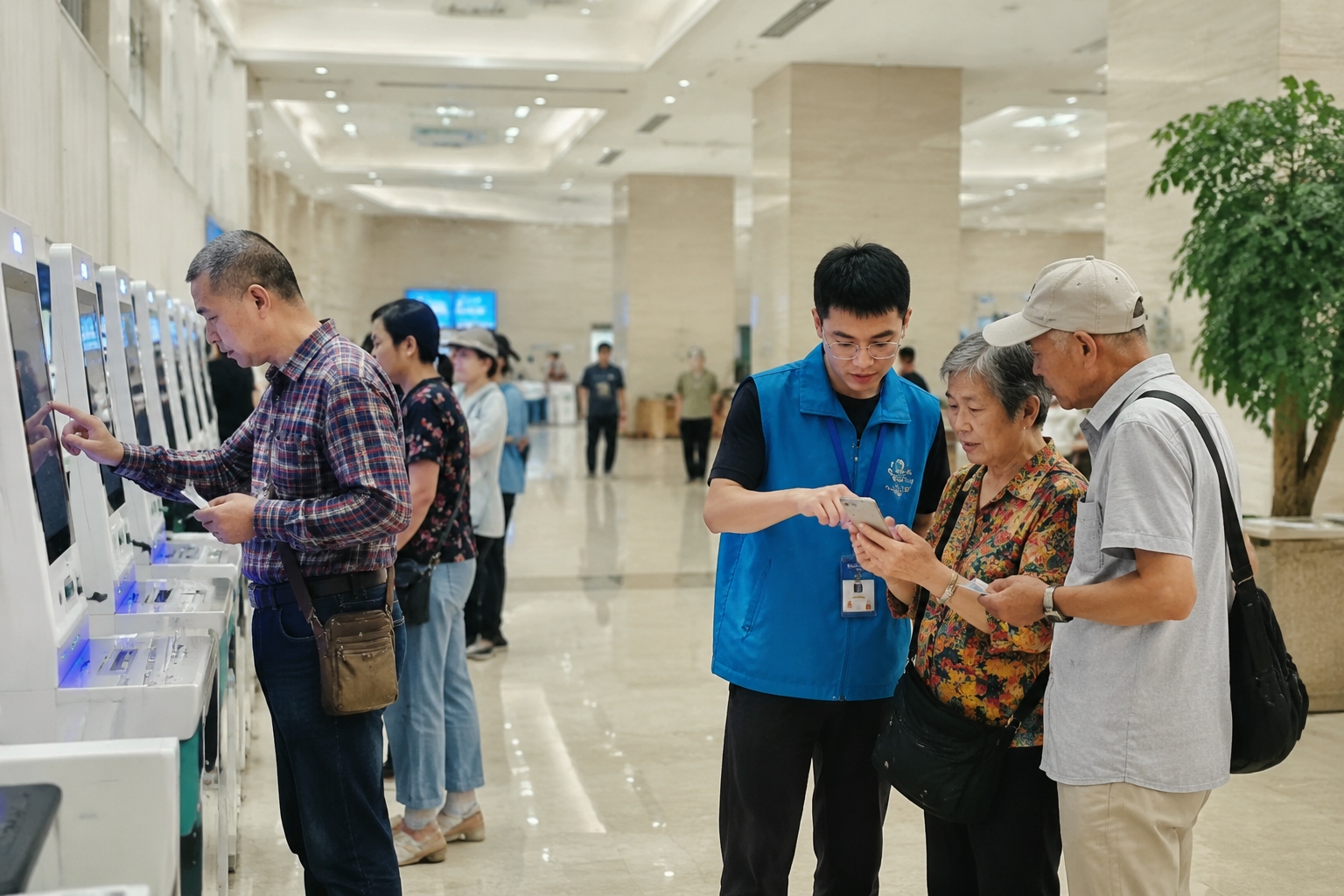
Third, the smartphone requirement is a real barrier for some elderly patients. The app is designed to be easy, but many older people still need help from younger family members or hospital volunteers.

For older users who don’t have smartphones, many hospitals still allow you to register with your physical social insurance card, but you may then need extra manual assistance.
Fourth, the system is limited to public hospitals and designated private hospitals. It doesn’t apply to foreign-owned or international clinics. If you choose a medical tourism hospital or private international practice, you’re outside the subsidized network.
What Other Countries Can Learn
For readers in the United States, the idea of using your insurance across state lines instantly might seem appealing. In the U.S., Medicaid and private insurance networks are often state-specific, and out-of-state coverage can be complicated. In Europe, the European Health Insurance Card allows basic cross-border care within the EU, but the reimbursement process is not always this frictionless because it still relies on paperwork between member states.
China’s approach is distinct: it didn’t merge all the insurance funds, but built a central digital protocol on top of them. It’s like having a universal POS system for health care. Every local insurance fund keeps its own accounting and contribution rules, but the national platform is standard. That makes it easier to achieve without a massive political negotiation to erase regional differences. It happens to work because mobile digital identity is already deeply embedded in Chinese daily life—nearly everyone has a smartphone and can scan a QR code for everything from coffee to subway tickets.
Where It’s Headed
The NHSA is not stopping here. In recent years, it has expanded the cross-province network to include more outpatient chronic conditions, such as high blood pressure and diabetes, so that someone with a long-term condition doesn’t have to return to their hometown every three months just to renew a prescription. There is also work towards making the online filing unnecessary altogether. With sufficient data about your location and past usage, the system might infer you are living in a certain place and automatically activate a “local” status.
Behind the scenes, the national platform processes billions of transactions a year, and it has become an essential piece of infrastructure. In 2023, more than 70,000 designated hospitals in China were part of the hospital settlement network. For an average person, the story has simplified to just two things: a phone and a code.
Li Mei’s next visit to Shanghai hospital for a follow-up last week took exactly five minutes to check in. She didn’t file a new form; her previous one was still valid. When her son asked if she wanted to keep the paper receipts from her purchase of traditional Chinese medicines, she said, “What receipts? The phone already took care of it.”
Start the discussion at forum.chinacomes.com