
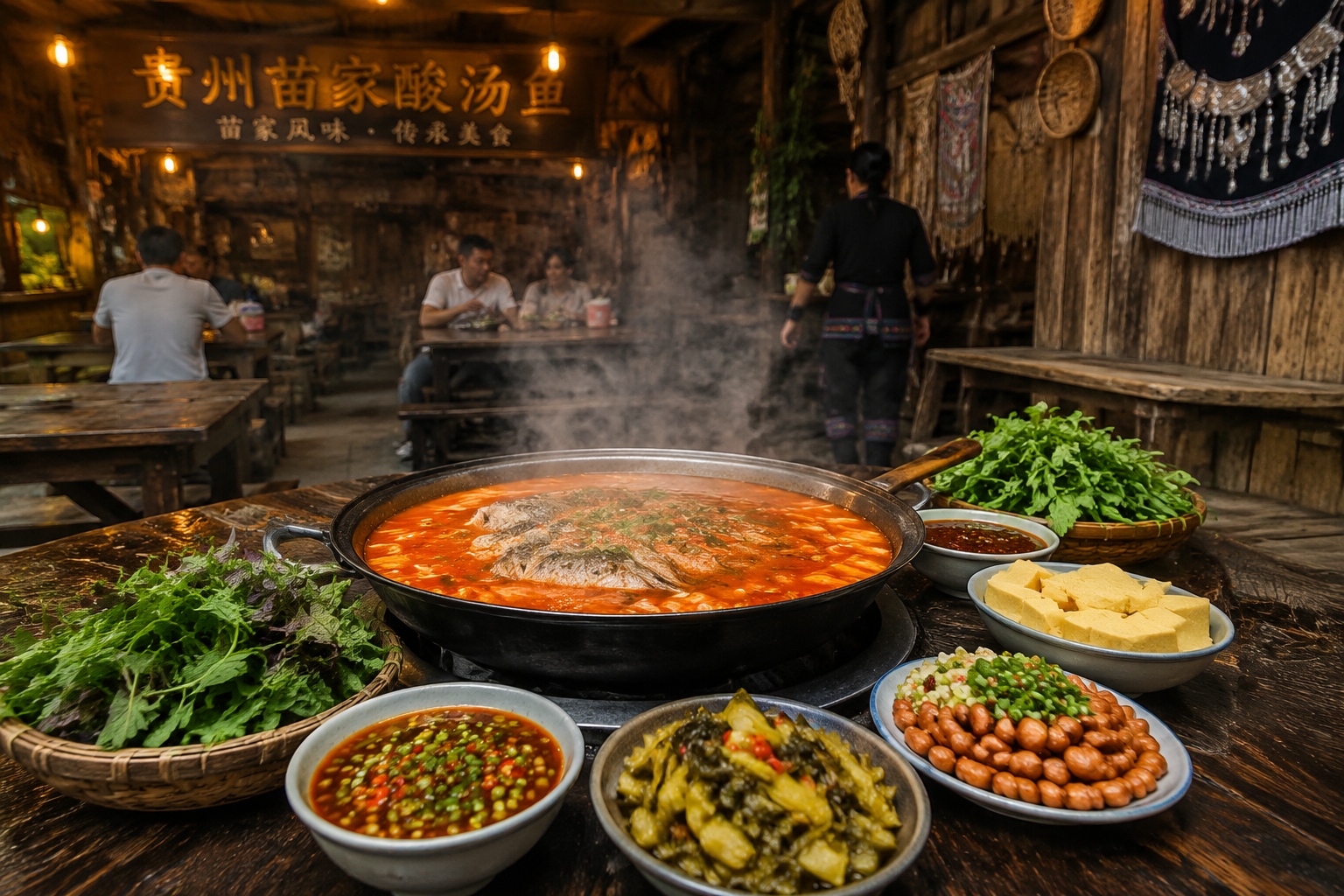

One Sour Night at the Side of the Road
The alley is unremarkable—concrete homes, a noodle shop, a barber’s. But at the end, a familiar smell lingers: sharp, sour, slightly sweet, then a whisper of chili. It’s 7 p.m., and a dozen neighbors are already crowded around a cast-iron pot on a low wooden table. Bubbles rise, steam lifts the scent of pickled tomatoes, mint, and fresh river fish. A woman leans in with her chopsticks, pulls out a flaky fillet, dips it into a sauce of ground chili and smashed litchi tomatoes, and eats it with a mouthful of rice. This is Miao sour fish soup—also known as suān tāng yú—and in the hills of Guizhou and the broader Southwest highlands, it is far more than a meal. It is a flavor code that unlocks an entire way of life.
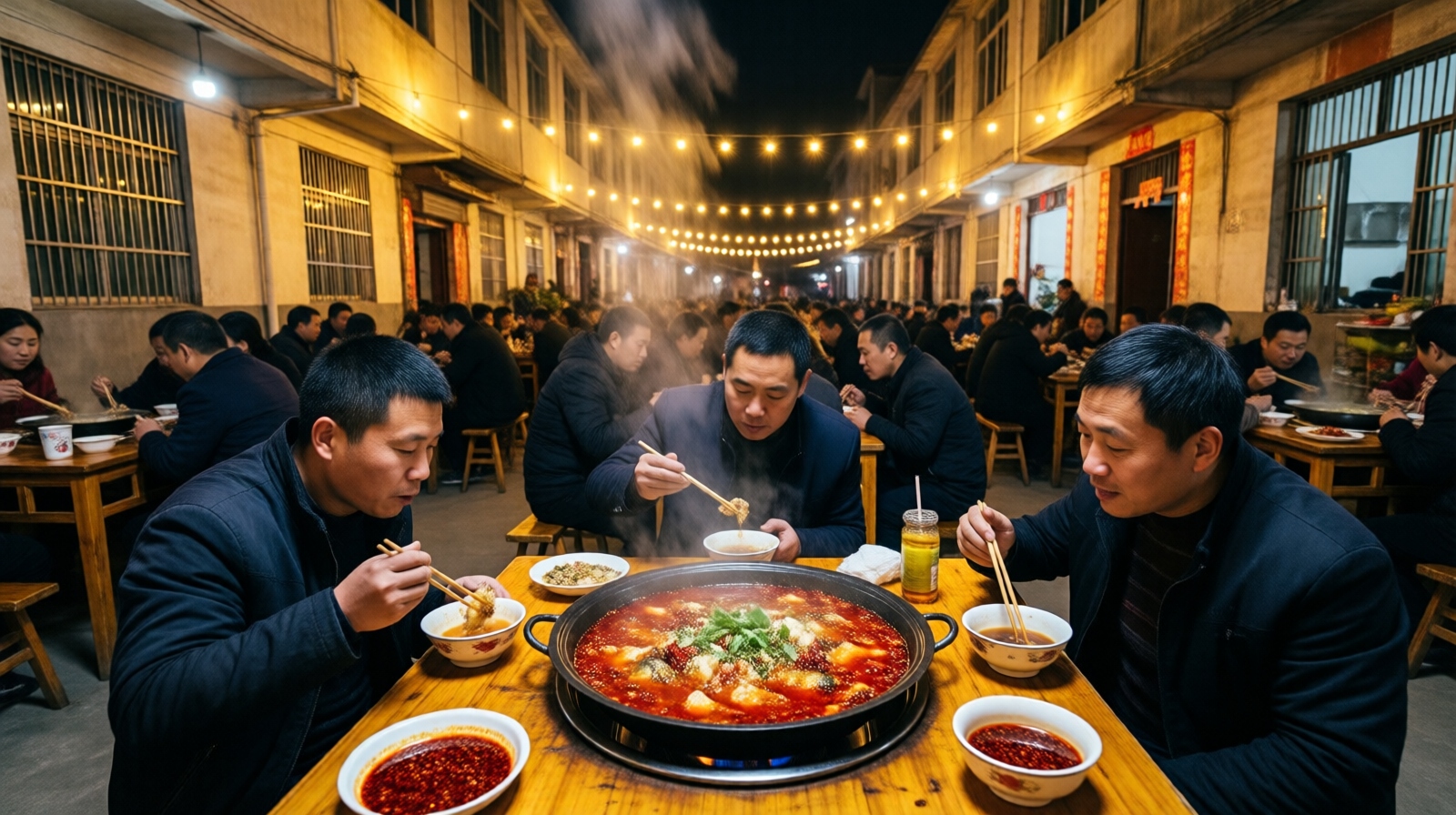
Why Sour? Look at the Mountains
The simple answer is climate. These highlands are hot and humid for much of the year, with mountains that trap warmth in the valleys and rain in the afternoons. Before refrigeration reached the villages, fresh meat and vegetables could turn within hours. Fermentation offered a solution. By letting rice, tomatoes, or chili ferment in sealed earthenware jars, Miao cooks created a tangy, bubbling broth that preserved ingredients and also sharpened the appetite in the humid heat. Deep in summer, a bowl of cold sour soup can cut through the heaviness like nothing else.
But there’s a deeper story. Many Miao people are not originally from these hills. Generations of migration—sometimes forced, sometimes in search of land—brought them westward from the flatter, temperate lands along the Yangtze River. In their new home, salt was scarce and expensive. Sourness became a substitute, a way to season food without depending on the salty minerals they couldn’t afford. To this day, some families still call sour soup “the poor man’s salt.”
Two Kinds of Miao Sour Soup
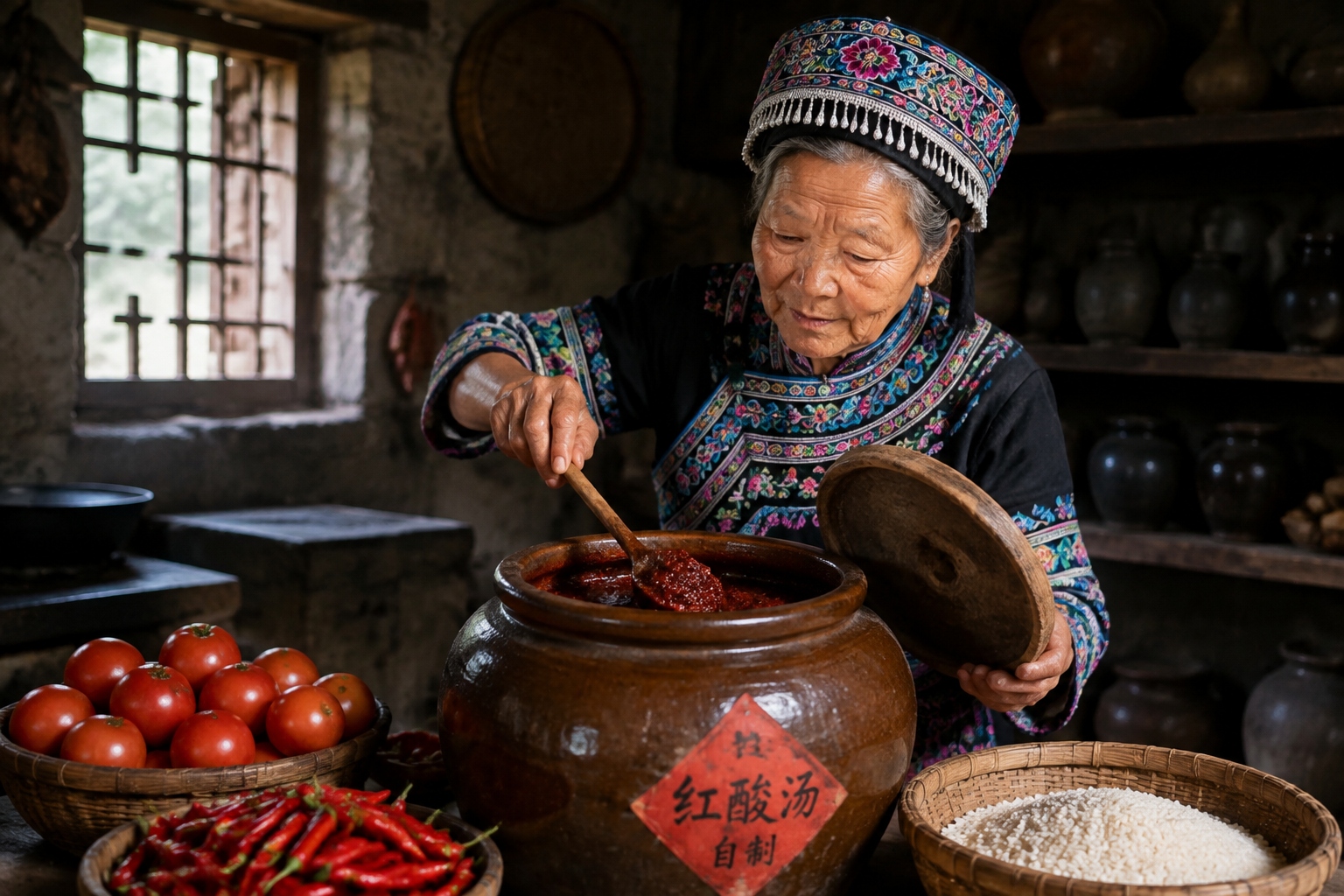
There are two main types in the Miao culinary tradition. White sour (bái suān) is made from cooked rice water left to ferment for a few days; it’s mellow and slightly milky. Red sour (hóng suān) uses wild litchi tomatoes—small, purple-red fruit that taste like a cross between tomato and cherry—and is thickened with rice to form a deep, vibrant broth. The red sour is the one that goes into fish soup. It has a bright, fruity acidity, a subtle fizz, and a gentle heat that comes from fresh chili peppers.
The Landscape in the Pot
Around the same hills, an ancient partnership between rice and fish still flourishes. For centuries, Miao farmers have raised fish in the same flooded terraces where they grow rice. Young carp or catfish swim among the green stalks, gobbling insects and weeds, while their droppings fertilize the paddy. When the rice is ready to harvest, the fish are released and often end up in the sour pot. So the soup is literally a taste of the landscape—a landscape of water, terraces, and memory.
Old jars of red sour base are valued possessions. To make the real thing, you collect the small purple litchi tomatoes, cut them into chunks, and mix them with rice water and a spoonful of an older batch as a starter. The jar is sealed and left in a warm corner for a week or more. Every day, you stir it with a clean wooden spoon. Bubbles rise, a thin white film forms, and the smell turns from sweet to sharply tart. When it reaches a deep maroon and tastes nearly like a sour beer, it is ready.
One Flavor, Many Codes
When people talk about sour food, they often think of France or Thailand. But those sour traditions are fundamentally different. In the cool, northeastern climate of France, cabbage is packed in salt and left to ferment for months. The resulting choucroute is dense, earthy, and made to pair with pork and potatoes. In Thailand, the more tropical tom yum finds its sourness from lime juice and lemongrass, a sharp, refreshing jolt that combats the relentless heat. In the Chinese southwest, the sourness is based on grain—rice, wheat, or corn—fermented for weeks or months. It is neither heavy nor sharp, but round, floral, and almost effervescent.
These differences are not accidents. They are shaped by which ingredients are abundant, which preserving methods are practical, and what the body needs in a given environment. In the Miao highlands, sourness was a survival tool, and it became a cultural marker. When a Miao person says something tastes “like home,” they often mean that specific, bright, gently fizzing sourness.
How to Eat a Bowl of Sour Fish Soup
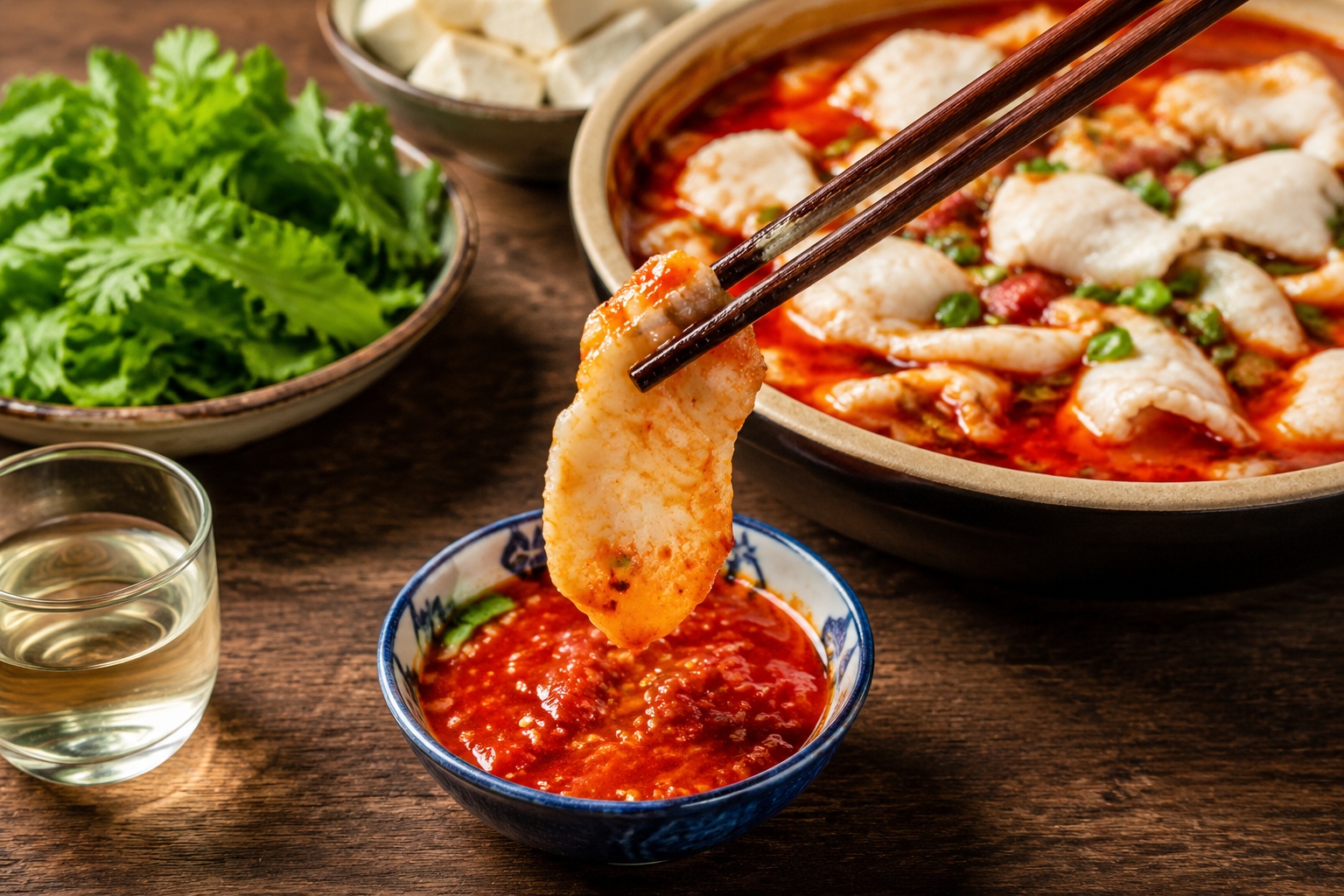
The dish itself is wonderfully simple. A whole river fish—usually carp, catfish, or sometimes a small black carp—is cleaned and dropped into a large pot of bubbling red sour broth. It simmers just long enough to remain tender; you don’t cook it to pieces. Diners fish out pieces with their chopsticks, then add greens, tofu, and root vegetables to the pot. At the end, everyone takes a bowl of the broth—a tart, spicy sip that is said to aid digestion and wake up your senses.
But the final touch is the dipping sauce. In every village there is a version: roasted chili, smashed litchi tomatoes, garlic, fresh coriander, a squeeze of lime or wild lemon. The fish is dipped, then eaten. The sourness hits first, then heat, then a surprising sweetness. That sequence—sour, hot, sweet—is the backbone of the region’s cooking.
From Village Cookpot to City Restaurants
Thirty years ago, sour fish soup was mostly a home-cooked specialty for Miao and Dong families in rural Guizhou. During that time, almost no one outside the Southwest had heard of it. But improvements in roads, telecom, and tourism changed that. Today, sour soup restaurants can be found in almost every large Chinese city, from Beijing to Shenzhen. Many advertise with pictures of a bubbling red pot, and some add extra chili for spice-seeking customers. The dish has even been incorporated into hotpot chains and instant noodle flavors.
The move to the city has changed the dish, too. Some restaurants try to shorten the fermentation time, or use a hint of vinegar to fake the aroma. Purists can tell immediately. But for many Miao people living far from home, the taste is more than a recipe. A friend in Shanghai, originally from a Miao village in Kaili, told me that she keeps a jar of her mother’s homemade sour base in her freezer. It sits like a souvenir from another life. “When it thaws in the pot, I smell the smoke of my grandmother’s stove,” she said, smiling.
Living Traditions, Not Museum Pieces
What’s striking is that sour soup is not being loved to death. In Kaili, you still see the old ways at the morning market: women selling jars of fermented base, wild litchi tomatoes, and fresh herbs that have no standard names. At night, a different market fills with young people who gather for bowls of sour soup noodles or spicy fish hotpot. Some vendors even make a vegetarian version for the growing number of young Chinese who don’t eat meat.
Learning to Love a Tangy Secret
Understanding sour fish soup is, in a way, understanding a certain kind of Chinese ingenuity. It’s a lesson in how a people used what they had—a hot climate, poor soil, and a long journey—and somehow turned it into a cuisine of startling depth. The sourness isn’t accidental; it’s encoded with memory, adaptation, and community.
So if you’re near a pot of sour soup, let the steam hit your face. Dip your fish into the chili-tomato sauce. Take a sip of the broth. It doesn’t taste like France, and it doesn’t taste like Thailand. It tastes like mountains—old, patient, and alive.
Start the discussion at forum.chinacomes.com