

Introduction
Stand in front of Huangguoshu Waterfall in early June, and you’ll be hit by a wall of water that makes the ground shake. Come back in late December, and the same waterfall looks like a white silk ribbon, gentle enough for a postcard. Same cliff, same river, but completely different character.
So when someone in China tells you that Guizhou’s waterfalls can be seen ‘twice a year,’ they don’t mean a rare phenomenon. They mean that the seasons transform these cascades into something so different that it feels like visiting two separate worlds.
This guide is for anyone who wants to see Guizhou’s most famous waterfalls—and some hidden gems—at the right time. We’ll explain the rainy and dry seasons, what each season offers, and how to plan a trip that matches the view you want.
Why Guizhou Is a Waterfall Province
Guizhou sits on a giant limestone karst plateau in southwest China. Rain falls a lot, especially from May to October when the monsoon arrives. The landscape is full of rivers, caves, and cliffs. When rivers meet drop-offs, you get waterfalls. Simple as that.
The province is home to more than 600 waterfalls big enough to be measured. The most famous, Huangguoshu, is 77.8 meters high and 101 meters wide during high water, making it one of the largest waterfall clusters in Asia. But hidden in the mountains are thousands of smaller cascades that only appear after heavy rain.
This is the key to understanding ‘twice a year.’ The seasonal water flow changes everything.
Season by Season: What to Expect
Spring (March to May): The Awakening
Spring brings new leaves, wild azaleas, and spring rain. Water levels start to rise but are still moderate. Waterfalls look fresher and more defined, with clear water over gray rock. It’s a great time to visit if you want to see the structure of the falls without being soaked by mist.
Temperature is pleasant, around 15–25°C. However, spring rain can be unpredictable, so bring a raincoat (umbrellas are hard to use near waterfalls).
Summer (June to August): Peak Power
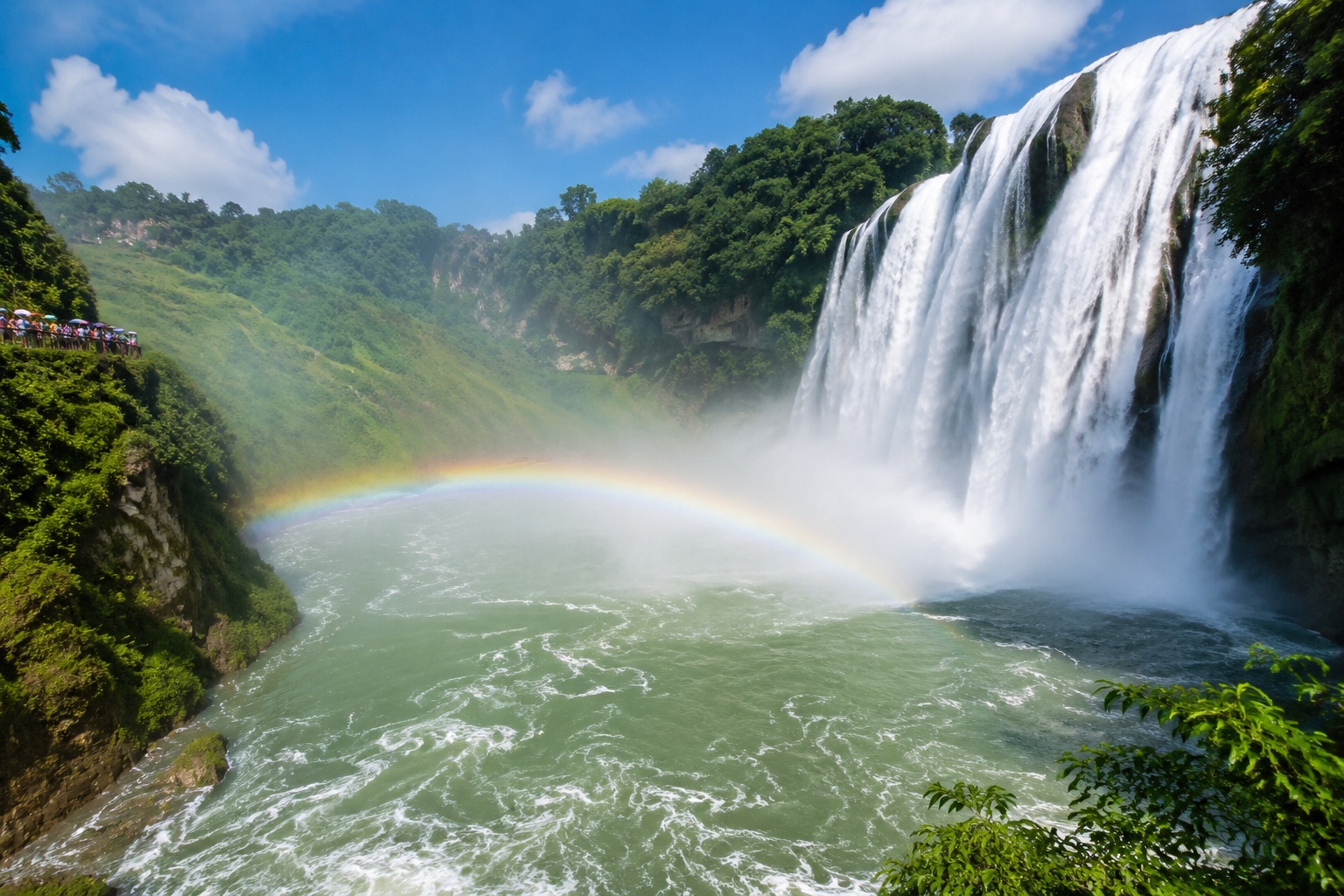
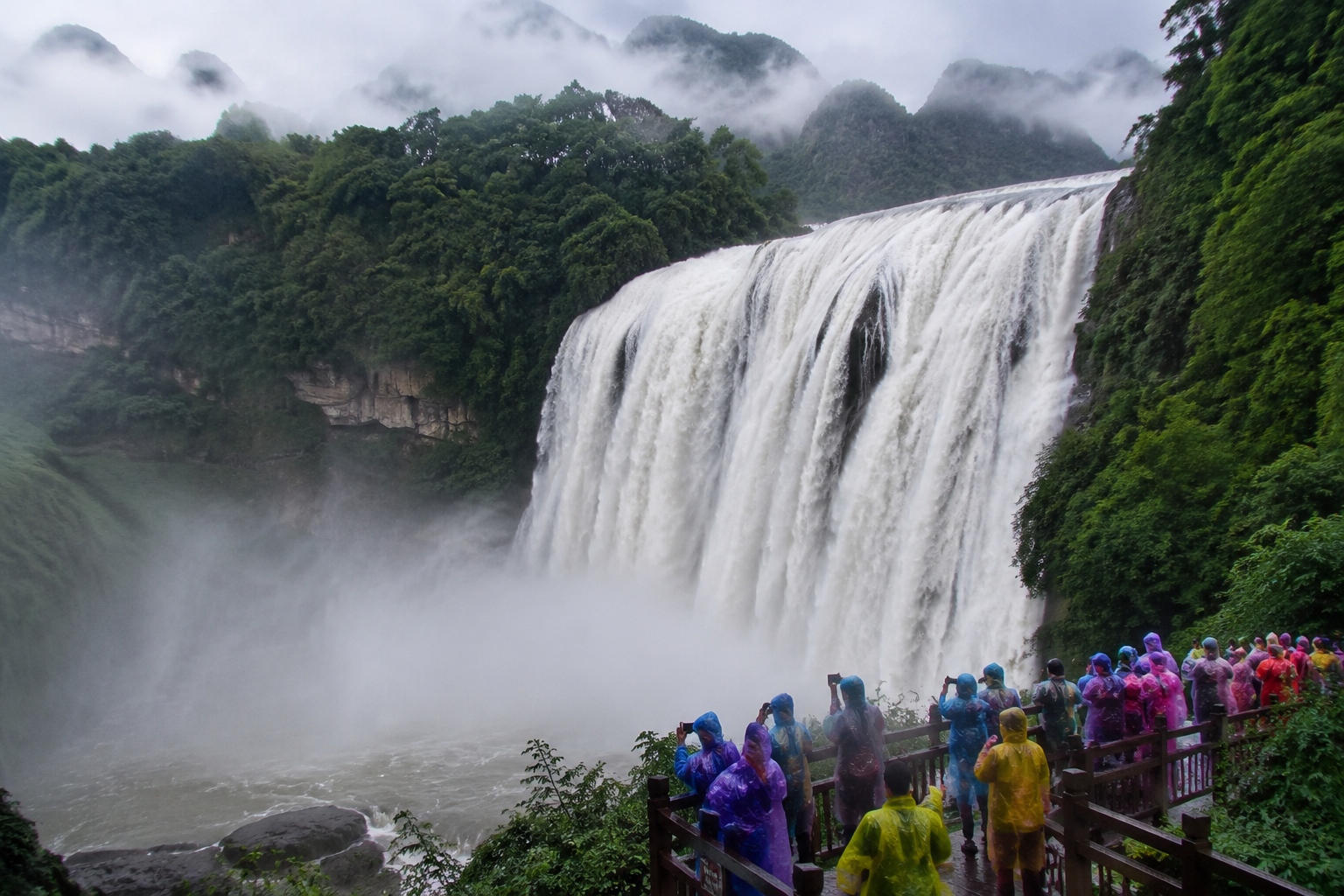
Summer is the wet season. Huangguoshu becomes a brownish-white monster, with thunderous sound you can hear from half a kilometer away. The viewing platform is constantly misted, and on sunny afternoons, rainbows appear in the spray.
This is the most dramatic time to see waterfalls, but also the most crowded. Local schools have summer holidays, and domestic tourism peaks. If you go, arrive early or visit lesser-known falls.
Some temporary waterfalls only exist in summer. For example, the hidden cascades in the forests near Guiyang, the capital, burst to life after a few days of heavy rain.
Autumn (September to November): The Balanced Beauty
Autumn is the sweet spot. The rain eases but the water is still high from the summer. The air is drier, visibility is better, and the surrounding hills turn golden and orange. Waterfalls appear especially sharp against the colorful forest.
This is also the best season for photography, not just because of the light, but because you can find spots with few tourists. October, especially, offers clear skies and moderate water flow.
Winter (December to February): The Quiet Stream
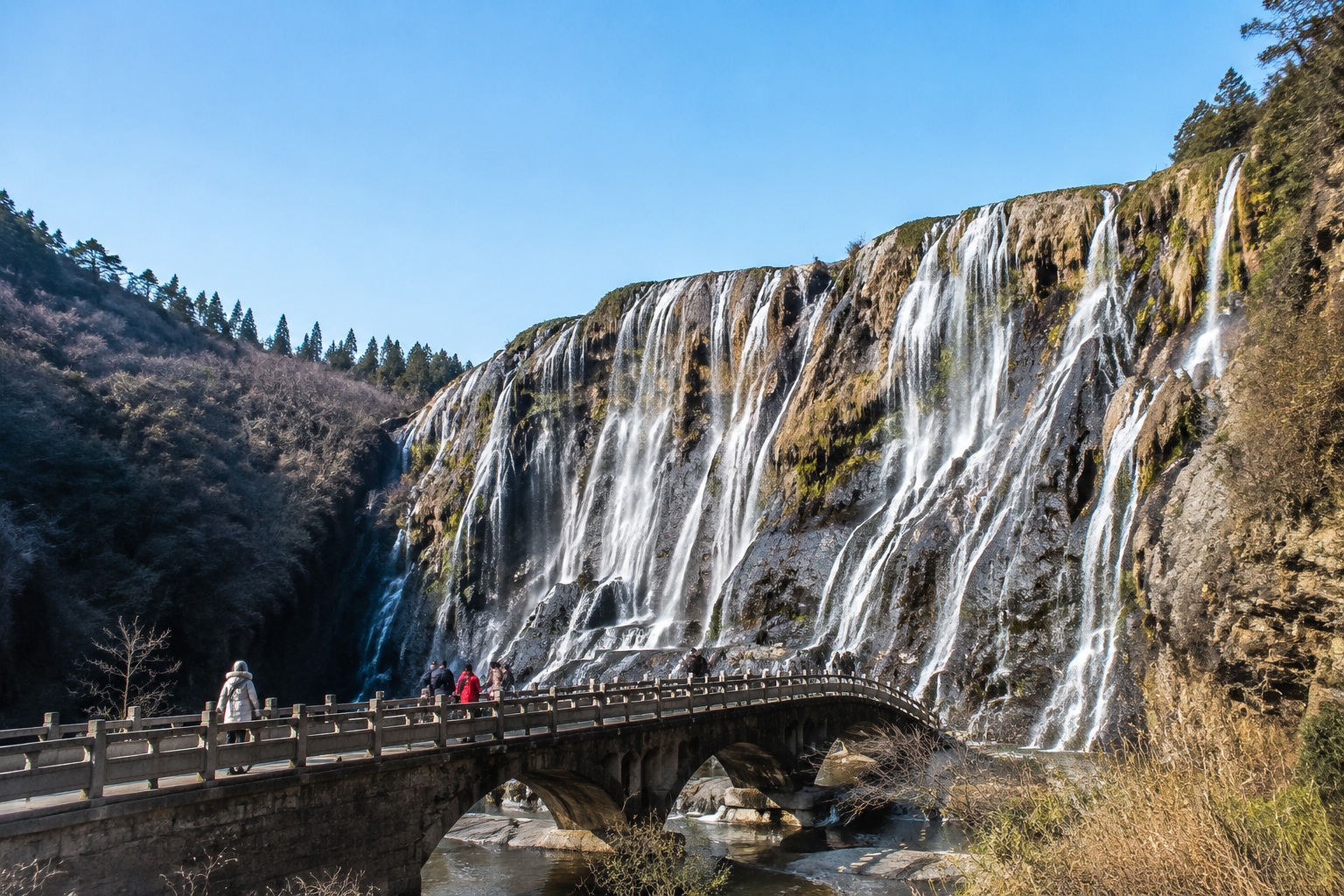
Winter is the dry season. Large falls like Huangguoshu still flow, but they shrink to about half their summer volume. The water runs clear, not muddy. The rocks are more exposed, and you can see the geology better.
In the far north or high-altitude areas like Leigongshan, small waterfalls can turn into frozen ice art. But near Huangguoshu, freezing is rare. What winter lacks in power, it makes up in serenity. Fewer crowds, cheaper hotels, and a peaceful view.
The ‘Twice a Year’ Explanation
Let’s return to the tourist saying. Because of upstream reservoirs, Huangguoshu and a few other large waterfalls run all year. But if you visit in July, you see a flood-like torrent. If you visit in January, you see a sculpted stream. Many Chinese travelers say it feels like seeing two different waterfalls one year apart.
There’s another interpretation: some waterfalls only exist in certain seasons. During summer rains, temporary falls appear on mountain roadsides and cliffs. They vanish when the dry season arrives. So if you come in summer, you see more waterfalls than in winter. This is why some guides say you can only see ‘full Guizhou’ in the wet season.
Actually, the best answer is: to see the full range, you need to visit twice—once in high water and once in low water. That’s the real ‘twice a year’ advice.
Planning Your Waterfall Trip
Choosing the Right Base
Most travelers start from Guiyang, the provincial capital, then take a high-speed train or bus to Anshun, where Huangguoshu is located. The high-speed train from Guiyang to Anshun takes about 30 minutes.
If you prefer a less crowded experience, skip the big names and head to the trails near Libo, where lush forests have countless small falls, or to Chishui, near the border with Sichuan, known for scenic river valleys.
Packing and Etiquette
Waterproof shoes are a must. The mist near a powerful fall soaks everything quickly. A waterproof jacket is more useful than an umbrella, because the gusts change direction every few seconds.
Park facilities at Huangguoshu are well-developed, with escalators and walkways. But the most beautiful spots often require a little walking. Respect barriers—wet rocks are slippery.
Seeing Beyond the Falls
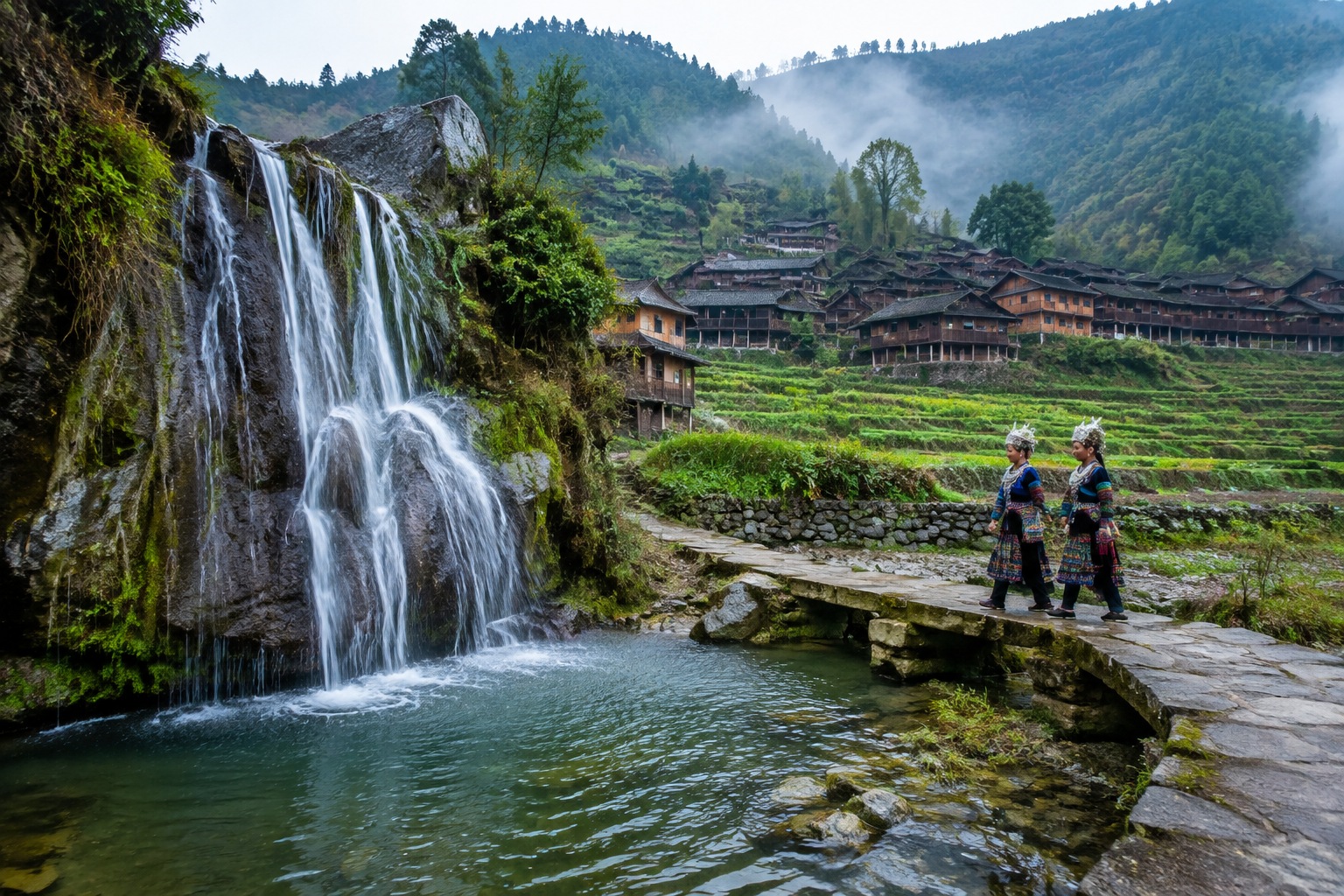
A waterfall trip is also a chance to see how ordinary people live in this mountainous province. You’ll pass through villages where the Bouyei and Miao ethnic groups have lived for centuries. The terraced fields, wooden houses, and small bridges over rushing streams make the journey feel like a storybook.
After the falls, stop by local restaurants for sour fish soup or dark rice wine. The cuisine here is bold and sour, very different from the more spicy Sichuan food next door.
Final Thoughts
So can you see a waterfall twice a year in Guizhou? Yes, if you mean that each visit gives you a different, almost opposite experience. The waterfalls aren’t just static sights; they change with the land’s rhythm.
If you want the roaring monster, go between June and August. If you want a calm, clear cascade, go in winter. And if you want both—well, that’s a reason to plan two trips.
Start the discussion at forum.chinacomes.com