


It’s 11:47 PM. Your phone buzzes.
You glance at the screen. It’s a DingTalk message from your team leader. Three dots appear. Then: “Read.” You feel a knot in your stomach. You weren’t supposed to be working. But now you’ve been seen. And the expectation is clear: you’re expected to reply.
If this sounds familiar, you’re not alone. For millions of Chinese office workers, DingTalk is not just an app — it’s a digital second skin. And its read receipt feature is the most anxiety-inducing button in their daily lives. In this article, we’ll explore why Chinese workers both rely on and resent this tool, how they cope with the pressure, and what it says about work culture in China today.
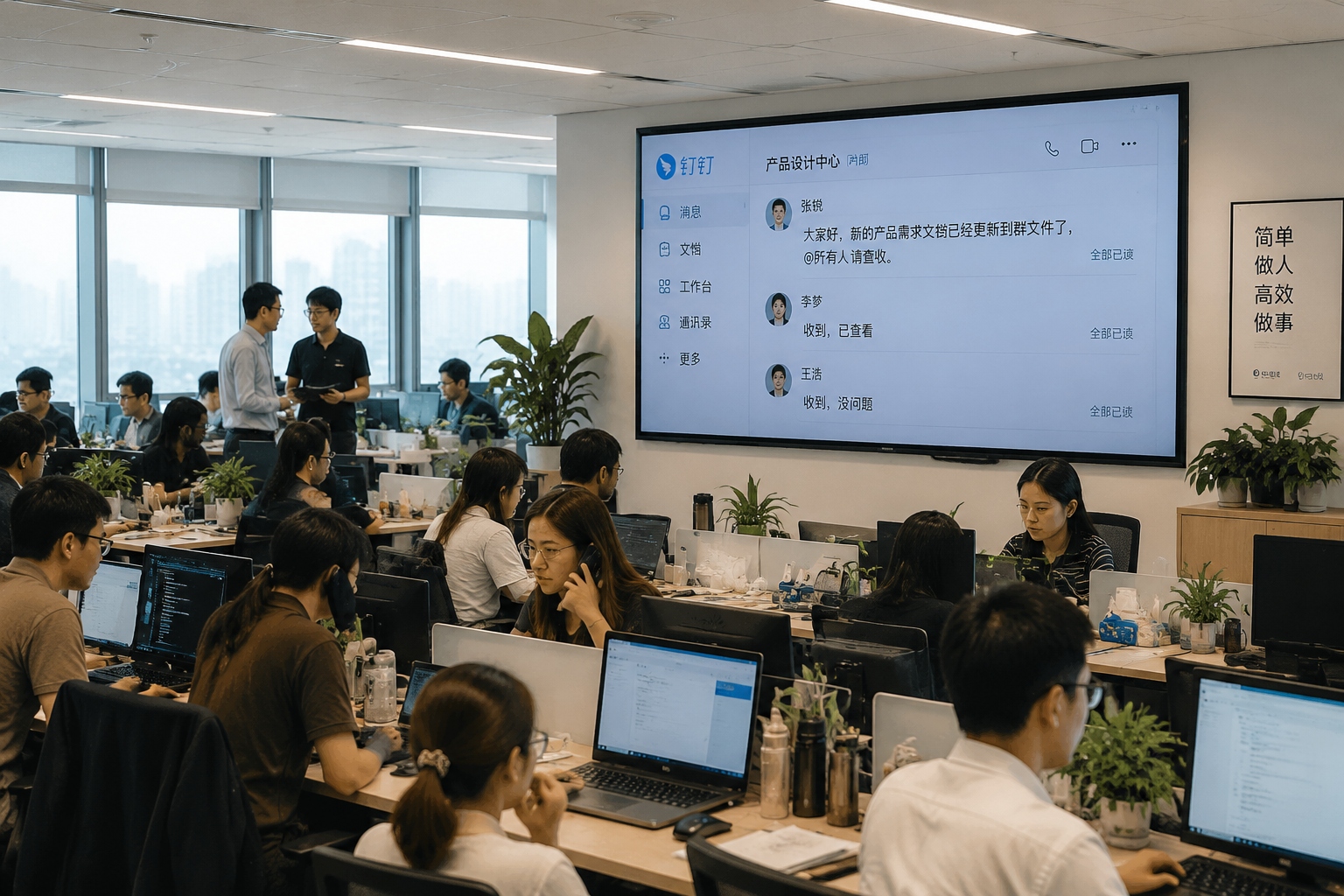
What Is DingTalk? A Super-App for the Workplace
If you’re from the West, you might think of Slack, Microsoft Teams, or Zoom. DingTalk (钉钉, literally “nail nail”) is like all of them rolled into one — plus a lot more. Launched by Alibaba in 2014, it started as a simple messaging app for businesses but quickly evolved into a comprehensive platform that handles:
- Instant messaging (with read receipts, of course)
- Attendance tracking (GPS check-in, facial recognition clock-in)
- Approval workflows (leave requests, expense reports, purchase orders)
- Video conferencing (up to 300 people free)
- Task management, project collaboration, and even AI-powered meeting minutes
By 2023, DingTalk had over 600 million users and 23 million enterprise customers. It’s not just a tool — it’s the operating system of Chinese office life. For many employees, it’s the first thing they open in the morning and the last thing they close at night.
The Double-Edged Sword: Read Receipts and the 24/7 Work Culture
The read receipt feature is simple: when a message is sent, the sender can see if it has been read. If you’re a manager, this is a godsend — you know exactly who has seen your instructions. If you’re an employee, it’s a trap. Once you’ve read it, you can’t pretend you didn’t.
Unlike WhatsApp or WeChat, where users can disable read receipts, DingTalk’s read receipts are mandatory for group messages and often for individual messages as well. The platform also adds a “Ding” function — a special alert that forces the recipient’s phone to ring, even if it’s on silent. Combined with read receipts, it creates a culture of constant availability.
Take the story of Liu Wei, a 28-year-old marketing specialist in Shanghai: “One night at 2 a.m., my boss sent a DingTalk message asking for a document revision. I saw it because I forgot to log out. I knew if I read it, I’d have to work. So I left my phone on the table and pretended to sleep. But I couldn’t sleep — I was too anxious. The next morning, I got a call: ‘Why didn’t you reply? I saw you read it.’”
This is the paradox of DingTalk: it makes work more efficient, but it also blurs the boundary between work and life. Many Chinese companies have a culture of “996” (9 a.m. to 9 p.m., six days a week), and DingTalk becomes the digital enforcer of that expectation.
Why Do Workers Still Love It?
Despite the anxiety, DingTalk has genuine benefits that make life easier for the average worker. Let’s look at the other side of the coin.
All-in-One Convenience
Imagine having to fill out a leave request form, get it signed by your manager, delivered to HR, and then tracked. In China, that used to mean walking between floors or sending paper forms. Now, with DingTalk, you can submit a leave request in 30 seconds, your manager approves it on their phone, and HR automatically updates the system. It’s the same for expense reports, purchase orders, and overtime claims.
Remote Work & Collaboration
During the COVID-19 pandemic, DingTalk became the backbone of remote work for millions. Companies used it for daily stand-ups, virtual meetings, document sharing, and even online training. In 2020, DingTalk added a feature that allowed users to blur their background during video calls — a small but significant relief for those living in cramped apartments.
Group Chat Efficiency
In Chinese workplaces, group chats are the primary communication channel. DingTalk’s group chat supports up to 2000 members, with features like @all, task assignment, and file sharing. For a project team, it’s much faster than email chains. A manager can assign tasks, set deadlines, and get real-time updates — all in one thread.
Automation & AI
Newer features include AI-powered meeting summaries, where the app automatically transcribes and highlights key points. There’s also a “smart attendance” system that uses facial recognition to prevent buddy clocking-in. These tools save time and reduce human error.
The Art of “Anti-Domestication”: How Chinese Workers Push Back
Chinese workers are not passive victims of DingTalk’s all-seeing eye. They’ve developed a rich set of tactics to reclaim some control.
- The “Delayed Read” strategy: Some workers turn off notification previews so they can see a message without marking it as read. Others keep their phone face-down and only check messages at set intervals.
- Emoji warfare: Instead of writing a lengthy reply, workers use a simple “Received” (收到) or a thumbs-up emoji. This acknowledges the message without committing to action. It’s a polite way to say “I see it, but I’m not going to do it right now.”
- The “Group Chat” buffer: Savvy employees know that in a large group chat, a single “Received” can get lost in the flood. So they reply in the group instead of privately, diluting the pressure.
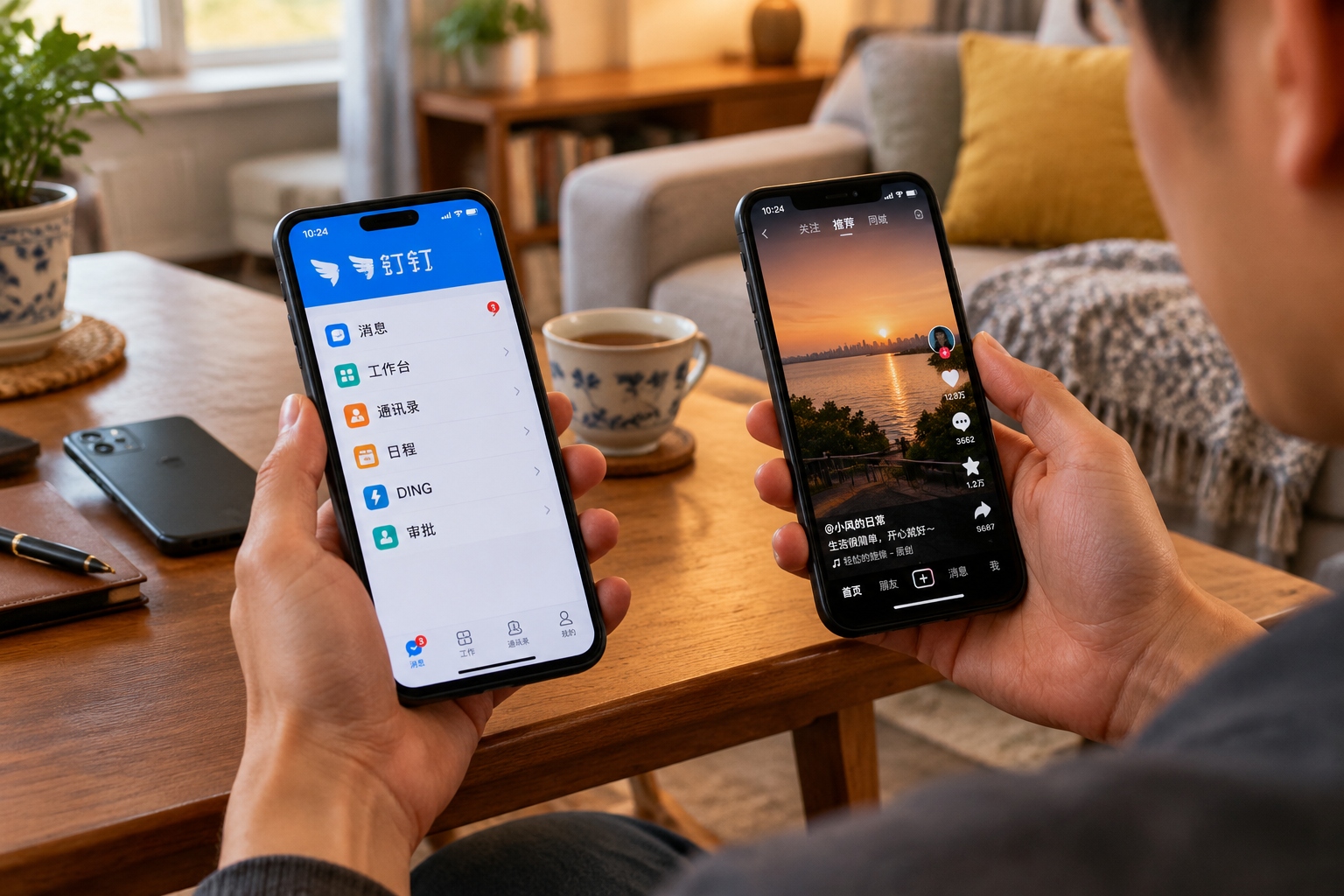
- Dual-phone strategy: Many workers carry two phones — one for work (with DingTalk) and one for personal life. At 6 p.m., the work phone goes into the drawer.
These small acts of resistance are a form of “anti-domestication” — a term scholars use to describe how users adapt technology to their own needs, rather than being controlled by it. It’s a quiet rebellion, but it’s widespread.
Deeper Observation: What DingTalk Says About Chinese Work Culture
DingTalk’s read receipt feature is not just a technical choice — it reflects deeper cultural values. In China, there’s a strong emphasis on responsiveness, accountability, and speed. The ideal worker is one who is always available, always ready to take orders. This is rooted in a high-pressure, competitive economy where companies prioritize efficiency and output.
Compared to Western counterparts, Chinese workers often have fewer legal protections around overtime and after-hours communication. The Labour Law does regulate working hours, but enforcement is uneven. DingTalk, with its digital paper trail, actually makes it easier for workers to prove overtime — but it also makes it easier for employers to demand it.
Interestingly, younger generations — Gen Z and Millennials — are increasingly vocal about work-life balance. They use DingTalk’s features creatively to carve out personal space. They also use social media to vent about “DingTalk anxiety,” creating a shared language of complaint that normalizes the problem.
This tension between efficiency and personal time is not unique to China. But DingTalk’s design amplifies it in a way that feels distinctly Chinese. The app is a mirror of the society it serves: fast, demanding, and full of clever workarounds.
Conclusion: From a Small Feature to a Cultural Lens
Read receipts are a tiny feature in a vast app. But they tell a huge story about how technology mediates power, expectation, and resistance in the modern Chinese workplace. DingTalk is both a tool of liberation and a tool of control. It makes life easier, but it also makes it harder to disconnect.
For the hundreds of millions of Chinese workers who use it every day, the love-hate relationship is here to stay. But as they send a “收到” emoji, turn off notifications, or carry two phones, they are not just surviving — they are adapting, with humor and resilience. And that, perhaps, is the most human part of the story.
Start the discussion at forum.chinacomes.com