

An Evening in Lijiang’s Old Town
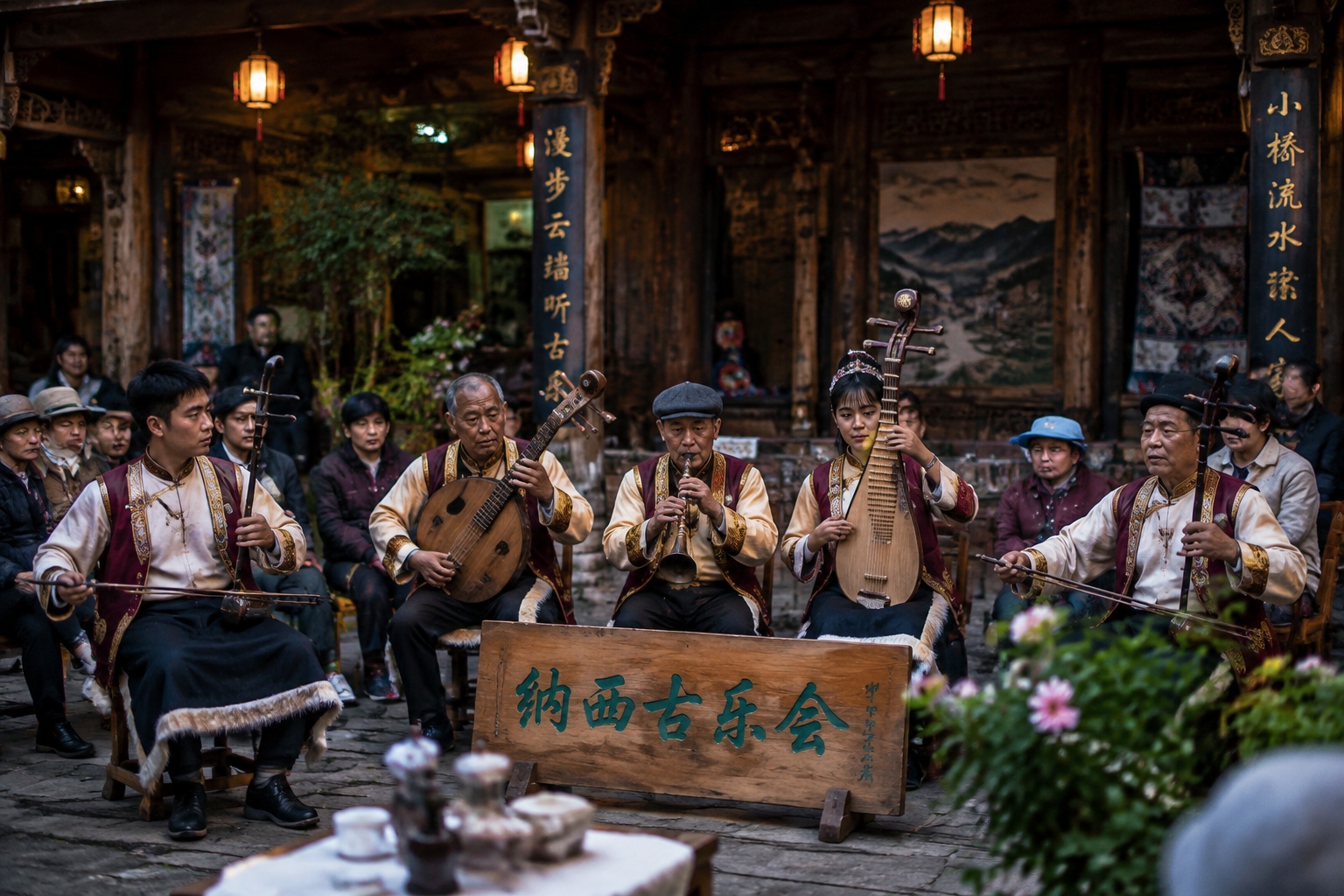
It’s a little past nine on a Wednesday night in Lijiang, and the crowds have finally thinned out. I leave the bright souvenir streets behind and follow a narrow stone lane until the sound changes. No more EDM covers or drum-machine loops. Instead, there’s a wooden xylophone tapping out a slow rhythm, a bowed string that sounds a bit like a human voice, and an old throat singing in a minor key. I end up in a 300-year-old courtyard with nine musicians sitting in a half-circle.
Their ages are everywhere. The eldest is an 80-year-old man with a loose shirt and a hand-rolled cigarette. The youngest is a girl in a college hoodie who looks barely 19. None of them is using a microphone. The audience sits on wooden benches, some with eyes closed, some recording on phones. This is a Naxi ancient music ensemble, and they play here four nights a week.
You may have visited Lijiang and seen only the shops selling tie-dye and drums. But this unamplified performance is the part of the old town that still feels like a heartbeat. And the more surprising thing is who is keeping it beating.
Why Naxi Ancient Music Almost Died
Naxi ancient music is not one piece or one style. It is a repertoire of ceremonial and courtly music that the Naxi people, a mountain ethnic group in Yunnan, inherited from Chinese Tang dynasty traditions up to 500 years ago. For centuries it accompanied weddings, funerals, and spring rituals. Villagers learned it by ear, not from written scores.
That ear-to-ear chain broke in the late 20th century. Younger Naxi left for the cities, elderly players passed away, and by the 1990s some villages couldn’t perform more than two or three pieces. The most famous rescue effort came from musicologist Xuan Ke, who formed a ensemble in Lijiang in the late 1980s. Many listeners described their shows as beautiful but “frozen in time,” and most performers were over 60. The music was still alive, barely, but its audience was mostly foreign tourists on a one-day stop.
The New Players: Who Are They?
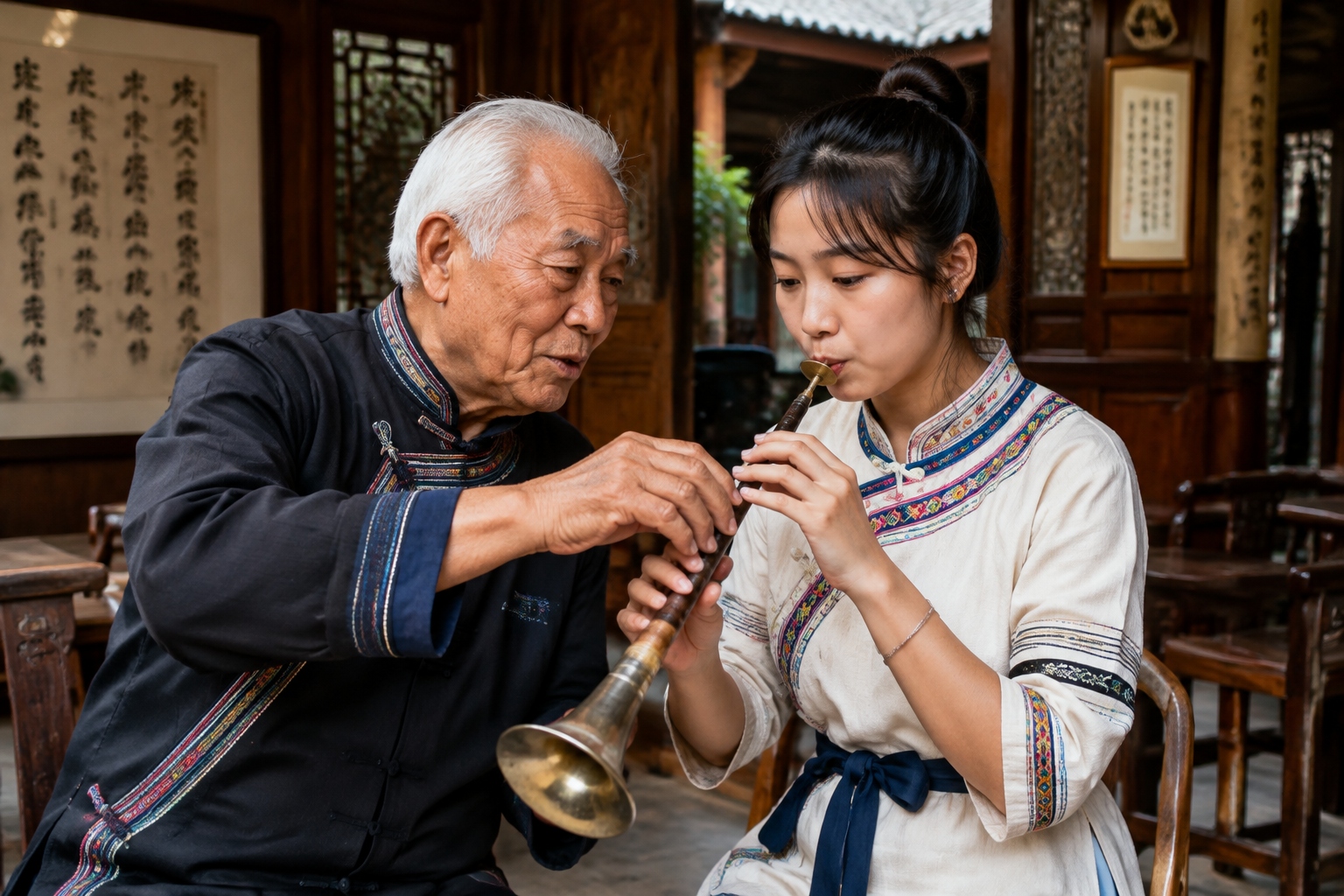
In the courtyard I met He Yu, a 24-year-old college student from Lijiang who plays the suona, a double-reed horn. She started taking Naxi music lessons only three years ago. “My grandfather used to play the pipa. I remember his hands but never asked him to teach me. I thought he would always be there,” she says.
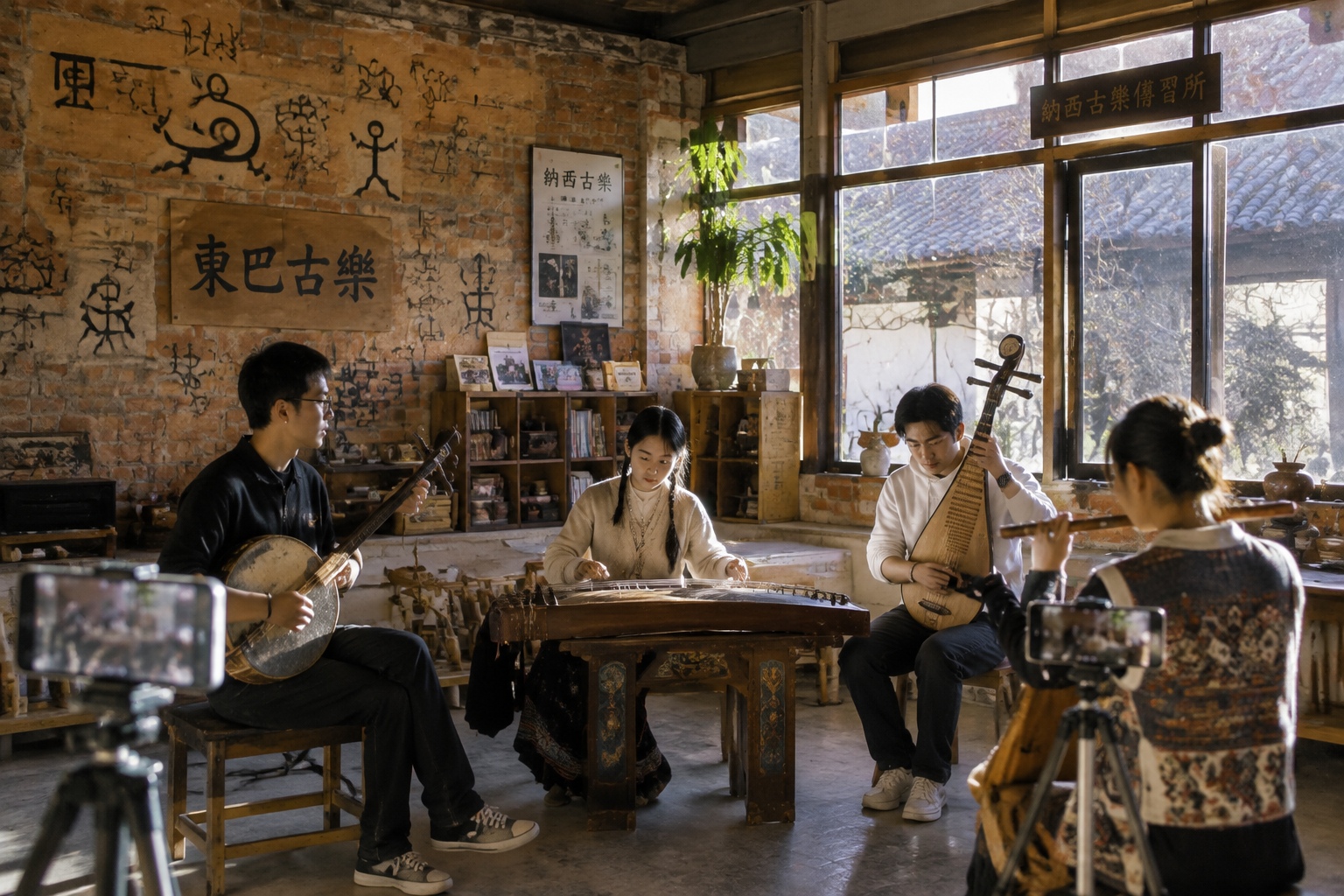
After her grandfather passed, He Yu found an old recording on her father’s phone. “I listened to it for one full night,” she says. “I decided I had to learn.” She now plays in a youth group that meets twice a week in a shared culture space downtown.
He Yu is part of a small but visible wave. A local survey from the Lijiang Cultural Center counted at least seven youth-focused Naxi music groups in the area, with membership growing each year. Some are school clubs; others are independent collectives that rehearse in teahouses, art galleries, or new incubators. Many young players film short videos for Douyin (Chinese TikTok) and explain the instruments to a new audience.
Her friend Wang Jie, a 21-year-old nursing student, plays the zheng, a zither. She learned from a retired factory worker in her village. “At first I just liked the sound. Then I found out my great-grandmother used to sing these melodies while picking tea,” Wang says. “Now I play almost every day, even if it’s only to myself.”
What kind of new energy are they bringing?
It depends on the group. Some preserve the traditional tempo and no percussion, just strings, woodwinds, and voice. Others mix the core melody with electronic ambient textures, or speed it up for festival performances. Social media pushes them to be visible; they often play with the camera in mind. But nearly all young musicians I asked insisted on one thing: they start with the old piece, not a new arrangement.
How Lijiang Is Helping Tradition Survive
Lijiang is famous for tourism, and officials there know that a town purely selling souvenirs doesn’t earn loyal visitors. Since around 2018, the municipal government has supported intangible cultural heritage in concrete ways. Five public schools now include Naxi music in their extracurricular curriculum. The cultural bureau gives monthly stipends to elderly custodians who teach young apprentices—a small sum, but enough to cover basic costs. Rehearsal spaces in the old town are partly subsidized, so venue rent doesn’t push young musicians to give up.
The tourism economy contributes too. A well-run ensemble can earn a decent income from regular performances, especially in summer. Some of that money buys instruments and funds trips to mountain villages where elders still carry rare oral scores. In turn, visitors who come just to see a “traditional show” often stay longer when they see young faces playing with genuine energy.
What Still Feels Unresolved
Not everyone is comfortable with the mixture of preservation and adaptation. Yang Shouyi, a 72-year-old Naxi master, told me: “You can put a new coat on an old coat, but don’t change the skeleton. If you change the skeleton, it becomes another thing.” His phrase is now quoted in local rehearsals as a warning.
There’s also the question of who gets to carry the tradition. Some new learners are Han Chinese from other provinces who moved to Lijiang for work or study. They play beautifully, but for some Naxi elders, the music is inseparable from Naxi language and daily life. “It’s like inviting a stranger to speak for your family,” one older musician said. Others worry that relying on tourist favorites may narrow the repertoire to the few pieces that get applause.
He Yu sees these tensions up close. “I grew up with headphones,” she says. “If I only copy the old sound, it will turn into a museum object. If I only change it, I lose the truth. The honest answer is probably somewhere in the middle.”
A Small Lesson for the Rest of Us
As I was leaving, the oldest musician helped a teenage boy tune his sanxian, a three-stringed lute. The boy struggled with the pegs; the old man sat down beside him and hummed the tune softly. No written guide, no app, just ear and hand. The boy started playing a few notes, then stopped, smiled, and played again.
Lijiang hasn’t perfectly solved the riddle of keeping a 500-year-old music alive. But its answer seems to be: stop treating heritage as a storage box. Instead, give young people a reason to pick up an instrument, let them speak back to the tradition through their own lives—and trust that the music will evolve without becoming someone else’s fantasy.
That is a more hopeful story than anything I found in the street market.
Start the discussion at forum.chinacomes.com