
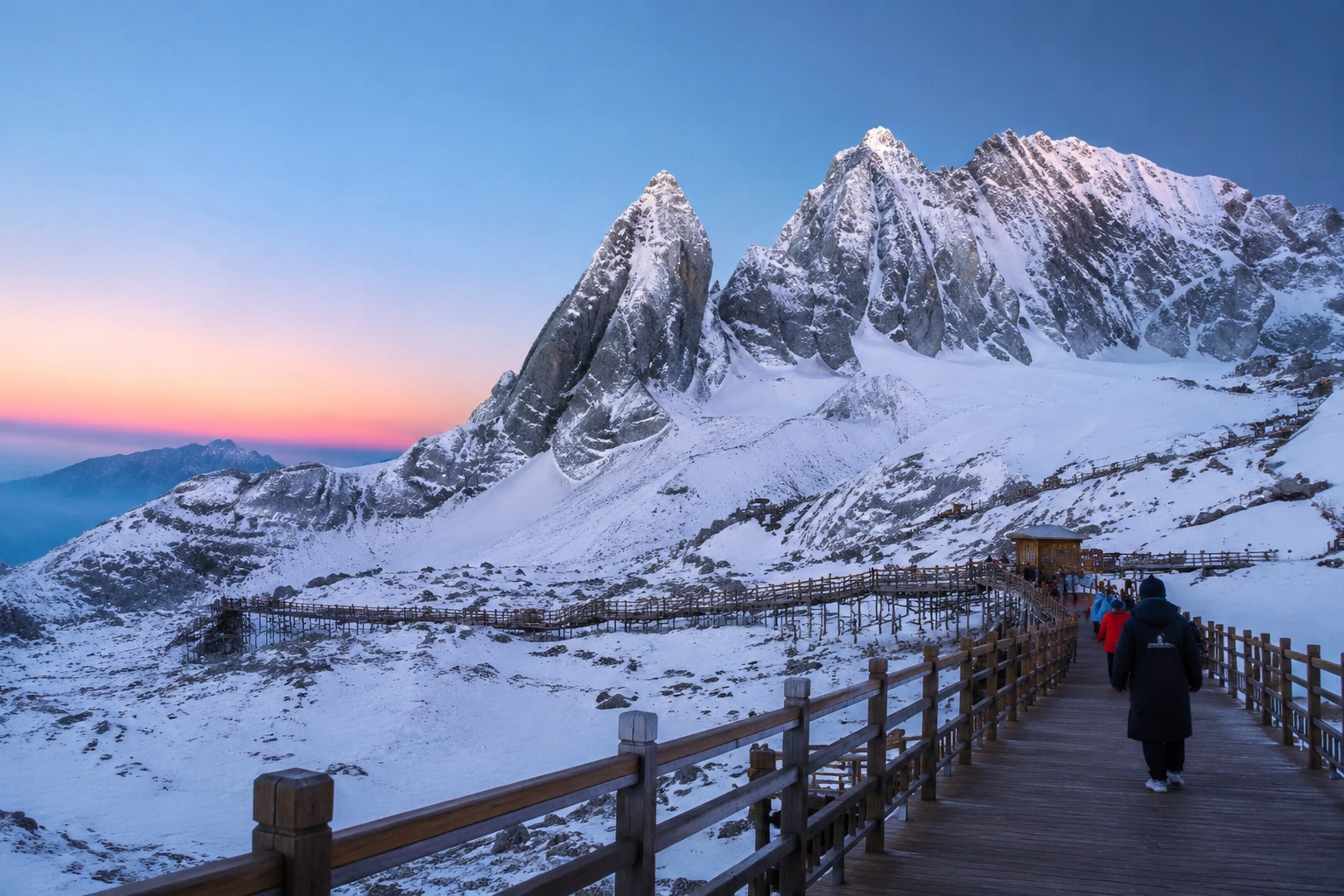

Morning Light on the Mountain
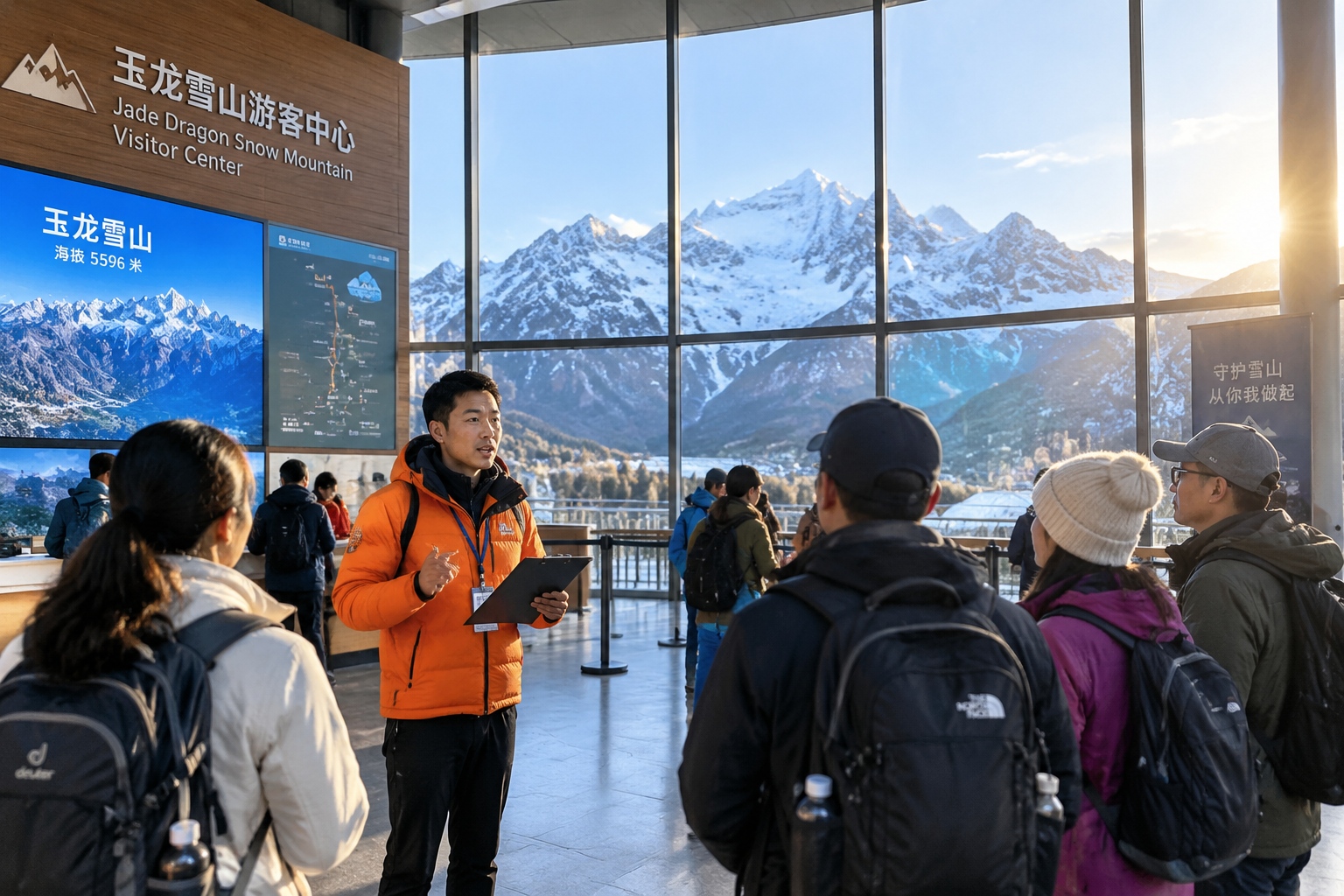
The alarm goes off at 5:30 a.m. in Lijiang, a UNESCO-listed old town in southwest China’s Yunnan province. By 6:15, He Jun is already at the visitor center at the foot of Jade Dragon Snow Mountain, checking his clipboard and thermos. The mountain’s thirteen peaks are still dark blue against the fading stars. It’s late October, and the air is sharp with cold—about 2°C at 3,100 meters above sea level.
He Jun, 38, has been a local guide here for 15 years. Today he leads a small group of eight tourists from Shanghai and Guangzhou. Before they board the shuttle bus, he pats his jacket pocket: Tibetan incense, altitude sickness pills, and a pack of recycled trash bags. “Some people think I’m carrying too much,” he laughs. “But up there, you learn to be ready.”
A Changing Landscape
Jade Dragon Snow Mountain is the southernmost glacier mountain in the Northern Hemisphere, with peaks reaching 5,596 meters. In the 1990s, it was still a place for mountaineers only. Today, over 3 million tourists visit the mountain area every year, drawn by the stunning views and cable cars that climb to 4,506 meters.
He Jun remembers the early days of mass tourism. “Around 2005, we started to see lines of buses and crowds that stretched for hundreds of meters,” he says. “The mountain was still beautiful, but we saw garbage on the trails, plastic bottles in the gullies, and smoke from campfires in forbidden zones.” The local government and the scenic area management responded with stricter rules and infrastructure upgrades.
Now, visitors must take shuttle buses from the ticket gate and use designated trails. Cable car tickets are timed and limited to about 1,800 people per day to the glacier area. “It’s not perfect,” He Jun admits, “but we’ve learned from the past.” He points to a row of new eco-toilets that collect waste and lower it down by helicopter containers—not a single drop is left on the glacier.
Balancing Act: Tourism Rules and Green Measures
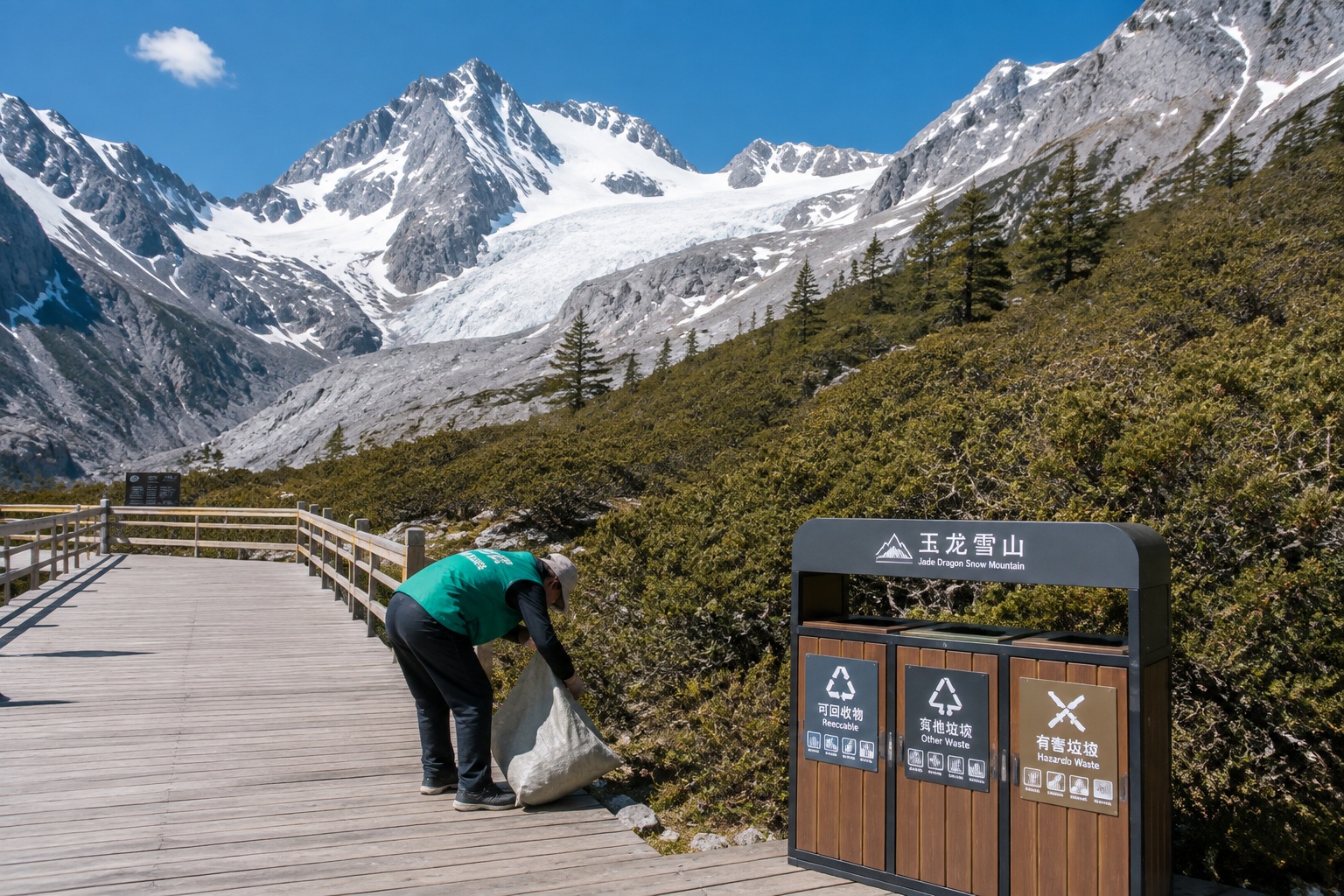
One of the most visible changes is the waste management system. Along the wooden boardwalks, there are clearly marked bins for different types of trash, and every afternoon, cleanup crews hike up with cloth bags to collect even the smallest pieces of litter. “We used to pick up plastic bags by hand,” He Jun says. “Now we have a whole team dedicated to keeping the mountain clean.”
Vegetation restoration is another ongoing effort. Areas that were trampled by tourists in the past are now fenced off and replanted with native alpine plants like Yunnan rhododendron and dwarf juniper. He Jun sometimes joins the planting sessions. “It’s our way of giving back,” he says.
But the biggest challenge is climate change. The glacier has retreated significantly over the past few decades. “The snow line is higher than it used to be when my grandfather was a herdsman here,” He Jun says. “We can’t control the weather, but we can control how we treat the mountain.”
The Mountain’s Keeper: Local Wisdom and Culture
For He Jun, the mountain is not just a workplace. He is Naxi, one of the oldest ethnic groups in Yunnan. The Naxi people have long worshipped Jade Dragon Snow Mountain as a sacred guardian. In Naxi mythology, the mountain is linked to the god Sanduo, who protects the land and its people.
“I used to think this was just old folklore,” he says. “But after years of leading tourists up here, I understand the respect my ancestors felt.” He pauses while a group of hikers passes, their voices fading into the thin air. “When you see how fragile the alpine ecosystem is, you can’t help but feel you’re just a guest here.”
He Jun is also among a growing number of local guides who work with the scenic area’s conservation team. They report unusual wildlife sightings, help monitor snow conditions, and remind visitors not to feed the plateau pikas that occasionally appear on the rocks.
Looking Ahead
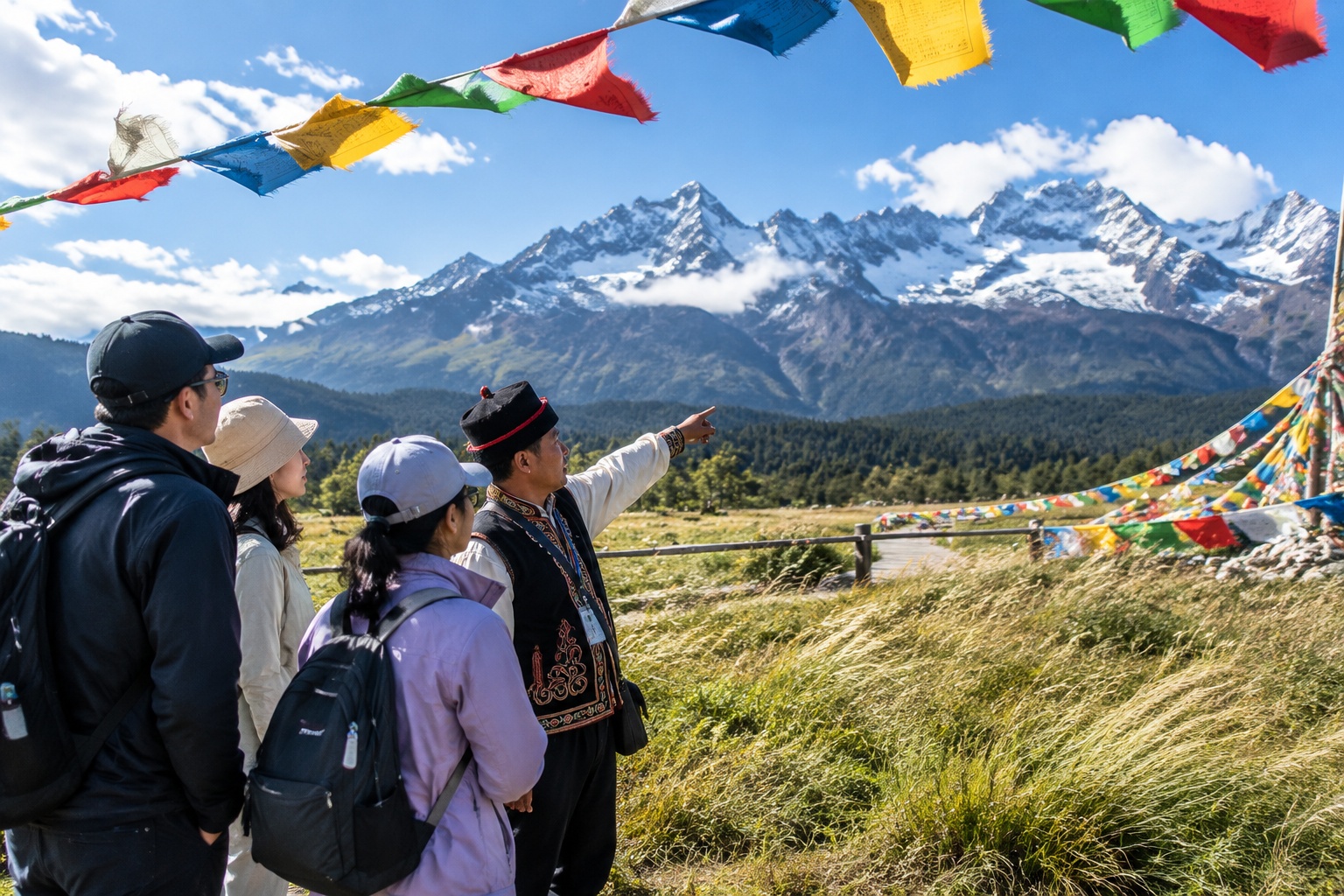
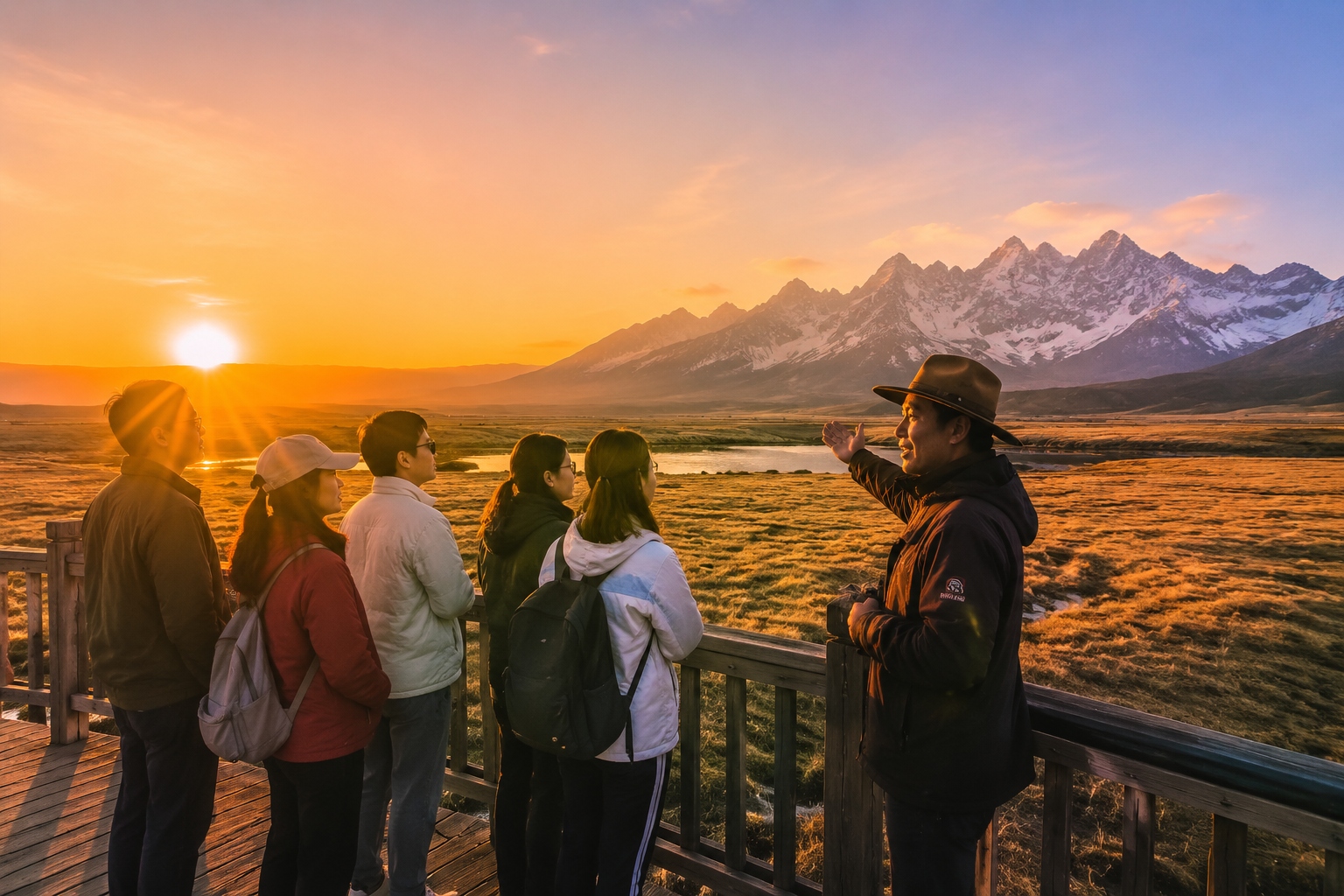
Late in the afternoon, He Jun walks his group to the final viewpoint at Ganhaizi Meadow. The sun is low, casting long shadows on the grassland. A few Tibetan-style prayer flags flutter in the wind. “When I started this job, I just wanted to make money,” he says quietly. “Now I feel responsible for this mountain. I don’t want my children to see only bare rocks where ice used to be.”
He Jun believes that tourism, if managed well, can be a force for conservation. “Every visitor who walks away with a sense of wonder is more likely to support protecting similar places,” he says. “That’s not just good for the mountain—it’s good for all of us.”
As the shuttle bus heads back to Lijiang, He Jun looks out the window. The winter snow will come soon, covering the high peaks in white again. For now, the mountain stands silent, guarded by rules, patience, and a local man who has made it his life’s work to keep it that way.
Start the discussion at forum.chinacomes.com