


Introduction
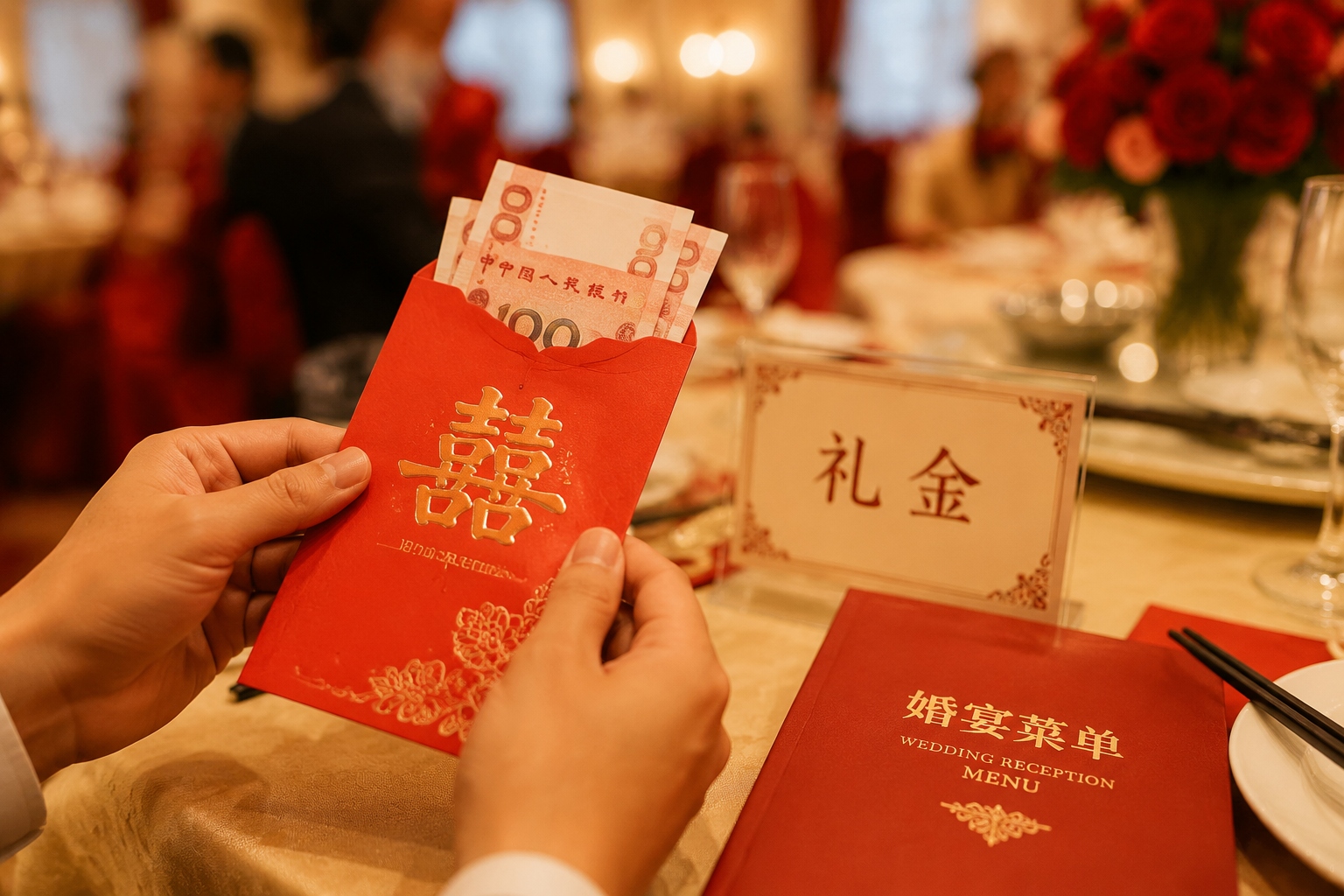
On a Saturday evening in Beijing, Zhang Wei, a 32-year-old accountant, stands in a hotel lobby with a red envelope in his pocket. Inside is 800 yuan in crisp bills. He is attending his college roommate’s wedding. The number is not random—it is a delicate balance between their friendship and his budget. For Zhang, and for millions of Chinese, this envelope is not just a gift; it is an entry in an invisible ledger of social debts and credits.
The Logic of Renqing: Gift as Social Currency
In China, giving cash in a red envelope at life events—weddings, births, housewarmings—is known as suili (随礼). It is rooted in the concept of renqing (人情), which translates roughly as “human feelings” or “social obligation.” The idea is simple: when someone invites you to celebrate an important moment, you are expected to contribute to their new beginning, and they will reciprocate when your turn comes. This is not a purchase or a bribe; it is a system of mutual aid that has held families and communities together for centuries.
The amount you give is a statement. Give too little, and you risk appearing cheap or distant. Give too much, and you might embarrass the recipient or create an awkward burden. The key is to match the amount to the depth of your relationship and, to some extent, to local customs and your own financial comfort.
Weddings: The Most Calculated Occasion
Weddings are the most common and most carefully negotiated gift-giving occasion. The stakes are high because weddings involve large expenses for the host family, and guests are expected to help cover costs—though no one says this out loud. In practice, the amount is influenced by three factors: your relationship to the couple, the venue’s tier (a five-star hotel suggests a higher bar), and regional norms.
How much to give?
In tier-1 cities like Beijing and Shanghai, a typical cash gift for a colleague or distant friend is 500 to 1,000 yuan. For close friends or relatives, it climbs to 1,500 to 2,000 yuan. For immediate family members, 2,000 to 5,000 yuan is not unusual. In tier-2 and tier-3 cities, the amounts are lower by roughly 20–30%: a colleague might receive 300–600 yuan, while a close friend gets 800–1,500 yuan. Of course, these are ranges, not rules. Some people give 666 or 888 for good luck, as these numbers sound like “smooth sailing” and “prosperity” in Chinese.
| Occasion | Relationship | Amount (RMB) |
|---|---|---|
| Wedding | Colleague / distant friend | 500–1,000 |
| Wedding | Close friend | 1,000–2,000 |
| Wedding | Immediate family | 2,000–5,000+ |
| Housewarming | Friend | 200–600 |
| Baby shower (1-month) | Friend | 200–500 |
Avoiding the number 4
One universal rule is to avoid the number 4, because in Mandarin it sounds like “death” (sǐ). That means amounts like 400, 1400, or 444 are avoided. Instead, people favor 6, 8, and 9. 6 represents smoothness, 8 is prosperity (as in the Beijing Olympics opening date), and 9 suggests longevity. So you will often see gifts of 600, 880, 1200, or 1888.

Housewarming and Baby Showers: Smaller Stakes, Same Rules
Beyond weddings, gift-giving is expected at housewarmings (乔迁) and the one-month celebration for newborns (满月). These events have lower stakes than weddings but follow the same logic. For a housewarming, a friend might give 200–600 yuan. For a baby’s first-month celebration, 200–500 yuan is common. In both cases, it is also acceptable to bring a practical gift, such as a kitchen appliance or baby clothes, but cash is still the preferred option for most, as it is flexible and easy to track.
The timing matters too. For housewarmings and baby showers, gifts are usually given at the event itself. If you cannot attend, it is polite to send a red envelope through a friend or via WeChat, though some people consider that a bit impersonal—yet it is becoming more common.
The Ledger: Why Everyone Keeps Track
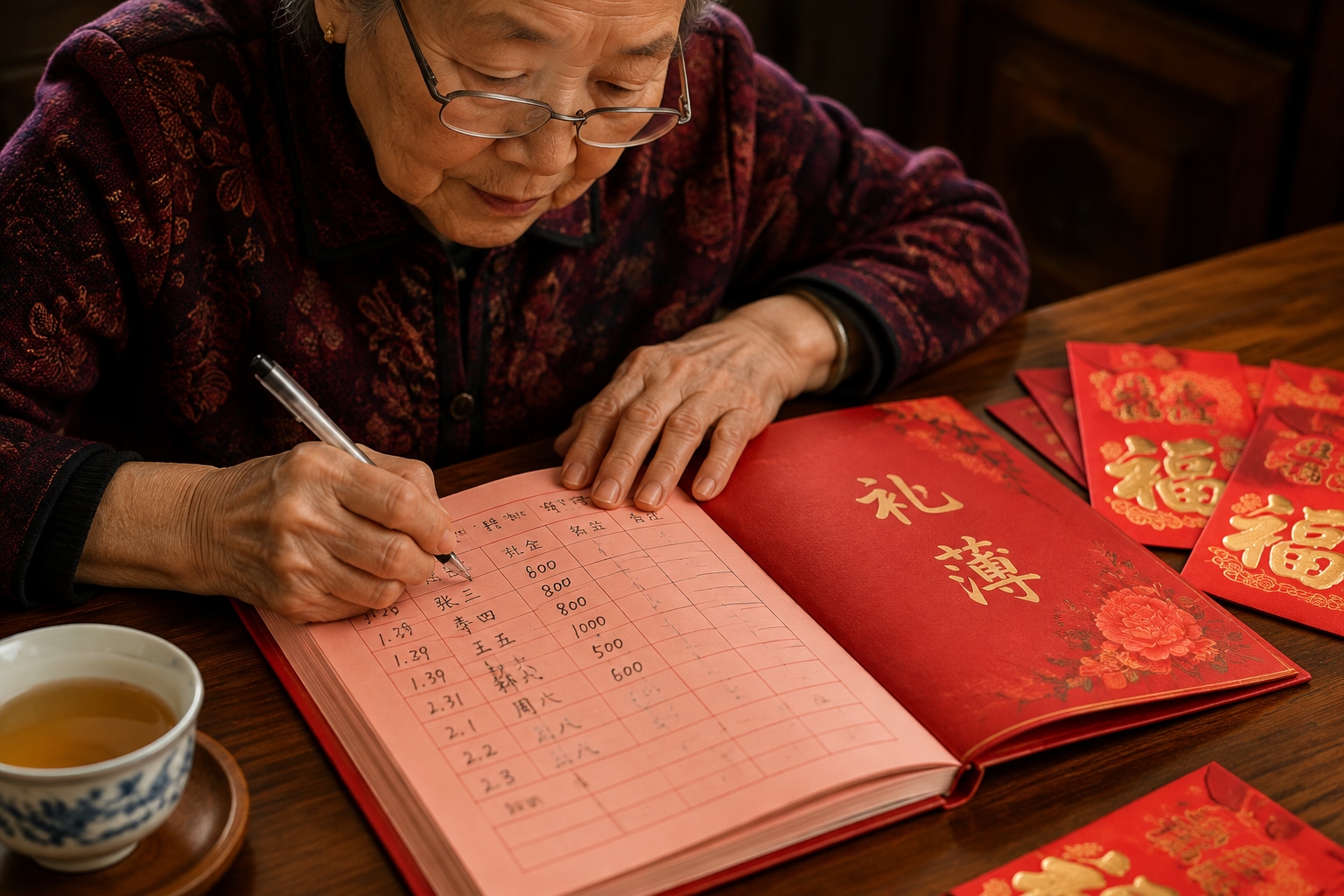
For generations, Chinese families kept a physical notebook called a lǐbù (礼簿), or gift ledger. In it, each guest’s name and the amount they gave are recorded. This is not just for nostalgia; it is a practical tool. When the guest later gets married or has a child, the host family can refer to the ledger to determine how much to give in return. The unwritten rule is that the return gift should be equal to or slightly higher than what was received, adjusted for inflation and the passage of time.
Today, some families still keep a paper ledger, but digital tools like WeChat and Excel spreadsheets are taking over. Still, the principle remains: every gift is remembered, and every gift is meant to be returned.
Practical Tips: Cash, Envelopes, and Timing
If you are invited to a Chinese wedding or other celebration, here are some practical points to avoid awkwardness.
What to write on the red envelope
The red envelope, or hóngbāo (红包), should be new and still have a crisp look. On the front, you can write a short blessing in Chinese, such as “zhu he xin hun” (祝新婚快乐) or “bai nian hao he” (百年好合) for weddings. For a new baby, write “xiao tian mi” (小甜蜜) or simply “zhu fu” (祝福). If you are unsure what to write, it is acceptable to leave the envelope blank and just put cash inside, though a few characters show extra care.
When and how to hand it over
Usually, you hand the red envelope at the reception desk, where staff or family members record your name and amount. Some couples have a designated gift box. Hand it with both hands and say a short blessing like “zhu ni men xing fu” (祝你们幸福) for a wedding. Don’t make a big deal about the amount; it’s private. If you are giving cash directly to the bride or groom’s parents, do it quietly and out of sight of other guests.
The Digital Shift: WeChat Red Envelopes
In the past decade, WeChat has transformed how gifts are given. Instead of physical cash, many people now send a digital red envelope through the app, especially if they cannot attend in person. WeChat even has built-in features for marking amounts like 520 (meaning “I love you”) or 888 (prosperity). The benefit is convenience, but there is a catch: digital transfers can feel more transactional and less personal. Some young people admit that they feel pressured to send a gift even if they are not close, because it is too easy to do.
Attitudes are also shifting. According to a 2023 survey published by China Youth Daily, about 70% of young respondents said they support simplifying or even abolishing the ritual of giving cash at weddings, arguing that it puts unnecessary financial strain on both hosts and guests. However, tradition is strong, and for now the red envelope remains a cornerstone of Chinese social relations.
Conclusion
The gift ledger is more than a record of money changing hands. It is a map of human relationships, a way of saying “I was there for you, so you will be there for me.” Whether it is a 200-yuan note in a small town or a 2,000-yuan transfer in Shanghai, the amount is a number, but the meaning is mutual support. As China modernizes, the forms may change, but the underlying social contract—give and you shall receive—remains as solid as ever.
Next time you receive a red envelope, remember: you’re not just holding cash. You’re holding a promise.
Start the discussion at forum.chinacomes.com