
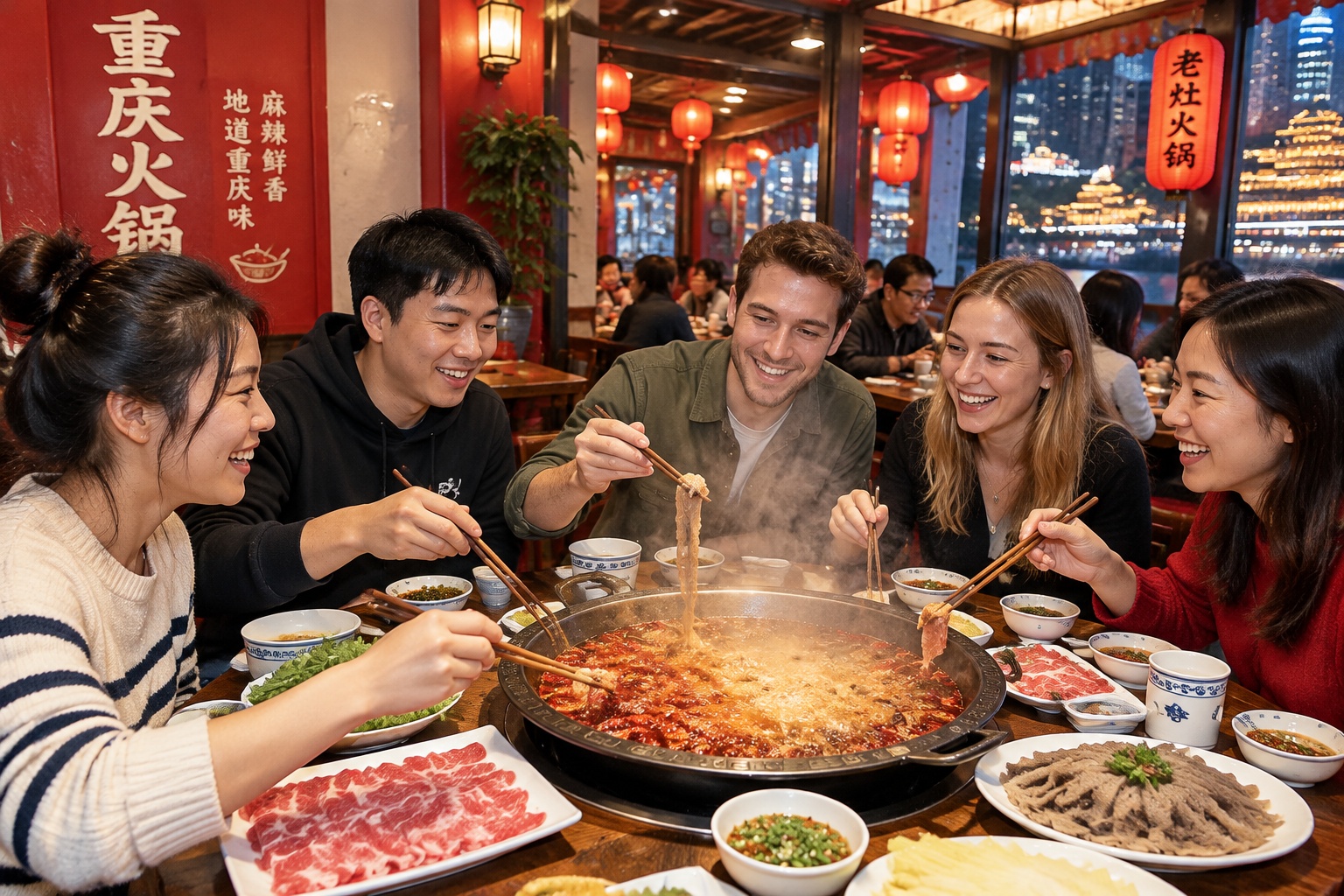

First Bite, First Lesson
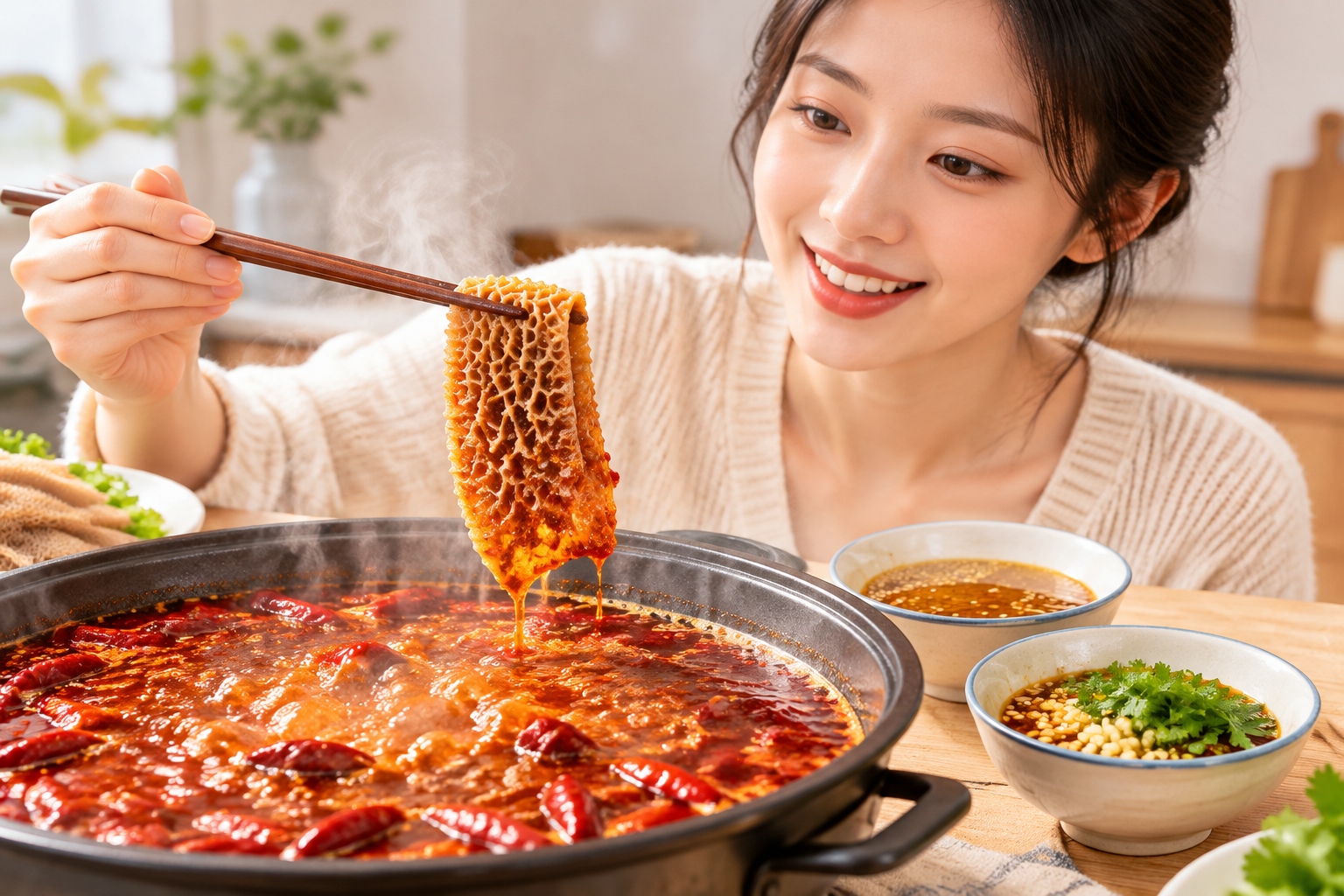
Sarah, a 28-year-old from Austin, Texas, had been traveling through China for two weeks. She thought she was prepared for Chongqing hotpot — after all, she grew up eating Tex-Mex and could handle jalapeños without blinking. But the first bite of a beef tripe that had been simmering in a bubbling red chili oil broth told her otherwise. It wasn’t just the heat; it was the numbing sensation from Sichuan peppercorns that tingled her lips in a way she had never experienced.
Her Chinese friend Li Wei smiled. “Drink some of this,” he said, pushing a small bowl of sesame oil with crushed garlic toward her. “It cools the tongue and helps the flavors blend.” Sarah hesitated — dipping spicy food into oil seemed counterintuitive. But she tried it, and the difference was immediate. The heat softened, and the complex flavors emerged.
That moment was the first of many social lessons that foreign visitors often learn only by sitting around a Chongqing hotpot table — a meal that is as much about connection as it is about food.
Hotpot as a Social Equalizer
In many Western cultures, especially in the United States, dining out can be a fairly individual experience. You order your own meal, it comes on its own plate, and you eat it yourself. Sharing food is common in family-style settings, but the norm is still “my plate, my food.” Chongqing hotpot turns that idea upside down.
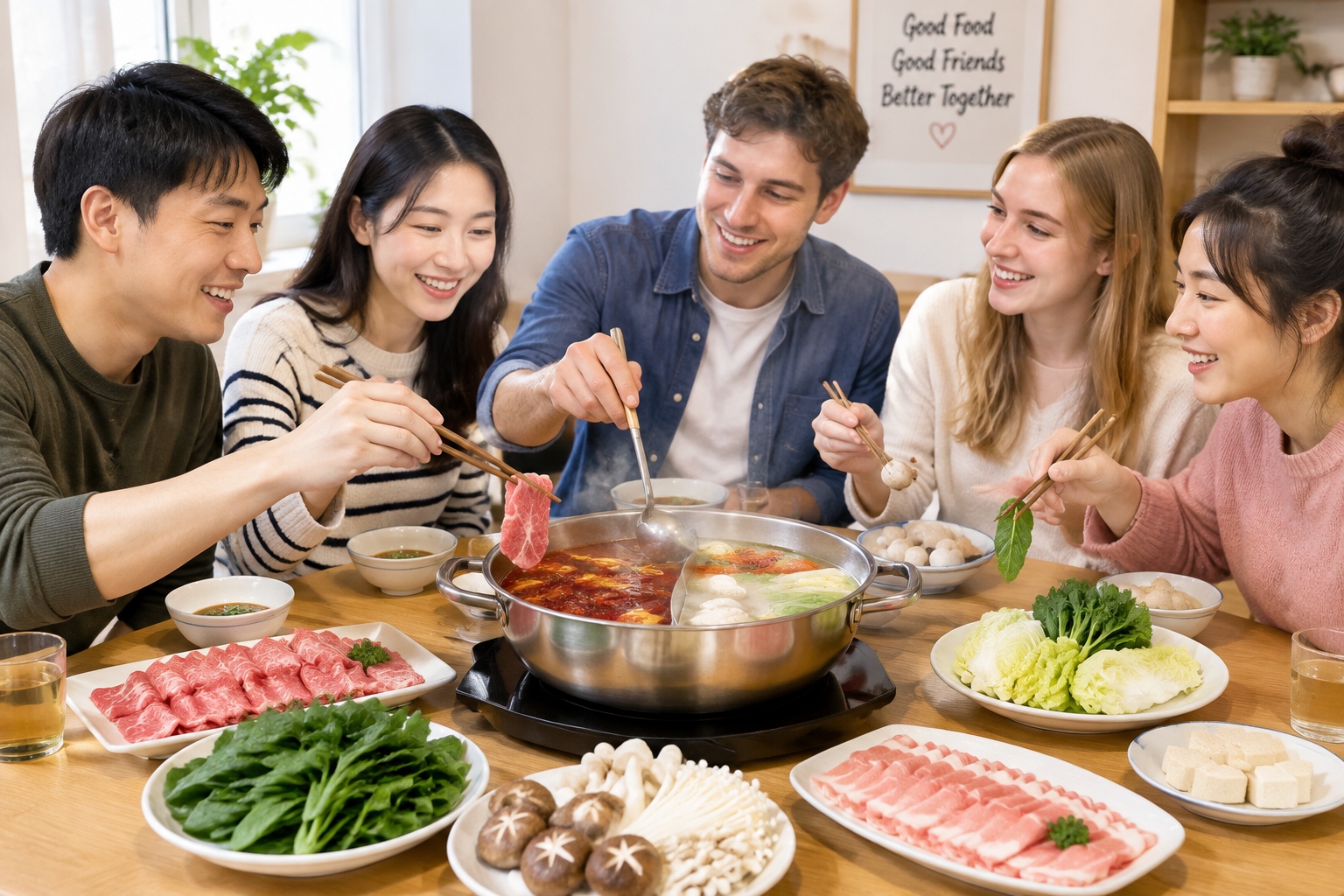
Hotpot is fundamentally communal. Everyone sits around a single pot, often divided into two compartments: one spicy (mala), one mild (clear broth). But the broth is just the stage. The real action is the sharing — raw ingredients like thinly sliced lamb, mushrooms, tofu skins, and quail eggs are placed on small plates around the table. Everyone reaches in with chopsticks or a small strainer, cooks their own food in the boiling broth, and dips it into shared condiment bowls.
For a foreigner, this can be disorienting at first. “Wait, I’m putting my chopsticks into the same pot as everyone else?” Sarah asked. In many cultures, double-dipping is a hygiene faux pas. However, in the hotpot context, it’s the entire point. The bubbling broth is hot enough to kill bacteria, and the social etiquette is about building trust and intimacy through shared action.
A 2023 survey by a Chinese travel platform found that over 40% of foreign tourists in Chongqing cited “experiencing the local dining culture” as their top reason for visiting, and hotpot was the most mentioned dish. The communal nature was the aspect they found most surprising — and most memorable.
The Rhythm of Serving Others
Another lesson foreign visitors quickly learn: in a Chinese hotpot meal, the person who hosts or is most senior often serves others first. It’s a sign of respect and care. Sarah observed Li Wei constantly refilling her tea, adding ingredients to the pot for her, and even cooking pieces of meat and placing them in her small bowl. At first, she felt awkward — in the U.S., people tend to serve themselves and might feel smothered by too much attention. But she soon realized this was the norm, not an exception.
“It’s like being taken care of without having to ask,” she later wrote in her travel blog. “I felt like a guest of honor, even though I was just a friend of a friend.”
This custom of “serving others before yourself” extends beyond the table. It reflects a broader cultural value: reciprocity and attentiveness to others’ needs. For a foreigner, experiencing it firsthand is far more powerful than reading about Confucian ethics in a book.
Navigating the Spice Together
Chongqing hotpot is famous for its fiery mala broth. But the spice isn’t meant to be endured alone — it’s a shared experience. When someone at the table starts sweating or panting from the heat, others laugh and offer tips: dip in vinegar, drink a yogurt drink, or simply take a break. The pain becomes a bonding agent.
“In the West, we say ‘no pain, no gain,’ but usually about working out, not eating,” said Eric, a German tourist who joined a hotpot dinner with colleagues in Chongqing. “Here, the pain is part of the pleasure because you’re sharing it. Everyone is going through the same challenge, and that creates a sense of camaraderie.”
This communal approach to discomfort is very different from the Western ideal of “saving face” by not showing pain. In a hotpot restaurant, sweating openly is a badge of honor, and asking for help is encouraged. It’s a microcosm of Chinese social interaction: problems are solved together, not alone.
Drinking and Dipping: A Toasting Culture
Hotpot in Chongqing is almost always accompanied by alcohol — usually beer or baijiu (a strong Chinese liquor). Toasts are frequent and follow a specific etiquette. The host typically initiates the first toast, and everyone stands up, clinks glasses, and says “ganbei,” meaning “bottoms up.” But unlike Western toasts where a symbolic sip is enough, ganbei often means emptying the glass.
For foreign visitors, this can be a test of endurance. Sarah learned quickly that if you didn’t want to drink too much, you could declare early that you are a “light drinker,” and others would respect it. However, the act of toasting remains central — it’s a way of expressing goodwill and strengthening the social bond.
“I’ve never clinked glasses so much in my life,” Sarah said. “But by the end of the night, I felt like I had made real friends, not just dinner companions.”
Conclusion: More Than a Meal
Chongqing hotpot is not just a dish; it’s a classroom for cultural immersion. Foreign tourists who sit down expecting only spice often walk away with a deeper understanding of Chinese social values: collectivism, reciprocity, and shared resilience. The hotpot table becomes a microcosm of society, where everyone contributes, everyone shares, and everyone looks out for each other.
For the Chinese hosts, watching a foreigner navigate the hotpot experience is a joy. They get to explain their culture through food — the most universal language. And for the visitor, the lesson lingers long after the taste of chili fades.
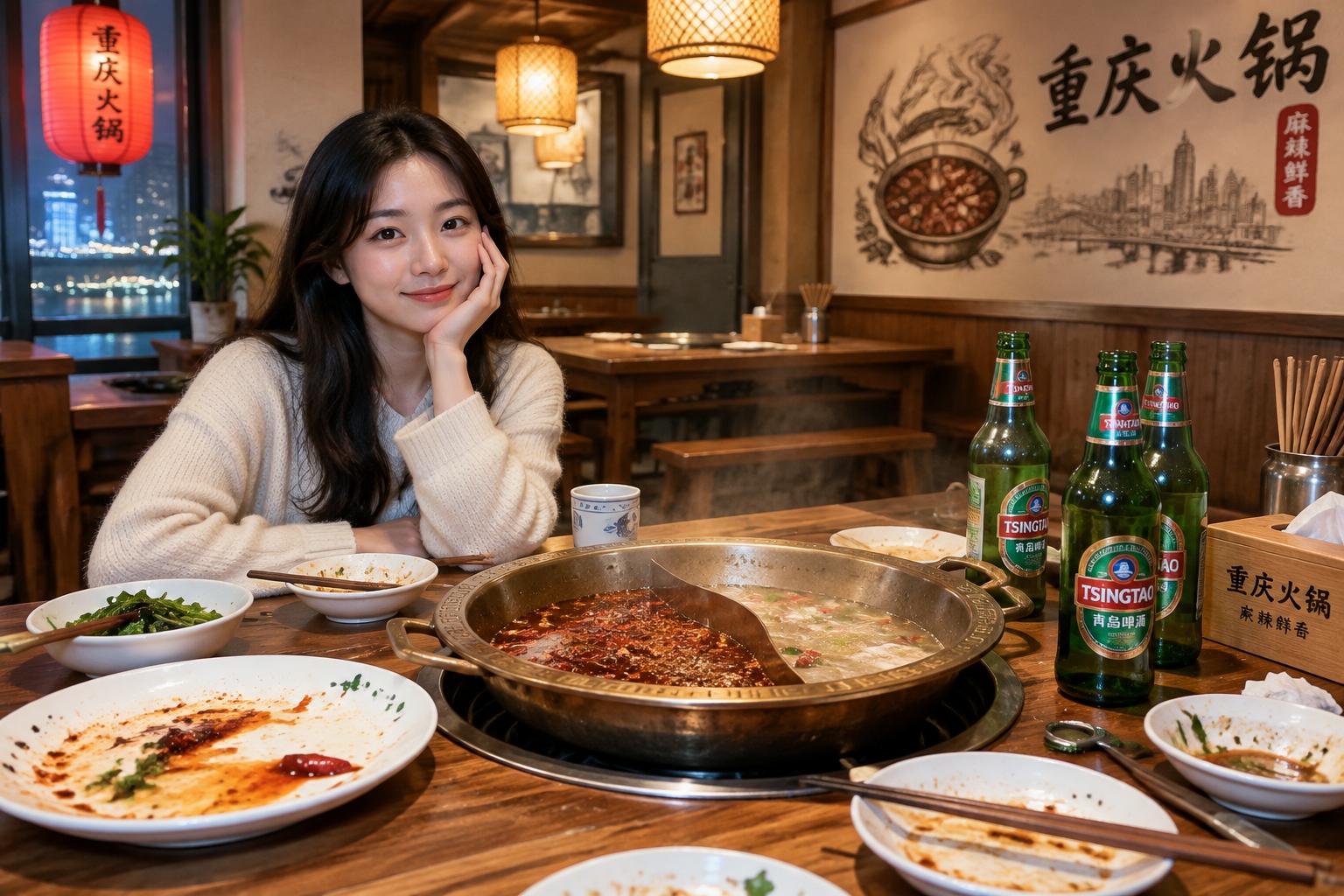
Next time you’re in Chongqing, find a local hotpot restaurant, sit down with friends (old or new), and let the boiling pot teach you what no travel guide can.
Start the discussion at forum.chinacomes.com