

Monday Morning, 7:40
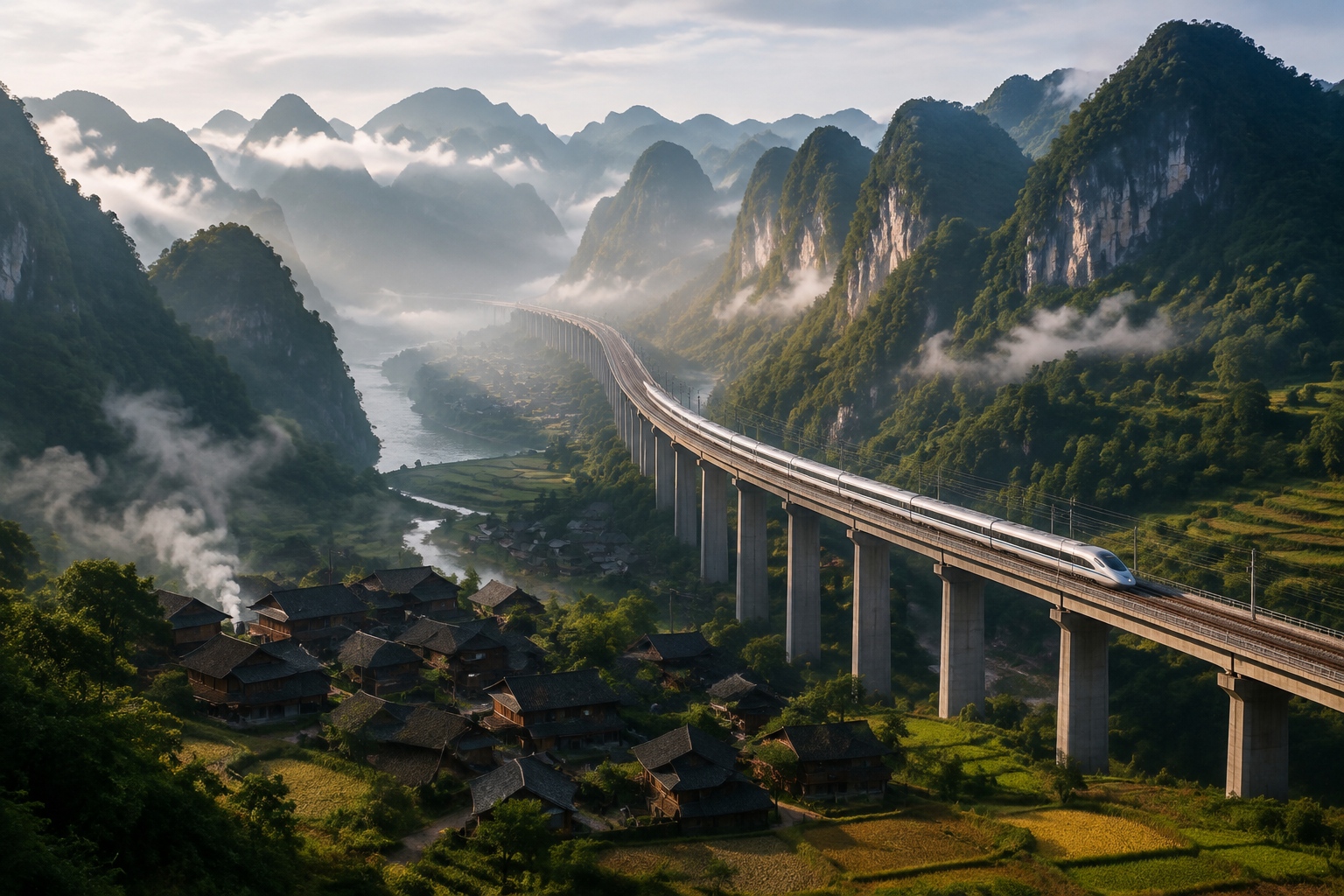
Wang Li, 24, stands on the platform of Pingtang Railway Station, in the Buyi–Miao Autonomous Prefecture of southern Guizhou. She holds a backpack with a jar of mother-made chili sauce and a rumpled copy of a preschool education textbook. At 7:41, the train arrives. She slides into her seat, puts on earphones, and watches the karst hills glide by. By 8:15, she is stepping out at Guiyang North Station—the big city, 37 minutes from her village.
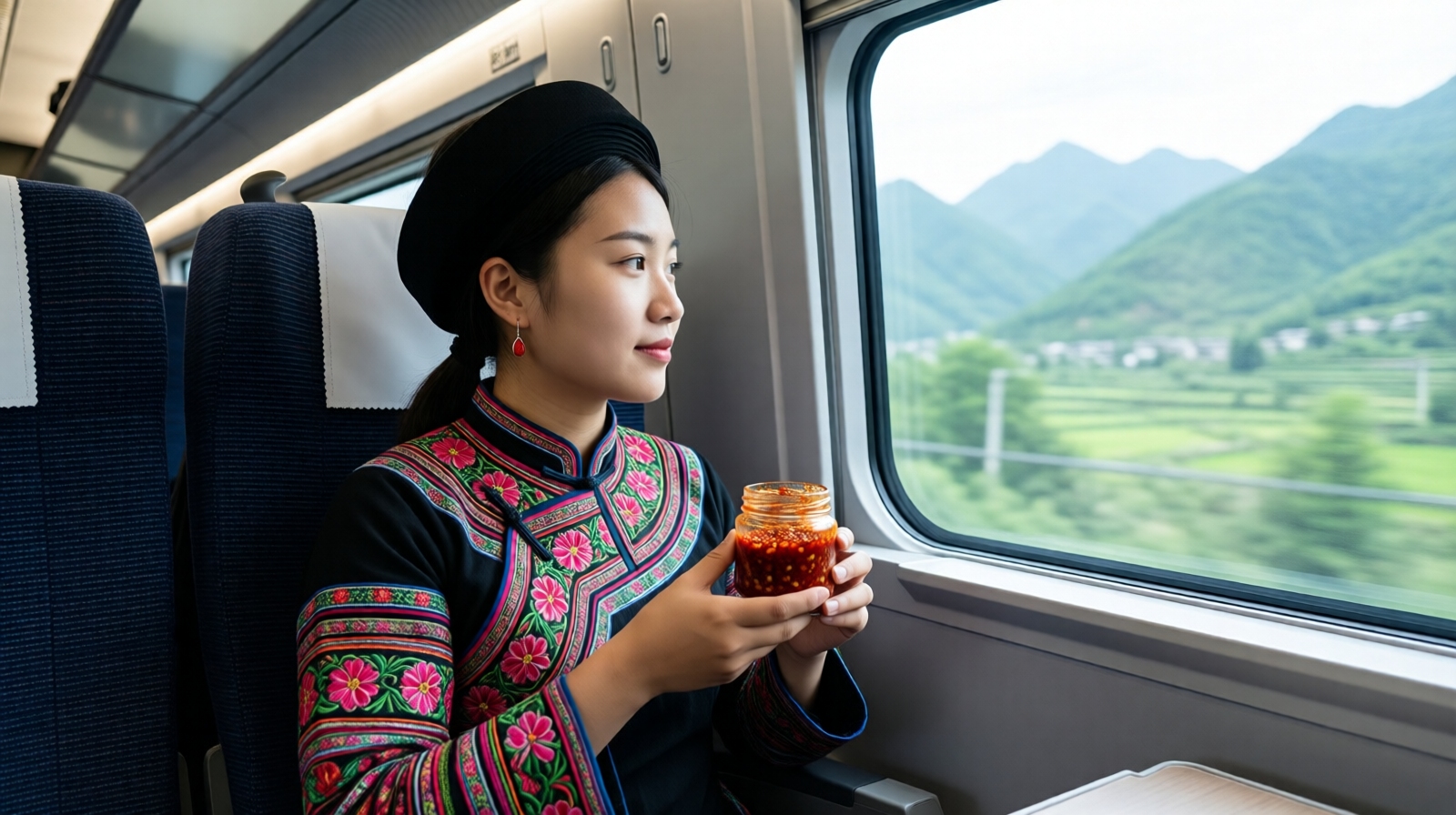
Two years ago, this trip took three and a half hours on a bus that shook through the mountains. Wang Li only came home for the Spring Festival and the Buyi New Year. Now she goes home almost every weekend.
“The first time I took the train, my mom cried,” she says. “She told me I was finally living in the same country as the rest of the city people.”
A Railway Through the Karst
China’s high-speed rail network, already the largest on Earth, keeps pushing into the southwestern provinces that were once considered all but unreachable. Guizhou, Yunnan, Sichuan, and Guangxi are not flat plains. They are limestone forests, steep valleys, and rivers that slice through deep gorges. For centuries, these mountains were a natural wall that isolated many ethnic minority communities from the rest of the country.
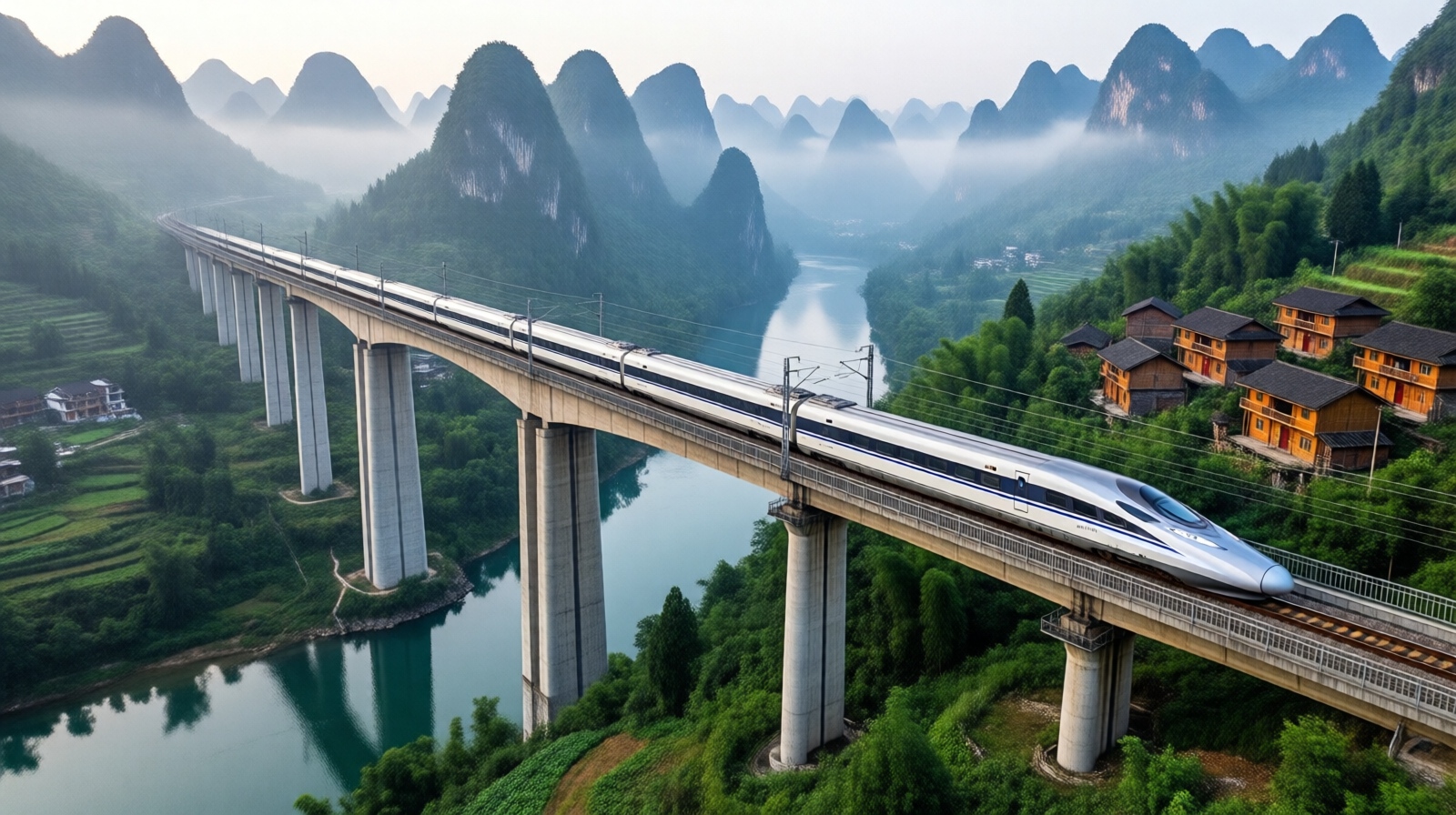
Building high-speed railways in this terrain means boring long tunnels through mountains and throwing viaducts across empty space. On some lines, bridges and tunnels make up over 90% of the entire route. The Guiyang–Nanning high-speed railway, opened in August 2023, is a good example. It cut the travel time between the two provincial capitals — Guiyang and Nanning — from five hours to under three. Along the way, it stops at places like Duyun, Dushan, and Pingtang. For many of these counties, it is the first passenger rail service in history.
By the end of 2023, China’s high-speed rail network stretched beyond 42,000 kilometers, connecting over 93% of cities with more than 500,000 people. But even in this vast system, the smaller and more remote stations often represent the most dramatic change. A ticket that once required a full day and a good deal of courage now feels like an ordinary errand.
For the Buyi, Miao, Dong, Yao, Yi, and other minorities who live here, this is not just another transport upgrade. It is the difference between being on the margins of China’s urban economy and being an hour away from it.
Three Hours to Thirty Minutes
Before the railway, Wang Li’s commute to Guiyang was a full-day event. She would catch a bus in the town center at 6:30 a.m. The driver would climb onto the old mountain road, stopping for passengers carrying baskets of vegetables, chickens, and schoolbags. The trip was 100 kilometers, but the winding road made it feel longer. In the rainy season, the bus sometimes had to stop entirely because of small landslides.
Now the same distance takes 37 minutes by train. The ticket costs 25 yuan, about 3 dollars, which is cheaper than the old bus fare and far quicker. Wang Li buys her ticket on her phone, using the same app she uses to order takeout. A seat number appeared in seconds. For her, the ease of booking is almost as transformative as the speed itself.
For Wang Li, who works as a kindergarten teacher in Guiyang, the change means she can be home by dinner every Friday. “It feels like I work in the city but live in the mountains,” she says. Her own cousin, who still lives in the village for half the year, now sends vegetables to the city by train as well. The logistics of family life have changed almost overnight.
The Return Ticket Home
This new mobility is reshaping the emotional geography of many young minority workers. In the past, going home was an annual pilgrimage. Missing a matriarch’s 80th birthday or a cousin’s wedding was a common pain. Today, the high-speed rail makes it routine. Wang Li recalls that her best friend, a hospital nurse, now comes home for two days every month to see her parents. The parents have started to count the days not in months but in train schedules.
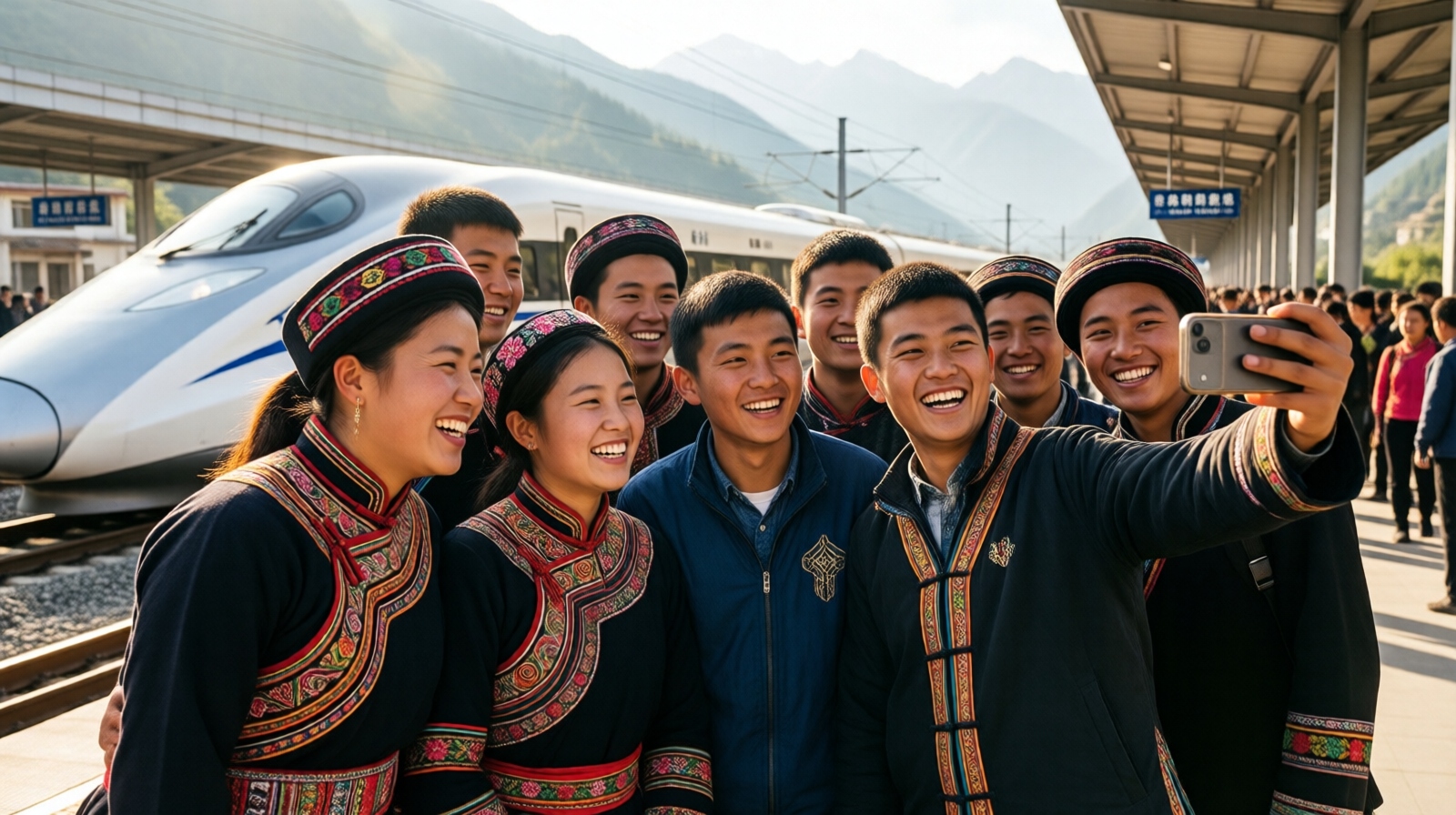
The railway also brings families back for the most important moments: the Buyi New Year, the Miao New Year, the Lusheng Festival, and the harvest. Instead of being a rare treat, traditional dress is now something young people wear on weekends. They bring city friends home with them, and the festivals become an occasion of cultural exchange as much as a family reunion.
Even older generations, who may never board the high-speed train themselves, have started to see its benefits. The sound of a train whistle is now a reminder that their children are not lost to the city.
New Opportunities at the End of the Line
The railway doesn’t just let young people leave — it also lets opportunity come back. Some young workers use their weekends to start side businesses. Wang Li’s cousin, who learned e-commerce in Shenzhen, now sells handmade Buyi embroidery online. She takes the train to the city to meet buyers, and uses the same train to bring supplies back. Another friend has converted his family’s wooden house into a guesthouse for tourists arriving by train.
These changes don’t happen instantly. But the high-speed rail has created a realistic bridge between rural culture and urban markets. For a region that used to depend on labor migration alone, this is a quiet but significant shift. It is also part of a broader rural revitalization effort in China, which encourages people and capital to flow back into the countryside. High-speed rail provides the physical backbone for that idea.
The Last Kilometer (And Other Realities)
Not everything is solved. The station is built on the edge of town, and for villagers deep in the mountains, there is still a long journey of motorbike rides and dirt paths before they reach the platform. That “last kilometer” can be the weakest link. Ticket prices, while low by city standards, are still a consideration for a family of five. And not every young person can afford to move to the city in the first place.
Still, the overall direction is clear. The high-speed rail gives more people a choice. They can work in a big city and yet remain a daily presence in their village. That choice, for many, is priceless.
A Generation That Moves Both Ways
When Wang Li returns home, she brings ideas, digital skills, and a wider view of the world. Her mother sends her back with food. The train has become a thread connecting two different ways of life — but it is not cutting the thread. It is making it stronger.
“It doesn’t just shorten distance,” Wang Li says. “It makes me feel my village is part of this century.”
Her phone buzzes. It’s a message from friends planning to meet at a night market in Nanning next month. The mountains are still there. But they no longer feel like a barrier.
Start the discussion at forum.chinacomes.com