

Introduction: A Question That Stops People
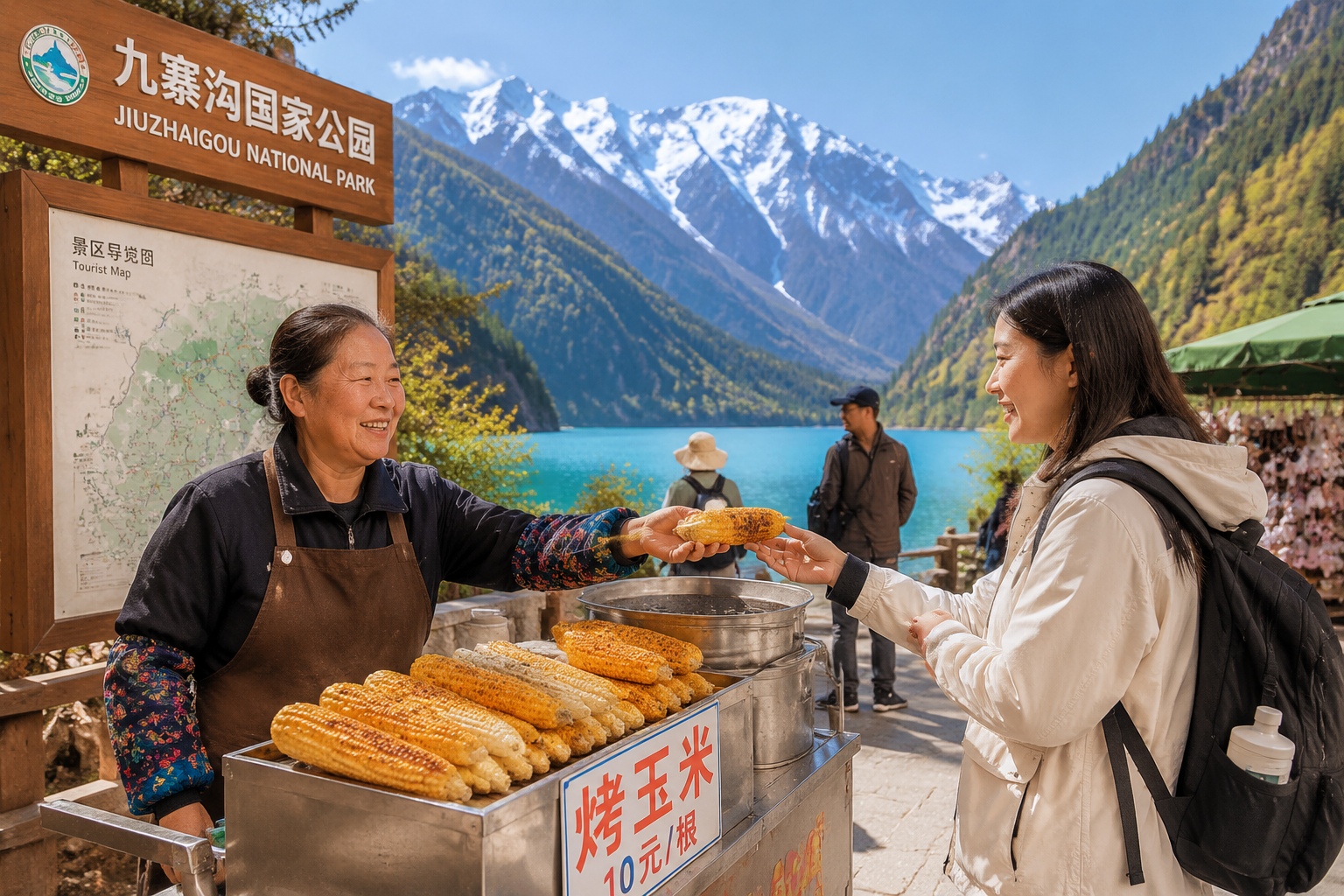
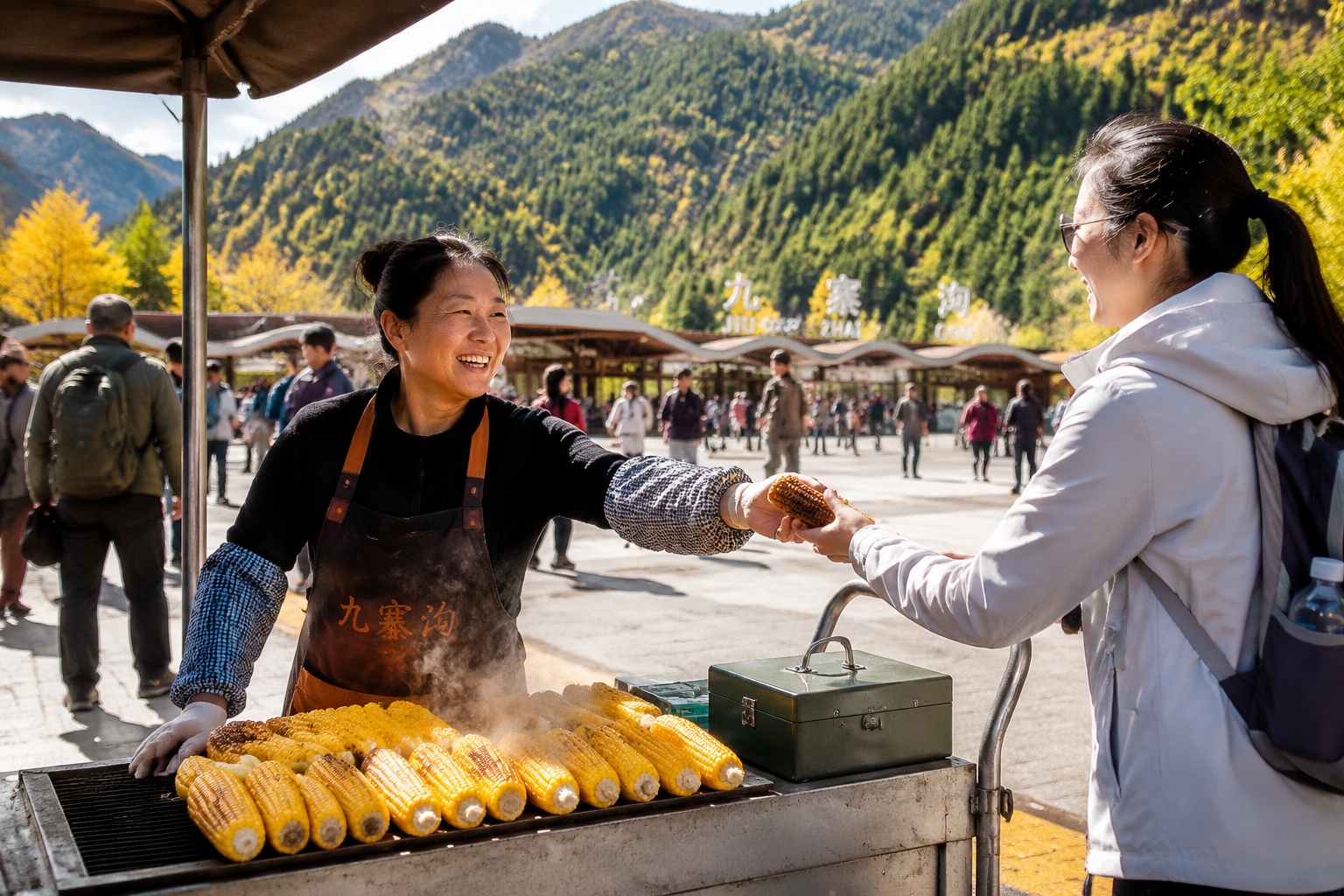
It was a sunny afternoon at the entrance of Jiuzhaigou, a UNESCO World Heritage site in southwest China. A middle-aged woman was selling roasted corn from a metal cart when a young tourist walked up, paid for an ear, then blurted out, “How much do you earn in a year?” The woman didn’t flinch. “About 40,000 yuan,” she said, “but only if the summer season is good. You?” The tourist laughed, surprised to be asked back.
This kind of exchange happens every day in China’s scenic areas, where millions of tourists meet thousands of vendors. For most visitors, the vendors are part of the backdrop—figures in straw hats and aprons who appear just long enough to sell a bottle of water or a raincoat. But those vendors have their own views of the people passing by, and their answers to the question “How much do you earn?” tell a deeper story about tourism, wealth, and how two different worlds collide.
What Vendors Actually Earn
The woman with the corn, who gave her name as Aunt Zhang, has been selling at Jiuzhaigou for seven years. She told us that during the peak season—from May to October—she can make 300 to 500 yuan a day. But in winter, the number drops to almost zero. “No snow, no tourists, no income,” she said, laughing. On average, she earns about 50,000 yuan a year, which is close to rural income levels but much less than a city worker in Chengdu.
Other vendors report similar ranges. A woodworker selling carved trinkets says his annual profit is around 80,000 yuan, but he has to buy raw materials, pay for a stall, and handle the fact that sales are unpredictable. “Some days I sell nothing. Some days I sell 50 pieces. You can’t plan.”
Notably, these figures are far below the incomes of the tourists they serve. Many domestic tourists earn 100,000 yuan or more a year, and international visitors often come from countries where even a fast-food worker earns more than a Chinese vendor. That imbalance shapes the entire relationship.
Why Tourists Ask That Question
When tourists ask vendors about their income, it’s rarely motivated by rudeness. “They want to know if we are being overcharged,” says a woman selling inflatable pillows and rain boots. “If they think we earn too little, they may feel guilty. If we earn a lot, they think we are cheating them.”
Another vendor, a middle-aged man who sells grilled sausages, sees it differently. “In the city, people never ask each other about salaries. But when they come here, they feel like they are in another world. The question is their way of understanding our life, even if it sounds direct.”
Chinese tourists often ask because they are genuinely curious about economic differences. For many, seeing a vendor working a 12-hour day under the sun is a reminder of how many people still live on the margins. Foreign tourists, on the other hand, tend to ask about prices or working hours rather than total income, perhaps because salary talk is taboo in their own cultures.
Jiuzhaigou as a Stage—Vendors on Tourists
If tourists are fascinated by vendors, the feeling is often mutual. “We see thousands of faces a week,” says Aunt Zhang. “Some are rich, some are poor. Some treat us like servants, others like old friends.”
The most common complaint from vendors is haggling. “A tourist bought a handbag for 50 yuan and then asked for a discount, saying ‘It’s too expensive, you must be rich.’ We aren’t rich. We carry all these goods up the mountain every morning,” says a woman selling woven bags.
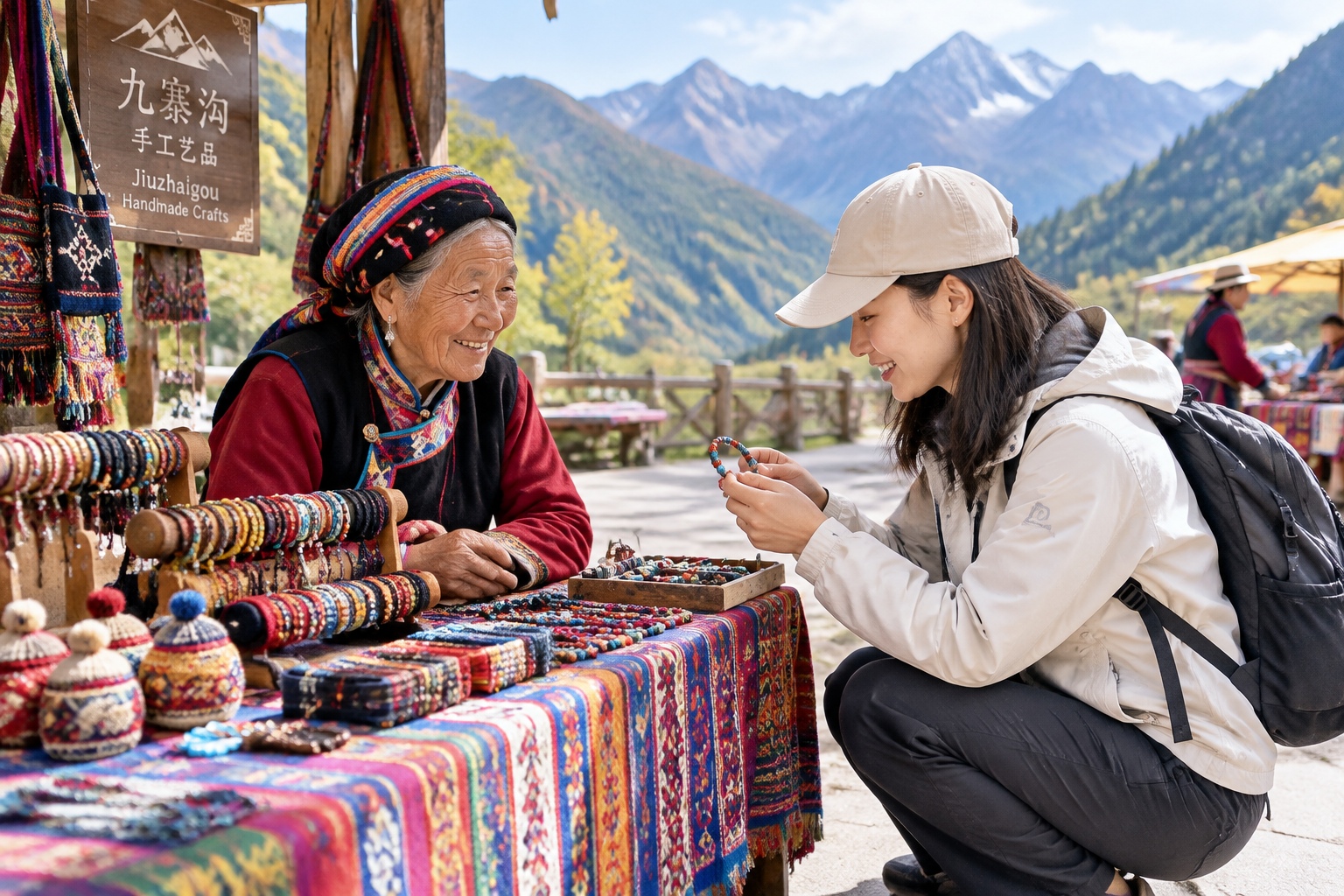
But there are also moments of connection. A young couple once bought a dozen roasted ears of corn and gave them to a group of schoolchildren nearby. An old Tibetan woman selling barley wine often chats with foreign tourists in broken English, practicing her language while they practice their Chinese. “I learn more about the world from these conversations than from any TV,” she says.
The Other Economy—Life After the Camera
The vendors’ world operates on a schedule tourists never see. Many wake up at 4 a.m. to take a bus or drive a scooter to the park entrance, where they set up stalls before the first buses arrive. Some carry goods on their backs for several kilometers to reach the best spots next to the spectacular lakes and waterfalls. They eat their lunches quickly, often cold, because they can’t leave their posts.
When the last tourist leaves at 6 p.m., they pack up and head home, rarely taking a moment to admire the landscape that draws people from around the globe. “I’ve seen every season of Jiuzhaigou, but I’ve never been inside the park,” one elderly vendor told us, referring to the main scenic area. “I watch tourists watch it on their phones.”
That distance between the beauty and the business is a central irony of Jiuzhaigou. The park is famous for its crystal-blue lakes and snow-capped peaks, but the people who make the experience possible—who sell the noodles, the ponchos, the souvenirs—rarely get to enjoy it themselves. Their profit margins depend entirely on the number of visitors, which makes their livelihoods fragile. A bad season due to weather, natural disasters, or this year’s travel restrictions can push a family into debt.
What Tourists and Vendors Share
Despite the differences, the question “How much do you earn?” often leads to a moment of empathy. After Aunt Zhang answered the young tourist, she asked him about his salary. He said he made about 120,000 yuan a year as a software engineer in Shenzhen. She smiled. “That’s a good income. But you work hard too, right?” He nodded. “We all work hard,” she said.
That exchange captures something essential about China’s tourism economy. It is not just about money moving from richer regions to poorer ones. It is also about people being confronted with each other’s realities—the fact that a woman can make a living selling corn while a man can make his living writing code, and both are part of the same nation.
As the sun dipped behind the mountains, Aunt Zhang began packing her cart. A few tourists lingered, taking photos of the glowing water. She looked at them and said, “They want to keep a piece of this place with them. I just want to go home and soak my feet.”
A Final Thought
Next time you visit Jiuzhaigou—or any famous scenic spot—pause before you judge the price of a bottle of water. The person selling it might be earning a third of what you make, working twice as long, and seeing the same scenery you came for without ever truly seeing it. Their answers to your questions are not just about money. They are about a life that runs parallel to the tourist trail, and one that has a lot to say about the real China—both its progress and its limits.
So if you get the chance, sit down with a vendor. Don’t just ask how much they earn. Ask what they see when they look at the mountains. Ask how tourism has changed their family. Ask what they dream about. You might find that the most memorable part of your trip isn’t the waterfall on your camera—it’s the person across the table.
Start the discussion at forum.chinacomes.com