

A Quiet Courtyard in the Heart of Lijiang
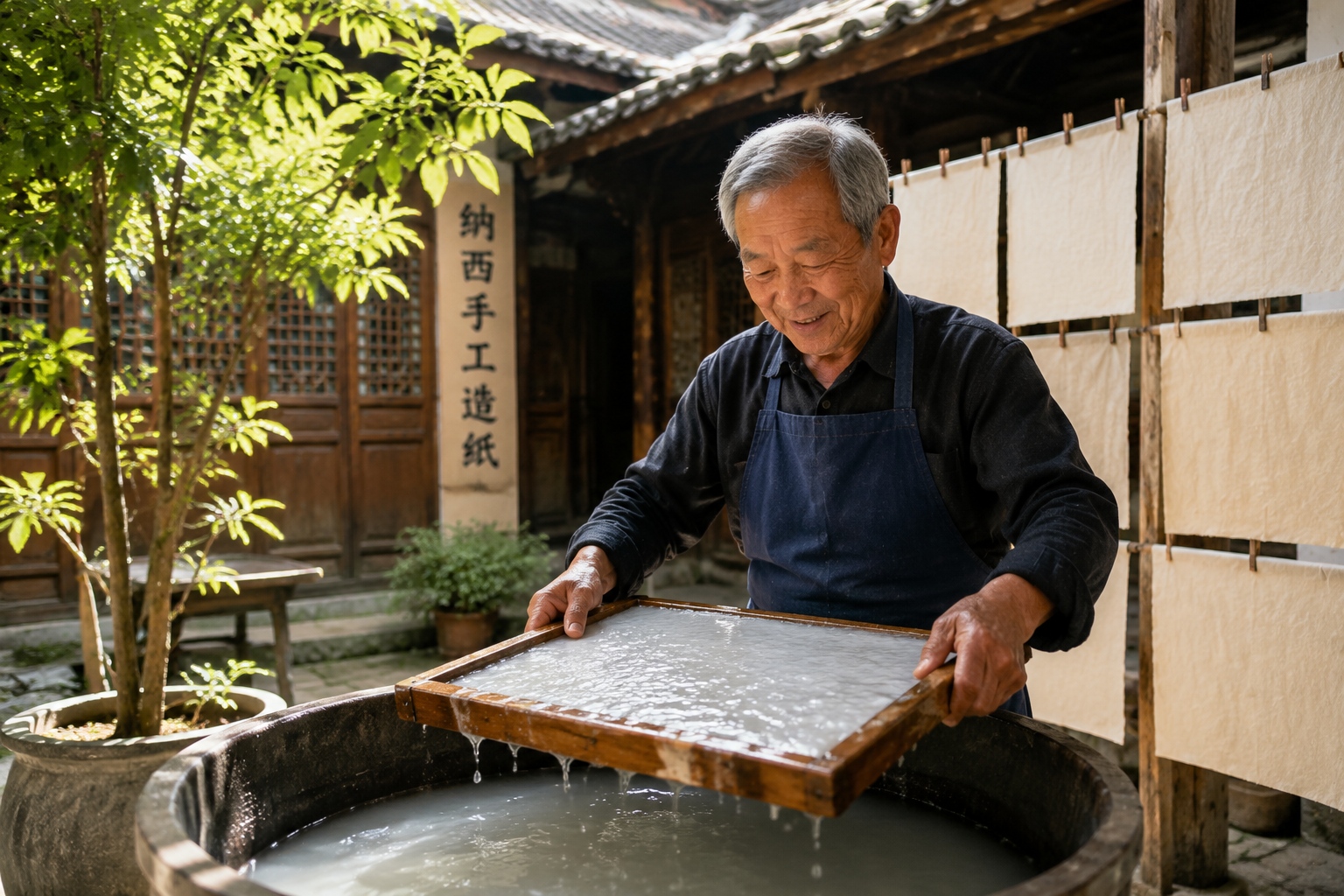
I almost walked past the small entrance. A wooden sign reading “Dongba Paper Workshop” hung slightly crooked, half-hidden behind a potted azalea. Inside, the noise of Lijiang Old Town – the chatter, the selfie sticks, the drumbeats from souvenir shops – faded into a soft hum. The air smelled of damp bark and clean water. In the middle of the courtyard, a man in his fifties lifted a wooden frame from a vat of pale pulp, shook it gently to spread the fibers, and set it on a rack to drip.
That man is Yang Fang, a Naxi craftsman who has been making Dongba paper by hand for over thirty years. His workshop is just a few minutes’ walk from the lively Sifang Street, yet it feels like a different century. Tourists rarely stumble in by accident; most come because they’ve heard about this ancient craft and want to see it before it disappears.
What Is Dongba Paper?
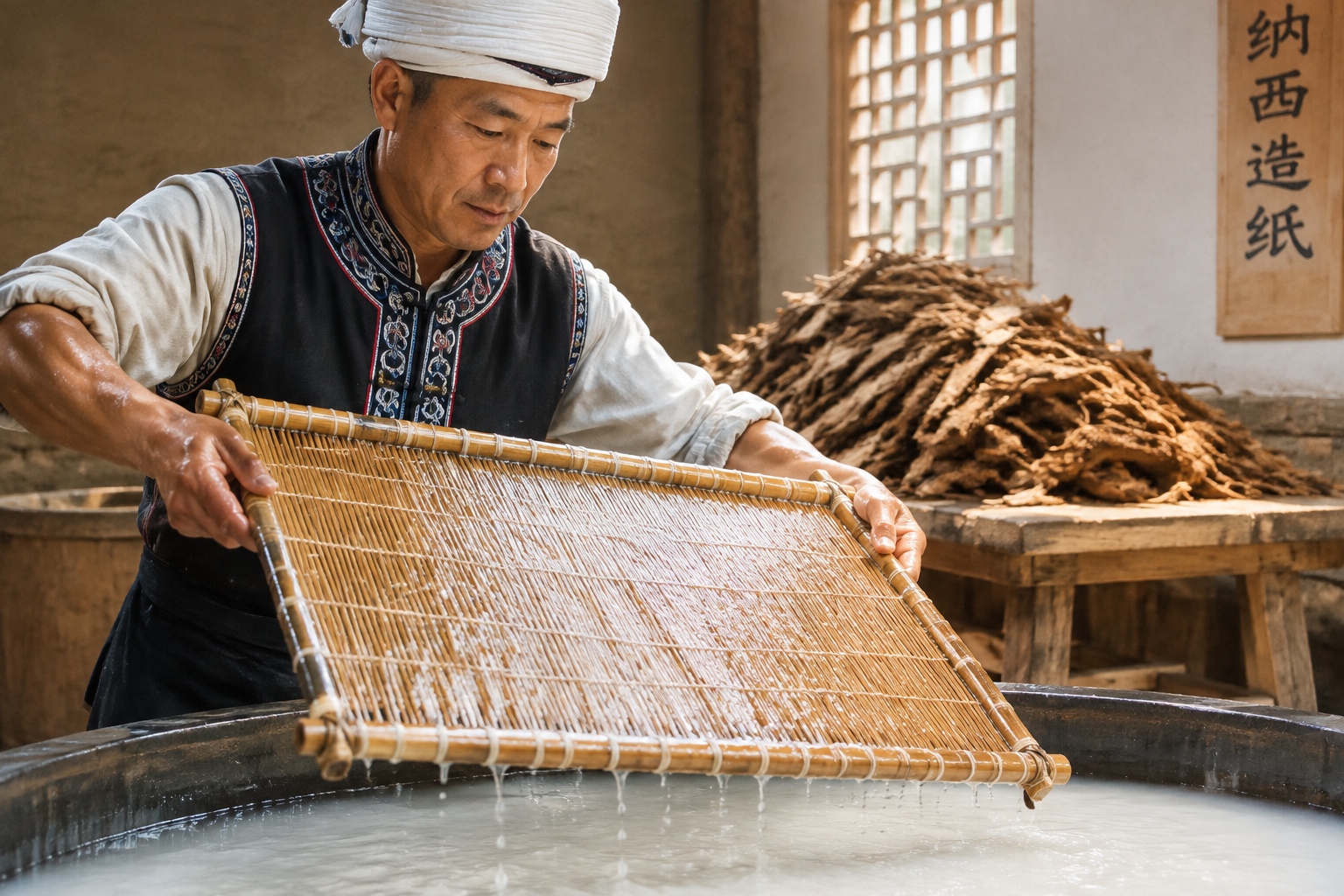
Dongba paper is not your ordinary paper. It’s made from the bark of a wild shrub that grows in the mountains around Lijiang. For centuries, the Naxi people used it to write and paint their sacred Dongba scriptures – the only living pictographic script in the world. The paper is strong, resistant to insects, and can hold its shape for hundreds of years.
Traditional makers would strip the bark, soak it in limewater, boil it for hours, then wash and pound it into a smooth pulp. The pulp is mixed with water, and the craftsman dips a fine bamboo screen into the vat, lifts it, and lets the water drain. Each sheet is then pressed, peeled off, and brushed onto a hot brick or a sunlit wall to dry. It’s slow, laborious work – a single sheet can take a full day from start to finish.
The Craftsman’s Daily Rhythm
Yang Fang starts before sunrise. He checks the water temperature, sorts the bark he soaked overnight, and stokes the fire under the boiler. “The paper doesn’t forgive hurry,” he told me, smiling. “If you rush, the fibers tangle. You get thin spots. Every step requires patience.”
His hands are calloused and stained a deep brown from tannins. He doesn’t wear gloves – they get in the way. Each time he lifts the screen, he studies the pulp through the mesh, adjusting the pressure with nearly invisible movements. “The mountains give us the bark, but the feeling comes from here,” he said, tapping his chest.
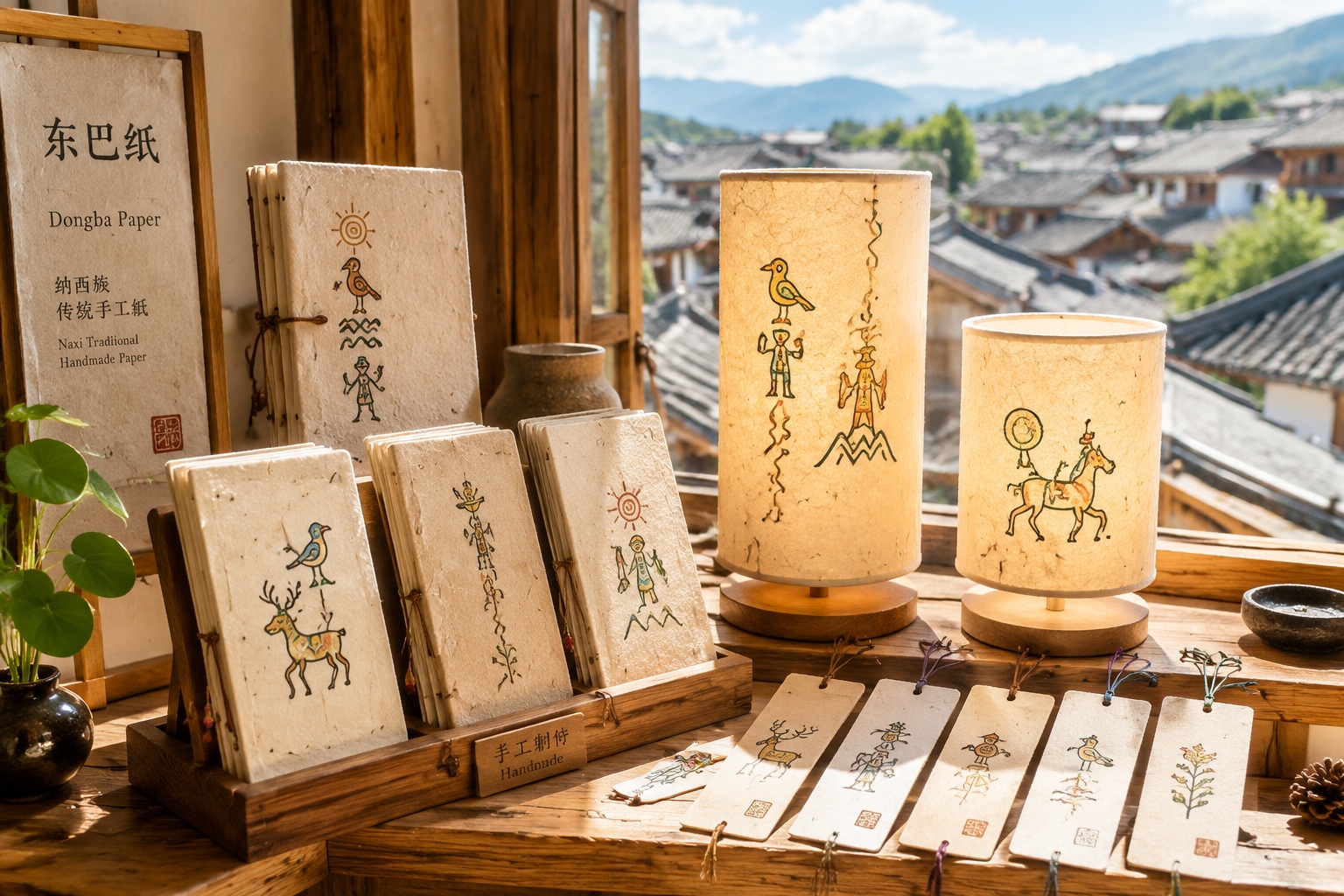
His wife, Mei, handles the business side. She shows visitors how to make small sheets of paper, using a miniature version of the same tools. They used to rely only on local sales and a few tourists who happened to wander in. But in the last five years, online orders have grown. “People want real things, not plastic souvenirs,” Mei said, gesturing to a shelf of paper notebooks and lampshades.
Keeping a Tradition Alive
Yang Fang’s father was a Dongba priest who made paper for sacred texts. Yang learned the craft as a boy, but never imagined it would become an economic lifeline. “In the 1990s, almost everyone in our village stopped making it. The elders died, and the young people went to the cities to work,” he recalled.
He almost gave up too. For a few years he drove a taxi in Kunming, but the calluses on his hands felt itchy. “I dreamed of the pulp. I dreamed of the smell of boiling bark.” So he returned to Lijiang, bought an old courtyard near the edge of the old town, and set up his workshop. It wasn’t easy – at first, almost no one came. He sold paper to a calligraphy shop at a loss. But he kept going, driven by a simple conviction: “If we don’t make it, who will?”
Today, the workshop hosts apprentices from all over China. Some stay for a few weeks, others for months. Yang teaches them not just the technique, but the ethos – that this paper is alive, that it carries the memory of the mountains and the hands that shaped it.
Innovation Without Compromise
Tradition doesn’t mean standing still. Yang has experimented with new materials – adding flower petals, mulberry fibers, even tea leaves – to create textured, artistic sheets. He collaborates with local designers to craft notebooks, bookmarks, lampshades, and even business cards made of Dongba paper. “The ancient method stays the same,” he explained, “but the forms can change. Otherwise we become a museum.”
One of his most popular products is a small notebook with the Dongba script embossed on the cover. Tourists buy it as a journal, not just as a souvenir. Others purchase lampshades that cast a warm, patterned glow across hotel rooms. “When you see this paper used in someone’s home, it lives again,” Yang said.
He also keeps a small digital presence. On Xiaohongshu (China’s Instagram-like platform), he posts short videos of each step – the bark stripping, the boiling, the drying. The videos don’t go viral, but they draw a steady stream of culture-curious visitors. “Some young people come because they saw my video. They say it calms them down. That makes me happy,” he said.
A Bridge Between Worlds
Lijiang Old Town attracts millions of tourists each year. Most hurry through it, searching for the perfect photo of Black Dragon Pool or a view of Jade Dragon Snow Mountain. But places like Yang’s workshop offer a different kind of encounter – one that brings you into the daily life of a culture, not just its backdrop.
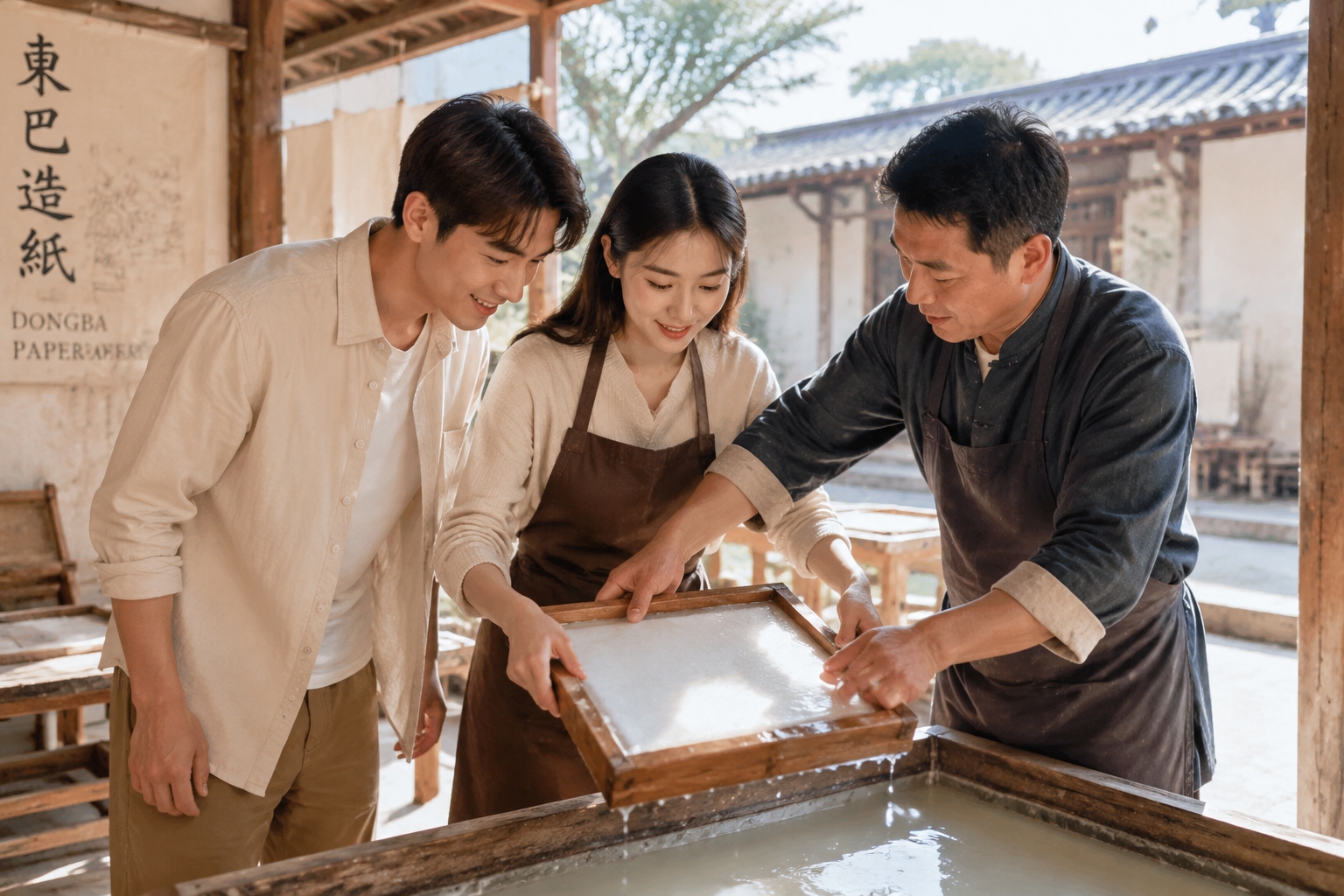
On the afternoon I visited, a young couple from Shanghai was trying to make their first piece of paper. They laughed as the pulp splashed, and Yang gently corrected their technique. “You don’t push the water out. You let it leave naturally,” he said. The couple left with a clumsy but cherished sheet, carefully wrapped in wax paper.
Yang stood in the doorway, watching them go. “People want connection. They want to touch something that doesn’t come from a factory,” he reflected. “Maybe that’s why this paper survives – it makes people slow down.”
Why Dongba Paper Still Matters
In a world of disposable everything, handmade objects carry a quiet power. Dongba paper is arguably the most tangible link to the Naxi people’s ancient worldview. It’s not just a material – it’s a language, a history, an identity. Yang Fang’s work is a reminder that preservation isn’t only about locking things away. It’s about making them useful and beautiful for the people of today.
As I left the courtyard, the sounds of the old town washed over me again. But now, I also heard the gentle drip of water from a wooden frame, and the rhythmic thud of bark being pounded. Somewhere in the crowd, someone was probably posting a photo of their Dongba paper notebook – and that notebook now carried a story more lasting than pixels.
Start the discussion at forum.chinacomes.com