
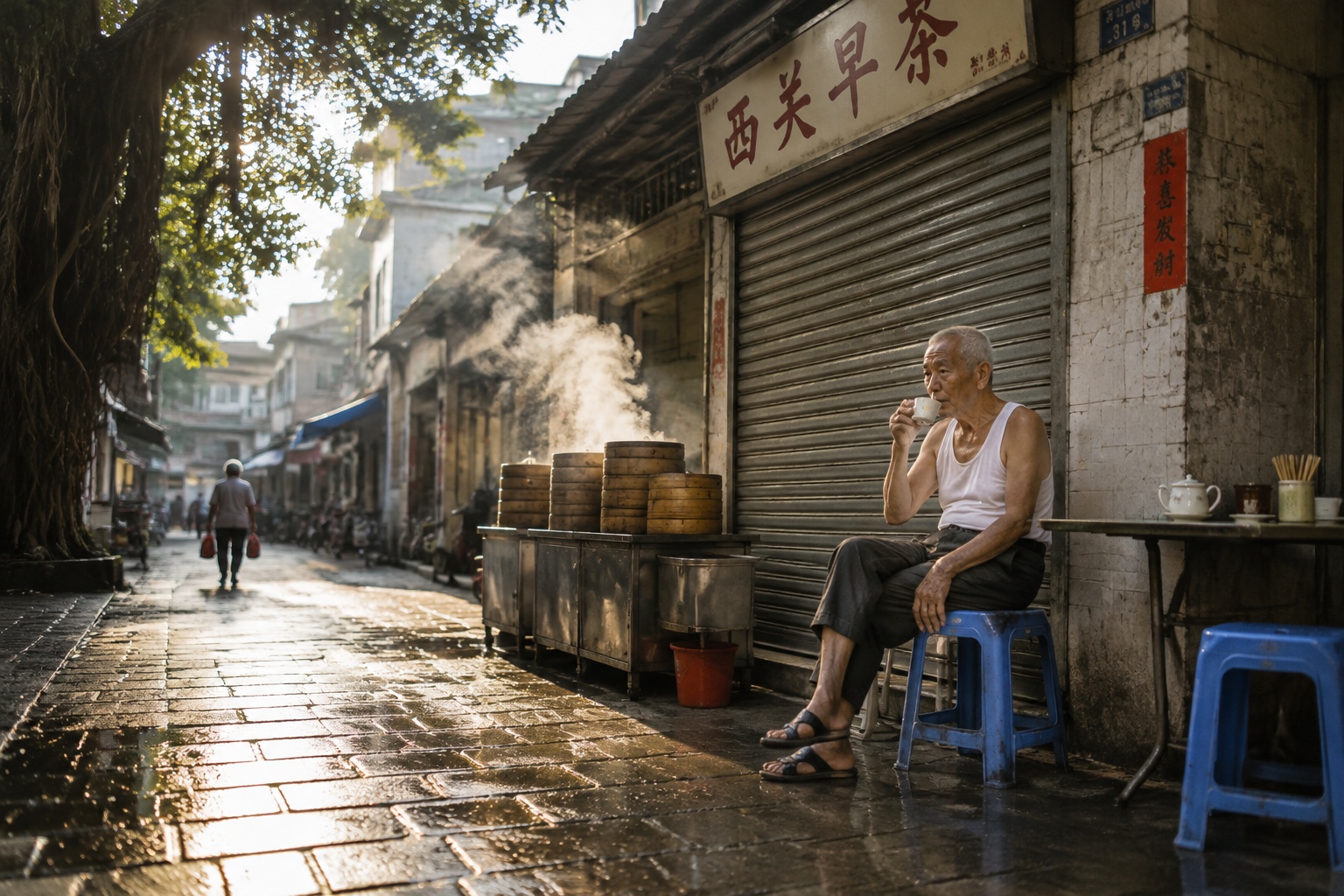

Morning Steam in a Hidden Alley
At 6:30 a.m., the narrow lane behind Guangzhou’s Liwan neighborhood smells of wet stone, fried garlic, and chrysanthemum tea. An old man in a gray undershirt pulls a plastic stool to the curb and waits. The metal rolling shutter of the unnamed teahouse in front of him has just started to creak open. Inside, a woman in a checked apron is lifting baskets of shrimp dumplings from a steel steamer. Steam floods the doorway.
This is where the dim sum marathon begins: not in a chandeliered hotel ballroom, but in a warren of backstreets where tea houses have no signs, no websites, and often no English menu. For the next seven hours, I will walk from one such place to another, tasting the city’s most beloved breakfast through a loop of alleys and sidewalks.
The Ritual Behind Yum Cha
Cantonese people call it yum cha, literally “drinking tea.” The phrase suggests a casual cup, but the reality is a loud, unhurried, hours-long meal that brings families and friends together. In Guangzhou, the capital of Cantonese cooking, yum cha is not just a food habit. It is a social institution, a way to mark birthdays, close business deals, or simply pass a morning.
The classic pairing is “one cup, two pieces” (yat jung leung gin): a pot of tea and two kinds of dim sum. The dim sum themselves are bite-sized creations served in bamboo baskets or small plates—shrimp dumplings (har gow), pork dumplings (siu mai), rice noodle rolls (cheung fun), chicken feet, pineapple buns, and dozens more.
In big hotels, dim sum has become elegant and expensive. But in the maze of residential alleys, the tradition lives on in a humbler form. These are the places locals defend with pride and secrecy.
A Marathon on Foot and Tea
The idea of a marathon is simple: walk from teahouse to teahouse, drink one pot of tea and order one or two dishes at each stop. By the end, I would have tasted more kinds of dim sum than in a single sitting—and seen how different neighborhoods treat the same classics.
My route starts in Liwan, the older core of Guangzhou, then moves east into Yuexiu, and finally south to Haizhu. It is roughly eight kilometers, but feels longer because of the detours into fruit markets, furniture workshops, and dead-ends. That is the point.
Stop 1: The Old Workshop in Liwan
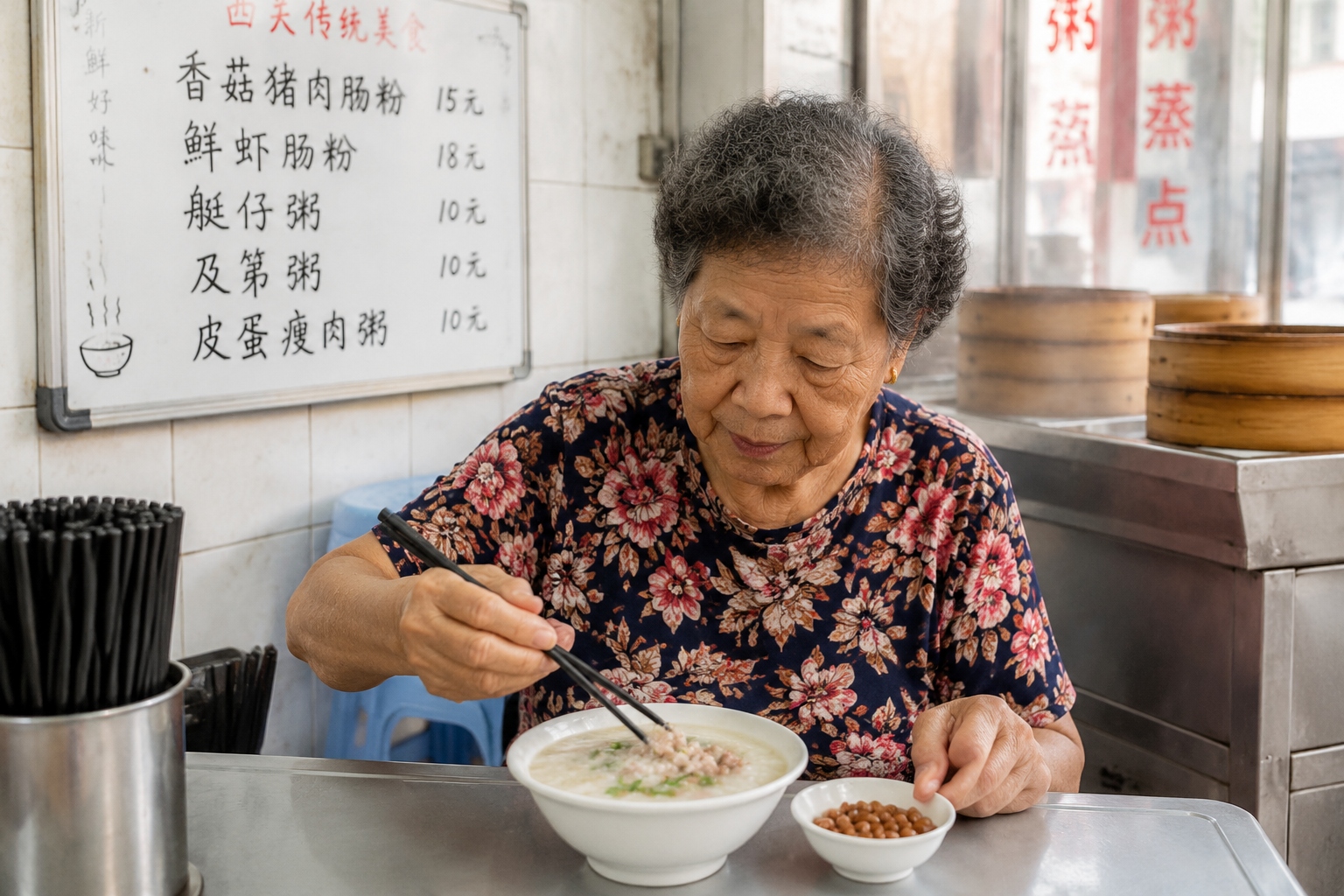
The first teahouse is hidden behind a row of ancient banyan trees. Its floor is gray cement, its chairs are mismatched plastic, and its menu is a whiteboard with a few characters written in marker.
I order a pot of pu-erh and a plate of blistered, glossy phoenix claws—chicken feet braised in a clay pot until the skin easily pulls away from the bone. On the next table, an old woman is picking out the peanuts from her pork congee and laying them in a neat line on her saucer. She has been coming here for thirty years, the owner tells me, and has never once asked for the menu.
Stop 2: A Family Affair in Yuexiu
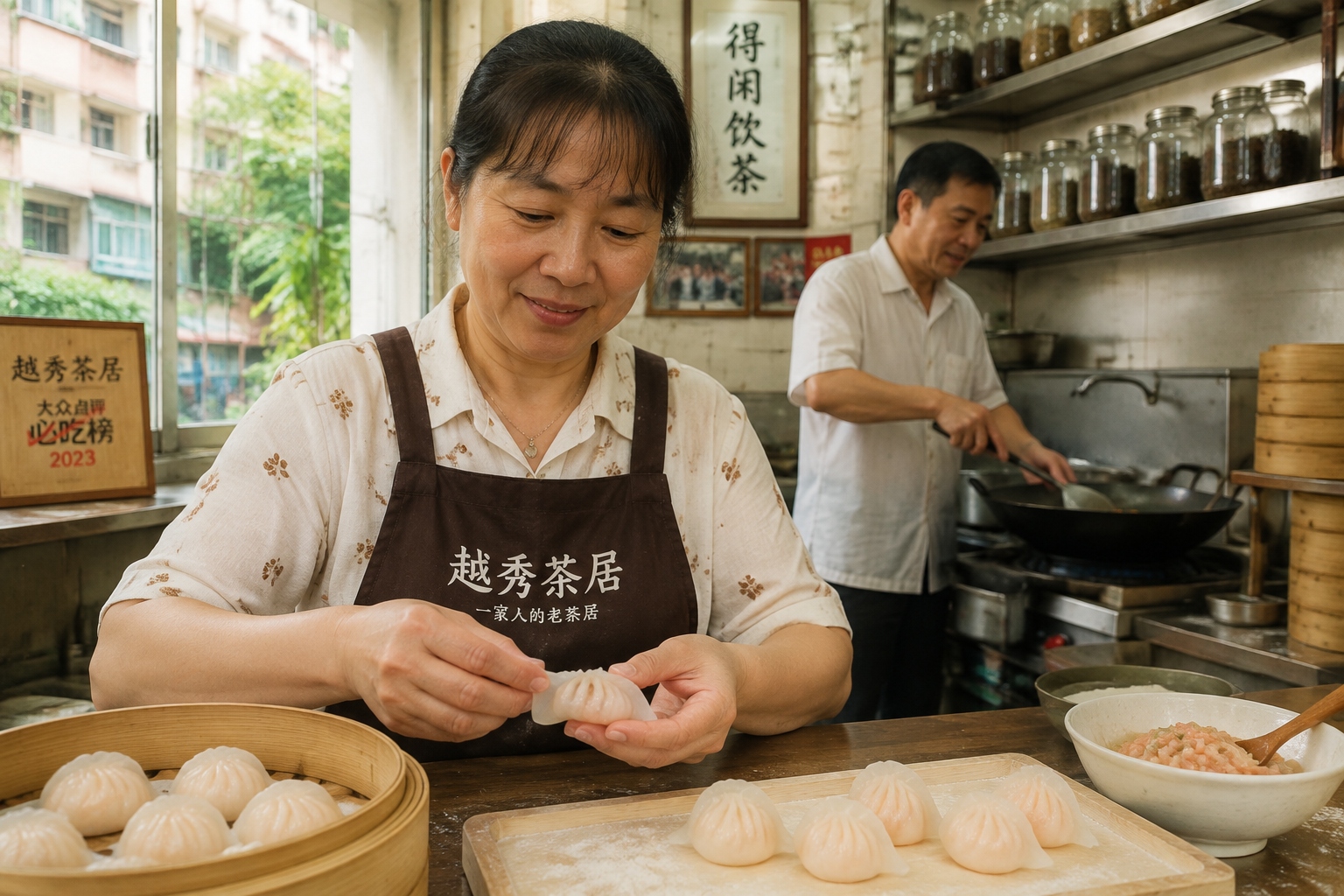
The second stop is in a 1970s apartment complex in Yuexiu District, where a family has converted their ground-floor flat into a tea house. The living room holds four tables; the kitchen is a wok station.
Here, the har gow—shrimp dumplings—are extraordinary. The skin is almost translucent, thin enough to see the pale pink shrimp inside, and the bundle is heavier than it looks. Each dumpling is folded with at least a dozen pleats, a sign that someone is still doing it by hand. My neighbor, a man in his sixties, is eating alone with a newspaper. When I ask about his usual order, he points to his plate: two siu mai, one basket of har gow, and a cup of oolong. “Same thing for ten years,” he says in Cantonese-accented Mandarin, then goes back to his paper.
Stop 3: The Neighborhood Favorite in Haizhu
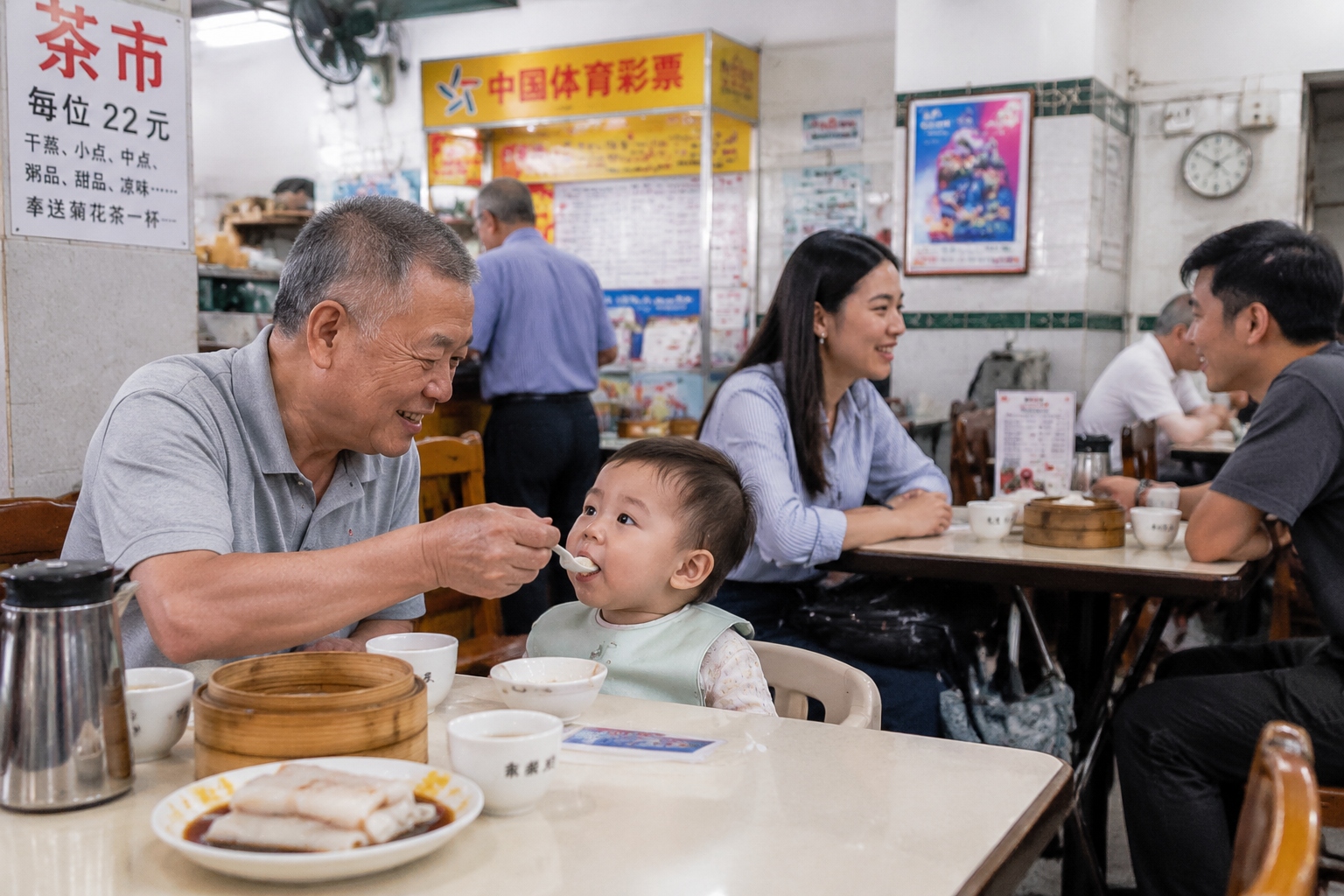
The last stop is in Haizhu, a district that mixes old industrial areas with new middle-class blocks. The teahouse is in a narrow shopfront that also sells lottery tickets at the counter. At 11 a.m., the place is packed with intergenerational groups. A grandfather is chasing a toddler with a spoonful of mashed taro, while a young couple pays at a squeaky desk.
Here, I try the rice noodle rolls—silky sheets of steamed rice flour wrapped around mince beef and garnished with sesame seeds. The version at this shop is flatter and more delicate than what you get in hotels, because the batter is ground fresh every morning. The soy sauce is sweeter, with a hint of cinnamon.
The crowd is noisy, the tea is strong, and nobody seems to be in a hurry. That is the rhythm of Guangzhou.
The Dishes That Define the Backstreets
Across these three teahouses, I recognized some dim sum from hotel menus, but they tasted different. The shrimp in the har gow were crunchier, because they were not frozen. The siu mai were smaller, less architectural, but richer in flavor. The cheung fun had a homemade, brittle texture around the edges, like noodles that had just left the steaming tray.
There were also dishes you rarely see in fancy venues: beef tripe with ginger, sticky rice wrapped in lotus leaves, and a dessert of steam-baked egg custard tarts that collapse the moment you press them. At one of the stops, a woman at the table next to me shared a plate of steamed dumplings filled with chives and eggs—her own recipe, brought to the kitchen for a small fee. That kind of thing happens in neighborhood tea houses.
Regulars Who Have Made This Their Second Home
At the Liwan teahouse, I meet Uncle Chen, a retired mechanic who has been coming every weekday since 1996. He sits at the same corner table, brews his own tea, and refills his thermos from the hot-water urn before he leaves. “People at home don’t talk much,” he says with a laugh. “So I come here to be with my friends. We don’t have to talk. We just sit.”
Uncle Chen is not alone. Many of the older customers treat these tea houses as living rooms. They greet each other with a nod, swap news about their health and their grandchildren, and occasionally argue about the best place to buy dried fish. The owners know their orders by heart: “the usual” is a phrase that works in every language.
How to Order Like a Local
If you want to do this marathon yourself, here are a few practical tips. First, arrive before 8 a.m. to catch the morning rush, when the steam is freshest and the neighborhood has not yet woken up fully. Second, don’t wait to be seated. In these shops, you grab a free chair and share a table with strangers. Third, find the tea table or the kettle. You are expected to rinse your own cup with hot tea before pouring from the pot.
The most important rule is to say “nay ho” (thank you) in Cantonese, and tap your fingers on the table when someone pours tea for you. Tapping twice is the traditional silent thank-you.
And be open to suggestions. The best meal outside the tourist trail is often the one you did not plan.
Why the Marathon Matters
By mid-afternoon, I had walked through fruit markets, past shuttered factories, and across a canal thick with green algae. My stomach was full of tea and dumplings, my shirt smelled of soy and jasmine smoke. None of it was in a guidebook. But for a few hours, I had tasted what it means to live in Guangzhou—a city that still gathers its neighbors around a pot of hot water and a basket of freshly steamed dumplings.
In a time when old cities are being torn down and rebuilt at speed, the small tea houses are holding on, not as museum pieces but as living spaces. They are the true hidden gems of the dim sum marathon.
Start the discussion at forum.chinacomes.com