

It starts in a teahouse
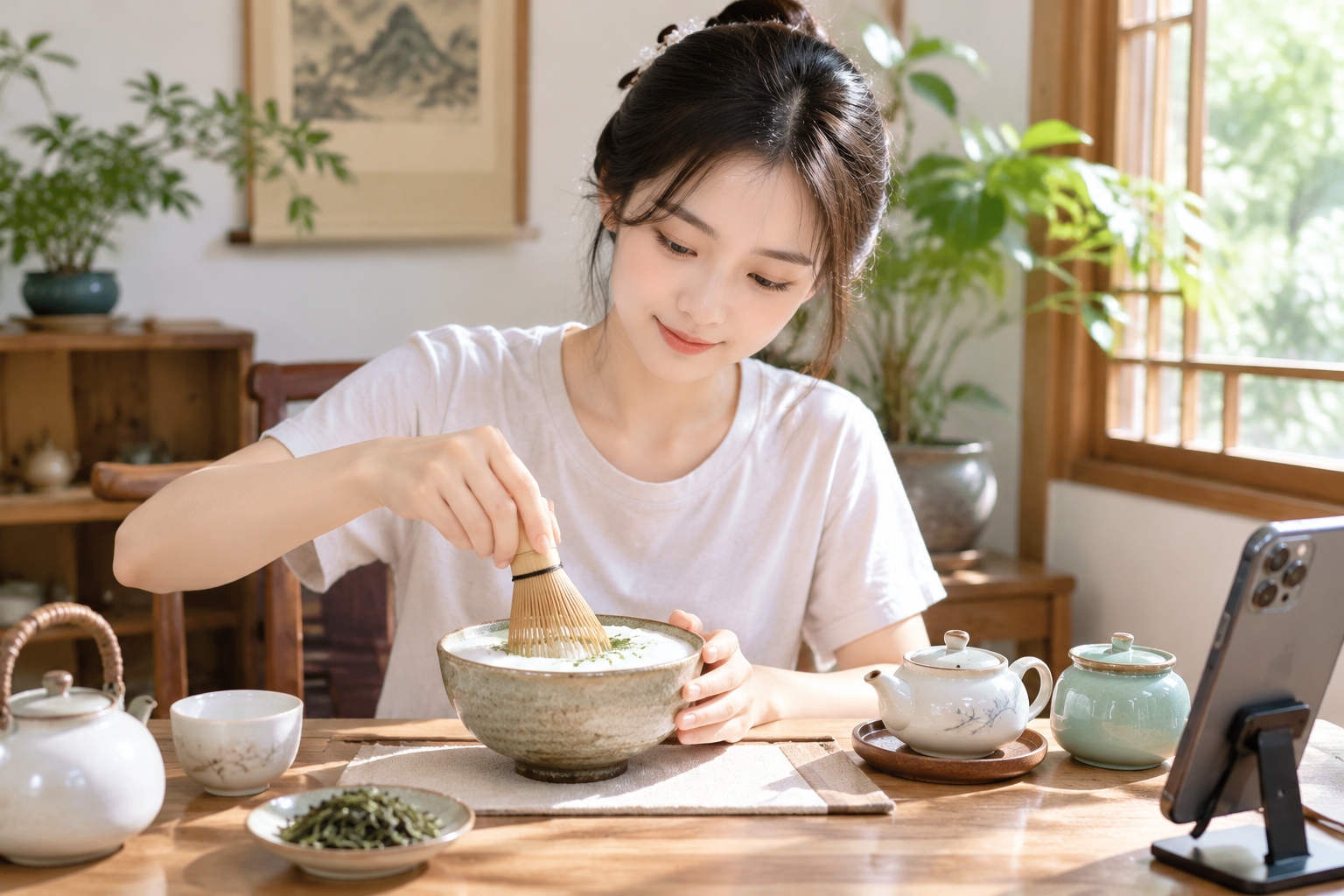
The first time I tried diancha, I was sitting in a small teahouse in Hangzhou, a city known for its lake views and “fancier” teas. In front of me was a dark ceramic bowl holding a thin layer of pale green powder. The tea master poured in a little hot water, then began to whisk it with a bamboo tool that looked like a small, flattened brush.
Within a minute, the watery liquid transformed into something like foam — not the thick bubbles of a cappuccino, but a fluffy, fine layer that floated over the tea, almost like pancake batter. The tea master then took a tiny spoon and drew a twisting line across the white foam. A stroke of art.
Outside, the city was full of cafés. I could picture baristas steaming milk, tilting cups, and drawing rosettas. The scene inside the teahouse looked surprisingly similar to the ritual of latte art — except the people doing it were wearing modern clothes and using an ancient technique.
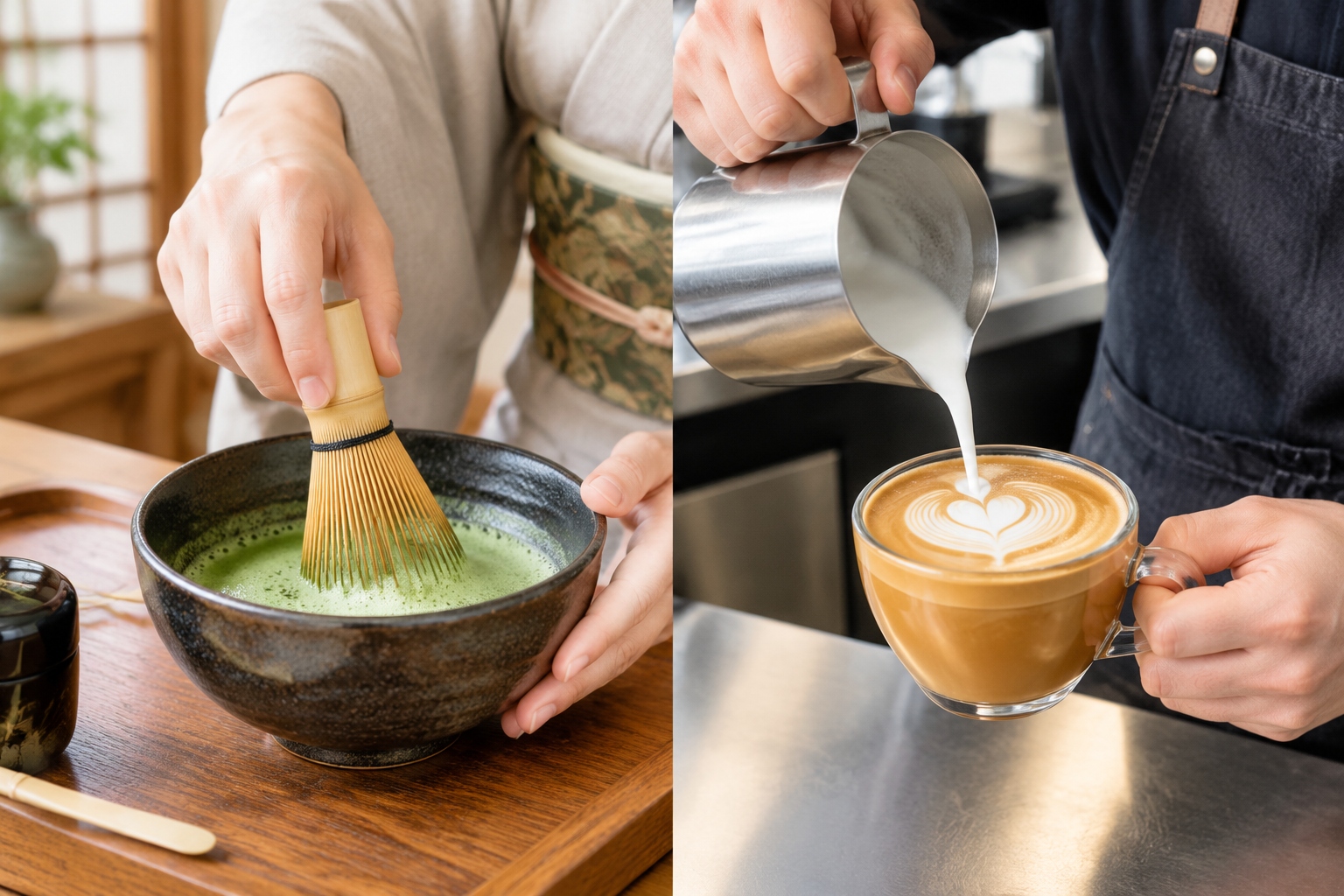
This is not a coincidence. The Chinese art of “dian cha” is a thousand-year-old method of making tea that involves whisking water and powdered tea into a thick, smooth foam. For hundreds of years, Chinese tea masters were creating patterns on this foam in a practice often called “cha bai xi” (tea play). In that sense, the latte art that millions admire on Instagram has a Chinese ancestor — and it’s making a comeback.
What is Song Dynasty tea?
To understand the connection, let me explain what “dian cha” actually is. During the Song Dynasty (960–1279 AD), Chinese people didn’t simply brew loose leaves in a pot. Instead, they took large, compressed tea cakes and ground them into a fine powder. This powder was placed in a wide bowl, hot water was poured over it, and then the mixture was whisked using a special bamboo tool called a “cha xian” (tea whisk). The result was a foamy, mousse-like beverage with a fine grain foam floating on top.
Yes, it’s similar to matcha. But whereas matcha is just whisked green tea, diancha was also an art form. The finest masters could create patterns in the foam by using a thin stream of tea from a small jug or by drawing with a tiny brush made from tea powder mixed with water. This was called “茶百戏” (tea hundred tricks) or “水丹青” (water painting), and it represents one of the earliest forms of “foam art.”
This was not a small tradition. During the Northern Song dynasty, emperors and poets held tea competitions. They would compete to see whose foam lasted the longest and had the finest texture, and who could produce the most beautiful surface patterns. The famous emperor Huizong even wrote a treatise on tea where he discussed the correct way to whisk it up.
The lost art of tea painting
But this playful, artistic side of tea didn’t become famous in the Western world. That honor went to the Japanese tea ceremony, which was heavily influenced by Chinese tea culture but developed in its own way. As for China, during the Ming Dynasty (14th century), a new brewing method — steeping whole leaves in hot water — took over. It was simpler and quicker. The old powdered tea method, along with its foam-painting skills, faded from daily life. By the 20th century, most Chinese people had never seen diancha. The art was effectively lost, surviving only in paintings, poems, and books.
Then something interesting happened. In the last decade, a wave of nostalgia and cultural curiosity swept through China. People started looking for things that were completely “Chinese,” not borrowed from the West. Social media played a big role. Clips from the Chinese drama “Meng Hua Lu” (Dream of the Flower) showed the heroine performing diancha with teapots and bowls, and viewers were amazed. Suddenly, young people wanted to learn it.
Why diancha is making a comeback
Walk around any major Chinese city today, and you’ll see more and more “Chinese-style tea houses” popping up. These are not the crowded, noisy teahouses of the past. They’re often beautifully minimalist spaces with wood, bamboo, and soft light, where you can order a bowl of powdered tea and watch a tea master prepare it.
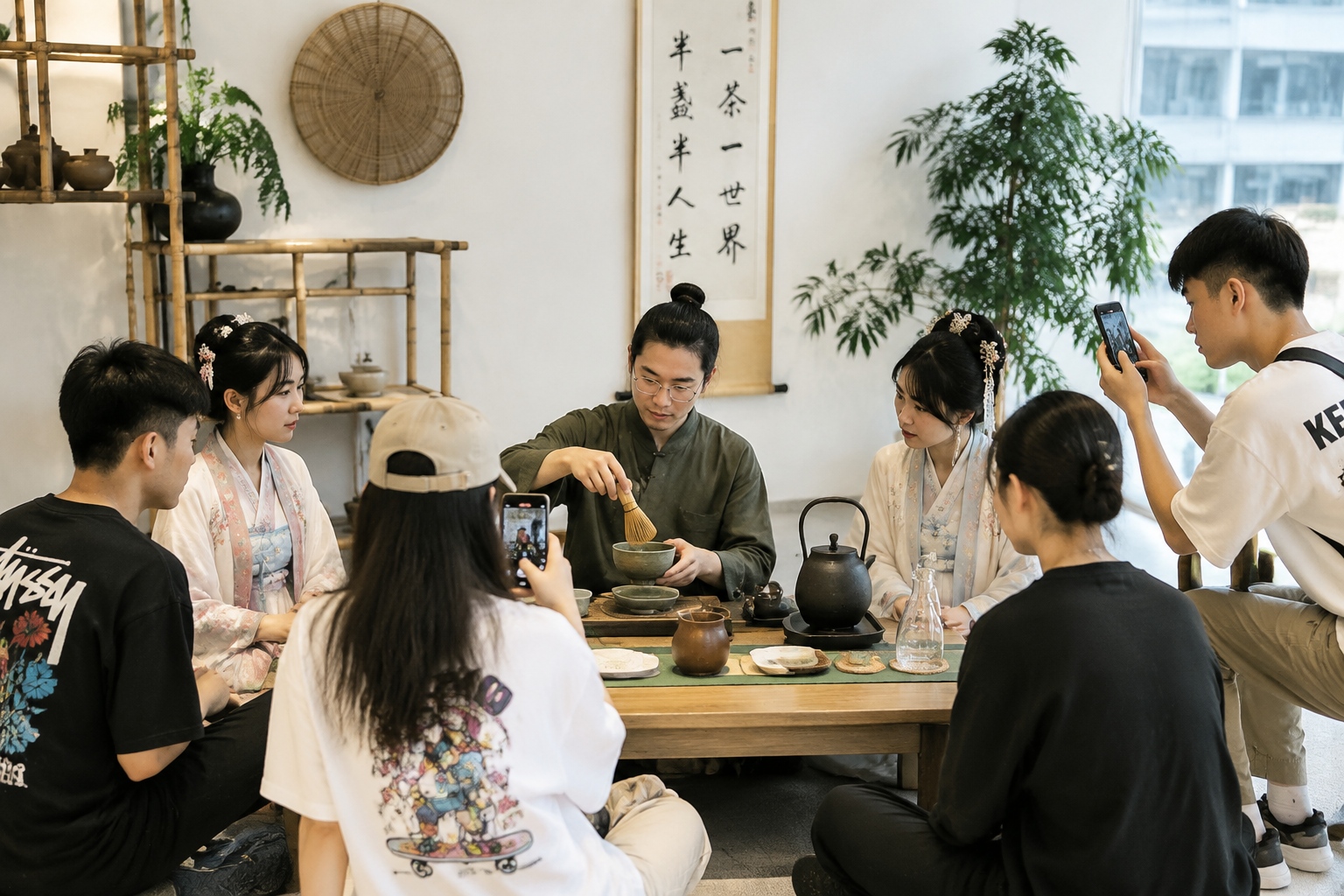
For younger generations, this is not just about drinking tea. It’s about reconnecting with their heritage in a way that feels fresh. Wearing hanfu (traditional Chinese clothing) while trying diancha has become a popular weekend activity. People take photos, post short videos, and share comparisons with latte art. To them, it’s a creative act that blends history with modern expression.
This revival is also happening inside the country’s growing coffee culture. China now has more coffee shops than any other country, and latte art has become highly popular. Millennials and Gen Z scroll through short videos of baristas creating flowers, tigers, and portraits on coffee. When they see a Chinese tea master creating a similar effect on a bowl of tea, it feels both familiar and unique.
Diancha vs. latte art: a closer look
Let’s compare the two. Both need tools, precision, and control. In a latte, you use espresso and steamed milk. Steam heats the milk and creates microfoam, which is poured into the coffee to create a design. In diancha, you use hot water and extremely fine green tea powder. The tea whisk (cha xian) whips the mixture and traps air, producing a layer of micro-foam. The visual result is similar: a creamy surface with patterns formed by careful movements.
But there are key differences. Latte art happens in a few seconds; you have to act fast while the milk is still fluid. Diancha is slightly more forgiving. The whisking can take a minute or two, and the foam is thicker. Also, in latte art you “pour” the design, but in diancha you usually draw on the surface with a small tool after the foam is ready.
And while both techniques require practice, diancha feels more like a meditation. You sit still, your body over the bowl, your wrist moving in small circles. It asks for patience and focus. Many young Chinese people find this calming, a tiny escape from the rush of modern city life.
Trying diancha today
If you’re visiting China, you can try diancha in many cities. Some museums offer cultural workshops, and several tea houses in the eastern part of China now include it in their menus. In places like Hangzhou, Suzhou, and Chengdu, you can often find a demonstration followed by a chance to make your own.
Don’t be afraid to jump in. When I tried it, my foam was thin and uneven. The tea master smiled and gently adjusted my wrist. With a little practice, I got a thick white foam with a faint swirl. It was satisfying in a way that making coffee at home rarely is. Then I drew a little leaf on top with a small wooden stick. It wasn’t beautiful, but I felt like I was touching the past.
A future in an ancient foam
So, is diancha simply a retread of old traditions? Not exactly. What’s growing is not just nostalgia, but a creative rethinking. Chinese young people are using digital platforms to teach, share, and remix ancient skills. They are filming the tea whisk in slow motion, adding modern music, and creating tutorials with English subtitles. This cultural revival is going global.
On platforms like Instagram and Douyin, people outside China are discovering diancha for the first time and are often shocked to see the similarity to latte art. Some call it “ancient latte art.” That label misses the point: it’s its own art form, a masterpiece of patience and skill. But it does open the door to a deeper exchange.
The story of diancha is also a story about how the past can become a future. It doesn’t require advanced technology, but it uses technology to reach a wider audience. An ancient tea whisk becomes a symbol of creativity and self-expression, not just of tradition. The wooden bowl holds not tea, but a bridge between times.
Next time you sip a cappuccino, think about this: a thousand years ago, a Chinese scholar was doing the same thing, whisking a bowl of tea and drawing a tiny bird on the foam. They knew what we now love about latte art. Some deep human desire to make our food and drink beautiful is timeless.
In today’s China, that desire is getting a second life. And the best part is, you don’t need to be an expert to feel it. Just pick up a whisk and try. The foam will rise, the design will fade, but the connection remains.
Start the discussion at forum.chinacomes.com