

One Evening in a Shanghai Park
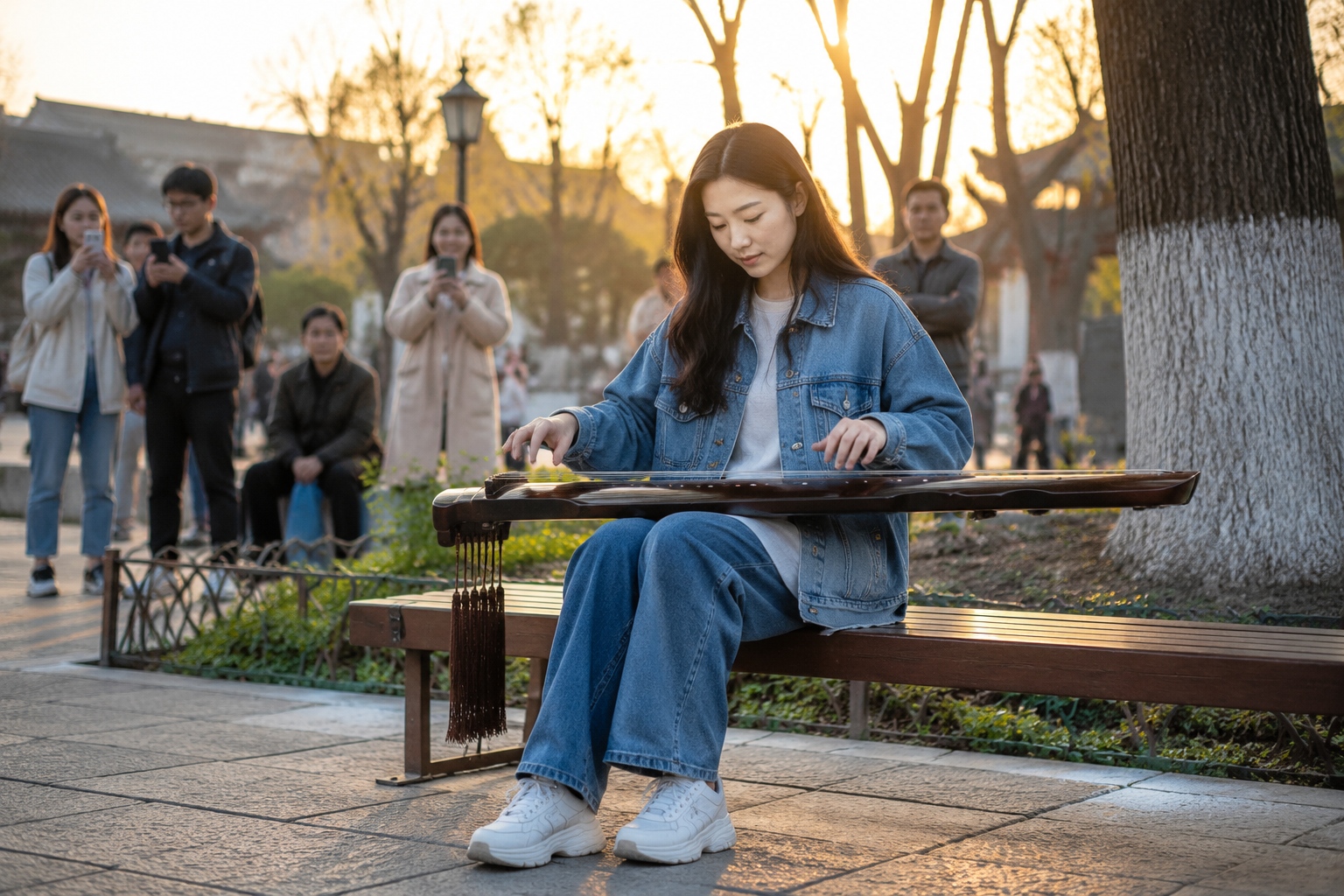
The sun was going down over Fuxing Park, and the noise of the city seemed to soften. Under a plane tree, a group of people had formed a loose circle around a young woman who was sitting on a wooden bench, her back straight, her eyes half-closed. On her lap lay something I had not seen in this park before: a long, dark wooden zither with seven silk strings. She plucked one string, and the sound hung in the air like a question.
She was 27, a graphic designer named Lin. She had been taking guqin lessons for about a year. ‘I used to scroll through my phone every night until my eyes hurt,’ she told me. ‘Now I spend at least an hour with the qin. It forces me to sit still. My teacher says the qin tunes your mind before it tunes the instrument.’
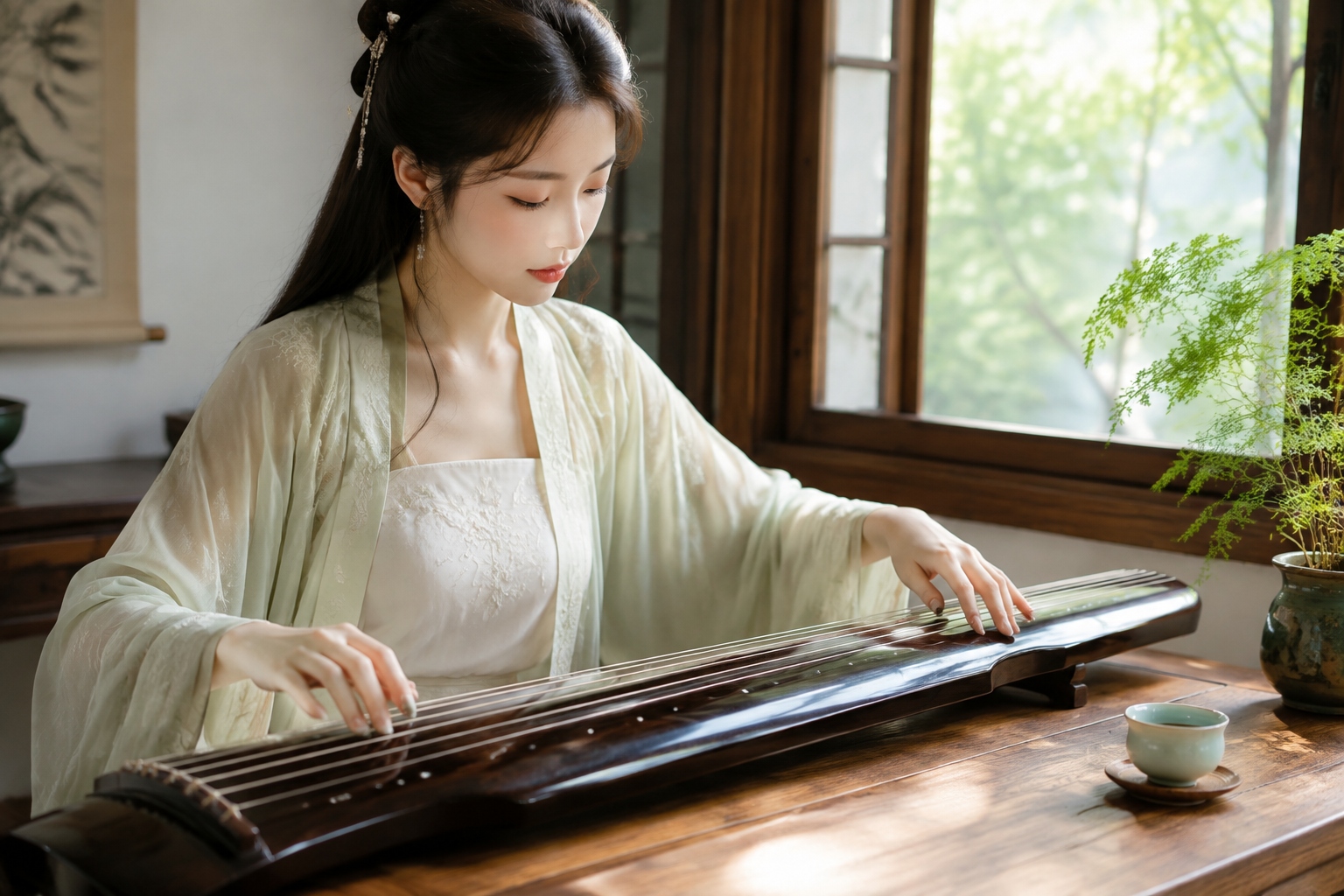
A few years ago, Lin would have been a rare sight. The guqin — often called ‘the instrument of the sages’ — was almost forgotten in 20th-century China. But today, in Beijing, Shanghai, Chengdu and scores of smaller cities, young people are signing up for guqin classes, renting studio time, and posting videos of their practice sessions. It is not a mass movement like K-pop or gaming. It is quieter, more private — yet it is unmistakably happening.
The Story That Started It All: Boya and Ziqi
To understand why a 27-year-old designer would choose an instrument with a thousand years of history, you have to go back to a story every Chinese schoolchild knows.
According to legend, a master musician named Bo Ya was playing his qin one day when a woodcutter named Zhong Ziqi stopped to listen. Ziqi could hear not only the notes but the images behind them: when Bo Ya played a piece about mountains, Ziqi said he could see Mount Tai; when Bo Ya played about rivers, Ziqi said he saw the Yangtze. Moved by being understood so completely, Bo Ya took Ziqi as his soulmate. Years later, when Ziqi died, Bo Ya smashed his qin and never played again. ‘There will be no one else to understand my music.’
This story defines the guqin not as a performance instrument but as a tool for inner expression and deep human connection. In ancient China, the guqin was one of the four arts that every scholar was expected to master — along with chess, calligraphy and painting. It was not meant to be played in concert halls. It was played for oneself, for friends, for the moon.
An Unlikely Revival
That idea of the guqin as a companion rather than a spectacle is exactly what draws many young Chinese to it today. The instrument became nearly extinct in the 20th century, when war, revolution and rapid industrialization pushed tradition aside. When UNESCO named it a Masterpiece of the Oral and Intangible Heritage of Humanity in 2003, estimates suggested fewer than 400 people worldwide could play it proficiently.
Since then, the numbers have grown. Guqin schools have emerged across China, many of them run by masters who themselves learned from surviving older teachers. Among the students, a significant number are in their twenties and thirties — a generation that grew up with the internet, social media, and plenty of anxiety. They are not looking to join an orchestra or win a talent show. They are looking for something the digital world does not offer: silence, patience, and a feeling of being rooted in a culture that is often described but rarely felt.
Why Young Women Are at the Forefront
In many guqin classes I have visited, young women outnumber men by a wide margin. One explanation is that playing the guqin has become part of a broader ‘new Chinese style’ (guochao) movement, where young consumers embrace traditional aesthetics — wearing hanfu, collecting traditional crafts, and attending classical poetry readings. For many women, the guqin offers a way to embody a cultivated and composed femininity that feels different from both Western pop culture and old-fashioned patriarchy.
But Lin says the gender balance is simpler: ‘Most men I know run away from anything that requires sitting still for an hour.’ She laughed. ‘Frankly, it’s a practice of facing your own thoughts. That takes courage.’
The Guqin as Modern Meditation
That ‘facing your own thoughts’ is the heart of what has been called the modern guqin revival. In a society where ‘involution’ — the exhausting rat race for success — has become a buzzword, young Chinese are actively seeking slow activities that resist productivity culture. The guqin is particularly suited to this. It has no rhythm section; the player sets the tempo. Its music is sparse and quiet, with notes that fade into silence. To play it well, you must breathe, listen, and accept imperfection.
‘When I play the guqin, I can’t multitask,’ says Chen, a 31-year-old software engineer in Beijing who started lessons two years ago. ‘If my mind wanders, my fingers feel it immediately. The qin is a mirror for your attention. It’s like meditation, but with a beautiful sound to guide you.’
This meditative aspect has attracted not only stressed office workers but also psychologists and researchers. Some studies have suggested that playing traditional Chinese instruments can lower anxiety and improve mood, though the guqin’s effect has not been extensively researched. Anecdotally, many players describe a profound sense of calm and a different relationship with time.
Not Just a Hobby: The Social Side of the Guqin
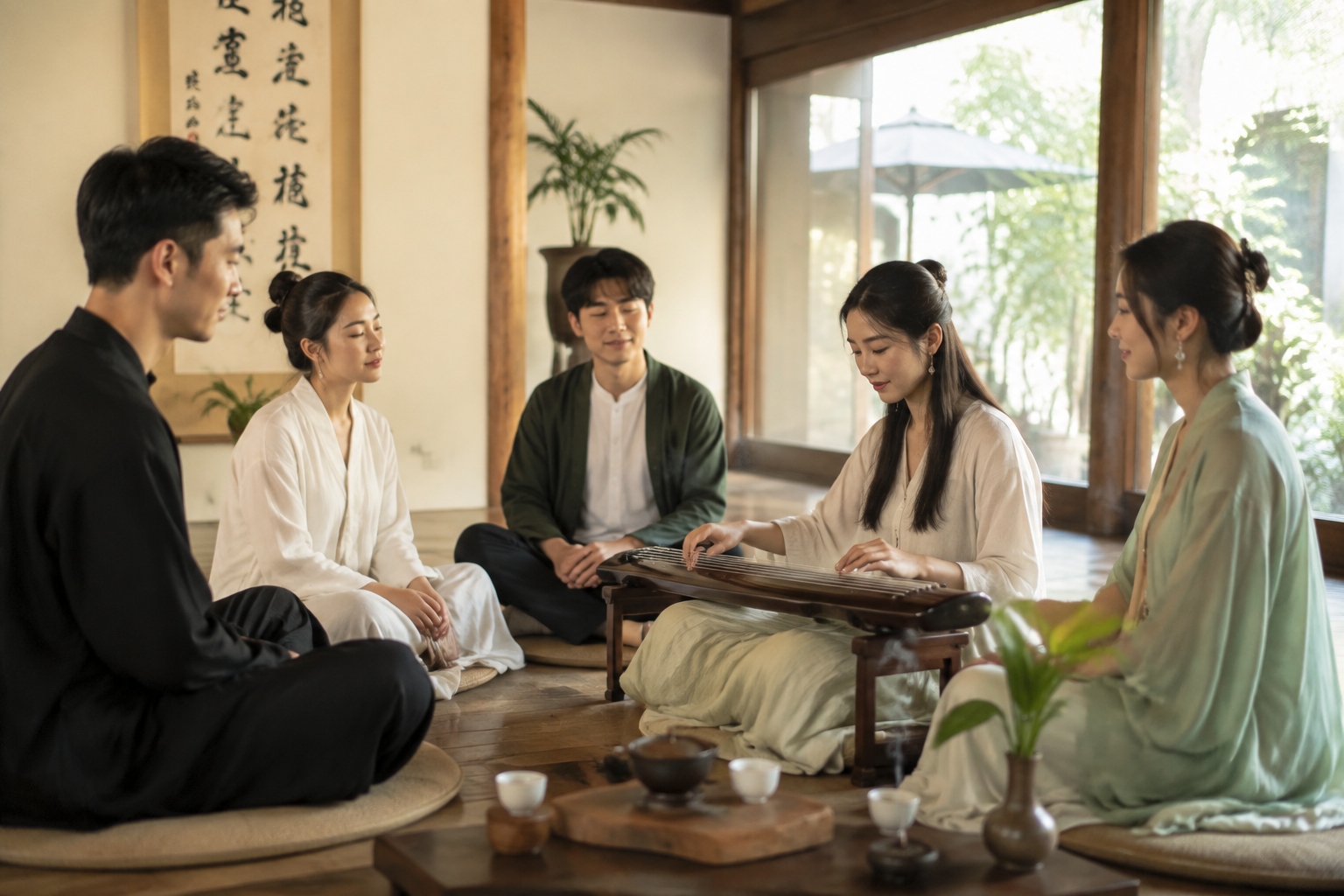
Despite its solitary nature, the guqin has also created new communities. Many students join regular ‘yaji’ (elegant gatherings), where players meet at teahouses or cultural spaces to play for each other in a low-pressure setting. These gatherings are intentionally small. Sometimes there is tea, sometimes incense, often no agenda. For young urbanites who are tired of networking and happy-hour noise, the guqin offers a way to connect with others that starts with listening.
Lin told me about her first yaji. ‘We sat in a circle, and each person played one piece. No comments, no applause. We just listened. Afterward, when we talked, it felt like we had known each other for years. That never happens at a normal party.’
The Challenges Behind the Aesthetic
The guqin is not an easy instrument to romanticise away. It has no frets, so the player must find each pitch by ear and press the string exactly at the right spot. The left hand’s fingernails are kept long, while the right hand plucks the silk strings quite hard — calluses appear quickly. Music is written in a unique tablature called jianzipu, a system of Chinese characters that describes fingering rather than notes. Beginners often spend months just learning to produce a clear sound.
‘The first month, I wanted to quit every day,’ Chen said. ‘My fingers hurt, and I kept making this scratching noise. But one evening, I played a single note and it just seemed to float in the room. Something clicked. I thought, I want to be able to do that again.’
What the Guqin Says About China Today
When I watched Lin play in the park that evening, she looked completely absorbed. A few people took photos with their phones. One toddler stopped to stare. After she finished, she smiled and chatted with onlookers. She was not performing for them; she was sharing something personal.
The guqin revival is not a nostalgia trip. It is a response to the fast, digital, hyper-connected life that many Chinese experience. By picking up an instrument that asks for patience, presence and self-reflection, young Chinese like Lin are not escaping their culture — they are making it audible again, one quiet note at a time.
As she packed up her zither, I asked her if she had a goal. ‘To be able to play for myself in thirty years,’ she said. ‘And maybe, one day, to find my own Ziqi.’
Start the discussion at forum.chinacomes.com