


It Starts with a Cup
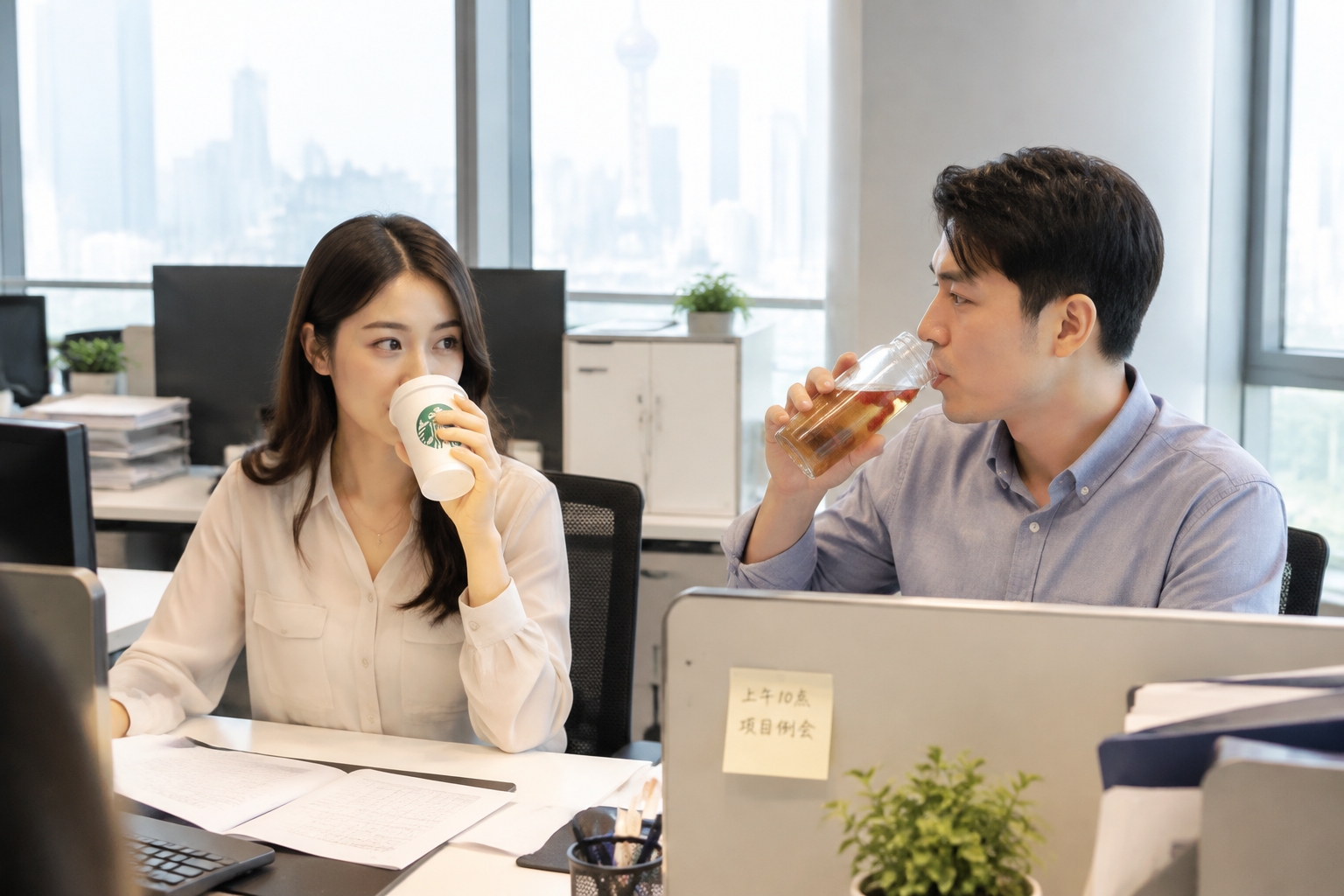
At 8:30 a.m. in a Shanghai office, two colleagues sit side by side. One sips a warm latte from a paper cup with a green logo — Luckin Coffee. The other opens a glass thermos, releasing the scent of jasmine tea and goji berries. Both are in their late twenties. Both believe their drink is the right way to start the day.
This is not a scene of conflict. Coffee and tea in China today are no longer rival camps. They are two parallel daily rituals that millions of young Chinese switch between — sometimes in the same day.
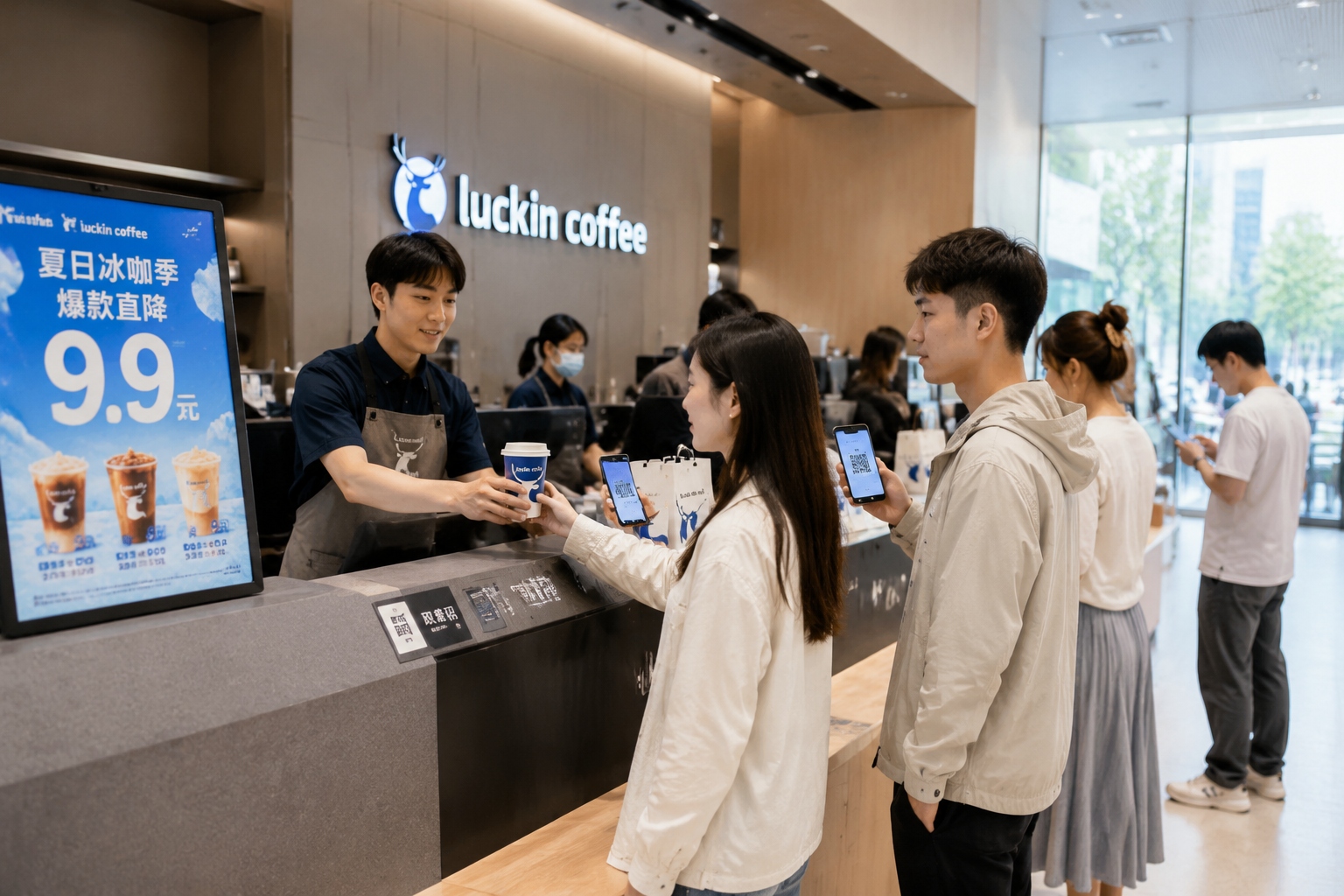
The 9.9-Yuan Coffee Revolution
Walk into any office in Beijing or Shenzhen, and you’ll see paper coffee cups everywhere. The driving force? A price war between Luckin Coffee and Cotti Coffee, two domestic chains that made decent coffee available for as little as 9.9 yuan (about $1.40).
Before these chains showed up, coffee was a treat for the middle class — a 40-yuan cup at Starbucks felt like a luxury. Then Luckin digitized everything: order on the app, pick up at the counter, no need to talk to a barista. Cotti matched the price, and suddenly coffee became an everyday convenience.
Delivery apps like Meituan and Ele.me made it even easier. You can order a coffee while still in bed and have it arrive in 20 minutes, often with a coupon that brings the price down to 9.9 yuan. For Zhang Wei, a 26-year-old product designer, coffee is not about status. “It’s fuel. I need caffeine, and 9.9 yuan works better than a 5-yuan bottle of tea,” she says. “I don’t taste the difference between a cheap oat latte and an expensive one, but I do feel the difference in my wallet.”
The Thermos That Never Leaves Your Desk
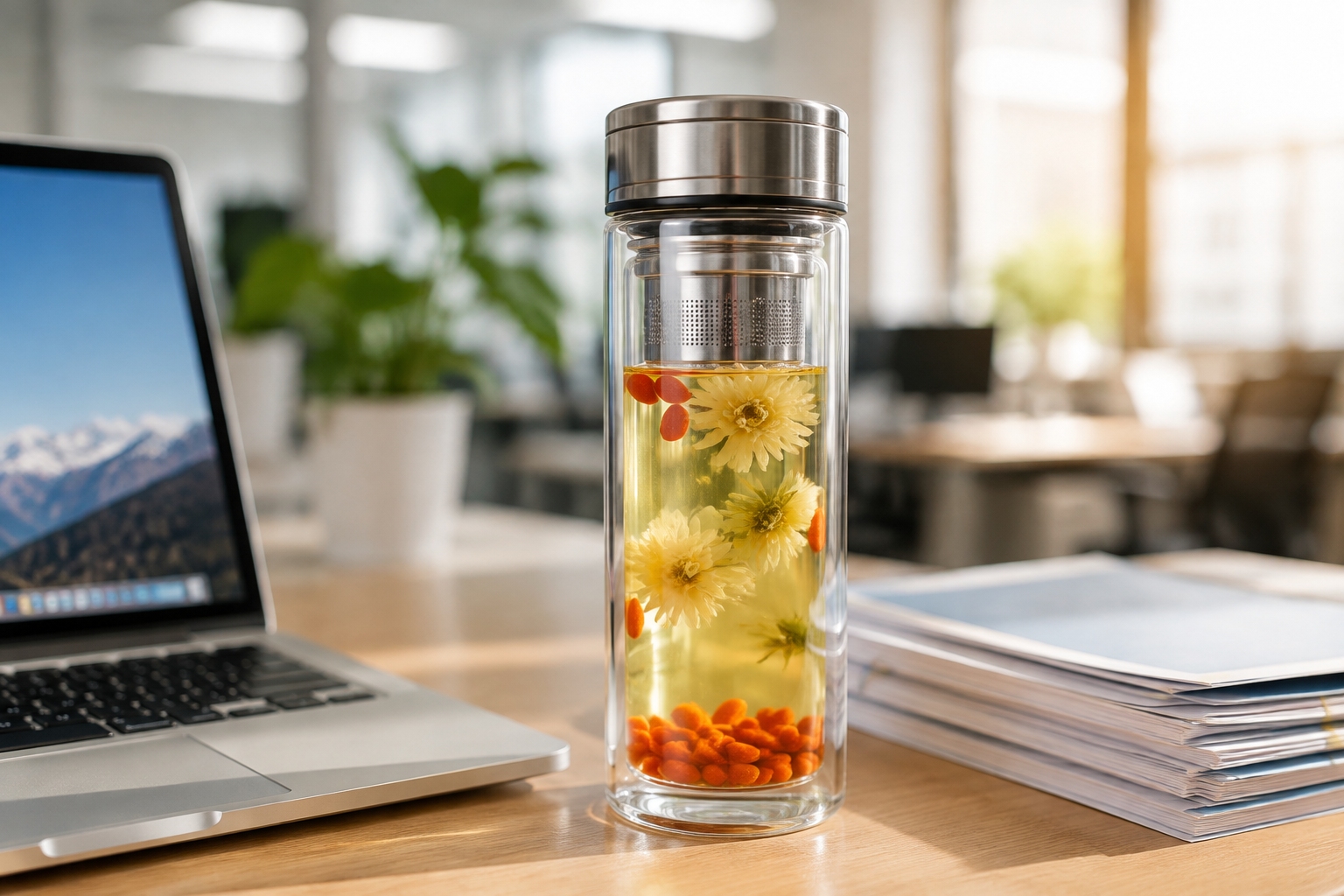
If coffee is new-speed, tea is old-steadiness. Look a few desks away from Zhang Wei, and you’ll see her colleague Li Ming with a different companion: a 500-milliliter glass thermos with a stainless steel filter. Inside, his own mix of chrysanthemum, wolfberry (goji), and green tea.
Li Ming says he started drinking tea in college, but the habit deepened when his mother told him that staring at screens all day hurts his eyes. “She said goji berries are good for the eyes. I don’t know if that’s science, but it makes me feel better,” he laughs.
In Chinese offices, the thermos is a personal symbol. You rarely see borrowed cups for tea. Everyone has their own. It says “I take care of myself.” It’s also a low-key way to show taste — some go for Da Hong Pao oolong, others for white tea or plain jasmine. Tea breaks in China are not a set time like in Britain. Instead, people add hot water to their thermos throughout the day. A thermos is a personal kettle. Many young people also bring their own tea leaves, not tea bags. It’s a more serious way of drinking.
The Daily Switch: Morning Wake-Up, Afternoon Wind-Down
Ask young Chinese how they schedule their drinks, and you’ll notice a pattern: coffee in the morning, tea in the afternoon.
“Coffee gets me sharp for the first two meetings,” says Zhang Wei. “But after lunch, I need something that won’t make me jittery. Tea is a slow release. Also, my boss is a tea guy, so when we have long discussions, he pours me a cup of puerh. It’s a sign of trust.”
This split isn’t random. It mirrors a deeper rhythm in Chinese work culture. Mornings are for efficiency, deadlines, quick outputs. Afternoons are for relationships, negotiations, patient talk. Coffee fits the first; tea fits the second. This rhythm also matches the Chinese concept of “yangsheng” (life cultivation). The morning is yang (active) and coffee suits it; the afternoon is yin (passive) and tea balances it. Some people even believe that drinking coffee too late in the day will make them lose sleep, so they switch to tea after lunch.
What Your Cup Says in a Social Setting
Coffee and tea also carry different social codes in China. Invite a business partner to a coffee shop — it’s modern, energetic, a place for deals. Invite them to a tea house — it’s warmer, more traditional, a place for trust-building.
Younger generations blur the lines. A group of friends catching up might go to a “tea coffee” hybrid store, where you can order a jasmine tea latte or an espresso made with Chinese tea leaves. These fusion drinks, like the tea-coffee mixes from brands “Nayuki” or “Heytea”, are becoming popular because they need no either/or.
But the old associations stay. As one 30-year-old banker from Guangzhou puts it: “If I’m pitching to a client, I choose coffee because it makes us look sharp. If I’m having dinner with my parents, I make them tea — it shows respect.”
There’s also the “tea ceremony” version. Some young Chinese are taking up gongfu tea brewing at home, buying clay pots and learning the steps. It’s a way to slow down in a fast-paced world. Coffee is for performing; tea is for being.
A Generation Living in Two Time Zones
The coexistence of coffee and tea is not just about taste. It reflects a bigger story about China’s youth — they are the generation that grew up with both ancient traditions and global brands. They can quote a Tang dynasty poem about tea and order a cold brew from an app in the same minute.
This duality appears everywhere: they eat herbal soups but also fried chicken; they practice mindfulness but check their phones constantly. The two drinks are a perfect metaphor. Coffee is the future, tea is the past — and both meet in the present.
To an outsider, the Chinese coffee-tea mix might look confusing. But spend a week in any Chinese city and you’ll see it: the same person carrying a takeaway coffee at 9 a.m. and a thermos of tea at 3 p.m., shifting their rhythm with ease. It’s not about choosing sides. It’s about having more tools for a good day.
Practical Tips for Visitors
If you’re visiting China, don’t assume you must pick one cup. Try both, just like the locals do.
- Find the 9.9-yuan deals. Download the Luckin or Cotti app (or use Meituan) to get first-time discounts. Many stores offer coupons.
- Buy a good thermos. You’ll see everyone carrying them. It’s practical and a conversation starter.
- Visit a tea market. Go to a place like Maliandao in Beijing or Fenghuang Village in Guangzhou. Ask for a sample of jasmine pearl tea.
- Don’t be afraid of tea cafés. Try a cheese foam tea at Heytea or a rapeseed honey latte at a local indie shop. It’s a new genre that belongs to China.
Understanding coffee and tea in China is not about ranking them. It’s about seeing how a culture can hold two different traditions without pushing one away. And that’s something worth raising a cup to — whichever you choose.
Start the discussion at forum.chinacomes.com