

Four in the afternoon, in a lane in Kashgar’s old town
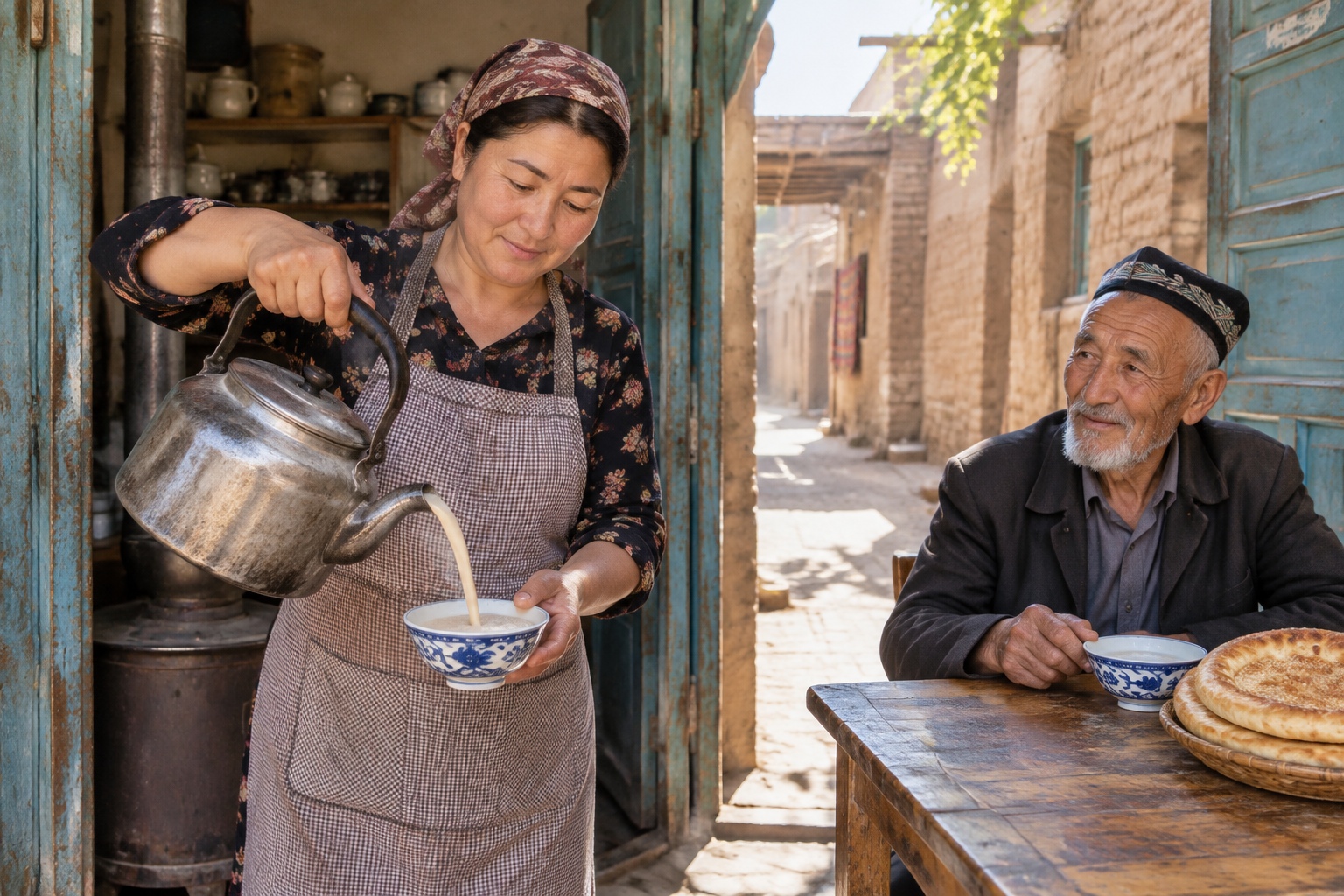
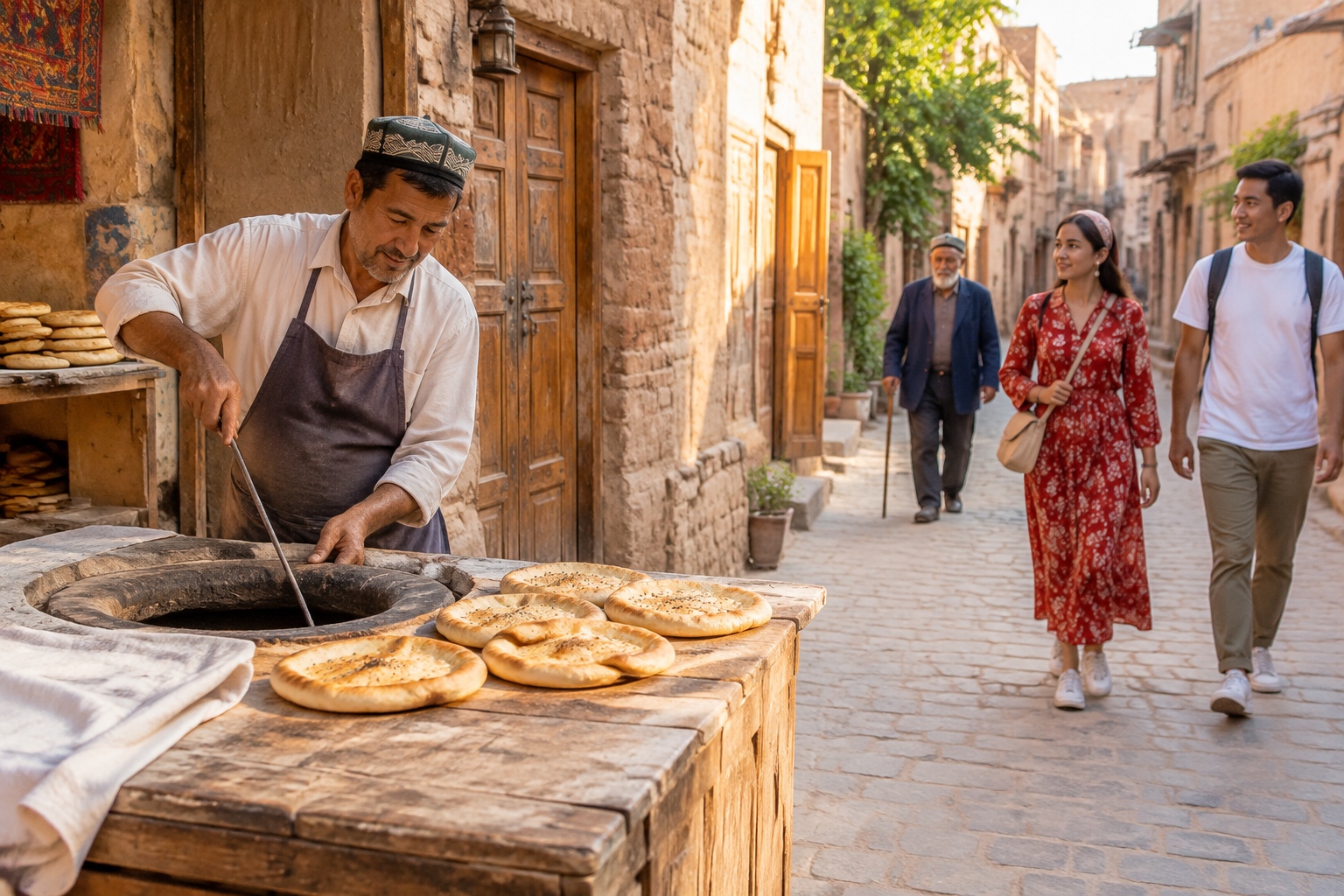
It is just past four, and the light in Kashgar is still high and hard. In summer the sun here does not set until after ten at night, so four o’clock feels like early afternoon. In a narrow lane of the old town, the smell of baking naan comes out of a clay tandoor and mixes with something sweeter: milk, sugar and tea.
A small tea shop has four tables, two of them pushed together. An old man in a flat cap sits alone with a bowl of salted milk tea and a piece of naan. Beside him, three university students wait for iced fruit tea and film themselves for a short video. A foreign couple has been handed two bowls of the salty drink and is working out whether they like it. The owner, a woman in her forties, refills the old man’s bowl without being asked.
Nobody is in a hurry. The old man will probably still be there in two hours. That is the small puzzle a cup of tea poses in Kashgar: it costs about as much as a bus ticket, and it buys an entire afternoon.
Where Kashgar is — and why the clock feels wrong
Kashgar sits in the far west of Xinjiang, in the west of China, within a few hours’ drive of the borders with Kyrgyzstan, Tajikistan and Pakistan. For centuries it was a trading town on the Silk Road, and it still feels like a place where routes meet rather than end.
The old town is not a museum. Its core is a dense grid of alleys you can walk across in twenty minutes. A large renovation that began around 2010 replaced crumbling houses and installed water, gas and electricity while keeping the alley layout largely intact. Some visitors find the result too tidy, too polished, more film set than neighbourhood. Walk ten minutes off the main tourist lane and that argument gets complicated: laundry hangs between walls, children come home from school, a barber works out of a single chair.
One country, one time zone
China runs on a single time zone, Beijing time, even though Kashgar is roughly 3,000 kilometres west of the capital. That means the sun is overhead here closer to two in the afternoon than to noon. Daily life shifts accordingly: lunch can be at two, dinner at nine or ten, and in July children are still playing outside at eleven at night.
If you come from Europe or North America, this is the first thing to understand about the pace here. Nobody is being lazy by starting late. They are living on solar time while the official clocks say something else.
Salt tea and bubble tea on the same street
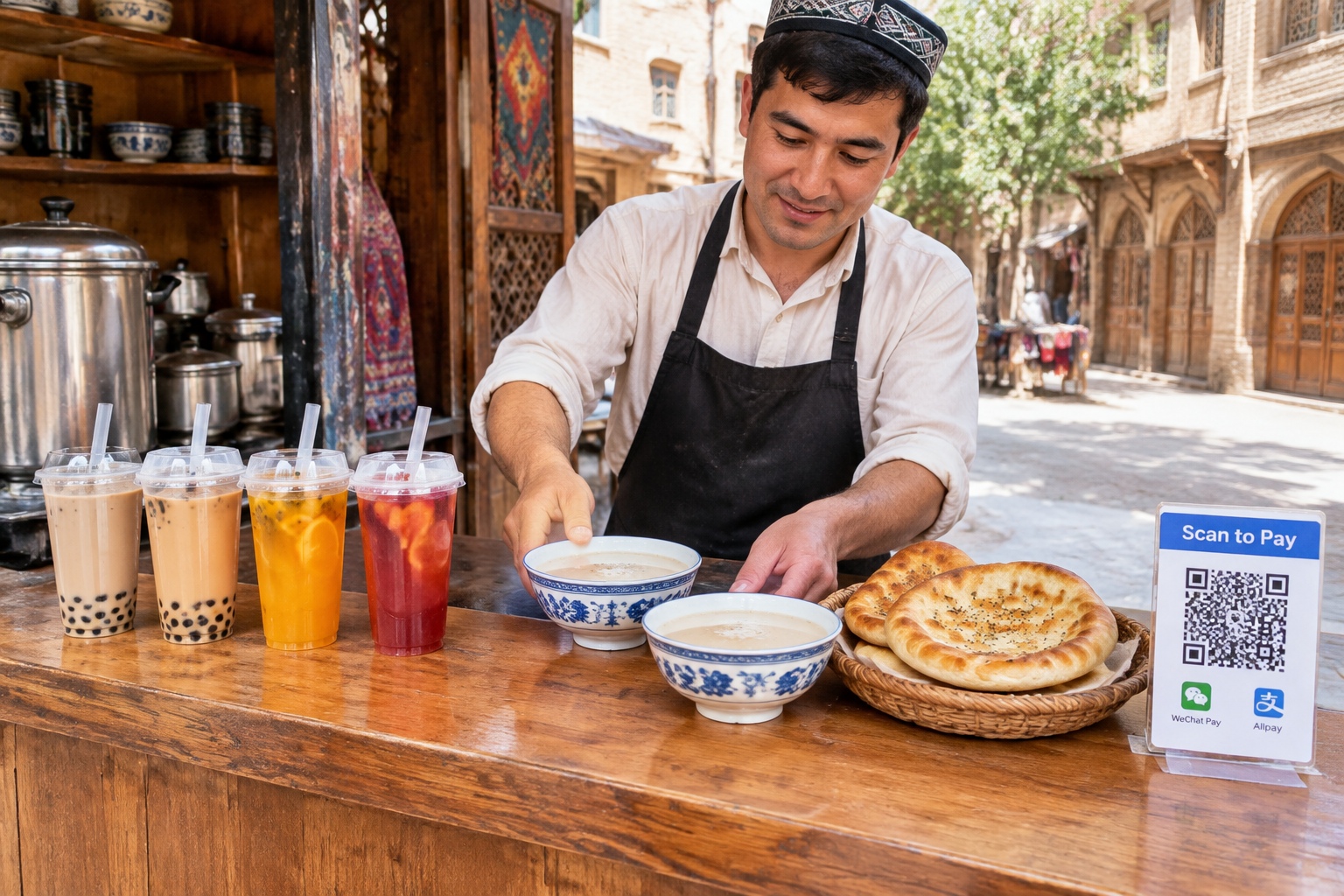
Traditional Kashgar tea is not sweet. It is brick tea — dark, fermented tea pressed into slabs — boiled with milk and salt, and served in a bowl. The salt is not an accident. In a dry climate, after a heavy meal of lamb and naan, a salty bowl does more for you than a sugary one. A bowl in a small teahouse in the old town usually costs somewhere between five and ten yuan.
Two doors down you can buy a pearl milk tea or a fruit tea for ten to twenty yuan, in a sealed plastic cup with a straw. Chain shops selling drinks for six or eight yuan have reached Kashgar too. Teenagers order them, and so do tourists who want something cold. Older residents mostly do not.
Almost nobody pays with cash. A QR code is taped to the counter, and money moves through WeChat Pay or Alipay. Delivery riders thread along the wider streets at the edge of the old town, because the alleys themselves are mostly too narrow to ride through.
The tea house as a public living room
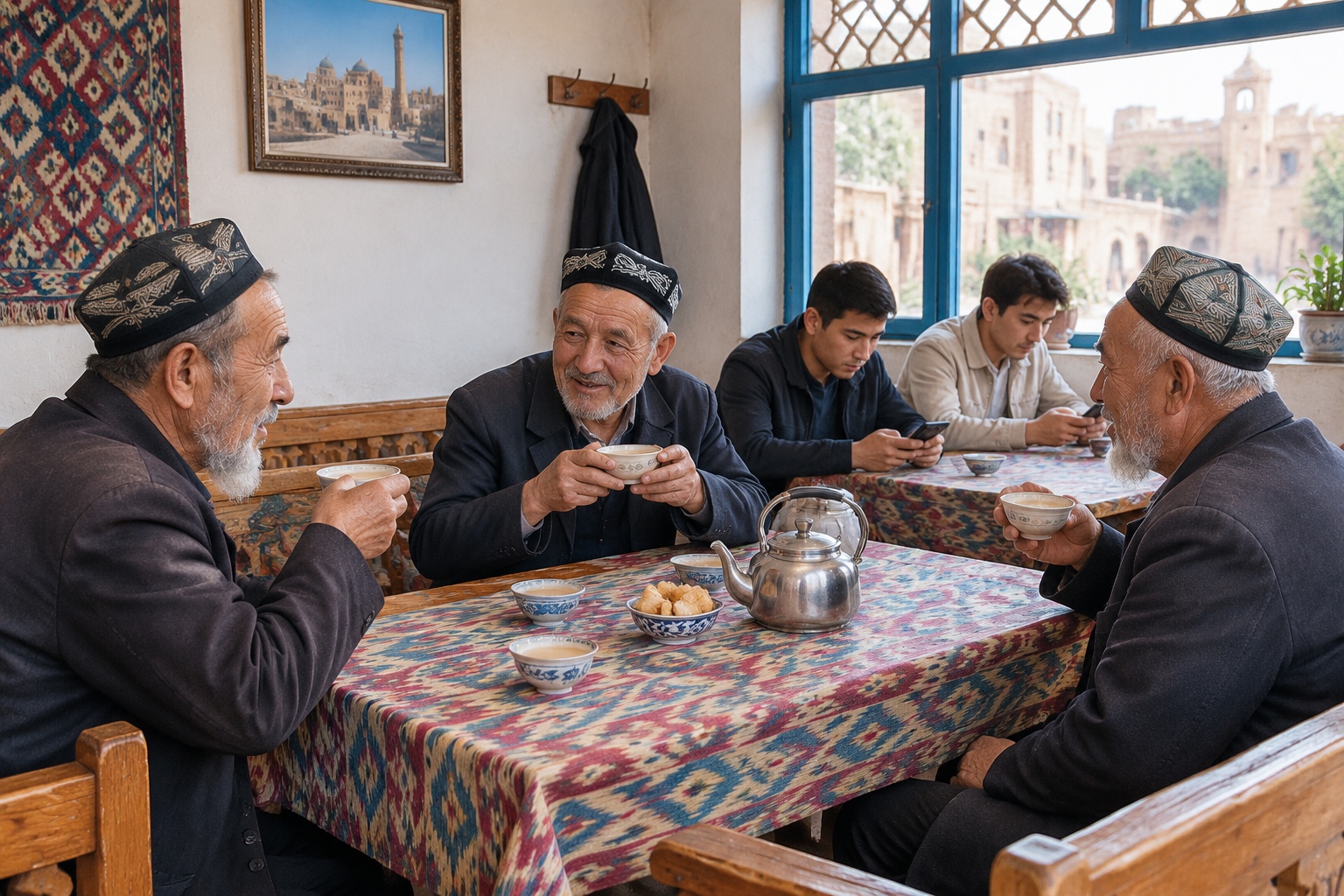
Sociologists in the West have a term for places like this: the third place, somewhere that is neither home nor work, where a community actually meets. Ray Oldenburg coined it in 1989 with reference to cafés, bars and post offices in Europe and America. Along the Silk Road the same idea is older, and it is called the chaikhana — the tea house.
What happens inside one in Kashgar would look familiar to anyone from Istanbul to Tehran to Almaty. Retired men come in the afternoon to sit, not to buy much. Neighbours pass on news. A shopkeeper takes twenty minutes off and ends up staying an hour. Students use the wifi and share one drink. Tourists walk in, look around, and are waved towards a free chair at an occupied table.
Three languages move through the room: Uyghur between neighbours, Mandarin with students and officials, English with visitors. When those fail, there is pointing — and there is tea.
What “slow” means here — and what it doesn’t
It would be easy to write this off as a place that has not caught up. That reading is wrong.
China’s big cities run fast: Shanghai, Shenzhen, the all-night delivery economy, the eleven p.m. reply to a work message. Kashgar’s rhythm is different, and the reasons are concrete — brutal summer heat and cold winters, a walkable old town where most of daily life sits within a fifteen-minute walk, and a dense network of people who know each other. When you know everyone, a two-minute errand turns into a thirty-minute conversation.
It is closer to the Spanish sobremesa, the long talk after a meal, or the Italian idea of a slow city, than to anything measured in productivity. Slowness here is a rhythm that has been chosen and maintained, and it is now partly reshaped by tourism — busier in summer, quieter in winter.
The business behind a cup of tea
The tourism season runs roughly from May to October, with the National Day holiday in early October as the peak. Shops on the main lanes pay much higher rent than those two alleys back, and shopkeepers plan their whole year around those six months. A viral short video on Douyin can fill a small shop for a week; a rainy week in July can empty it.
Many owners are in their twenties and thirties, people who left Kashgar for university or work in Urumqi or inland cities and came back to open something. Some run tea shops; others sell dried fruit, carpets or handmade instruments. In winter, when the tourists go, the same shops stay open for neighbours and for each other.
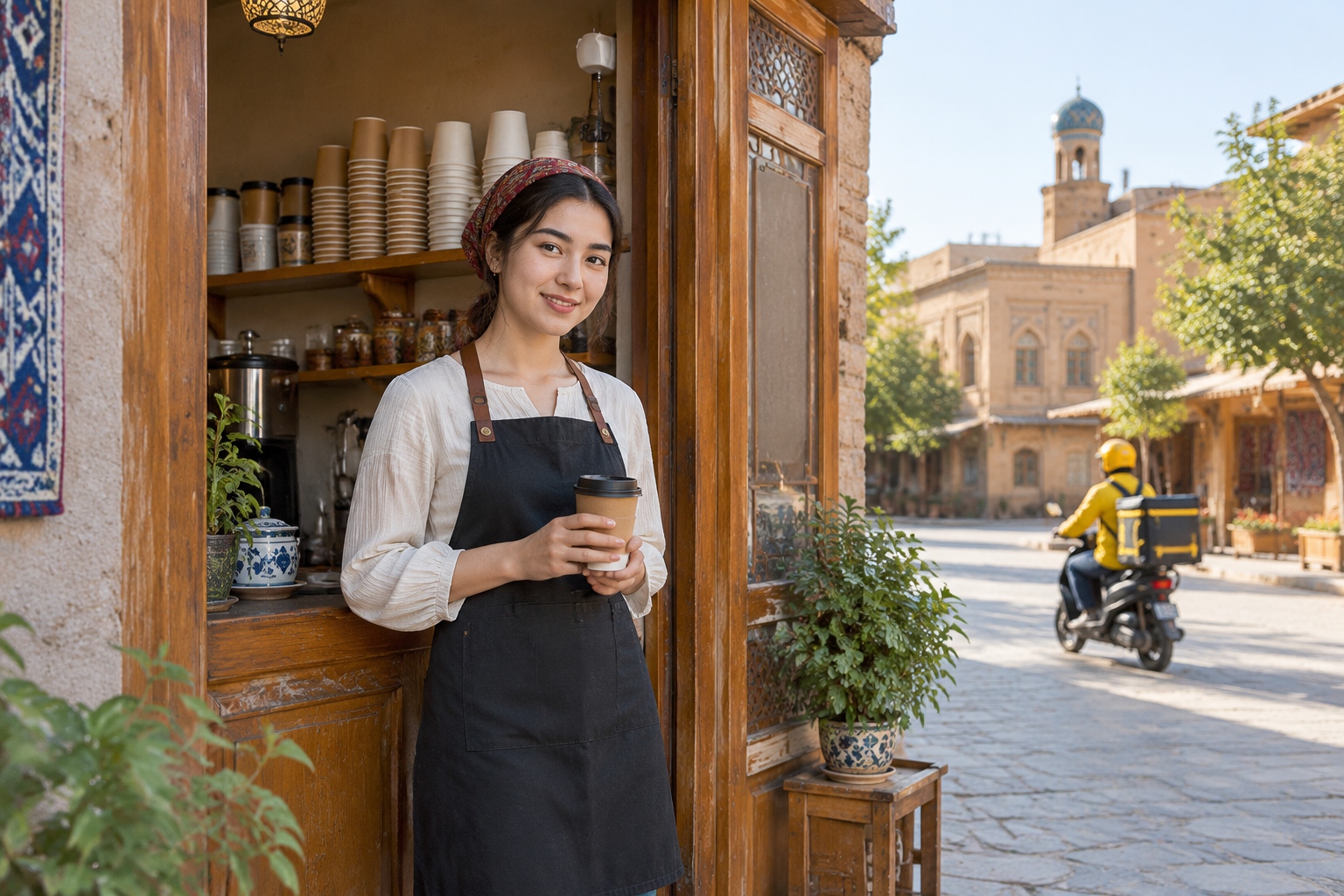
When tourists and locals end up at the same table
The most ordinary thing in the old town is also the most interesting: strangers share space without much ceremony. A man moves his bowl aside so a visitor can sit. A woman points down an alley when someone looks lost, then walks them part of the way. A teenager is asked to take a photo, takes four, and hands the phone back with a grin.
Some of it is imperfect. Not every visitor realises that the houses in the alleys are homes, and not every resident enjoys being photographed. But most contact is small, practical and unremarkable, which is exactly why it matters. Misunderstandings rarely dissolve through argument. They dissolve over tea, at a shared table, on an ordinary afternoon.
Leaving, with an empty cup
By seven, the light has gone gold. The old man’s bowl is empty and he is still talking to the man at the next table. The students have left and a new group has arrived. The owner is wiping down the counter and already thinking about tomorrow’s stock.
Kashgar’s old town is often described from a distance, as a symbol, a headline, a stop on a Silk Road itinerary. Up close it is something simpler and harder to argue with: a place where people live, sell tea, let their children play outside late, and take their time. The cup is empty. The alley is still loud.
Start the discussion at forum.chinacomes.com