
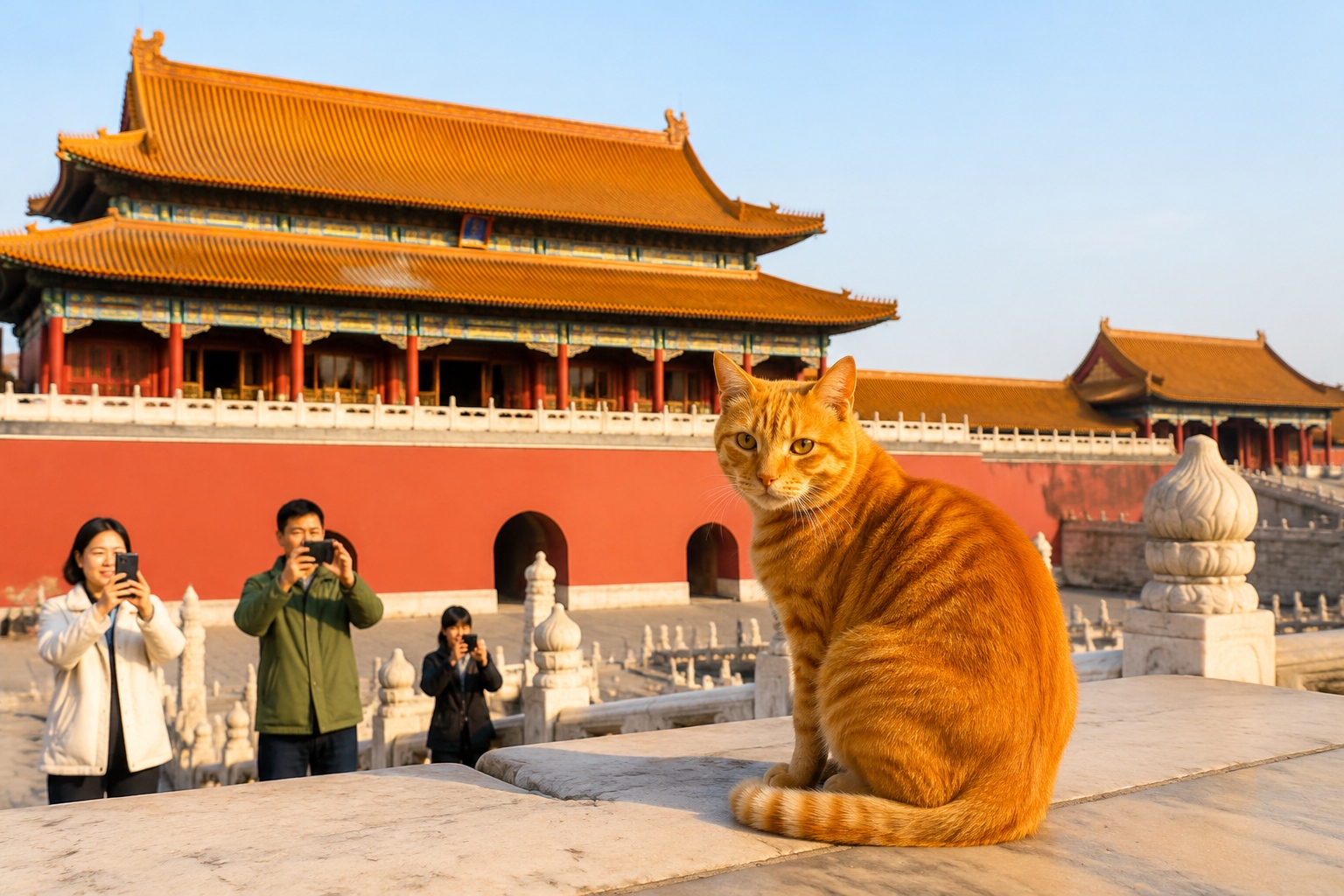

If you’ve ever wandered through the Forbidden City in Beijing, you might have seen one. A flash of orange fur under a crimson wall, or a pair of eyes peering from behind an ancient stone lion. It’s a cat. And if you’re lucky, it might stop, pose, and let you snap a photo. These aren’t stray cats. Well, some of them once were—but now they’re something more official. Locals call them “Palace Cats” (故宫猫), and they’re often described as the Forbidden City’s most unusual employees.
A Palace, a Mouse Problem, and an Unlikely Workforce
The Forbidden City, or the Palace Museum, is a sprawling complex of nearly 1,000 buildings and over 9,000 rooms. Built in the 15th century, it’s mostly made of wood—which is beautiful, but also a tempting lunch menu for mice and rats. Over the centuries, emperors kept cats at court to keep rodents in check. And the tradition didn’t die with the dynasty. Today, over 200 cats call this UNESCO World Heritage Site home.
They’re not paid in gold. Their salary comes in the form of food, shelter, and medical care—provided by the museum and a team of dedicated volunteers. Yes, the Palace Museum has an unofficial but very real “cat department.” These cats are registered, vaccinated, and neutered. They have names, photographs, and even health records. Some have thousands of followers on Chinese social media.
Who Are the Cats of the Forbidden City? (Or, How They Ended Up on the Payroll)
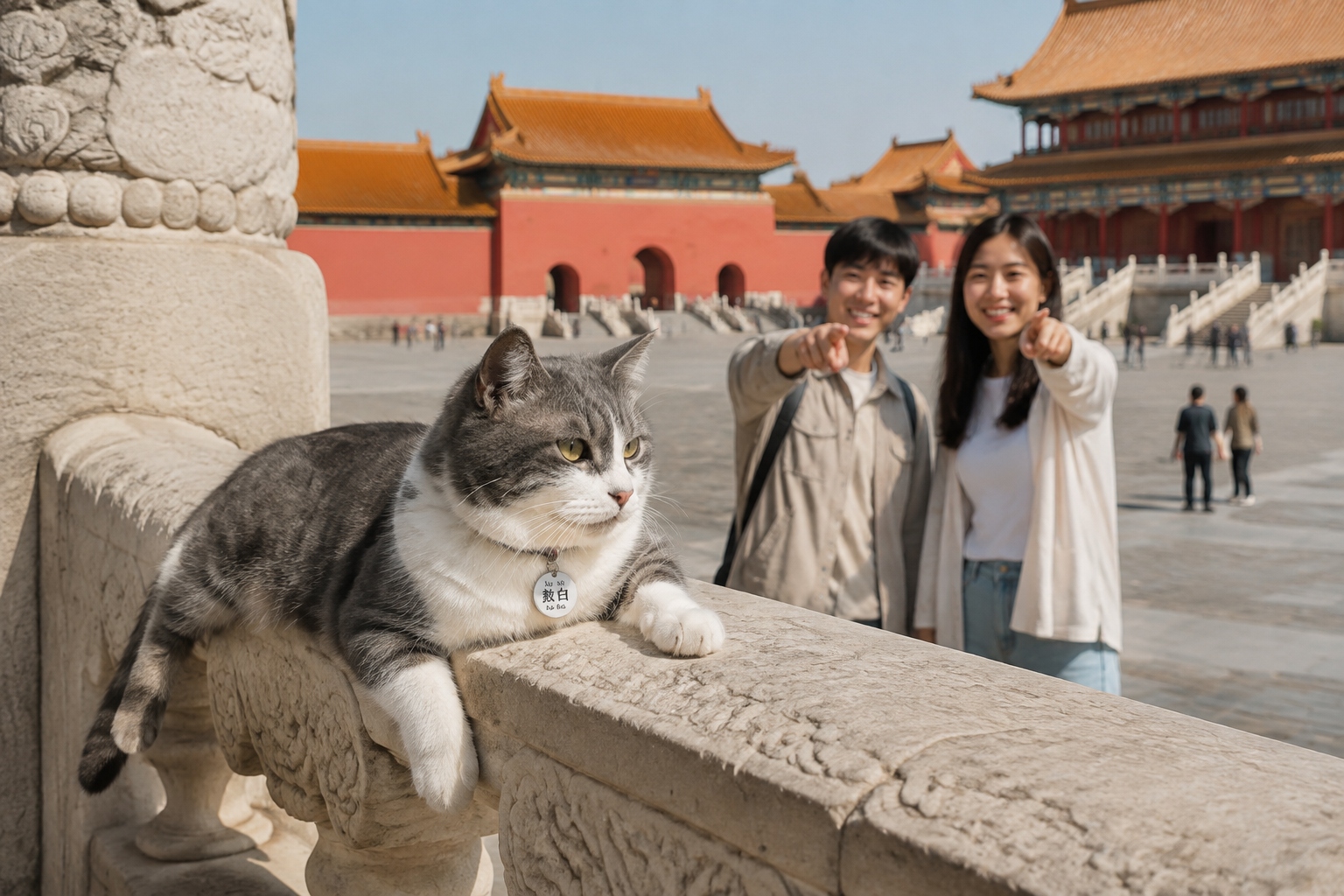
Forget the idea that these felines descend directly from royal pets. While some may have ancient ancestors, most of today’s Palace Cats were homeless strays that wandered in and decided to stay. The museum, rather than shooing them away, started a formal program in the early 2000s to manage the colony humanely. Each cat is given a name—sometimes inspired by its looks, sometimes by Chinese history or pop culture.
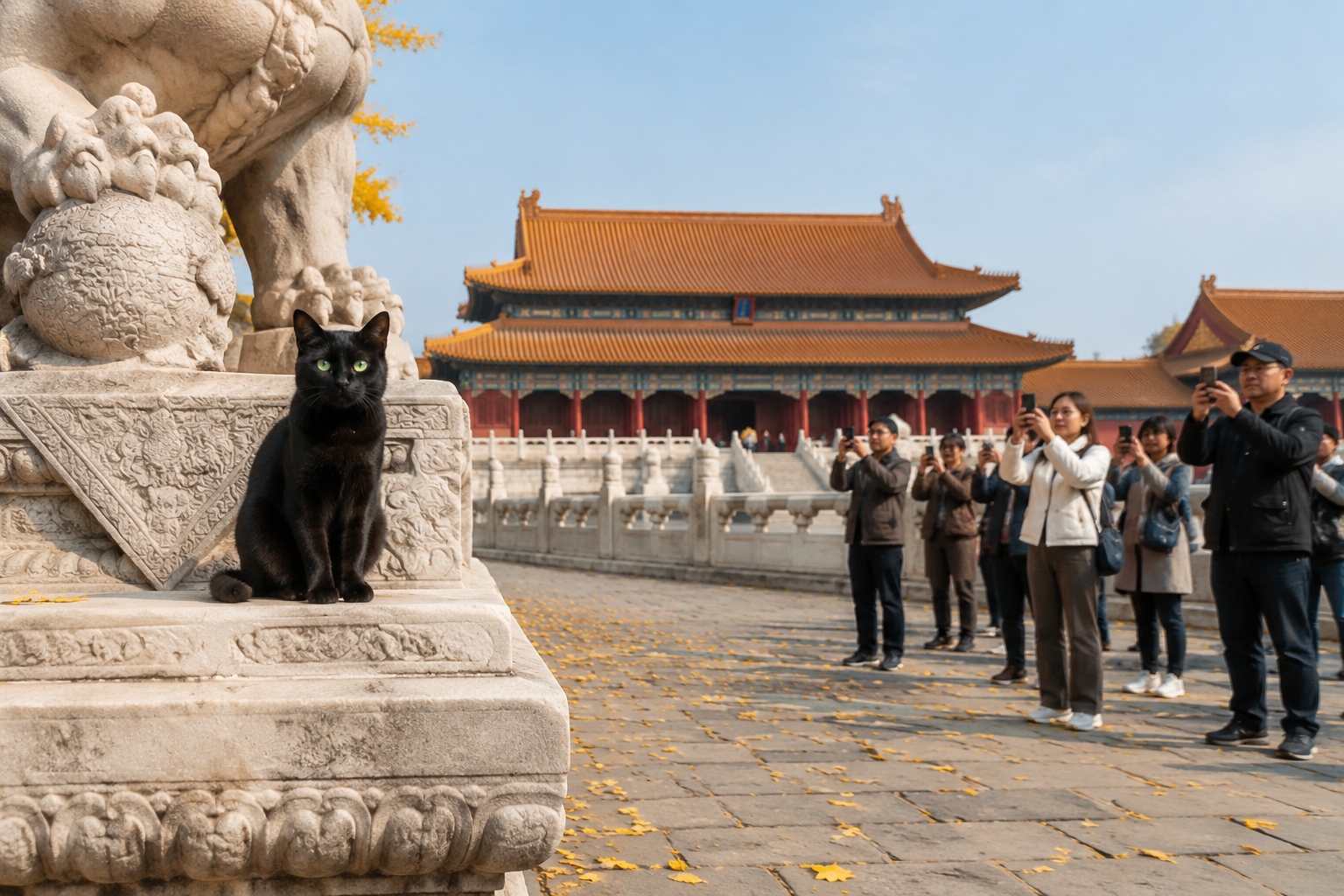
Take “Ao Bai” (鳌拜), a fluffy white and gray cat named after a powerful Qing-dynasty official. Or “Ping An” (平安), a cool-looking black cat with a big social media presence. These celebrity cats have their own fan clubs. Some even “approve” official artwork: the museum has released “Palace Cat” calendars, T-shirts, and notebooks featuring these mascots.
The cats are organized into “departments” based on where they live—some in the Western Palaces, others near the Garden of Clarity. They patrol their territories. Tour guides sometimes point them out by name, and visitors often ask “Where is the cat?” more than they ask about the emperor.
The Keepers: The People Who Feed, Vet, and Track Every Cat
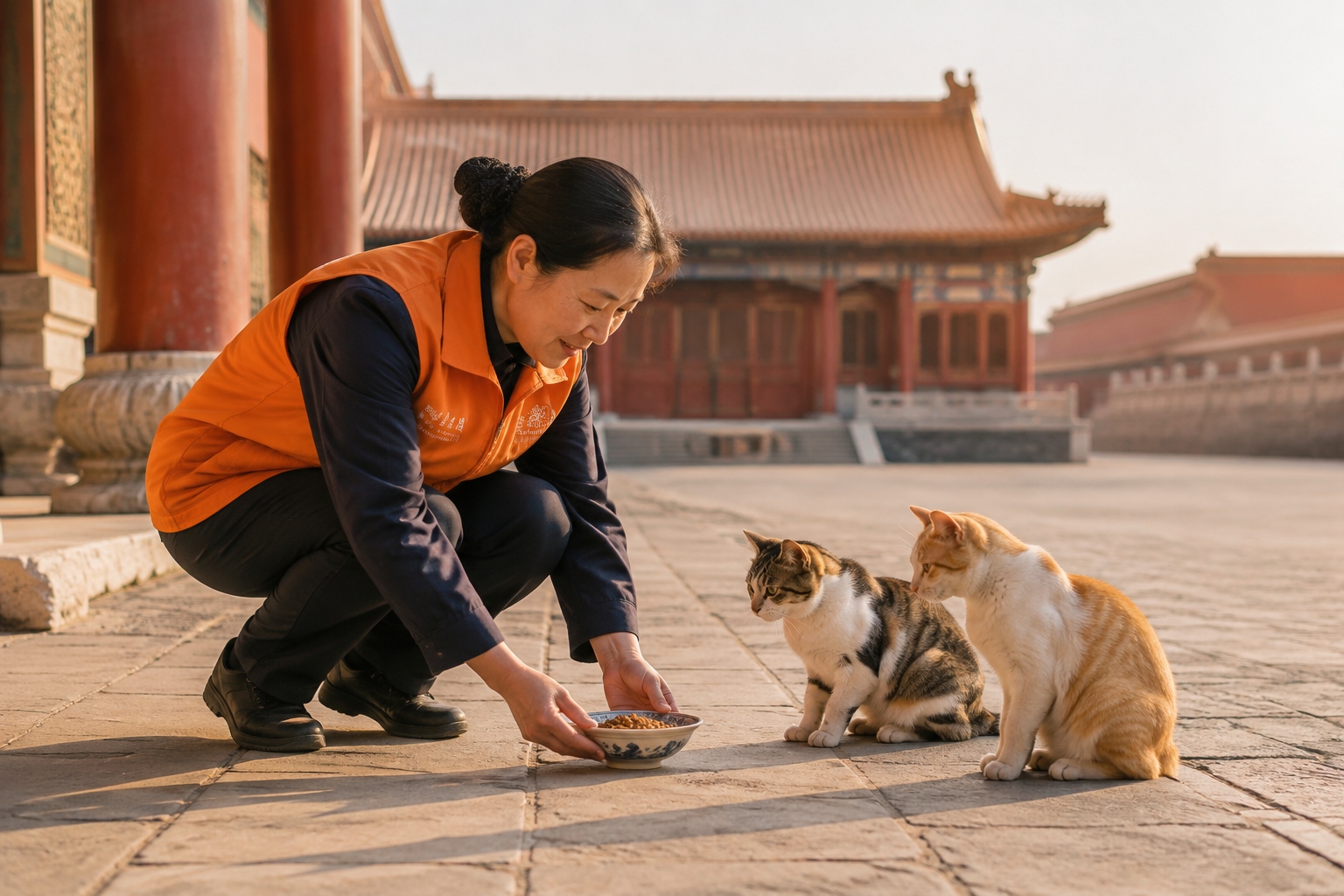
Running a cat colony inside a national treasure isn’t just about tossing out leftovers. The museum has a small team of staff members, along with a network of volunteers, who act as caretakers. They feed the cats twice a day, at fixed spots away from high-traffic areas. They monitor the cats’ health, arrange veterinary visits, and keep track of the colony’s population.
Each cat is identified by photos and physical features. Some wear collars with a bell or a tag, though many don’t, since the museum avoids anything that might get caught on ancient structures. Instead, volunteers use a more high-tech trick: a special cat-watching app and a shared database. When a new cat shows up, it’s added to the roster. Old cats that pass away are remembered fondly on social media.
The finances work like this: the museum provides the basic infrastructure and food, but donations and merchandise sales help cover vet bills. There’s also a partnership with local animal rescue groups. When the cat population grows too large, some cats are adopted out to loving homes. This “trap-neuter-return” (TNR) approach keeps the colony stable and healthy.
It’s not always easy. Palace workers have to balance cat care with preserving fragile wooden beams and ancient artifacts. Cats are generally harmless, but they do like to sharpen their claws. The museum has to ensure that cat scratching posts are available, and that the cats don’t damage any historic structures. So far, the cats and the keepers have found a way to coexist.
A Day in the Life of a Palace Cat
Let’s imagine a typical day for “Ping An,” the black cat celebrity. At sunrise, he stretches on a warm spot on the marble steps. A keeper arrives with a bowl of dry food and maybe a pouch of wet food. After breakfast, Ping An grooms himself and starts his patrol—a slow, confident walk through the courtyards. He’s not chasing mice immediately; he’s supervising, making sure his territory is in order. Then, nap time on a sunlit windowsill. Or maybe on a rock that hasn’t been warmed by visitors yet.
As the museum opens, tourists start arriving. Some spot Ping An and can’t contain their excitement. They take photos, whisper to each other, and look for more cats. Ping An, used to the attention, adjusts his position for better lighting. Sometimes he swishes his tail. That’s when the crowd loves it. By late afternoon, the crowds thin out, and Ping An heads to his favorite hiding spot for a second nap. At dusk, the keepers come back for the evening feeding. Then, as the sun sets and the red walls glow, Ping An resumes his nightly hunt—the real reason he’s on the payroll.
Of course, not every cat is a public star. Some are shy and only come out at night. Others prefer to observe from rooftops. But they all share the same “job title”: rodent control officer.
Why These Cats Matter More Than You Think
The cats aren’t just cute. They’re an important part of the palace’s protection strategy. Mice and rats can chew through ancient wires, damage wooden structures, and contaminate artifacts. A well-managed cat colony is a natural, chemical-free pest control solution. Studies have shown that the presence of cats reduces rodent activity significantly. Plus, they’re much more appealing than mousetraps.
Beyond pest control, the cats have become emotional symbols for the palace. They make a vast, often crowded tourist site feel a little more personal. Visitors from abroad, who might know nothing about Chinese dynasties, instantly connect with a fluffy cat lounging on a throne step. The cats have been featured in international media, and they’ve helped make the Forbidden City’s brand more approachable.
The Trouble with Celebrity Cats
But fame comes with complications. Some tourists, overwhelmed by love for the animals, try to feed them snacks—even though the cats receive a balanced diet from their keepers. Human food can make them sick. Others try to pet or pick them up, leading to scratches or bites. The museum has had to put up signs pleading: “Please don’t feed the cats,” and staff occasionally remind visitors to keep a respectful distance.
There’s also the risk of the cats wandering into off-limits areas. While they know their way around, a curious kitten might slip into a restoration workshop. The keepers have to be vigilant, especially when new cats are introduced. The colony is carefully monitored to ensure no animal is lost or injured. In 2019, there was a scare when a famous cat named “Mao Qiu” went missing for three days. Staff searched high and low, and eventually found him napping in a delivery box. Social media erupted with relief.
The Future of the Palace’s Feline Workforce
The Palace Museum has no plans to evict its furry residents. Instead, it hopes to expand the adoption program, allowing some kittens to find homes offsite. But the core colony will remain—as long as they keep the mouse population down and the visitors smiling.
In 2023, the museum launched a limited-edition “Palace Cat” collection, featuring illustrations of the most beloved cats. A portion of the proceeds goes back into caring for the animals. It’s a win-win: the cats get better food, and visitors get a cuddly souvenir.
Cats have been part of the Forbidden City for centuries. They’re not just mascots—they’re living, breathing residents of a world heritage site. They remind us that history isn’t only about buildings and relics. It’s also about the life that continues within them, no matter how small.
Conclusion: More Than Just Internet Stars
So, the next time you plan a trip to Beijing, put the Forbidden City on your list—and keep your eyes peeled for a four-legged guide. If you see an “employee” napping in the sun, you’ll know it’s just doing its job. And maybe, just maybe, you’ll leave the palace with a new favorite imperial subject.
The cats of the Forbidden City prove that sometimes the best guardians of a place aren’t the ones in uniforms, but the ones with paws. They might not speak, but they have an entire palace to themselves—and a human team that loves them.
Start the discussion at forum.chinacomes.com