


Why a Simple Order Can Land You in Court
Clara Rossi, business development director of an Italian skincare brand, was pleased when a Shanghai beauty retailer reached out after an exhibition. Her company had had a representative office (RO) in China for two years, mostly to collect market intelligence. The retailer wanted to place a RMB 1.2 million (about $170,000) first order. Clara drafted a supply contract and told her office manager to sign it under the RO’s name.
Her lawyer intervened just in time: a representative office in China cannot lawfully sign commercial sales contracts. Doing so would not only expose the Italian parent to direct liability for every term in that contract, but could also lead to fines from the Administration for Market Regulation (AMR) for operating beyond the permitted scope.
This scenario plays out more often than you might expect. To avoid it, foreign companies need to understand the deepest difference between the two most common entry structures in China: the representative office (RO) and the wholly foreign-owned enterprise (WFOE).
Representative Office: Liaison Only, With No Independent Legal Status
A representative office, sometimes called a liaison office, is a body established in China by a foreign enterprise to conduct non-operational activities such as market research, product introduction, business liaison, and quality inspection. It is not registered as a Chinese company. Chinese law does not treat it as an independent legal person.
Because an RO has no separate legal personality from its parent company, every obligation or debt of the office, from office rent to damages for a faulty service, belongs to the overseas enterprise that set it up. A Chinese court can name the foreign company as defendant in a lawsuit involving actions of its RO.
The RO is also heavily restricted in its activities. It cannot:
- Sign commercial contracts for sales, procurement, or services in its own name;
- Issue Chinese corporate invoices (fapiao) or receive operating revenue;
- Employ Chinese workers directly in most cases; Chinese staff must be hired through a licensed human resources agency or labor dispatch company;
- Make equity investments or become a shareholder in another Chinese entity.
These restrictions are based on national regulations, not local rules. However, local market regulators vary in how strictly they enforce them. In practice, foreign companies often test the limits by using an RO to coordinate a deal that is later signed overseas, but this is a gray area that can be challenged in tax audits and legal disputes.
WFOE: A Chinese Company with Real Legal Standing
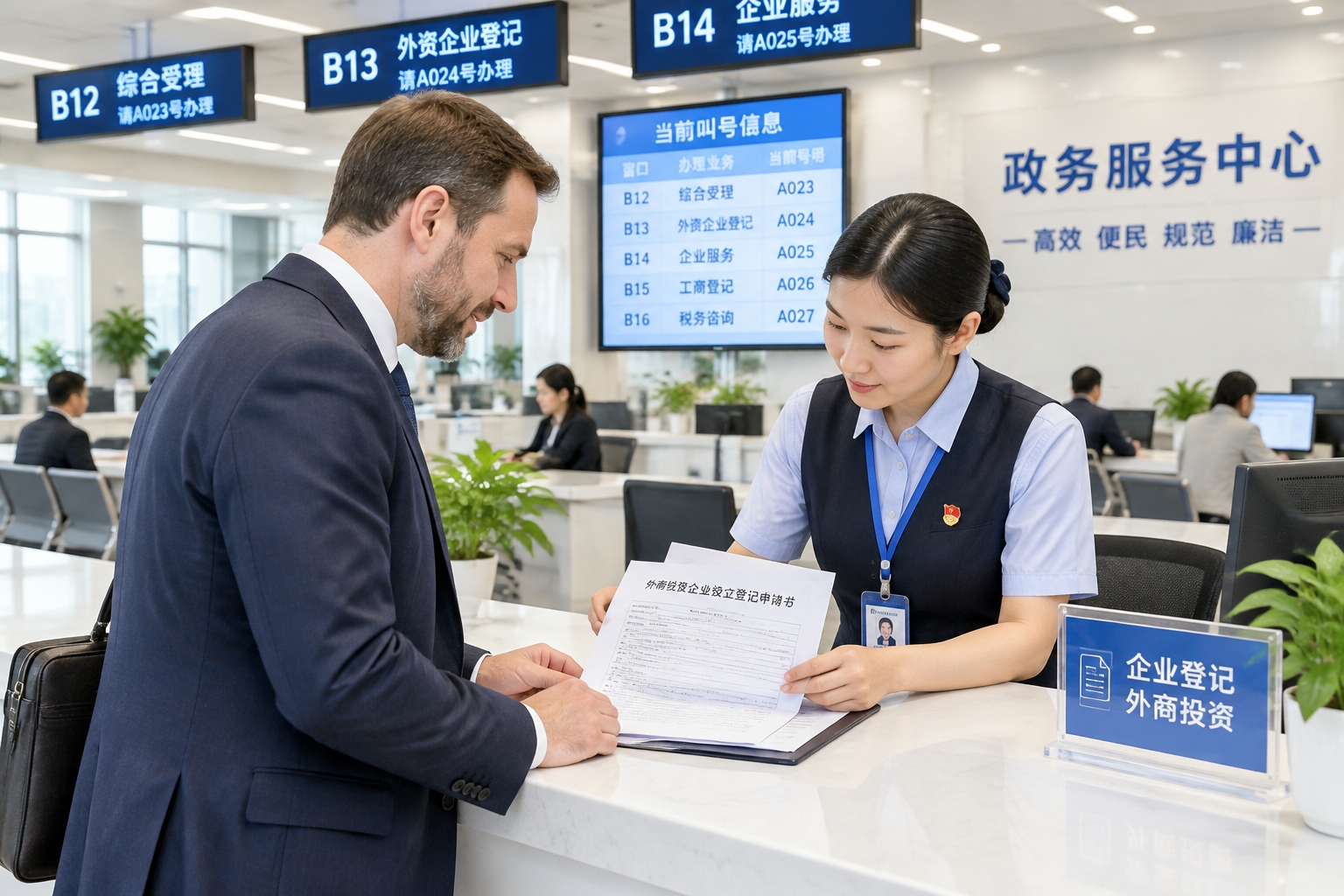
A wholly foreign-owned enterprise (WFOE) is an actual Chinese limited liability company whose shareholders are one or more overseas companies or individuals. After registration with the AMR, the WFOE receives a business license and has the status of a Chinese legal person under Chinese Company Law.
Why this matters:
- The WFOE, not its investors, owns the assets and is the contracting party in commercial agreements;
- The company can issue VAT invoices, receive RMB and foreign currency in its bank accounts, and hire employees directly under Chinese labor law;
- Shareholders’ liability is generally limited to their capital contribution; if the company defaults on a contract, creditors cannot automatically pursue the overseas parent’s assets.
In return for this legal wall, the WFOE must operate like any Chinese company: obtain required licenses, maintain proper corporate books, file tax on time, and submit an annual report to the public enterprise information system.
Unlike an RO, a WFOE can conduct actual business operations, but only the specific business described in its registered scope. New business activities may require additional licensing or an amendment to the business scope.
Comparing Key Obligations at a Glance
| Factor | Representative Office (RO) | Wholly Foreign-Owned Enterprise (WFOE) |
|---|---|---|
| Legal personality | No independent legal status; acts as part of overseas parent | Independent Chinese legal person (limited liability company) |
| Owner liability | Overseas parent is directly liable for RO’s obligations | WFOE liable with its own assets; shareholders limited to contribution |
| Business activity | Liaison, research, promotion only; no invoiced sales | Can conduct registered business scope and issue invoices |
| Local employees | Must typically hire through licensed HR or FESCO agency (except appointed representatives) | Directly hires and manages staff under labour contracts |
| Tax treatment | Corporate income tax often calculated on a deemed profit based on expenditure; no standard VAT on sales | Standard corporate income tax (currently 25%), VAT on actual sales and services |
| Annual compliance | Annual industrial and commercial report, tax filing, and periodic updates | Annual report, audited financials, CIT quarterly/annual filings, VAT filings, social insurance registration |
| Typical setup effort | Relatively simple, but requires multiple registrations and tax consequences | More complex; requires capital contribution, lease, articles, company seal, bank account |
A Room-Sized Difference in Real Liability
Imagine your RO signs a five-year office lease in its name. If the Chinese landlord later sues for unpaid rent, the court will look through the RO and rule against the foreign enterprise. Because an RO is merely a path to the parent company, not a shield.
This is not abstract. A Shanghai court heard a case involving a foreign logistics firm’s representative office that defaulted on an office lease. The court ordered the RO to return the premises and pay unpaid rent. When the RO had no money in its local account, the plaintiff applied to enforce the judgment against assets of the foreign parent in Hong Kong.
In a WFOE, the scenario changes. If the WFOE cannot pay rent, its shareholders are not automatically liable. The landlord can only recover from the WFOE’s own assets unless the corporate veil is pierced, a high bar in China that generally requires proof of fraud, serious loss of creditor protection, or confusion between the company and its shareholder.
The same logic applies to employment disputes. With an RO, local workers are technically employed by a Chinese human resources agency, but courts sometimes hold the RO and the foreign company accountable if the agency is just a paper employer. For a WFOE, employees sue the WFOE, not the foreign investor. Thus a WFOE gives overseas investors a more predictable boundary for operational risk.
Tax and Filing: The Compliance Reality
Foreign business people frequently assume that an RO with no sales has no tax obligations. That is incorrect. An RO must still register with the tax authorities and file returns.
Because an RO usually has no revenue, Chinese tax rules often use a total expenditure conversion method to determine taxable profit. The tax authority estimates that a certain percentage of the RO’s total operating costs, including rent, salaries, office supplies, and entertainment, is taxable profit, then applies the 25% corporate income tax rate. The deemed profit rate may range from 15% to 40%, depending on industry and local tax practice. Companies should ask a China tax advisor to model the exact calculation.
For VAT, an RO generally does not charge output VAT on commercial services because it cannot issue sales invoices. But if the tax authority determines that the RO is essentially running a sales office, it may require VAT registration, back taxes, and penalties.
A WFOE, by contrast, is a regular VAT taxpayer. It provides customers with an official fapiao, pays VAT on taxable sales, and can deduct input VAT on eligible purchases. Its corporate income tax is calculated from actual audited profit, not a deemed formula.
Both ROs and WFOEs must submit an annual report through the National Enterprise Credit Information Publicity System between January 1 and June 30. The information becomes public. Failure to report on time lands the entity on the operating abnormality list, which can harm bank operations and the foreign investor’s reputation.

How to Choose Between a Rep Office and a WFOE
You only need an RO when:
- You want to test the market, attend trade fairs, and conduct feasibility research without handling sales;
- Your budget is tight and the setup cost of a WFOE is not justified;
- You are in a sector restricted under the Foreign Investment Negative List and a representative office is the only permitted presence for certain activities.
You should probably set up a WFOE when:
- You plan to generate sales revenue, sign clients, or hire a Chinese team;
- You want a legal risk shield between your company and on-the-ground liabilities;
- You need to invoice Chinese customers or buy goods locally;
- You intend to pay salaries, social insurance, and taxes in your Chinese entity as a real operator.
Many foreign companies start with a representative office for research, then convert to a WFOE once they reach the revenue stage. Conversion is legally possible but takes time: the RO must be revoked and its taxes settled before the new WFOE is set up. Getting this sequence wrong can leave you with tax arrears and possible fines.
One more consideration: under the Foreign Investment Law and the latest Negative List, certain fields such as some value-added telecommunications, education, and media services prohibit or restrict foreign-controlled WFOEs. In those segments, a representative office or a joint venture may be the only workable option. Check the latest Negative List with local counsel before structuring.
The Bottom Line
For any foreign company planning to be active in China for more than a year, the first question is not just what can I do here? It is who is legally responsible if something goes wrong?
Representative offices are economical and quick to open, but they are not limited-liability entities. Every unpaid invoice, every unfair dismissal claim, and every contract dispute can reach your home office. A WFOE acts as a proper Chinese corporate citizen: it carries the risk, files its own taxes, hires and fires in its own name, and gives investors the legal distance that modern business demands.
The right choice depends on your timeline, business model, and regulatory environment. Whatever you decide, do not let a representative office near a sales contract. That is a risk as expensive as the order itself.
Start the discussion at forum.chinacomes.com