
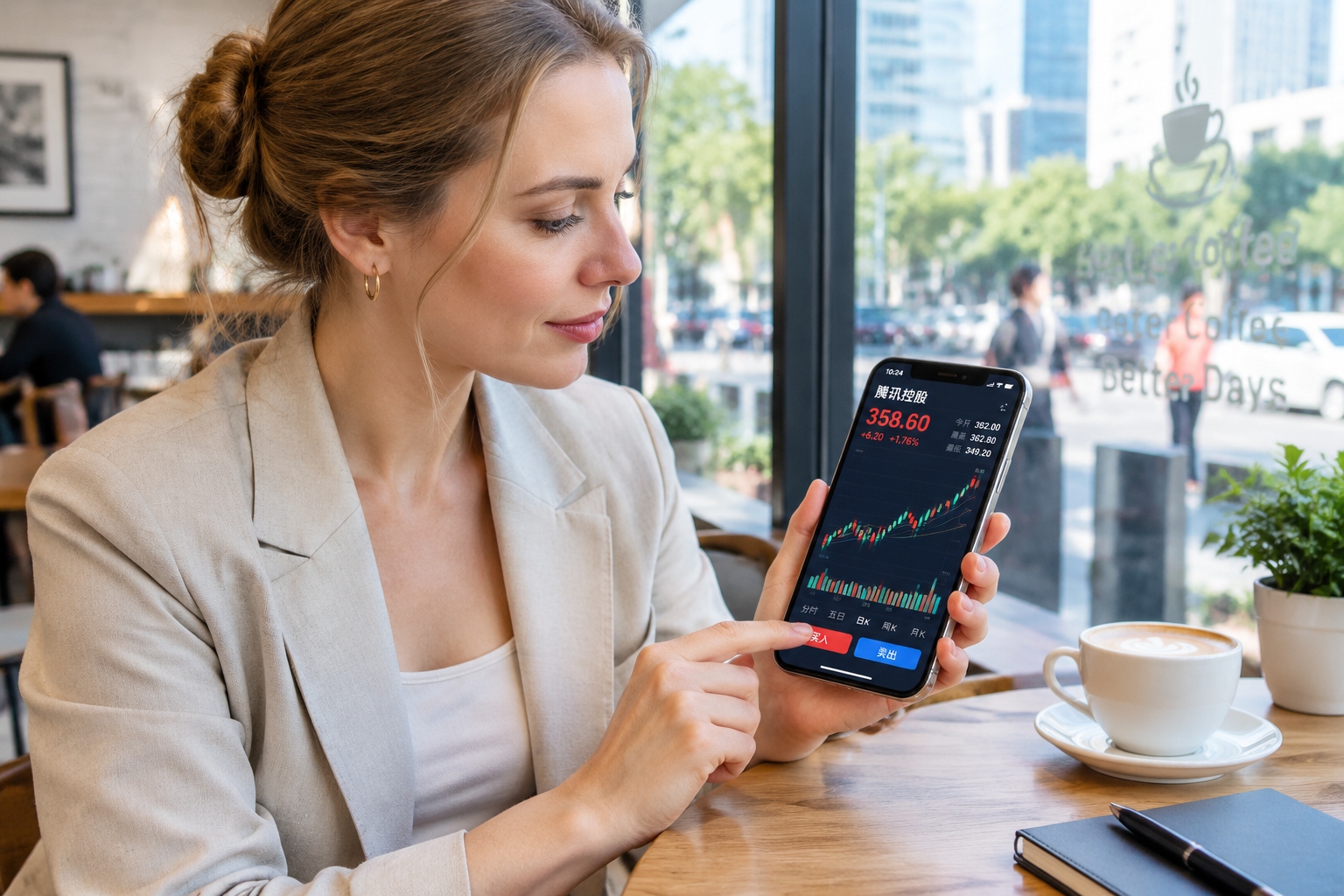

When Marie in Shanghai Wants to Buy Chinese Stocks
Marie, a French designer who has lived in Shanghai for three years, recently decided to put some of her savings into A-shares. ‘Am I even allowed to buy these stocks?’ she asked. ‘And if I make a profit, what will the tax office take from me?’ Her questions are common among foreign professionals. The reality is more reassuring than the rumor. Since 2018, a foreign national with legal residence on the Chinese mainland can open an A-share brokerage account. The account opening procedure is straightforward, the trading rules have some particularities, and the tax treatment for individual investors is remarkably generous. This guide explains the full path—from your first passport check to your first dividend payment.
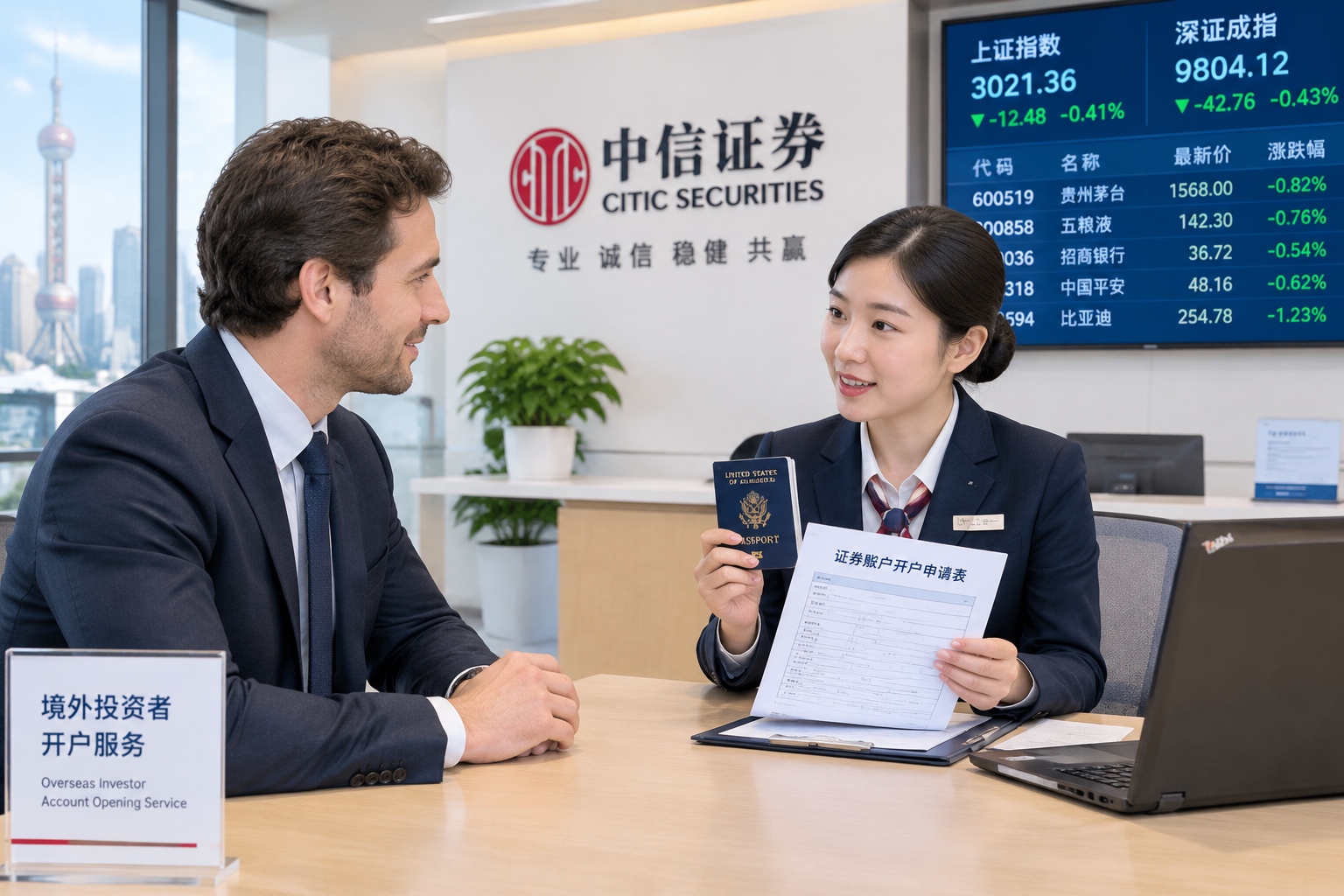
Can a Foreigner Open an A-Share Account?
The short answer is yes, but not without a local paperwork footprint. To open a Chinese securities account in your own name, you need to live on the mainland and hold a valid residency status. In practical terms, that means a work permit, a study or talent residence permit, or a foreign permanent residence card—the ‘green card’. A tourist visa does not qualify.
Who Is Eligible?
Eligible applicants include foreign employees registered with a Chinese employer, foreign residents under a family reunion permit, and long-term permanent residents. If you do not live in mainland China, you cannot currently open an individual A-share account, but later I will explain two solid alternatives.
Step-by-Step Opening
Most large Chinese brokers, such as CITIC Securities or Huatai Securities, have multilingual client desks that have handled expat accounts for years. The process is:
1. Visit a branch in person. You will need your passport, valid visa or residence permit, and the police registration of your residence. Usually, this is the temporary accommodation registration form you receive when you rent an apartment or stay in a hotel. If you have an alienation of permanent residence registration, bring that instead.
2. Sign the broker agreement and open two linked accounts: one securities account (to hold shares) and one funds account (to transfer money). The broker may also register you with the CSDC, the clearing center.
3. Complete a risk assessment and a short recorded interview. Some brokers run this as a video call; others do it on-site. You will be asked to confirm that you understand the T+1 settlement, price limits and other basic rules.
4. Activate and fund. Accounts are normally usable the next business day. To buy stocks, you need Chinese yuan in the cash account, so you will transfer money from a domestic bank account or use the foreign exchange account your employer set up.
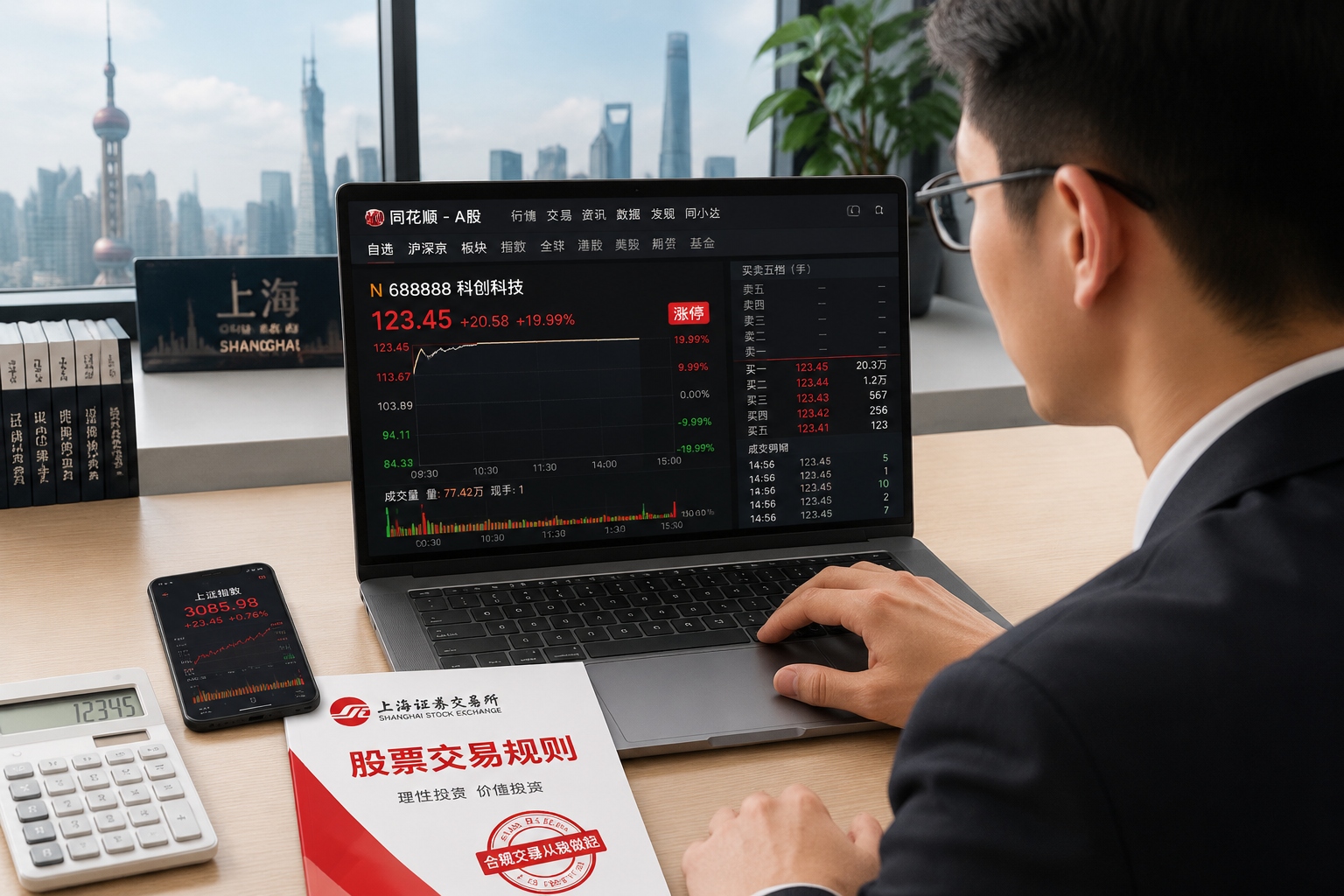
A-Share Trading Rules You Must Know Before Your First Trade
Mainland exchanges look familiar at first glance, but their trading rules were built to discourage rapid speculation. Three things will matter most on a daily basis.
The T+1 Settlement Clock
If you buy an A-share on Monday, you can only sell it starting Tuesday. Chinese exchanges use T+1 settlement (same-day purchases are not sellable in the same session). This is very different from T+0 markets such as the US. Day trading of the same stock is largely impossible without holding pre-existing shares. The buy and sell queue is therefore more predictable—but it also means that if a stock plunges in the afternoon after you bought in the morning, you cannot exit until the next day.
Daily Price Limits (and What to Watch)
A-share prices are allowed to move only within a set percentage of the previous close. For the main board of Shanghai and Shenzhen, the limit is 10% up or down. On the STAR Market (Shanghai) and ChiNext (Shenzhen), which host more tech-led companies, the limit is 20%. During the first five trading days after an IPO, there is no limit on those boards. The Beijing Stock Exchange uses a conservative 30% band. When a stock hits the upper or lower limit, trading still occurs, but the order queue can be thick. Seeing the terms limit-up and limit-down on a Chinese app is normal; place your order early or accept the silence on the other side.
Order Size and the Board Lot
Buy orders for A-shares are placed in board lots of 100 shares. You can buy 100, 200, 300 shares, and so on. Selling is far more flexible: you can sell an odd lot without having to build a round-lot balance. Keep this in mind if you use limit orders that fill only partly.
Taxes on Dividends and Capital Gains
Potential tax burdens are usually the biggest worry for expat investors. But China’s personal tax structure is designed to encourage buy-and-hold behavior, so the takeaway is surprisingly positive.
Dividend Tax: The Longer You Hold, the Less You Pay
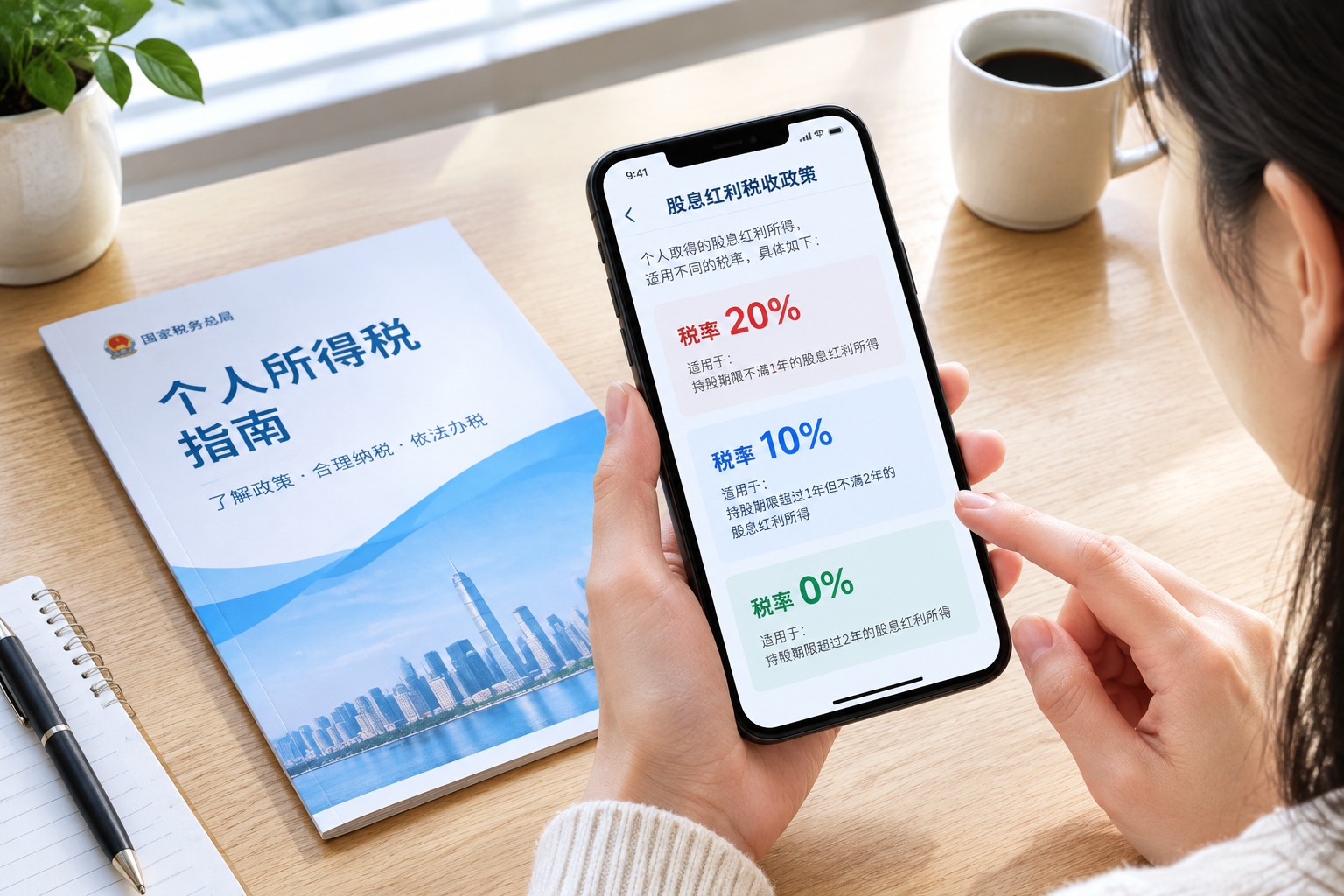
Dividends distributed by A-share companies are subject to personal income tax, but the rate is differentiated by the length of your holding period. The rule applies equally to Chinese residents and foreigners and is automatically deducted by your broker at the time the dividend is paid.
- Hold less than 1 month: tax withheld at 20%
- Hold for 1 month to 1 year: tax withheld at 10%
- Hold for more than 1 year: 0% withheld, so you get the full cash dividend
For a long-term investor, this means most dividends arrive without any local tax leakage. If you frequently trade around ex-dividend dates, however, the rate will be high enough to discourage you from grabbing yield.
Capital Gains from Selling Shares: Exempt for Individuals
The biggest myth of A-share investing is that the government will take a big slice when you sell at a profit. In fact, individuals selling shares listed on the Shanghai or Shenzhen exchanges do not pay personal income tax on their capital gains. This exemption started in 2005 and has been continuously renewed. If you buy at ¥10 and sell at ¥15, the ¥5 gain is entirely yours, with no capital gains tax at the Chinese federal level. The same applies to B-shares and the Beijing Stock Exchange. There is no wealth tax for securities.
Of course, your home country might tax foreign investment gains. Many bilateral tax treaties recognize the source-country exemption, but since your home jurisdiction treats tax differently, speak with an international tax adviser before assuming the final bill is zero.
Trading Fees and Stamp Duty
Even if capital gains tax is zero, you still need to pay certain transaction costs. The largest is stamp duty on selling stocks: 0.05% of the transaction value (reduced from 0.1% in 2023). Brokerage commission is negotiable, typically around 0.01% to 0.03% per trade. There is also a small registration fee. Altogether, a round trip might cost roughly 0.1% to 0.15%, which is modest by global standards.
What If You Don’t Live in Mainland China?
Foreign residents living in Hong Kong, Singapore, or the United Kingdom often want exposure to China’s growth story but lack an eligible mainland residence permit. Two routes solve this.
Stock Connect: Buy A-Shares via Hong Kong
The Stock Connect programs link the Shanghai and Shenzhen exchanges with Hong Kong. A foreign investor using a Hong Kong brokerage can purchase eligible A-shares through ‘Northbound’ trading. This avoids the in-person mainland broker requirement and is popular among funds and individuals. You can buy shares in more than 1,000 mainland-listed companies. There are daily quota limits for the entire Connect market, but for an individual, those limits rarely bind. Note that shares purchased through Securities Connect are held in the name of the Hong Kong clearing nominee; the economic ownership remains yours. Dividend tax rates and settlement follow the same rules as in the mainland, making this a pragmatic choice.
A-Share ETFs and Mutual Funds
Alternatively, you can buy an ETF on an international exchange that tracks Chinese A-share indices. Some examples are the CSI 300 ETF, SSE 50 ETF or STAR Market ETFs listed in Hong Kong or Europe. From a practical angle, ETF investing is the simplest way: no Chinese paperwork, no individual stock picking, and you can trade in your home brokerage account. If you prefer actively managed exposure, consult a licensed wealth manager about funds that are structured for offshore investors.
Final Advice Before You Begin
The rules described in this article are effective at the start of 2026. China’s securities regulator sometimes adjusts trading or tax policies, so always verify the latest terms with your broker or the State Taxation Administration’s website. For most residents, the A-share market is fully open, with tax-efficient long-term investing possible. The easier challenge isn’t before you start; it’s resisting the temptation to trade too often in a market that rewards patience.
Start the discussion at forum.chinacomes.com