


When Laura, a product manager from Berlin, moved to Shanghai two years ago, she assumed her German health insurance would cover everything. After a minor bike accident, she learned her international policy only reimbursed claims above €500 and required forms sent by mail. The hospital bill from her knee treatment sat on her desk for months. Laura’s story isn’t unusual. Expats in China constantly ask me: should I buy insurance from a Chinese company or stick with an offshore policy from Hong Kong or my home country? This guide walks through what the Chinese market actually offers and what you need to understand about costs, taxes, and claims before you sign.
What Insurance Products Can Expats Buy in China?
China’s insurance market is huge. As of 2023, over 240 insurance companies operate here, and foreigners with valid residence permits can buy most policies. The primary categories are:
- Health insurance: covers outpatient visits, hospitalization, and sometimes maternity and dental. “Critical illness” policies pay a lump sum if you’re diagnosed with specific conditions. “Medical insurance” covers hospital expenses. There are also “million-yuan insurance” products—high-limit, low-premium plans with a deductible—that have become very popular.
- Life insurance: provides a death benefit. Term life is common for covering mortgage or family responsibilities; whole life and investment-linked policies are also around but less common for expats.
- Accident insurance: pays for injuries, disability, and death from accidents. Often cheap and easy to buy.
- Annuity and pension products: essentially savings plans to provide income at retirement. These are rarely sold to foreigners due to tax uncertainty and are not as competitive as alternatives in other markets.
Most local insurers have expanded expat support. For example, Ping An Health offers English telephone lines, and foreign joint ventures like AXA-PICC Health and Cigna are models that let you file claims via their English-language apps. Premiums are paid in yuan, and the reimbursement rates are transparent.
One important difference from some Western markets: many local policies have a 30-day waiting period before coverage starts, and pre-existing medical conditions are usually excluded. If you have a chronic condition, you may need to go through “medical underwriting” to get approved, or you may be declined. This is common, but Chinese domestic policies are willing to underwrite young and healthy expats easily.
Claims and Customer Service: Local vs. Offshore
The first thing you notice is that in China, virtually everything is mobile. Top-tier health insurers have direct-billing agreements with hundreds of hospitals, especially in cities like Shanghai, Beijing, and Guangzhou. You simply present your digital insurance card at the hospital’s cashier counter, and the insurer settles the claim directly with the hospital. This is a huge convenience, particularly for international patients who don’t have Chinese language skills.
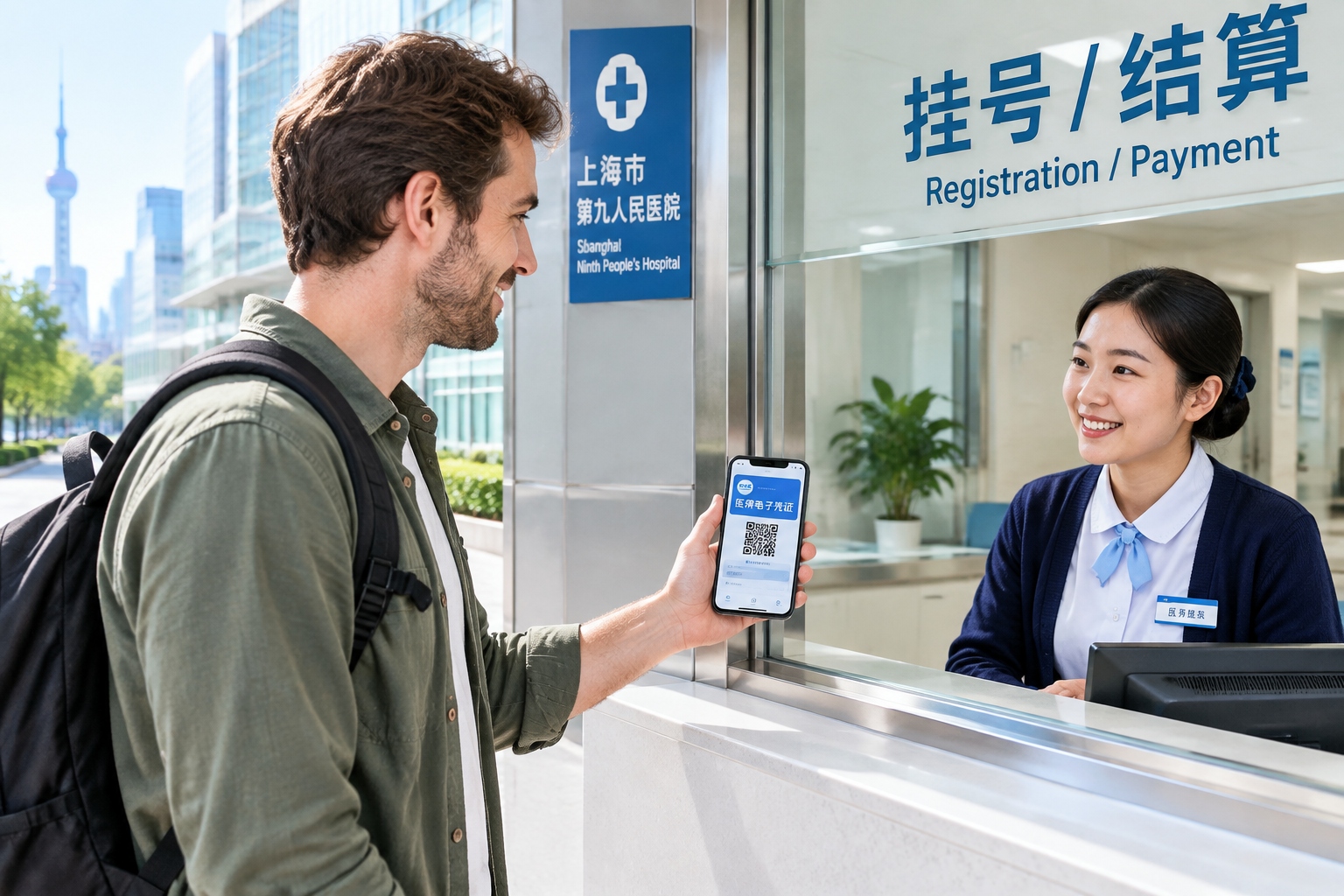
If you buy a standard domestic plan without direct billing, you’ll pay the hospital first and then submit receipts for reimbursement. Most insurers process these claims within 5 to 10 working days. Some allow submission through WeChat mini-programs, saving paper.
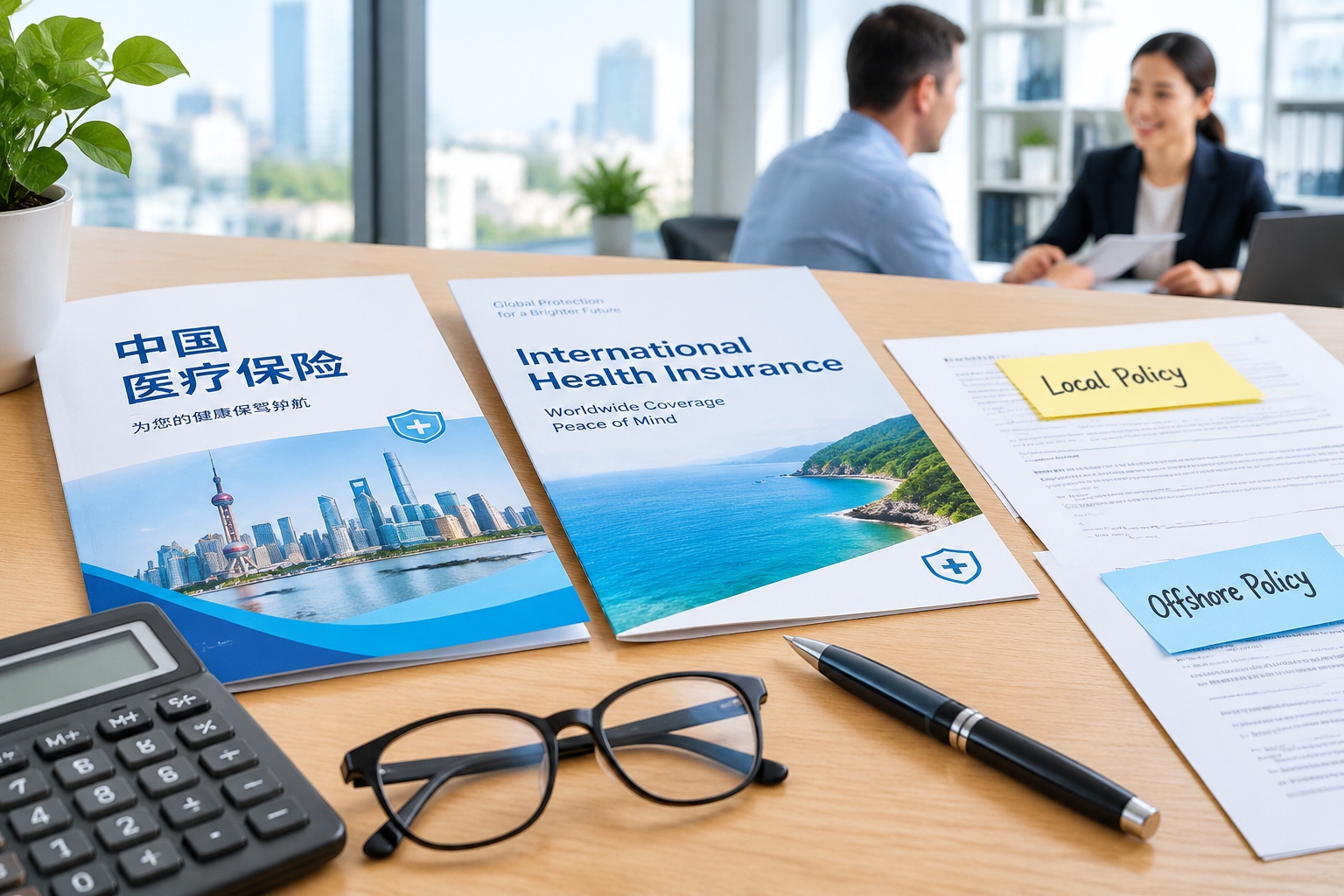
Offshore policies, such as those from Hong Kong, often have lists of “network hospitals” in mainland China that provide designated services. But the claims process is never as smooth. You might need to fill out claim forms in English and send original receipts by courier to Hong Kong. On average, it can take 4 to 6 weeks for a reimbursement to arrive. In my interactions with expats, many have complained about disputes over “customary and reasonable” charged amounts, which adjusters review. If you disagree, there is no independent consumer protection office on the mainland to help.
Tax and Currency: Two Things Nobody Tells You
This is where making the right choice gets tricky.
For tax purposes, you become a Chinese tax resident if you stay for 183 days or more in a year. For tax residents, premiums paid for commercial insurance from Chinese insurers are normally paid from after-tax salary—no tax deduction. If your employer pays the premium for you, it may be treated as a benefit-in-kind and subject to tax. The exact treatment varies by local tax bureau.
What about offshore policies? Many expats in Shanghai buy Hong Kong investment-linked plans because of their long-term savings appeal. But here is the catch: China’s State Administration of Foreign Exchange (SAFE) restricts capital outflow. Every Chinese resident (including foreigners with a local income) is entitled to purchase up to $50,000 worth of foreign currency per year for “current account” purposes, like tourism or education—but buying offshore life insurance is classified under capital account transactions, which are generally prohibited without regulatory approval. Banks are not allowed to process remittances for this purpose. You may be able to use money you already have overseas, but you can’t send money out of China to pay those premiums.
There are also tax implications on the payout side. If you receive a claim from a Hong Kong insurer, you’ll have to bring the money into China to use it. Technically, you should repatriate it through legal channels, and the local branch may ask for proof of tax payment. Since many offshore policies accumulate investment earnings, there is ambiguity about whether that gain is taxable in China. Tax professionals often advise long-term residents to report foreign financial assets; new policies require that income from overseas assets must be declared by Chinese tax residents.
The “Expat-Specific” Products: Are They Worth It?
Because expats have special needs, a few insurers created product lines only for foreign passport holders. These plans include:
- Full English policy wording and claim forms.
- 24/7 multilingual hotline.
- Access to international hospitals and foreign doctors (e.g., Shanghai United Family, Beijing United Family).
- Global coverage options, including emergency evacuation back to your home country.
- Direct billing for outpatient and inpatient care.
One example is Cigna and its partner in China; another is the “Expat Saver” plan from BOC/Manulife. These are similar to international medical insurance you’d buy back home but priced in yuan. Are they worth it? If your employer pays for you, absolutely. If you’re paying from your own pocket, compare the premium with your offshore option. A 30-year-old healthy expat might pay around 20,000–30,000 RMB per year for basic international health coverage with a global network, while a locally-focused plan could be only 5,000–7,000 RMB for excellent coverage within China. It’s all about your expected need for global care.
The most significant advantage of expat-specific plans is that they are legally regulated in China and support the domestic tax treatment. They are more likely to be accepted by immigration and work permit renewal authorities, showing you have proper local coverage.
A Practical Way to Choose
Let’s look at two different people and how they would decide:
A French teacher on a 3-year contract in Chengdu: He is paid in RMB, plans to stay for at least three years, and doesn’t have high overseas medical needs. A local “million-yuan” health plan plus a good accident policy would cost around 3,000 RMB annually and would give him enough peace of mind. Direct billing at top local hospitals isn’t vital, so he stays away from the expensive expat plans.
A US-born banker in Shanghai with a family, traveling weekends to Tokyo and Seoul: Her employer offers an expat-specific global plan. Because she is a tax resident in China, it’s better for her to keep local payroll deductions, and the insurer sends the premium bill to her company—no exchange controls. She rarely files claims because direct billing is everywhere. If she uses an offshore policy, she would need to wire premiums from a foreign bank account, which is okay, but she’d face delays each time she needs a medical procedure in mainland. She chooses the local plan, even if the premium is higher.
What about the young digital nomad who is in China for six months? He can probably rely on travel insurance from home. Buying a domestic Chinese policy for such a short period is usually not recommended.
A Caution About Offshore and “Underground” Sales
Because Hong Kong products offer high commissions, some unlicensed agents target foreigners in mainland China, promising foreign law protection and lower premiums. Be very careful. According to China’s insurance law, policies issued by insurers outside mainland China cannot be sold legally within mainland China. If you sign a policy online while you are sitting in Beijing, you have essentially bypassed Chinese consumer protection. In case of a dispute, the insurance company may not even accept your claim if you don’t have a valid Hong Kong address. Additionally, China’s tax authorities are focusing more on undisclosed offshore policies.
One rule of thumb: if a broker requires you to go to Hong Kong or Macau to sign papers, it’s a red flag for gray-market activity. The only legitimate way to buy a Hong Kong policy is to travel to Hong Kong and sign there, which is strictly regulated. And even then, you need to disclose it to Chinese tax authorities if you remain a tax resident.
Final Thoughts
For the vast majority of expats who plan to live and work in China for more than a year, buying a domestic insurance product is the most convenient and legally secure choice. It aligns with the health care system, processes claims quickly, and avoids foreign-exchange headaches. Offshore policies can still play a role for those with serious wealth and global mobility needs, but they should be treated as a “top-up” or an investment, not your day-to-day health safety net.
Before you decide, list your personal conditions: expected time in China, whether your income is RMB, your home country obligations, and your family’s medical needs. Then compare a domestic expat-friendly plan with your current global coverage. If necessary, talk to a licensed broker, but make sure they are registered in mainland China.
Ask three questions: Will I be able to pay the premium from my China bank account? Is my claim reimbursed in RMB or foreign currency? What happens if I have a dispute? The answer will usually lead you to a domestic insurance card.
This article provides general information and does not constitute legal, tax, or financial advice. Consult with licensed professionals before making decisions.
Start the discussion at forum.chinacomes.com