
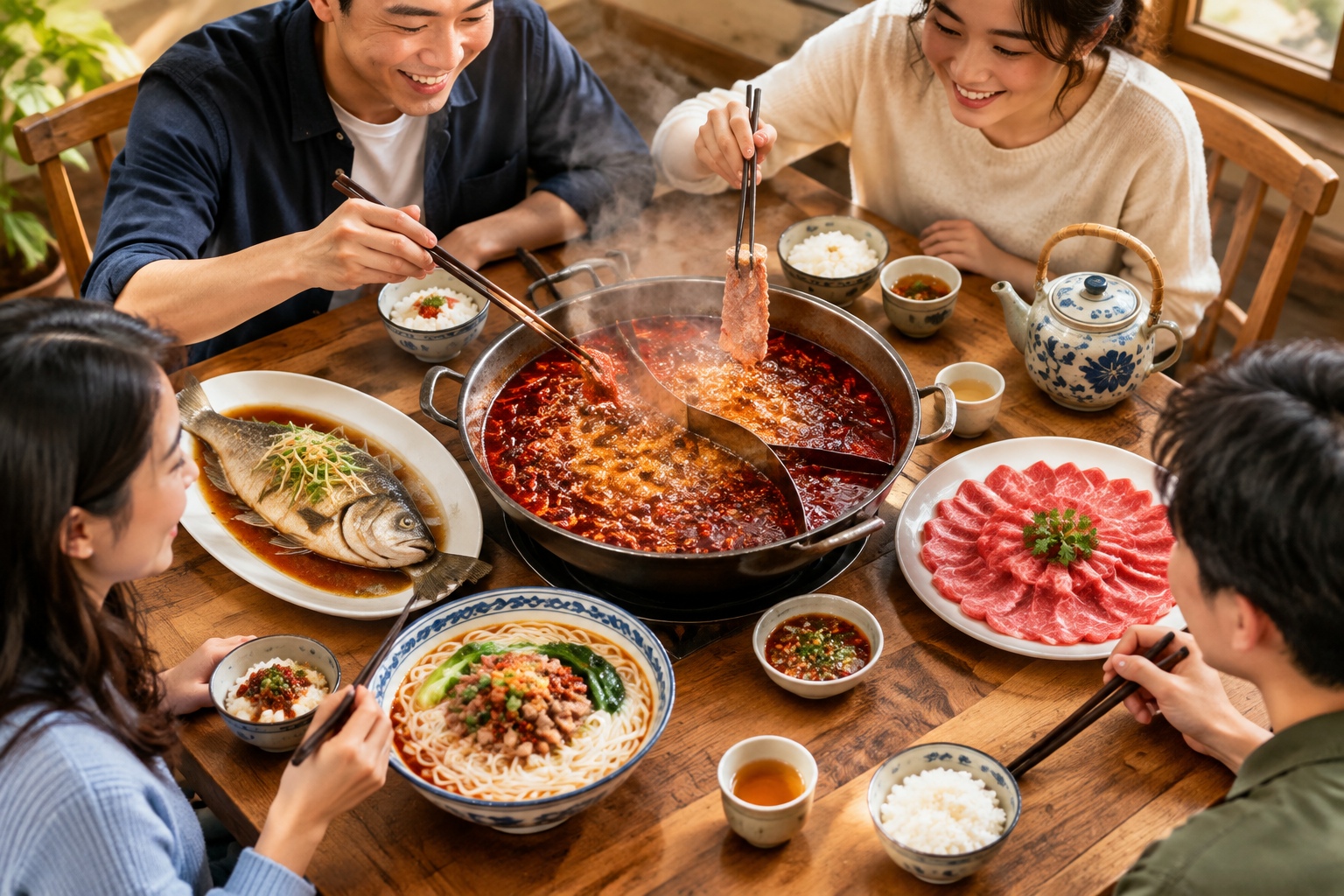

On my first real night in Chengdu, I ate a piece of fish that made me laugh out loud. It wasn’t funny — it was a mouthful of red oil, dried chilies, and something stranger underneath: a buzzing, fizzy feeling on my lips, as if my tongue had brushed against a mild electric fence. The waiter simply nodded. “花椒,” she said. “Sichuan pepper.”
Before that dinner, I thought Chinese food was one unified menu: sweet and sour pork, noodles, fried rice. But China eats like a continent, not a country. Sichuan doesn’t taste like Hunan, Hunan doesn’t taste like Guangdong, and even inside Guangdong there’s more than one cuisine. The only way to really understand is to travel, city by city, bowl by bowl.
This food tour isn’t geographically straight. It starts in Chengdu, dives south to Shunde, circles back through Changsha, returns to the Chaoshan coast, then flies northwest all the way to Xi’an. It makes sense in one way: contrast. Each place changes the way you eat and the way you think about dinner.
First stop Chengdu, where heat comes with a “ma” kick
People say Sichuan cuisine is spicy, but “spicy” doesn’t tell the full story. The main character is the Sichuan pepper, huajiao, which leaves your lips buzzing. Chinese people call that sensation má — a numbing, electric brightness. Chengdu cooks use it constantly, in combination with chilies, garlic, fermented beans and vinegar. The result is layered enough to be called “复合味” — complex, overlapping flavor notes.
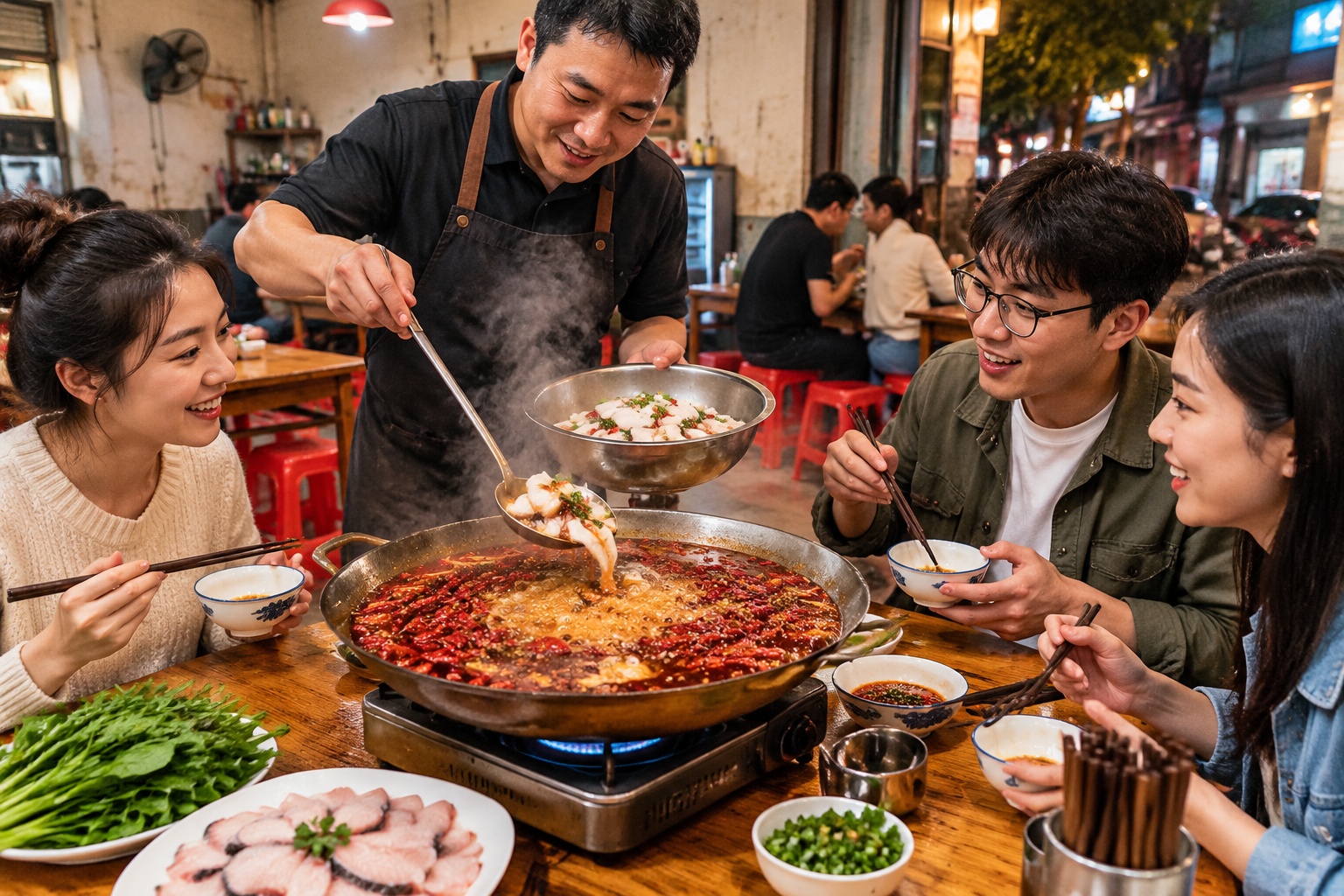
To eat it like a local, skip the tourist hotpot palaces and look for something called a cang ying guan zi, or “fly restaurant.” Don’t overthink the name — it just means an unpolished food stall or small shop where taste is the only priority. One evening I was led to such a place: plastic stools, a damp floor, an owner who yelled out my order to a loud kitchen. My mapo tofu arrived glossy with chili oil, flecked with Sichuan pepper and minced beef. After one bite, I understood why a city with so many beautiful restaurants still loves these holes-in-the-wall.
Shunde, the quiet heart of Cantonese cooking
Take a plane from Chengdu to Guangzhou, then a short drive to Shunde. Shunde doesn’t look like a food capital. It is a dense, low-rise city of small factories and apartment blocks. But it holds a UNESCO Creative City of Gastronomy title, and many chefs in Hong Kong, Macau and Guangzhou come from here. Cantonese food is often described as fresh and light. Shunde is where that idea becomes a personal philosophy.
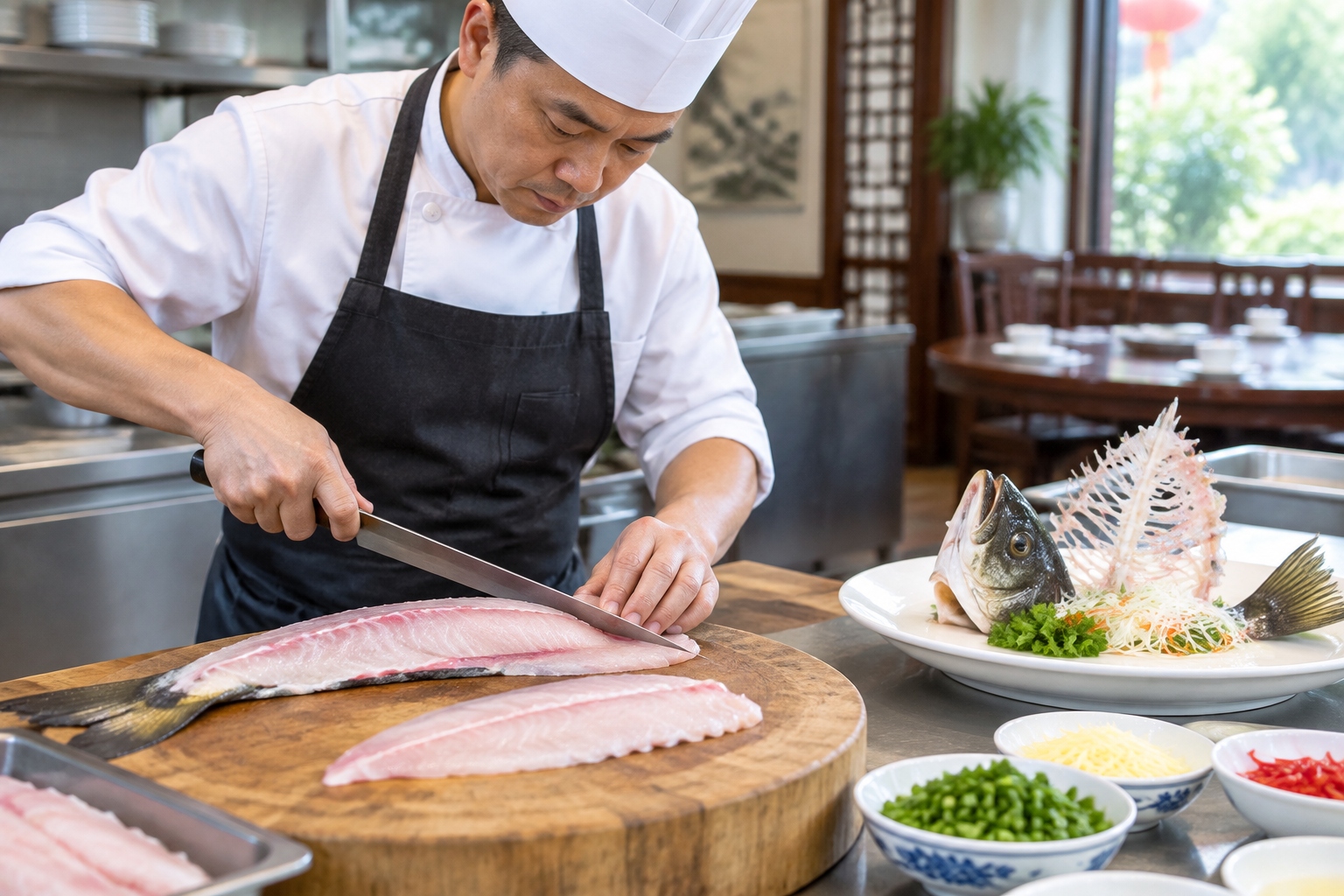
The most astonishing dish I had was a freshwater fish with no bones. The chef removed every small bone while leaving the fish’s spine and head looking almost artistic on the plate. The fillets were sliced thin, poached for a few seconds in steaming, milky fish soup, then served with just ginger and scallions. Maybe a drop of soy sauce. No heavy sauce. The flavour was so clean it tasted like the fish had just been pulled from water.
After the meal, try double-skin milk. The name comes from the skin that forms when buffalo milk is boiled and cooled twice. The dessert is smooth, creamy and gently sweet. In a country used to bold flavour, this is a lesson in restraint.
Changsha, where breakfast starts with a loud slurp
Fly north to Changsha, and the flavour philosophy changes again. Hunan food has little patience with subtlety. It uses fresh green chilies and dried red ones, garlic, fermented black beans. The dishes are direct; there’s usually no numbing pepper to complicate the burn.
The most loved dish here is often named simply after its ingredients: green chili pepper fry pork. This is not a fancy restaurant dish. In Changsha, I’ve seen it on street menus, at family dinners and in hotel canteens. It doesn’t look like much: thin slices of marinated pork belly, chunks of pan-charred green chili, dark specks of black bean and garlic. Eat it with rice and you will understand why a whole province is hooked.
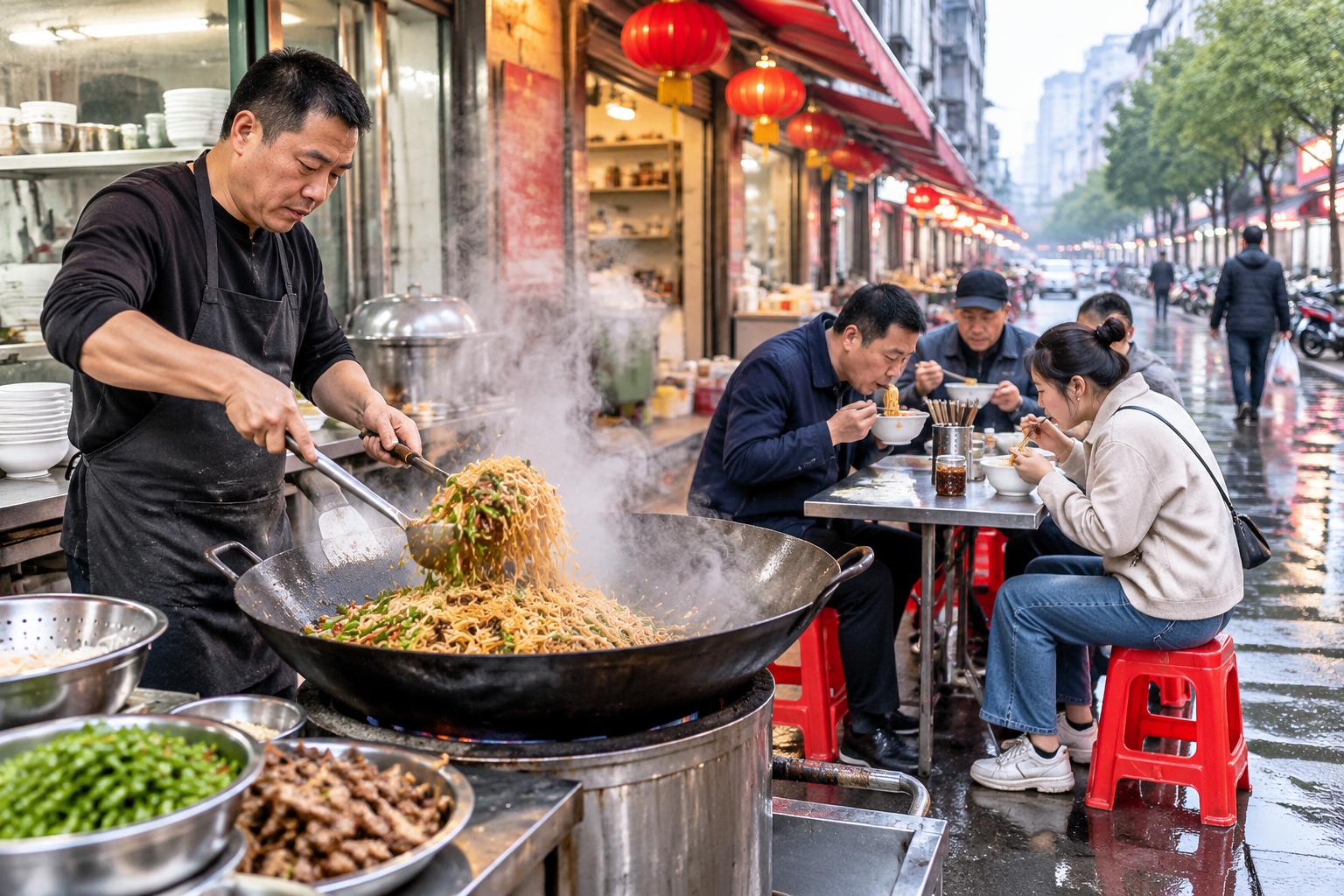
The morning version of this culture is rice noodles, locally called mi fen. Early in the day, cooks toss steamed rice noodle sheets into a quick broth and cover them with a succulent spoonful of pork and chili. Locals sit curved over white bowls and suck up the noodles, making the pleasing noise called suo. At 7 a.m., the street is full of steam and rhythm.
Chaoshan, where fresh is everything
Take a flight or a high-speed train from Changsha to the coast of eastern Guangdong, and you will land in Chaoshan, a region covering Shantou, Chaozhou and Jieyang. Although it is politically part of Guangdong, its cuisine follows a completely separate tradition. For seafood lovers, Chaoshan is worth crossing China by plane.
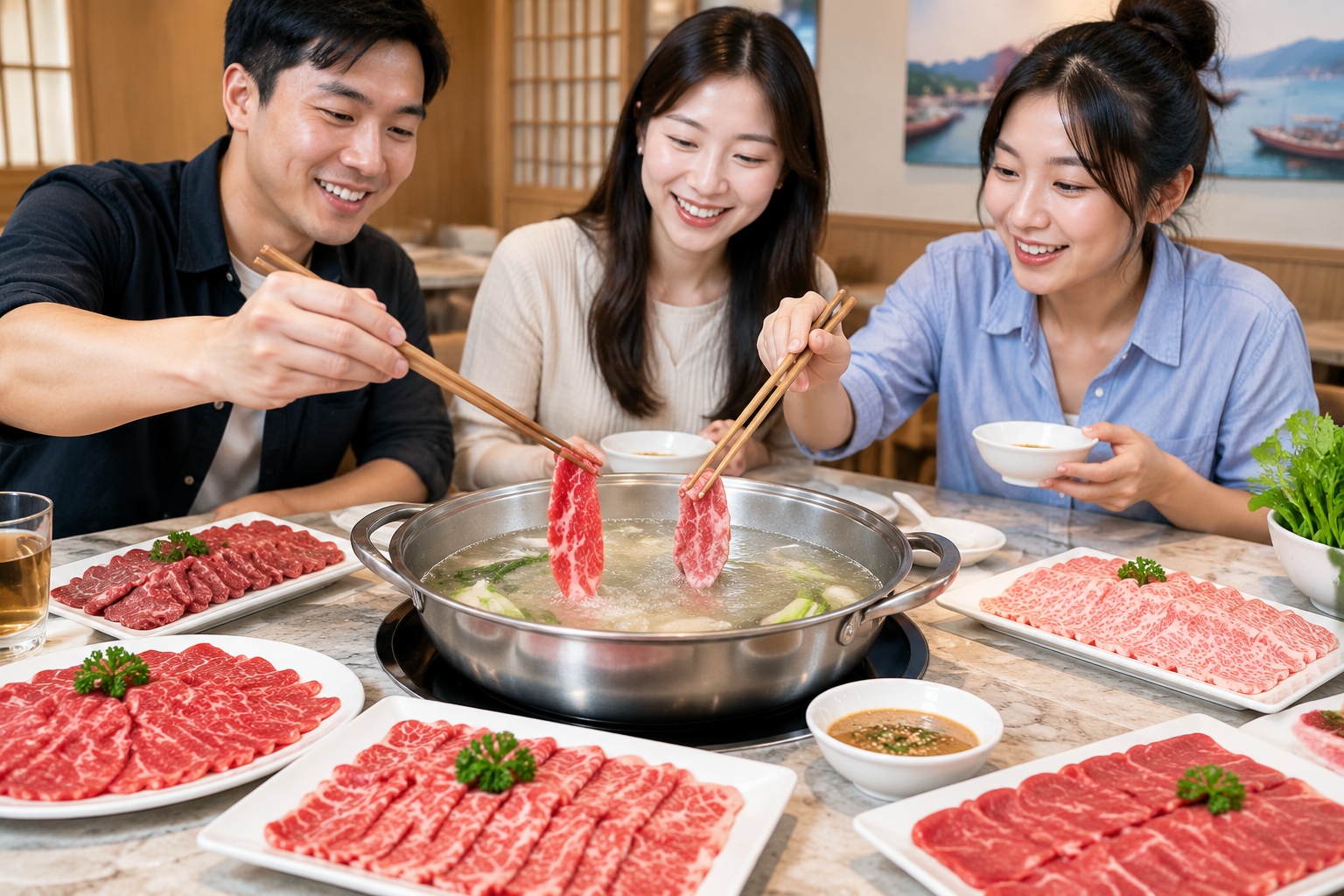
A good introduction is beef hotpot. This is not about a boiling red soup. The broth in Chaoshan is usually a clear bone soup with radish and corn, and the star is fresh beef, cut into slices so thin you can almost read through them. Each plate is labelled with a different cut and tells you how many seconds to swish in the broth. The sweetness of the meat comes through without a heavy sauce.
If you are more adventurous, ask for sheng yan — raw marinated seafood. Raw prawns, crabs or oysters sit in a mixture of soy sauce, garlic, coriander and tiny red chilies for half an hour. It is eaten with porridge and tastes like the ocean, but brighter. Choose a busy stall that sells everything the same day, because in Chaoshan, freshness isn’t a slogan.
Xi’an, the kingdom of wheat
From Chaoshan, take a long flight to Xi’an in northwest China. The landscape turns from rice paddies to golden wheat fields, and so does the table. Xi’an was once the capital of several Chinese dynasties and the eastern end of the Silk Road. Its food remembers that history — it has more in common with the flatbread cultures of Central Asia than with rice-loving southern China.
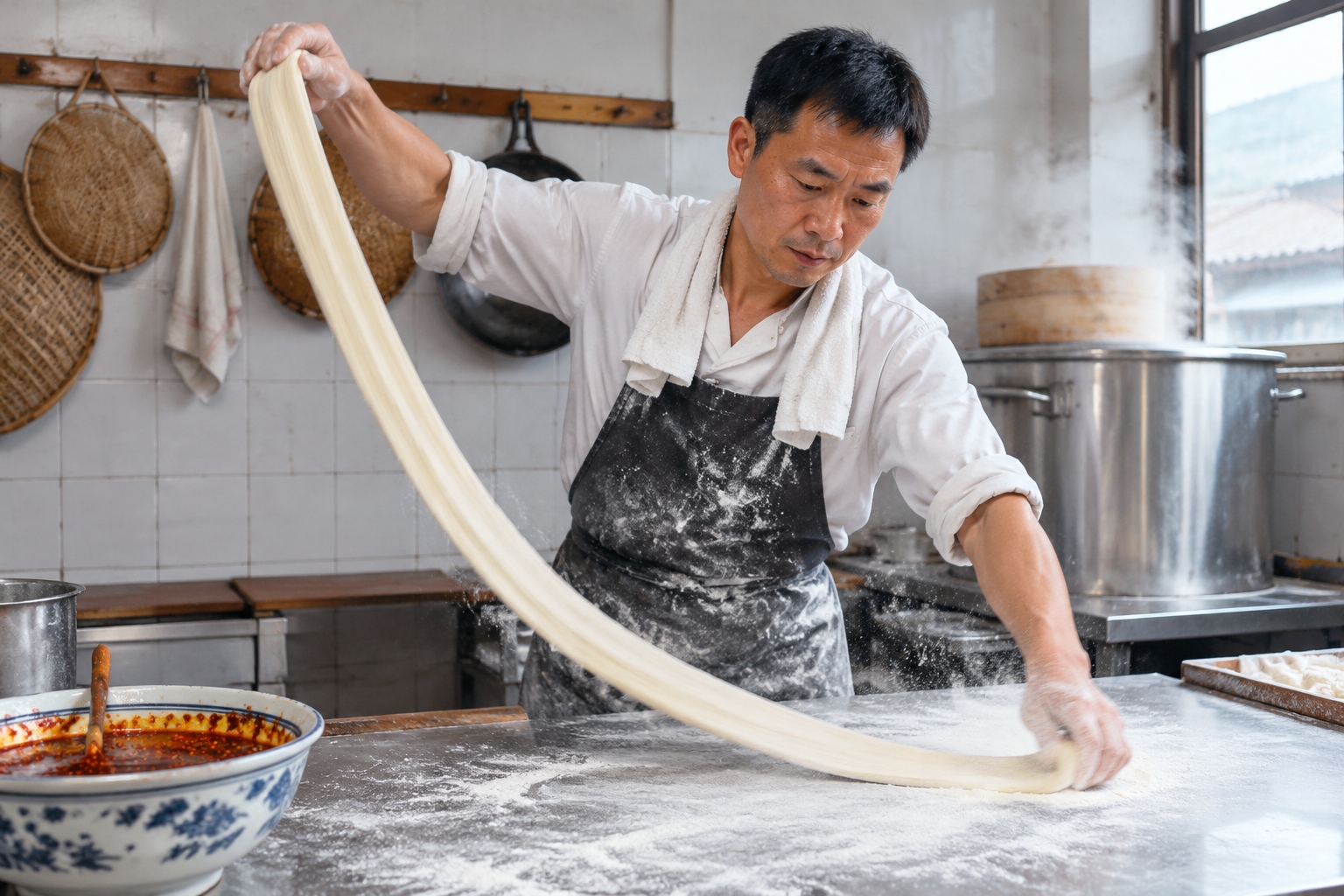
The most famous dish is biang biang noodles, a name whose Chinese character has more than fifty strokes. You take a piece of dough, pull and slap it until it becomes a wide, belt-like strip. After boiling, it is topped with chili flakes, garlic, scallions, and a ladle of searing hot oil. The sizzle is a form of music.
Another Xi’an ritual is yang rou pao mo, a lamb soup with “broken bread.” The restaurant gives you a flat, hard bread. Your task is to pull it into small crumbs. A patient eater forms pieces the size of rice grains. When the bowl goes back to the kitchen, it is cooked with lamb broth and stewed lamb. The result is a thick, comforting porridge of bread and meat. Don’t be in a hurry here. Crack the bread slowly, like the locals do, and you will taste why patience belongs in the recipe.
How to find restaurants locals actually use
You don’t need a blog list of “must eats.” You need a simple filter. Here are mine:
- Use the 8pm check. Pass by at dinner peak. If you see tables of families, workers with beer, and waiters shouting orders across the room, you’re in the right place.
- Look at the menu, not the sign. A laminated menu with photographs of every dish usually counts for tourists. A cheap printed page with a lot of handwritten crossings and updated prices in pen is a good sign.
- Ignore words like “网红” (wang hong), meaning online sensation. This label changes from week to week, and not always for taste.
- Watch how locals order. If they are not looking at the menu, they know something. Ask what they’re having — most people are happy to help a curious traveller.
- Use China’s review apps like Dianping, but read them the local way. Set the filter to “nearby” instead of “highest rating.” Read recent photos taken by locals. If a 3-star review says “the food is good but the wait is terrible,” that is often a place you want to try.
- Ask delivery riders or taxi drivers. They eat out more than most people and have no reason to pretend.
The last bite
After this tour, I stopped saying “Chinese food” as if it were one thing. Now I say “Sichuan style,” “Hunan style,” “Cantonese,” “Chaoshan” and “Shaanxi.” The differences are real, yet every place shares one trait: a deep belief that good food is part of a good day. When locals see you trying their dish, they often put more food on your plate and say “多吃一点” — eat a little more. If you’re ever invited to the table, take them at their word.
Start the discussion at forum.chinacomes.com