

A Chair, a Cup, and Nowhere to Be
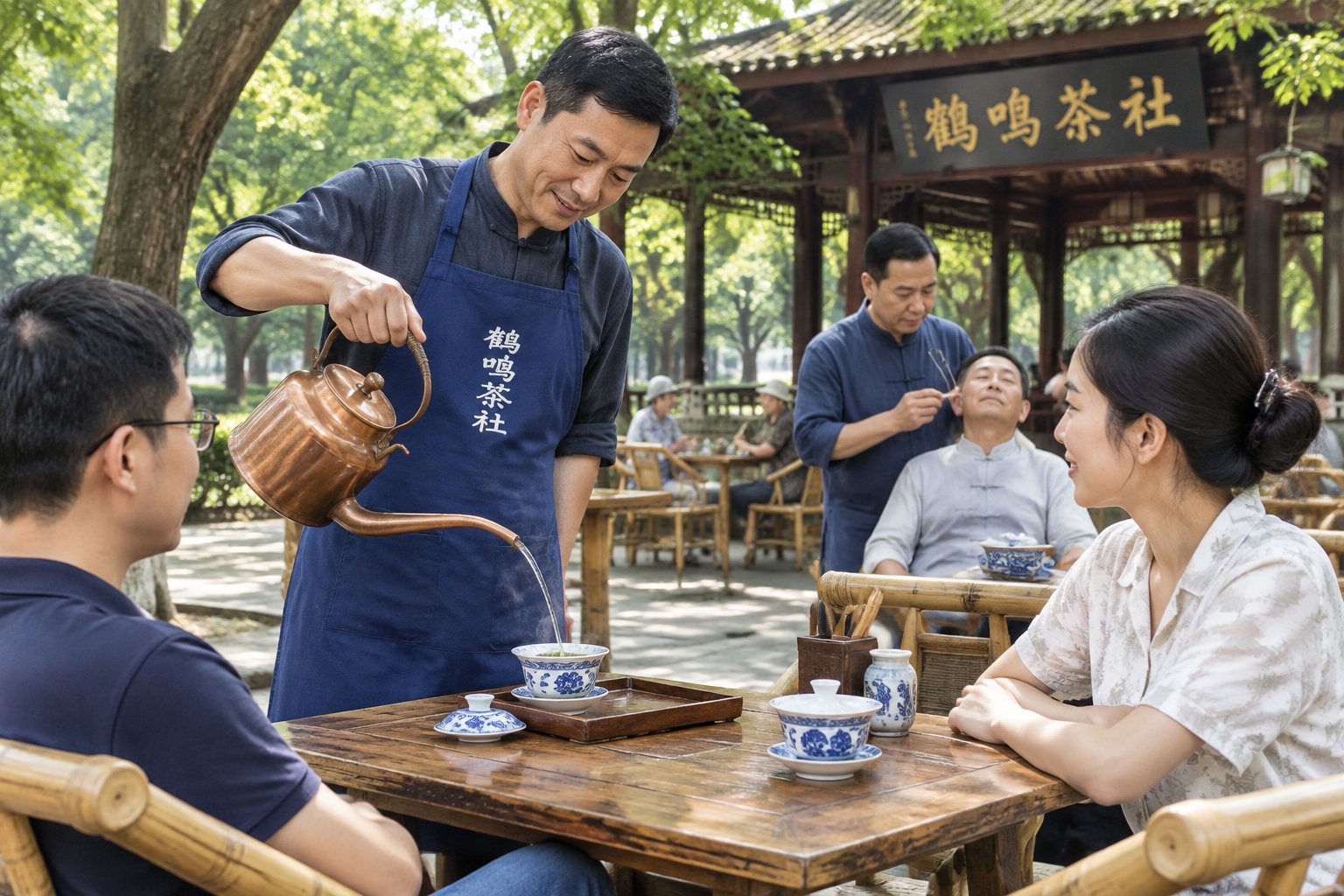
At 2:15 on a Tuesday afternoon, the Heming Teahouse in Chengdu’s People’s Park is already full. The sound arrives before the sight: the clink of porcelain lids, the low murmur of Sichuanese, the sharp ding of a brass tuning fork. A man in a blue apron threads between bamboo chairs, holding a copper kettle with a meter-long spout. He tilts it without looking, and hot water arcs into a covered bowl. Steam curls up. Somewhere behind me, a retired man has fallen asleep with a newspaper over his face. No one minds.
I order a cup of jasmine tea. It costs 28 yuan — about four dollars. The waitress hands me a lidded porcelain bowl, a small thermos of hot water, and a receipt. Then she disappears. No one asks me to leave. No one upsells me a pastry. I can sit here until the park closes, and the only rule is that I keep refilling my own cup.
This is a third place. Not home, not work. The term comes from sociologist Ray Oldenburg, who argued that a healthy society needs informal public gathering spots — cafés, taverns, barbershops — where people can show up alone and leave with a conversation. In China, that role has long been played by parks and teahouses. And on this afternoon, I want to see what it actually looks like.
What a Chinese “Third Place” Actually Looks Like
People’s Park sits in the middle of downtown Chengdu, a city of 21 million people. It was built in 1911 as Shaocheng Park, and it contains a lake, a monument to the Railway Protection Movement, and miles of shaded paths. Entry is free. The Heming Teahouse, founded in 1923, is the park’s living room.
The crowd is mostly retirees. They arrive after breakfast and stay until dinner. Some play cards — a game called dou dizhu, or “Fight the Landlord.” Others read newspapers, knit, or simply stare at the lotus pond. A few are clearly here every day. They have their own chairs, their own tables, their own tea preferences. The staff know them by name.
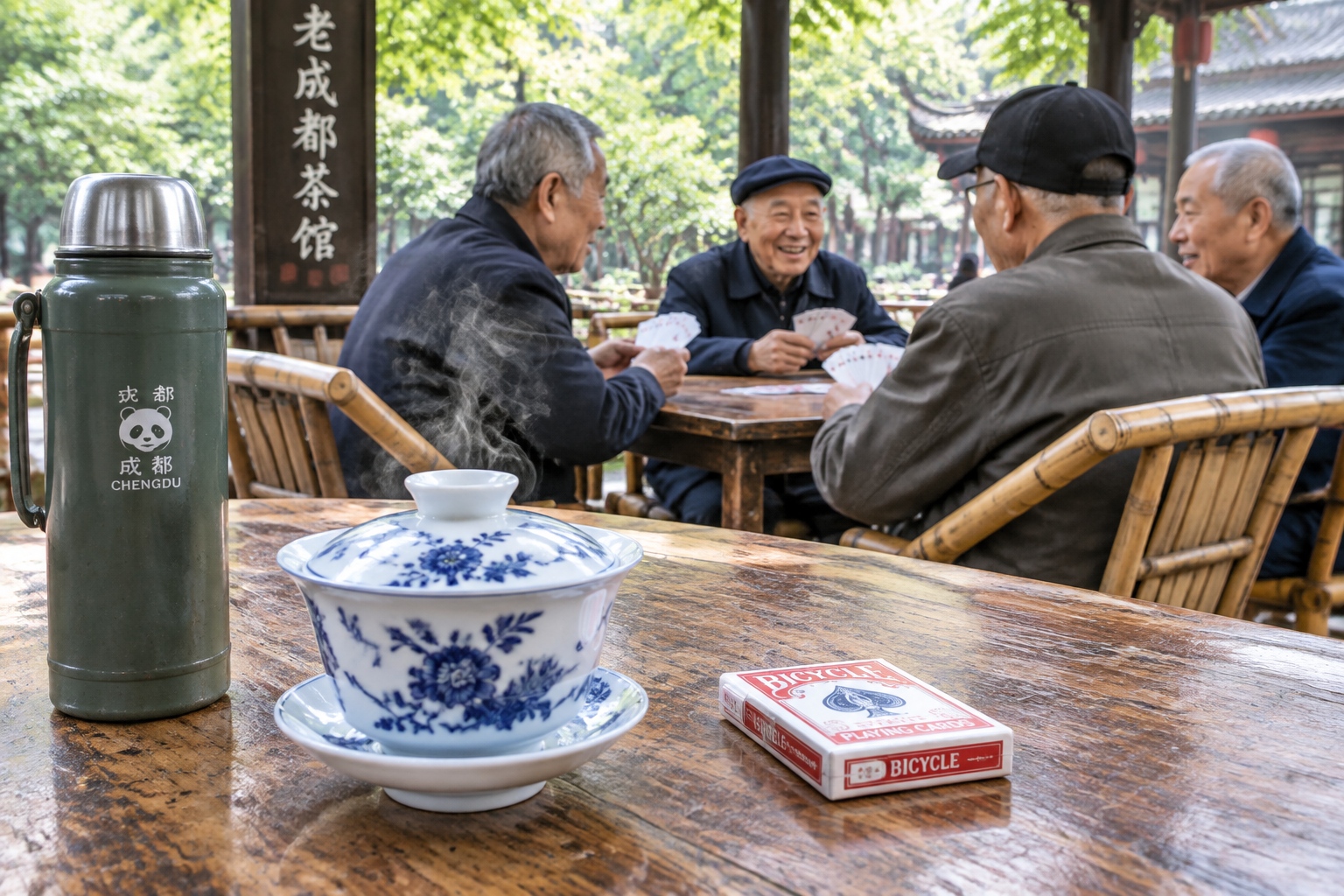
What strikes me is the economics. A cup of tea costs between 20 and 40 yuan. You get unlimited hot water. You can bring your own snacks. You can nap. You can argue politics. You can cry. The teahouse makes money, but it doesn’t demand that you consume. That’s a rare thing in a world where public space increasingly means a shopping mall with a security guard.
The Tea Never Gets Cold
The covered bowl tea, or gaiwan, is a small ritual. You lift the lid, sniff the jasmine, push the leaves back with the lid, and sip. The water is always just below boiling. You refill it yourself from the thermos. The tea gets weaker over time, but no one complains. The point isn’t the tea. The point is the sitting.
Next to me, three men are playing cards. They slap down their hands with the force of a judge’s gavel. One of them, a man in a red cap, has a cigarette tucked behind his ear. He loses a round and laughs so hard he has to wipe his eyes. No one is in a hurry. There is no meeting to attend, no email to answer. The afternoon stretches out like the lake outside.
I ask the man in the red cap how often he comes. ‘Every day,’ he says. ‘Except when it rains.’ He is 68, retired from a state-owned factory. His pension is enough. His son works in Shenzhen. He doesn’t want to live with him. ‘Here I have friends,’ he says. ‘At home I have a television.’
The Ear Cleaner’s Tuning Fork
Then there is the sound of the tuning fork. A wiry man in his fifties walks between the tables carrying a leather roll. He unrolls it to reveal bamboo sticks, cotton swabs, tiny knives, and a brass fork. He strikes the fork against his palm. Ding. A customer tilts his head. The ear cleaner inserts a long bamboo tool, scrapes gently, and pulls out a small ball of wax. The customer sighs. The fork rings again.
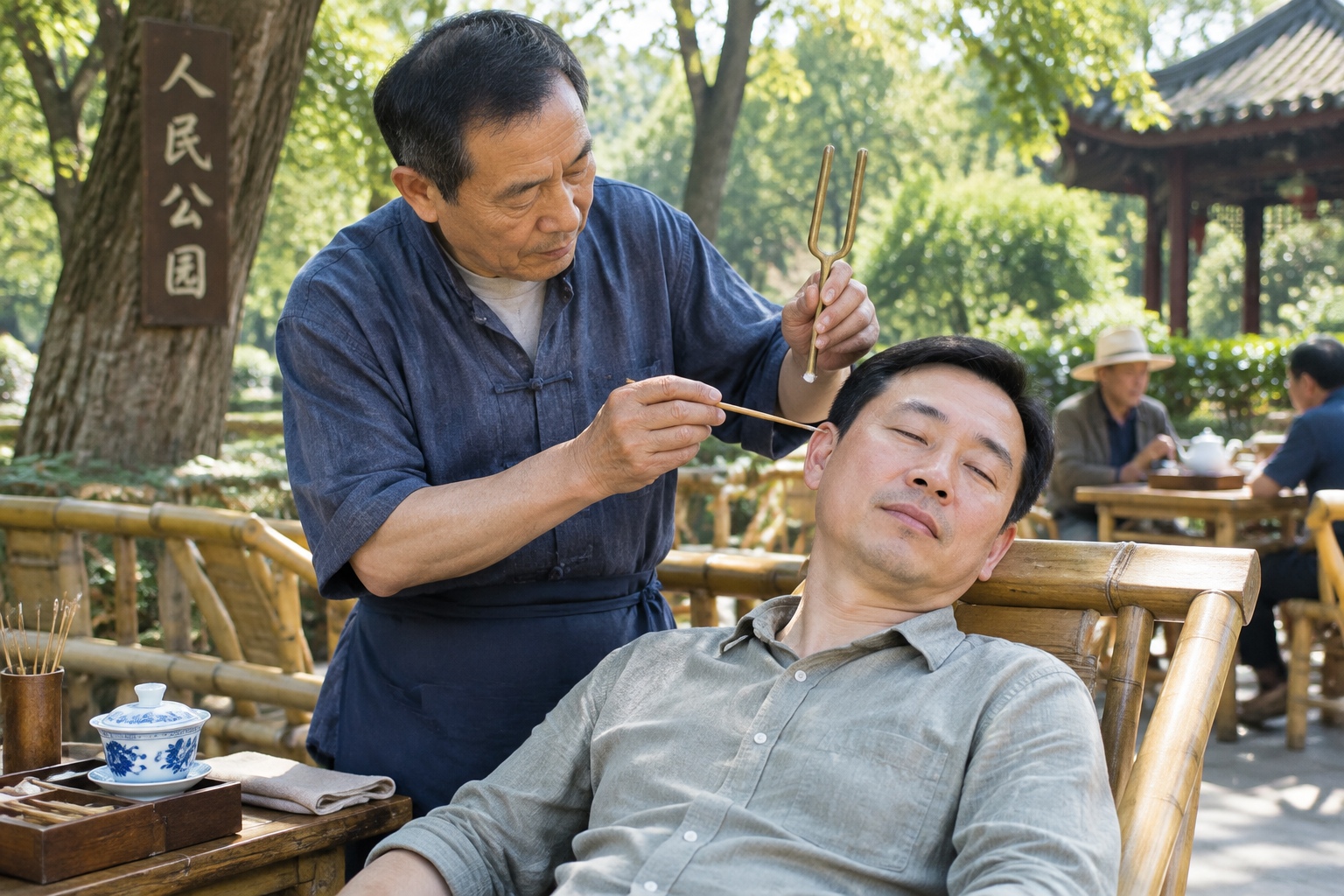
This is traditional ear cleaning, a service that exists in teahouses and street corners across Chengdu. It costs around 100 yuan. Some people find it unbearable; others swear it’s better than a massage. The ear cleaner, who gives his name as Mr. Liu, has been doing this for 22 years. He learned from his father. ‘Young people come now too,’ he says. ‘They watch videos on their phones and then they want to try.’
He moves from table to table, like a musician busking for a crowd. No one organizes him. He is part of the informal economy that fills the gaps of the formal one. The park allows him to work because he doesn’t make a mess and he doesn’t harass anyone. It’s a small negotiation between public space and private hustle.
Matchmaking Corner: The Park’s Other Heartbeat
On weekends, the park’s northeast corner turns into something else: a marriage market. Parents gather with umbrellas covered in paper resumes. Each resume lists height, weight, salary, property, car, hukou, and sometimes a photo. ‘Born in 1988, female, 1.62m, civil servant, one apartment in Jinjiang.’ The parents stand in clusters, comparing notes, exchanging phone numbers. It looks like a stock exchange, but the commodity is their children’s futures.
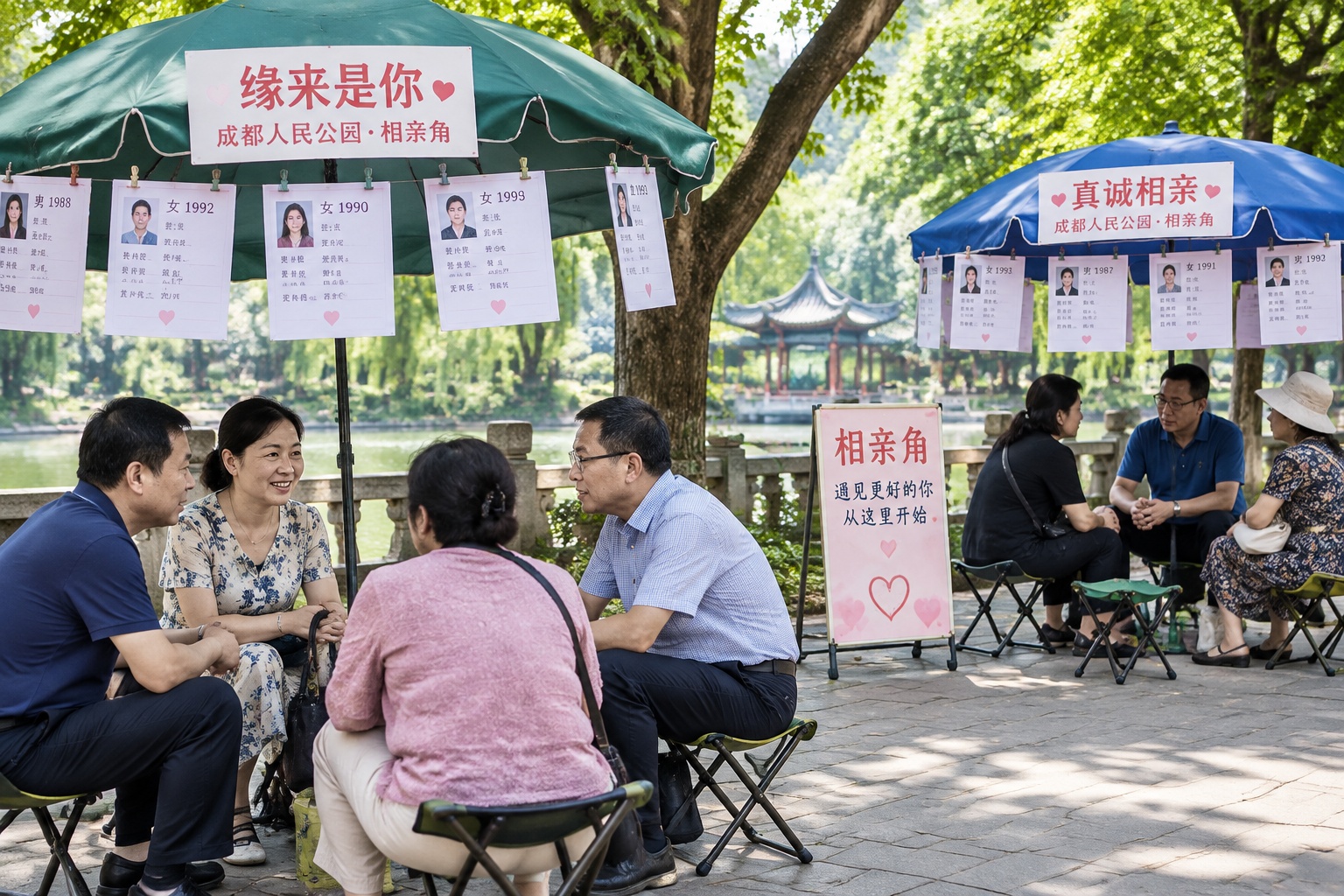
I ask a woman in her sixties why she is here. Her daughter is 34, a lawyer, and doesn’t want to marry. ‘I’m not forcing her,’ she says. ‘But I’m worried. If I don’t look, who will?’ She has been coming for three years. She has met other parents in the same situation. They have become friends. They drink tea together after the matchmaking hours end. The park gives them a place to worry collectively, which is its own kind of comfort.
Dancing, Calligraphy, and the Art of Doing Nothing
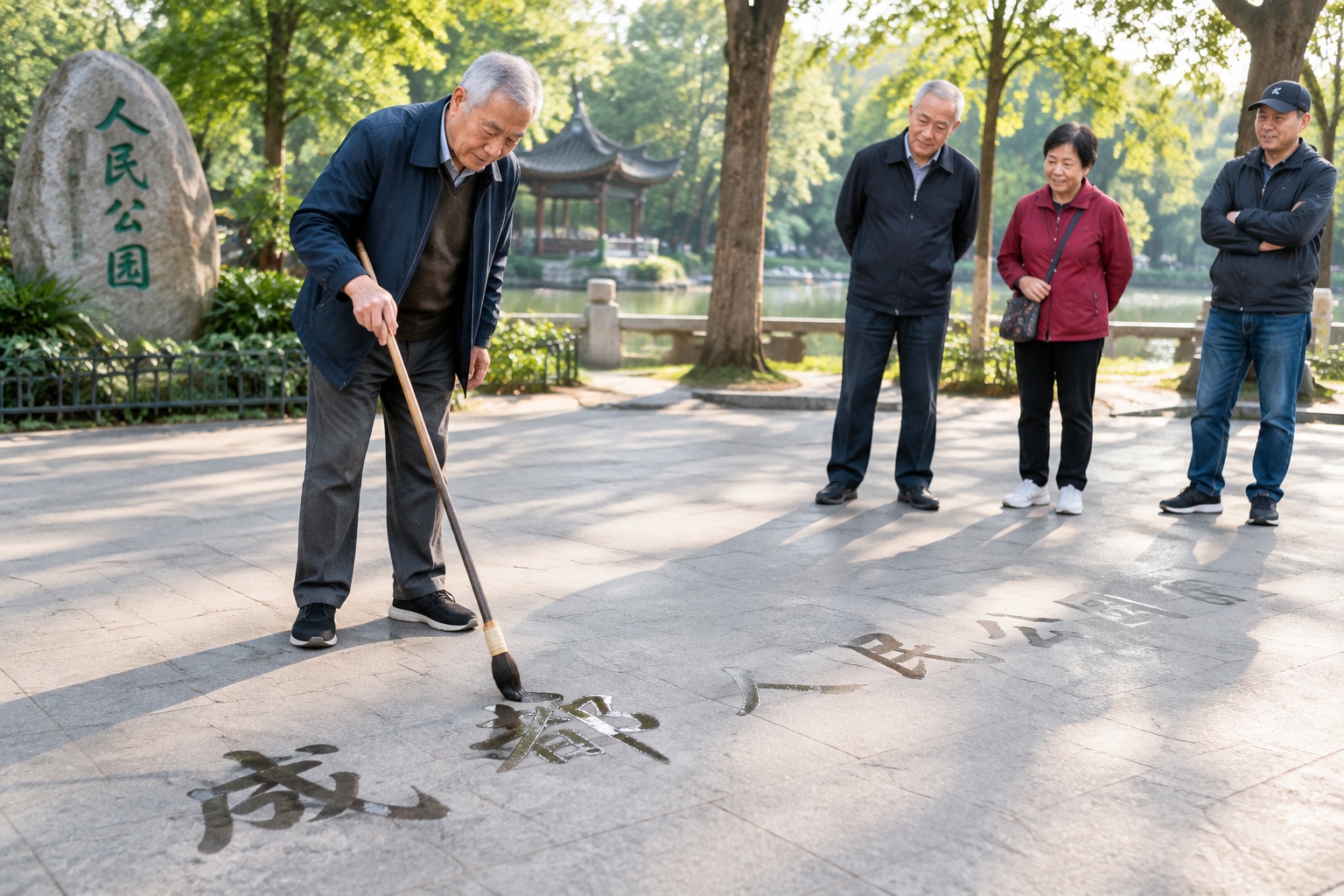
By 5 p.m., the light turns gold. In another corner, a portable speaker blares a Tibetan folk song. A dozen women in their sixties dance in a loose circle, arms raised, hips swaying. On the pavement nearby, an old man writes calligraphy with a long brush dipped in water. The characters evaporate as he moves. He doesn’t care. He writes the same poem every day.
I walk past a group of young office workers on their lunch break. They sit on a bench, eating takeout from plastic containers. One of them, a woman in a white blouse, tells me she comes here to ‘clear her head.’ She works for a tech company and often puts in 10-hour days. ‘The park is free,’ she says. ‘I can’t afford a therapist. But I can afford a cup of tea.’
Who Gets to Relax?
The park is not a utopia. It is a privilege of time. Most of the people here are retirees with pensions, or students, or freelancers who can set their own hours. The city’s delivery riders, factory workers, and nurses are not here. They are working. China’s ‘996’ culture — 9 a.m. to 9 p.m., six days a week — is still a reality for many. The relaxed atmosphere of the teahouse is a contrast to that, not an escape from it.
And yet, the park is public. It is funded by the city government, maintained by cleaners and gardeners, patrolled by security guards. There is no entry fee, no dress code, no minimum spend. The government has built thousands of such parks across China in the past two decades. They are part of a broader push to improve ‘public cultural services.’ You can criticize the top-down nature of that. But you can also sit in a bamboo chair and watch a man sleep with a newspaper on his face, and admit that something is working.
When the Light Changes
At 5:30, the tea is cold. Mr. Liu the ear cleaner rolls up his tools and disappears into the crowd. The card players argue over a final hand. A woman collects the last thermos from the tables. The waitress comes by and clears my bowl without a word. I stand up, my legs stiff from sitting. The park doesn’t close. The evening dancers are already arriving, their speakers crackling to life.
I walk out past the lotus pond, where a young couple is rowing a boat in slow circles. The woman is laughing. The man is trying to steer. The water reflects the city skyline, but only in pieces. The third place is not an idea. It is a chair, a cup, a tuning fork. It is a place where no one asks you to be productive, and where the tea never gets cold — as long as you keep pouring.
Start the discussion at forum.chinacomes.com