

A Queue Before Breakfast
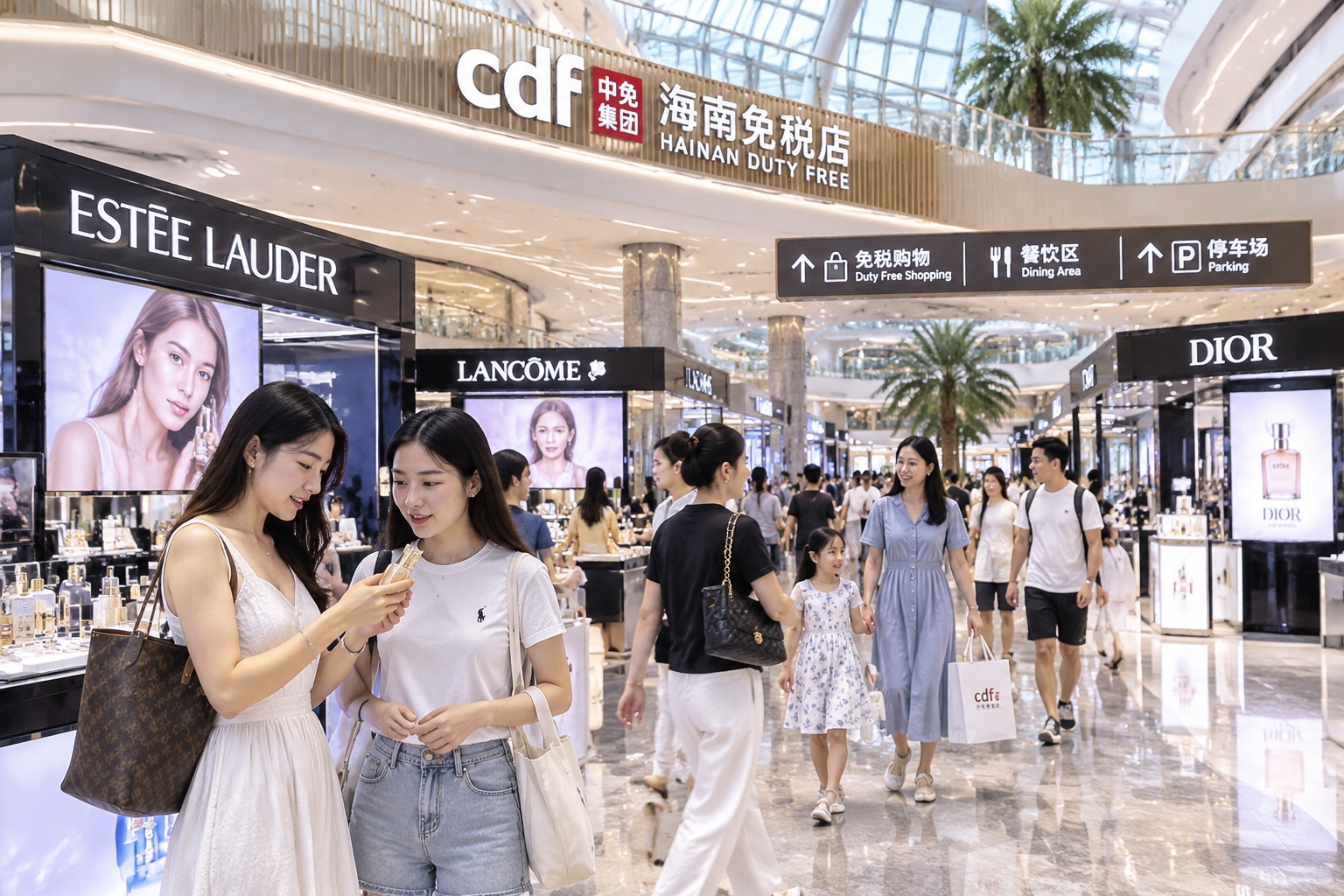
At 9:30 in the morning on a Tuesday in Haikou, the capital of Hainan island, a line of about thirty people already snakes outside the CDF Mall on Guoxing Avenue. Some hold phones, scrolling through product lists; others chat with friends about what to buy. The mall doesn’t open until ten, but these shoppers have planned their morning around it.
Among them is Lin Lin, a 26-year-old office worker from Chengdu, visiting Hainan for the first time. She has a small notebook with a list of skincare products she wants. “I compared prices online,” she says. “The same serum I use at home costs about 30% less here. Even with the flight ticket, it’s worth it.”
This scene is not unusual anymore. In recent years, Hainan’s offshore duty-free policy has turned the island into one of China’s most popular shopping destinations. It’s not just about buying things — it’s about how a government policy can reshape a vacation.
What Is Offshore Duty-Free?
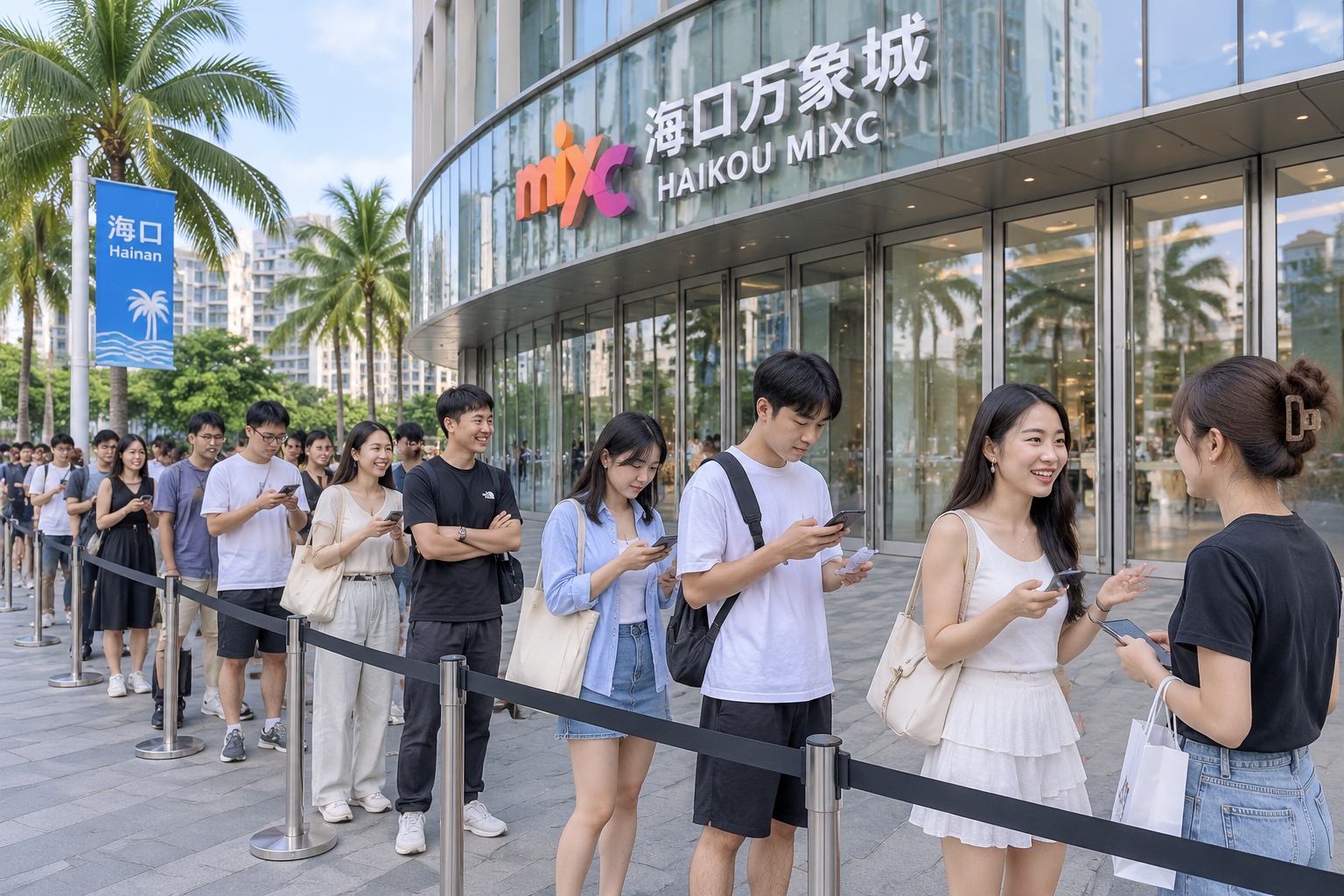
If you’ve shopped at airport duty-free stores, you know the basic idea: goods are sold without certain taxes and customs duties, making them cheaper. Hainan takes this a step further. It’s an “offshore duty-free” zone. That means any visitor to Hainan — whether a Chinese citizen or a foreigner — can buy duty-free goods on the island itself, not just at the airport.
The policy started in 2011, but for years it was limited. The annual shopping quota was small, the product categories were narrow, and only a few stores operated. Then, in 2020, the Chinese government dramatically expanded the program. The annual tax-free shopping quota was raised to 100,000 yuan (about $14,000) per person per year. The number of product categories increased to 45, including cosmetics, electronics, wine, and even luxury watches. For many overseas visitors, this is a big deal. But the key detail is this: you don’t need to leave the country to enjoy duty-free shopping. You just need to take a flight or a ferry to Hainan.
That’s a game-changer. In mainland China, buying a premium French skincare brand or a Swiss watch means paying import duties and value-added taxes. On Hainan, these taxes are removed. So the price difference can be significant. For a popular Japanese facial cream that costs around 1,200 yuan in a Shanghai department store, the price in Hainan might be 850 yuan. That’s a savings of nearly 30%.
How It Feels for a Normal Tourist
For most Chinese travelers, Hainan used to be about beaches and coconut palms — a domestic alternative to Southeast Asia. Now, for many, it’s also about shopping. A typical itinerary might look like this: a few days at a resort in Sanya, a morning at a duty-free mall, an afternoon at the beach, and another evening of browsing at a second mall. Visitors often plan their purchases carefully, because the quota is generous but has limits.
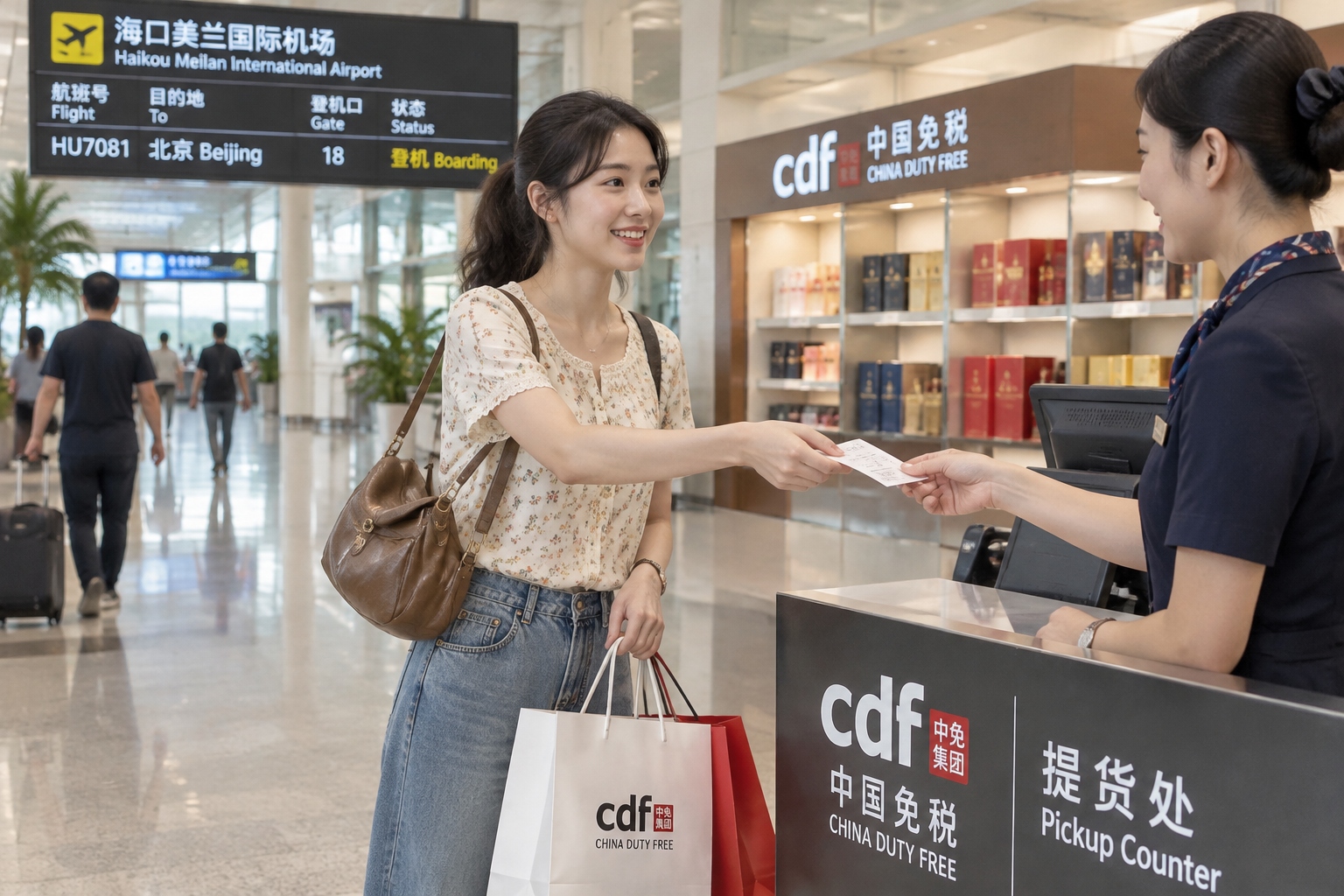
One important rule: duty-free goods cannot be taken away immediately. You buy them in a store, but they are delivered to the airport or ferry terminal, and you pick them up right before you leave the island. This sounds cumbersome, but it’s now quite efficient. At Haikou Meilan International Airport, there are dedicated pickup counters, and the process usually takes only a few minutes.
The result is a different way of thinking about a vacation. “I used to spend a whole day at the beach,” says a 34-year-old mother from Beijing, who asked not to be named. “Now I schedule one morning for shopping, because the savings basically pay for my hotel stay.” She is not exaggerating. Some people, especially those buying high-end electronics or jewelry, save several thousand yuan on a single purchase.
The Numbers Behind the Rush
The shopping boom is visible in the data. In 2023, Hainan’s duty-free sales reached about 43 billion yuan (roughly $6 billion). That’s more than double the sales in 2019, before the policy expansion. In 2024, despite concerns about slowing consumption, sales have remained strong. During the week-long National Day holiday in October 2024, duty-free sales on the island hit nearly 1.7 billion yuan in just seven days.
What are people buying? Cosmetics and skincare have long been the top category, especially among young women. But the fastest-growing category now is luxury goods and electronics. Apple’s MacBooks and iPhones are popular because the price difference can be substantial. Some Chinese consumers say that buying an iPhone on Hainan is cheaper than in Hong Kong, which used to be the go-to place for tax-free electronics.
The policy has also changed the geography of the island. In the past, almost all duty-free shops were concentrated in the southern city of Sanya. Now, Haikou, the northern capital, has become an equally important shopping hub. New shopping centers have opened with big glass facades and international brand logos, making them look like malls in Singapore or Dubai. The local government has even encouraged more competition by approving new licenses, hoping to keep prices low and improve service.
More Than Just Buying Things
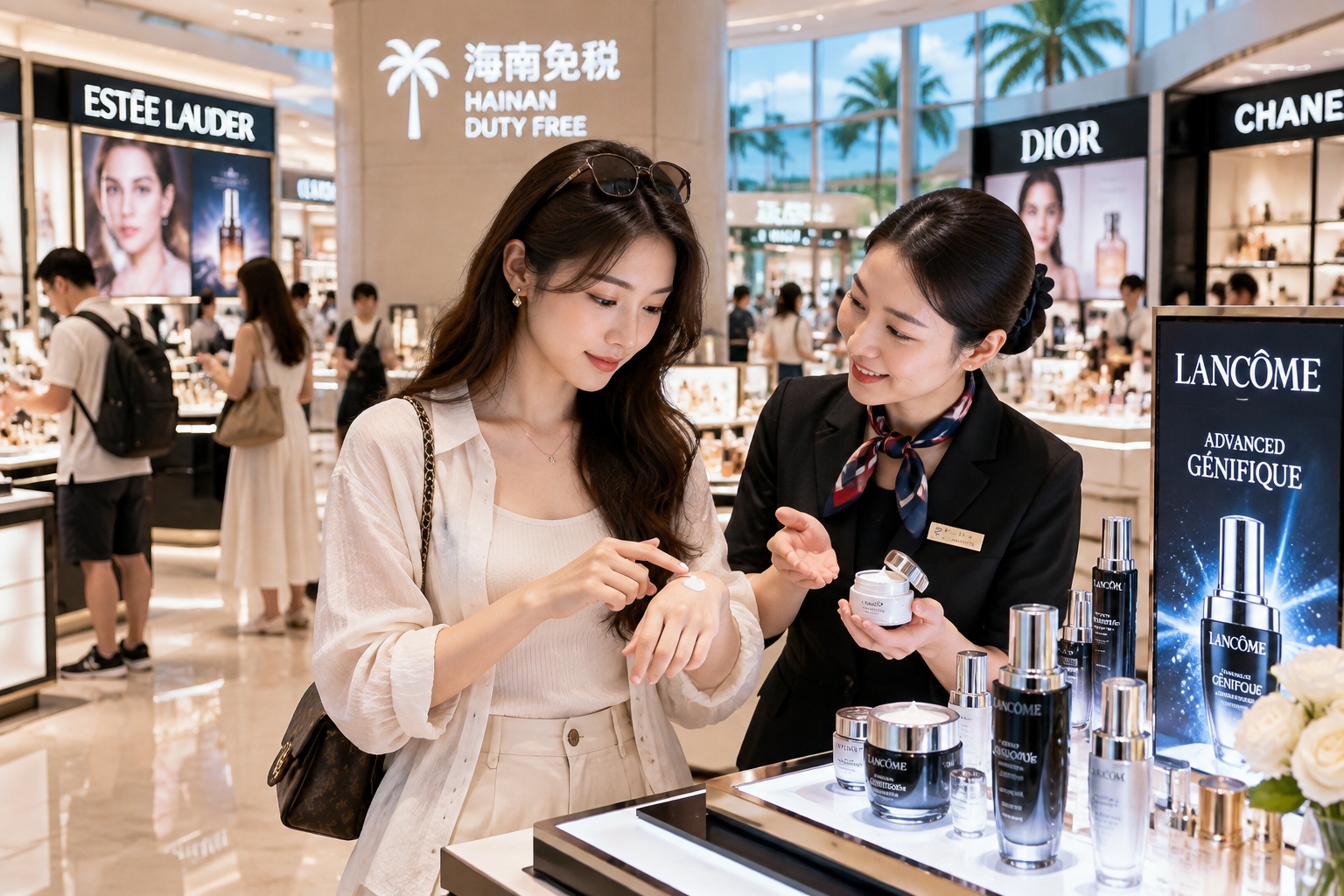
For many visitors, the duty-free experience is not just about the price tag. It’s also about the ability to see and touch products. On the mainland, high-end brands are often sold in small counters inside department stores. On Hainan, the flagship duty-free malls have massive spaces where you can try on watches, test skincare, and take your time. It feels more like a high-end shopping district than a tax-free warehouse.
The staff also play a role. Many duty-free store employees are trained to explain the tax policies and price comparisons. They know which product is cheaper here than on the mainland, and they can help customers calculate the exact savings. For some shoppers, this is a kind of reassurance. They feel they are making a smart financial decision.
But there is another side. The policy has created a gray market of “daigou” — professional shoppers who buy duty-free goods on Hainan and resell them on mainland social media platforms like WeChat. Some do this legally within the quota, but others use multiple ID cards to exceed limits. The government has tried to crack down, but the practice continues. This tells you something about the demand: many consumers want international brands but are very price-sensitive. They would rather fly to Hainan or hire someone to do it for them than pay full price at home.
What This Says About Chinese Consumption
For foreigners, the Hainan duty-free boom may seem like a strange phenomenon. It’s worth understanding the context. For decades, Chinese consumers have associated international travel with shopping. Visitors to Europe, Japan, and South Korea often spent as much time in shops as in museums. The pandemic interrupted this travel flow, and Hainan’s expanded duty-free policy was partly designed to bring that spending back home.
It worked, but it also revealed a deeper trend. Chinese consumers are not just buying brands; they are buying a sense of a good deal. They are sophisticated, comparing prices across channels, and they are willing to travel to get a better price. This is why Hainan is now often compared to a “domestic Hong Kong.” It offers a taste of cross-border shopping without the hassle of a passport.
Of course, not everyone is excited. Some visitors complain that the duty-free malls are crowded, especially during holidays. Others say the prices are not always the best, particularly for boutique items that are newer or less well-known. And there is always the question of whether shopping has become too central to the Hainan experience. But for many ordinary families, the duty-free policy is simply a smart way to make a vacation more affordable.
A Vacation with a Bonus
Back at the CDF Mall in Haikou, the doors open at ten. The crowd moves in, not running, but with purpose. Lin Lin, the young woman from Chengdu, heads to the skincare section. She picks up a moisturizer, checks the price, and smiles. “This is really cheaper,” she says. “I think I’ll buy two.”
Her flight back to Chengdu is in two days. She’ll pick up her purchases at the airport, carrying a new bag and a faint tan from the beaches. For her, Hainan is still a tropical island. It just happens to come with a discount.
This is what offshore duty-free has changed in China: it turned a domestic holiday into a smart consumer decision. The beach is the backdrop, but the shopping has become part of the experience — a reason to go, a way to save, and a memory to carry home.
Start the discussion at forum.chinacomes.com