

The Invisible Infrastructure of Chinese Digital Life
If you are new to China, you might notice a peculiar phenomenon: while Western professionals often rely on Google Drive, Dropbox, or OneDrive, their Chinese counterparts are using Baidu Wangpan (Baidu Cloud). It is not merely a backup drive; it is the default ecosystem for sharing large files, from high-definition movie collections to massive engineering datasets.
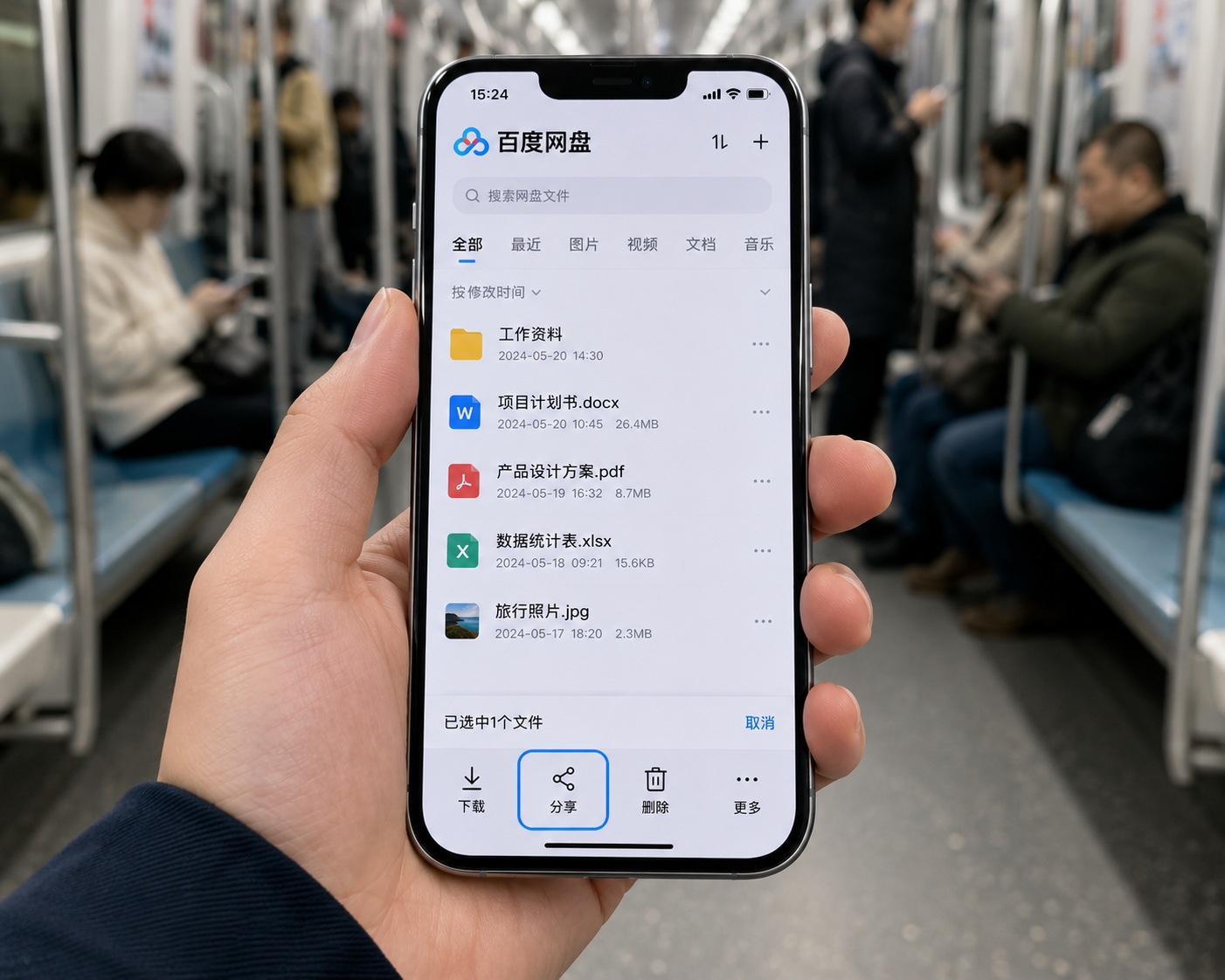
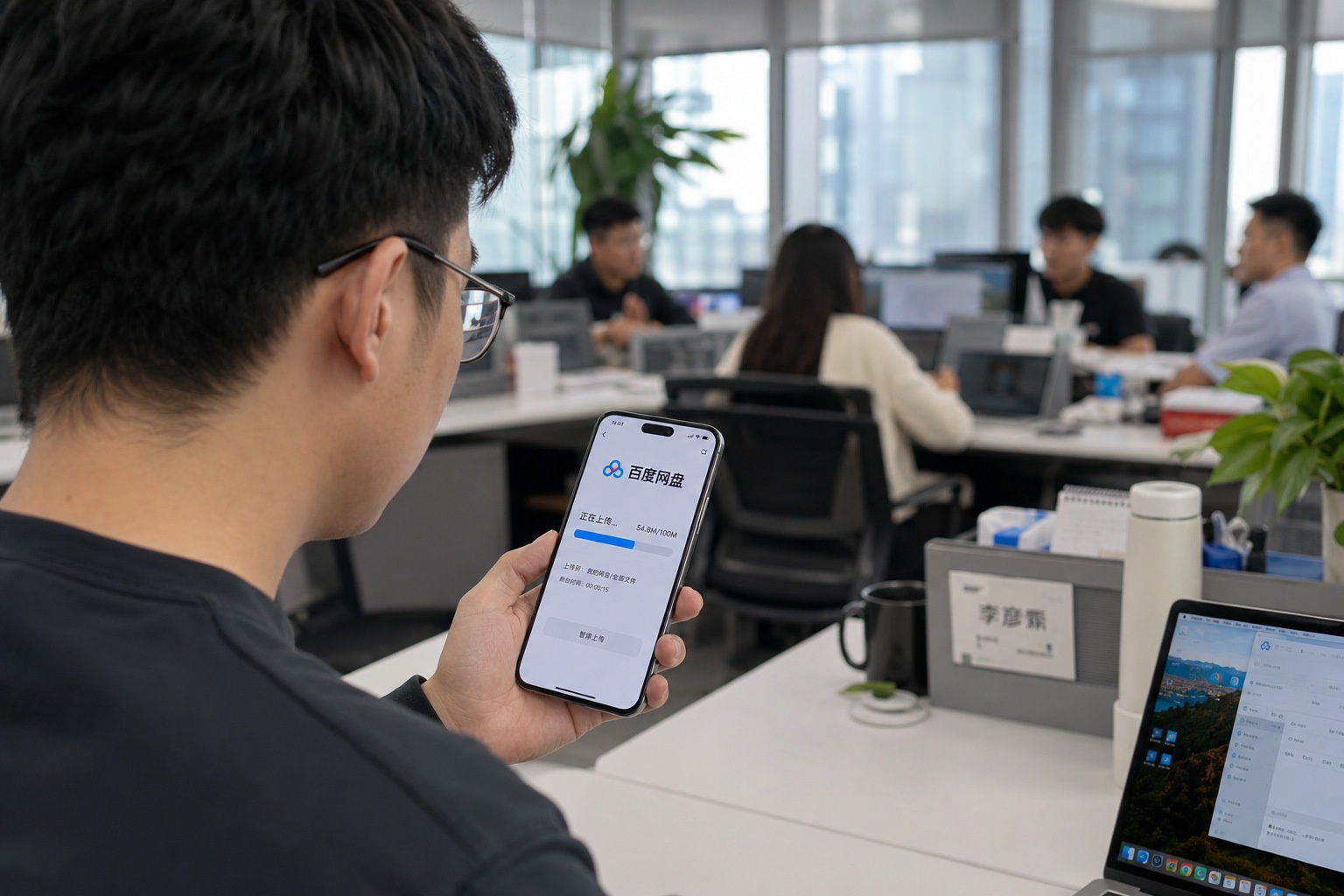
A modern office worker in Shanghai checks Baidu Wangpan on their smartphone while commuting, illustrating its role as an essential daily tool for accessing work files.
The reason for this dominance is historical and practical. When high-speed internet was expensive and mobile data was slow in the 2010s, Baidu offered the only viable platform for storing large media files. Over time, it became a network effect. If you want to share a file with a Chinese colleague, client, or friend, they will almost certainly ask for a Baidu link. It has become as ubiquitous as WeChat itself.
How to Use Baidu Wangpan: The Basics
Using Baidu Wangpan is straightforward, but it requires a Chinese phone number (+86) for registration. Once registered, the interface is clean and intuitive. Here is how the core functions work in practice:
- Uploading Files: Drag and drop files from your computer or upload via the mobile app. It supports most document, video, and audio formats.
- Generating a Share Link: Right-click (or long-press on mobile) the file you want to share and select “Share.” You can choose who can view it—publicly, privately, or via password.
- Setting an Extraction Code: For security, always set a 4-digit “Extraction Code” (Ququ Ma). When someone clicks the link, they must enter this code to access the file. This prevents random strangers from browsing your shared folders.
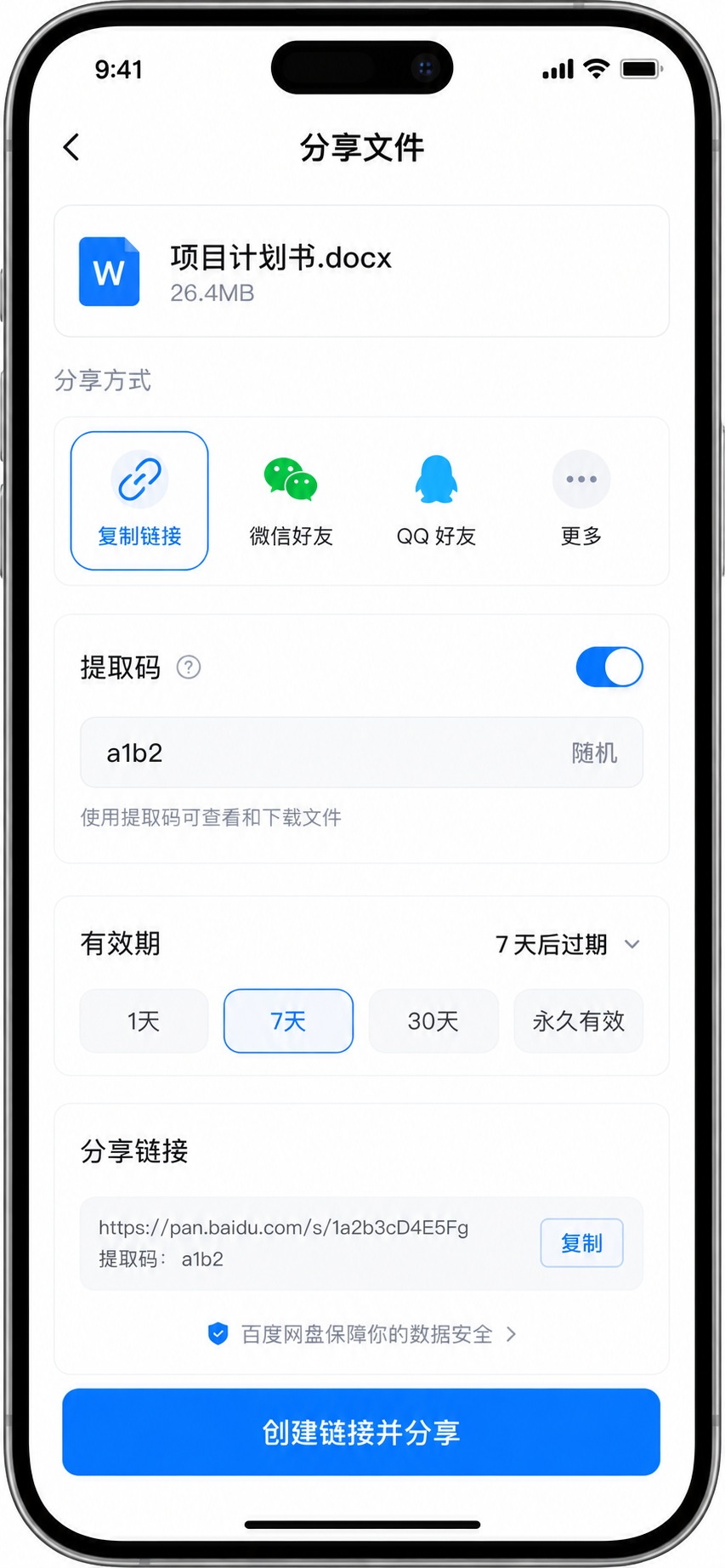
A close-up screenshot of the Baidu Wangpan mobile interface showing the “Share” button and the extraction code input field, highlighting the security feature.
The Speed Dilemma: Why “Snail Speed” is Real
This is the most critical aspect for any new user to understand. Baidu Wangpan operates on a model of asymmetric bandwidth. Uploading files is fast and usually free. However, downloading files as a non-member (free user) is intentionally throttled.
While a free user might upload at 10-20 MB/s, their download speed may be capped at just 10-50 KB/s. To put this in perspective: downloading a 1 GB file could take several hours instead of minutes. This “snail speed” (Niu Su Du) is not a bug; it is the primary business model. Baidu makes its money by selling VIP memberships that restore high-speed downloads.
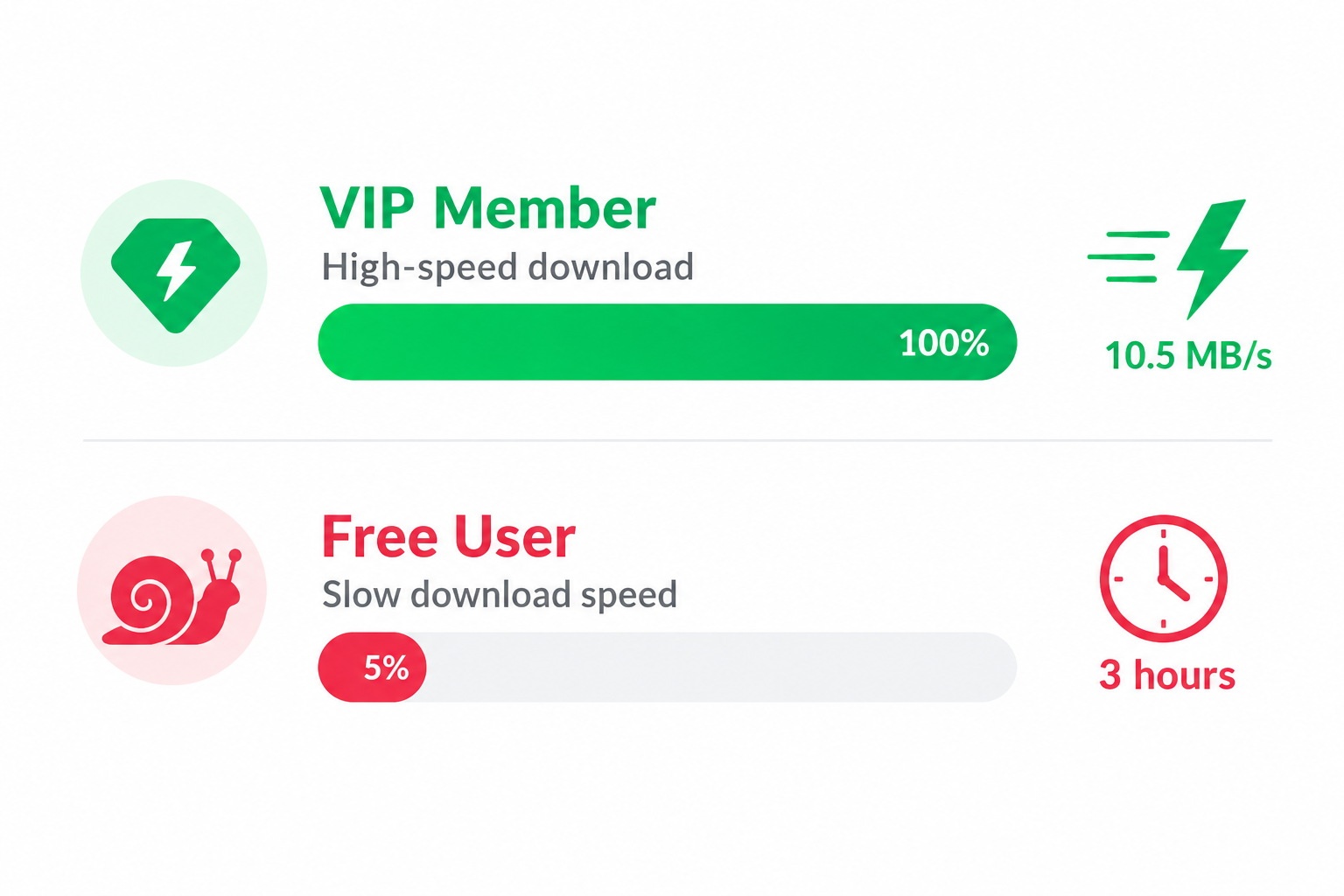
A split-screen graphic comparing download speeds: one side shows a fast progress bar labeled “VIP Member,” and the other shows a nearly static bar labeled “Free User,” with a clock showing hours passing.
Practical Solutions for Work and Social Sharing
If you receive a large file link from a Chinese colleague and do not want to pay for a subscription, here are pragmatic solutions used by locals:
- The “Friend Share” Trick: Ask your colleague to send the file directly via WeChat File Transfer or QQ. While these have size limits (usually 1-2 GB), they are instant and free.
- Temporary Membership: If you only need the file once, buy a “Daily VIP” pass. It is often cheaper than a monthly subscription and gives you full speed for 24 hours.
- Alternative Platforms: For smaller files, consider using Aliyun Drive (Alibaba Cloud) or Tencent Weiyun. However, be aware that Baidu still holds the largest share of shared content, so you may still encounter Baidu links.
Security and Best Practices
While Baidu Wangpan is convenient, privacy concerns exist. To protect yourself:
- Set Expiration Dates: Always set your share links to expire after 7 or 30 days. This ensures the file is removed from public view if not downloaded.
- Avoid Sensitive Data: Do not store highly sensitive personal documents (like passports or financial records) without additional encryption. While Baidu has security measures, the risk of account compromise or content review (censorship) is higher than in Western private clouds.
- Account Safety: Use a strong password and enable two-factor authentication. Baidu’s automated systems may flag accounts for sharing copyrighted material, so avoid using your main account for pirated content.
Conclusion
Baidu Wangpan is a paradox: frustratingly slow for free users, yet indispensable for life in China. It is less about technology and more about social habit. To navigate Chinese professional and social circles effectively, learning to use Baidu Wangpan is not optional—it is a necessary skill. By understanding its limitations and using the tips above, you can turn this “snail” into a useful tool for your daily workflow.