

A Surprise in the Classroom
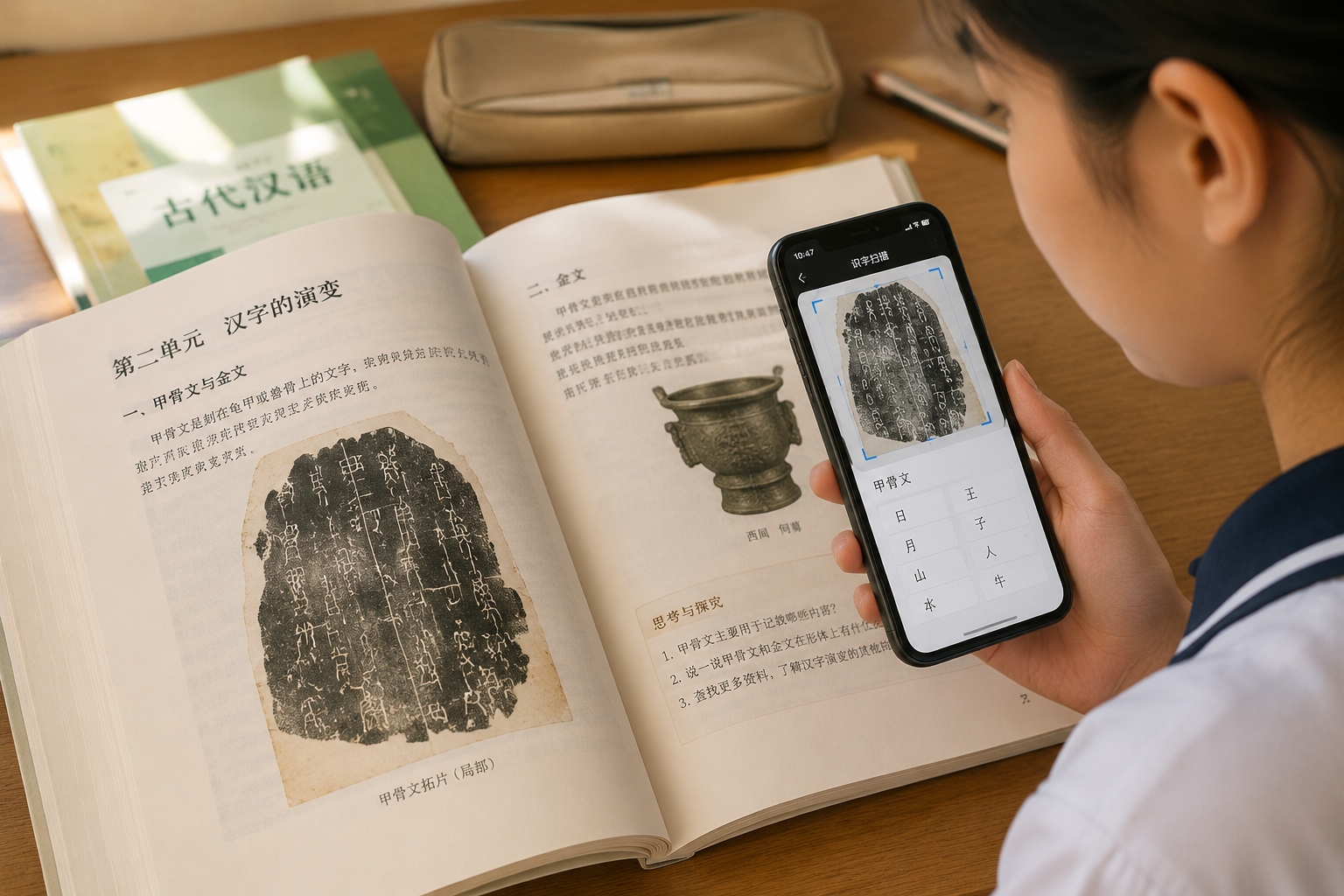
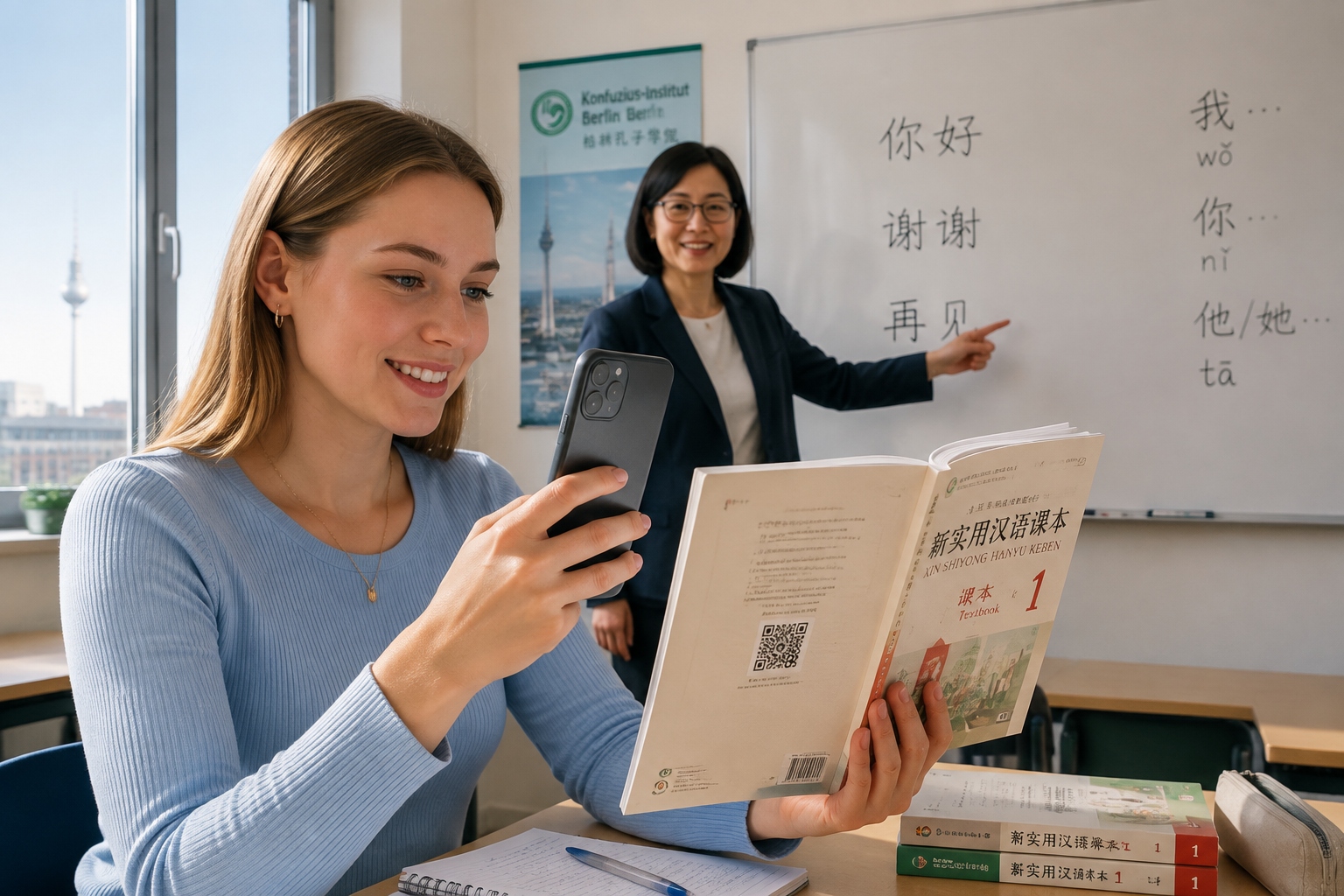
It was the first day of Chinese class at a Confucius Institute in Berlin. Anna, a physics student, sat down and opened her brand-new textbook. The first chapter introduced the character “日” with a small picture of an ancient oracle bone. Just ten pages later, she found a different kind of visual: a QR code with the instruction “Scan me to hear the dialogue.” She pulled out her smartphone and scanned it. A man’s voice in Mandarin read the conversation from the page. Anna laughed—she had expected a thousand-year-old language, not a thousand-year-old language with a barcode.
That unexpected mix is not a design quirk. It reflects a quiet transformation in how Chinese is taught overseas. Confucius Institutes, the non-profit language and culture centers that operate in many countries, have been rewriting their textbooks—from content that focused heavily on ancient civilization to lessons that embrace modern, everyday China.
The Old Textbook: Oracle Bones and Four-Character Idioms
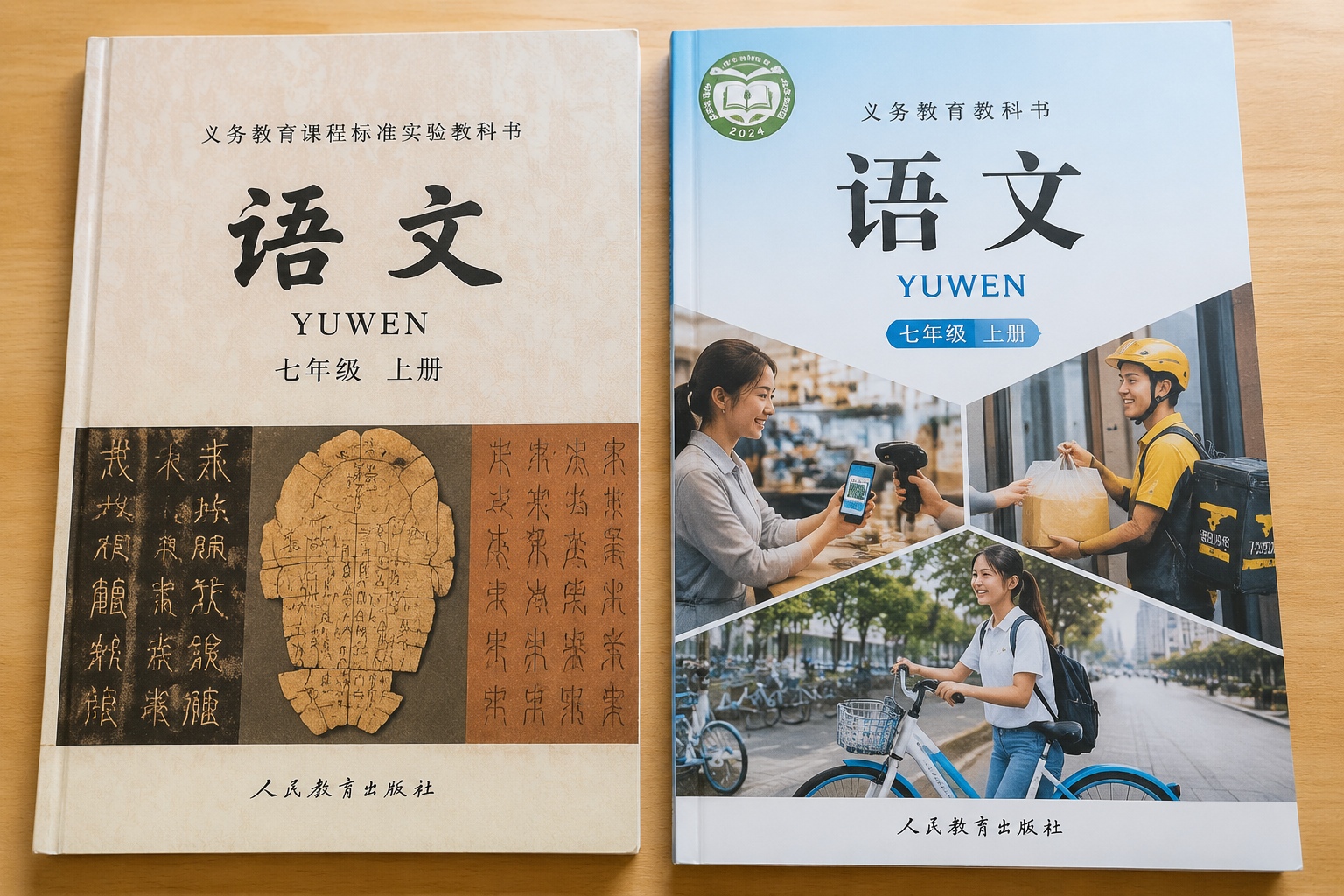
For a long time, Chinese textbooks for foreigners looked like a journey into a museum. Early chapters often featured oracle bone inscriptions, the oldest known form of Chinese writing dating back over 3,000 years. Students learned about Confucius, calligraphy, the Great Wall, and classic four-character idioms like “塞翁失马” (the old man at the frontier lost his horse—a story about luck and perspective).
These cultural anchors are still present. They give learners a sense of depth and beauty. But there was a downside. Many students finished their beginner course knowing how to write “beautiful” with a brush, yet completely confused when trying to order food in a modern Chinese restaurant.
The New Textbook: Ordering Coffee and Scanning QR Codes
Walk into a Confucius Institute today and you’ll see a different kind of page. Newer textbooks are filled with scenes from China’s daily life: a young woman paying for fruit by scanning a code at a market stall, a delivery rider dropping off packages at an apartment gate, a group of friends scanning a shared bike in a park.
Vocabulary has shifted too. Instead of “imperial palace” and “calligraphy brush,” common textbook words now include “扫码支付” (scan to pay), “外卖” (food delivery), “共享充电宝” (shared power bank), and “手机应用” (mobile app). Grammar exercises use sentences like “我下载了一个打车软件” (I downloaded a ride-hailing app) rather than “我去邮局寄信” (I went to the post office to send a letter).
The change is deliberate. According to language educators, the goal of a Confucius Institute is not to turn everyone into a sinologist but to help students use Chinese in real situations. That means teaching the language as it is spoken in today’s China, not just as it was written in ancient classics.
Take the popular HSK Standard Course textbooks, developed with input from international teachers. They now include role-play tasks like “buy a coffee in a 7-Eleven” or “ask about a refund on Taobao.” The dialogues mimic real phone conversations, complete with background noise of street traffic and elevator chimes. The old textbooks would never have anticipated a student asking, “How do I screen-shot a chat in WeChat?”—the new ones do.
How Technology Bent the Page
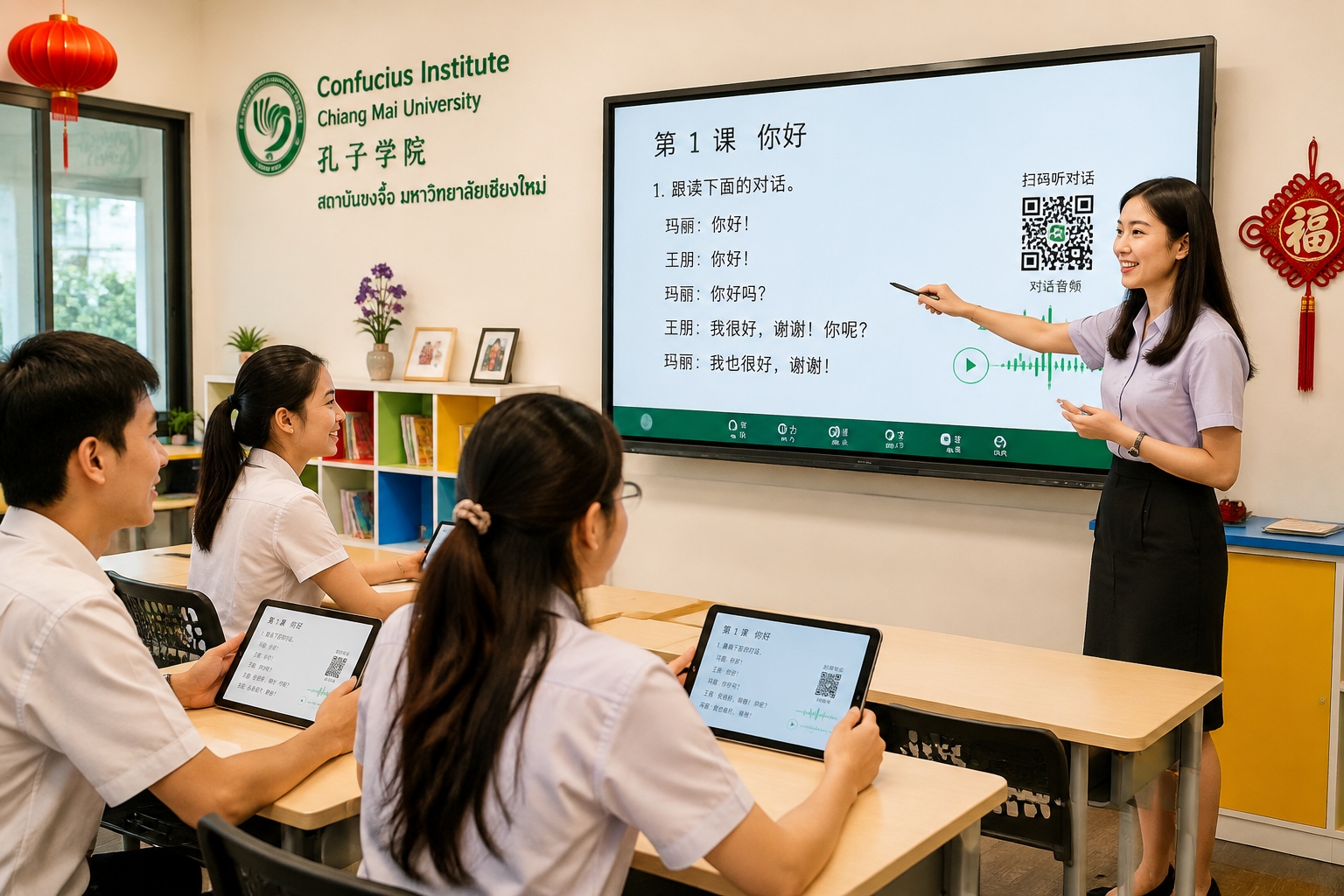
The most visible difference is the printed QR code. Open any modern Chinese textbook and you will see small square codes on nearly every page. Scanning them leads to audio dialogues, short videos, and interactive exercises. The code turns a static book into a thin screen that connects to a world of multimedia.
Digital platforms amplify this. Confucius Institutes increasingly adopt online resources such as the “Chinese Plus” project, an official education platform that offers interactive lessons and AI-powered pronunciation feedback. Teachers encourage students to use apps like HelloChinese or Pleco for flashcards and character practice. Homework is often submitted through WeChat or an online classroom system.
In one classroom I visited in Thailand, students practiced tones using a phone app that showed a digital waveform. The teacher projected her own phone on the screen, demonstrating how to swipe characters to make animated flashcards. The textbook was still there, but it had become the starting point of a digital chain.
This blending of paper and pixels is not just about convenience. It changes how language is learned. When a student scans a code and hears a dialogue at real speed, she trains her ear for modern pronunciation, not the slow, careful speech of old audio tapes. When an app gives instant feedback on a tone, the learner becomes less afraid to speak. The textbook, in a sense, becomes the co-star, not the sole star.
What This Change Really Says
The shift from oracle bones to smartphones is more than a teaching trend. It tells a story about how China sees itself today. A language course that only taught ancient philosophy would treat China as a civilization frozen in time. The updated textbooks acknowledge that China is also a society where people order bubble tea through an app, complain about traffic jams on social media, and greet their neighbors in the elevator.
It’s also a story about practical needs. Many students who enroll in Confucius Institute classes plan to work, travel, or do business in China. They need to understand not only “谢谢” but also phrases like “请问这个怎么退” (how do I return this?) or “可以便宜一点吗” (can you give me a discount?). Textbooks now include these everyday conversations, plus notes on social etiquette: how to use WeChat’s red envelope feature politely, or why people say “慢走” when you leave a shop.
This does not mean ancient culture has been abandoned. Calligraphy and poetry are still common elective courses. But they sit side by side with lessons on mobile payment and ride-hailing. The new materials do not replace history with an app; they show that history and the app belong to the same continuum. The oracle bone is an early form of Chinese code; the smartphone is its latest.
Conclusion: A Living Language
Back in the Berlin classroom, Anna scanned the QR code and listened to a conversation between two friends discussing how to split a dinner bill using a mobile payment app. It was not the elegant ancient dialogue she had imagined. It was better—it was something she could actually use.
Chinese textbooks at Confucius Institutes have learned to walk with two feet: one planted in the rich soil of a 3,000-year-old writing system, the other stepping confidently into a hyper-connected, app-driven present. The oracle bone and the smartphone are not opposites. They are bookmarks of the same story, and today’s learners get to read both at once.
Nǐ hǎo! Your first Chinese lesson might still start with “你好”. But the second lesson, thanks to a scanned QR code, could teach you how to order a taxi—in perfect Mandarin.
Start the discussion at forum.chinacomes.com