

A Market Before Sunrise
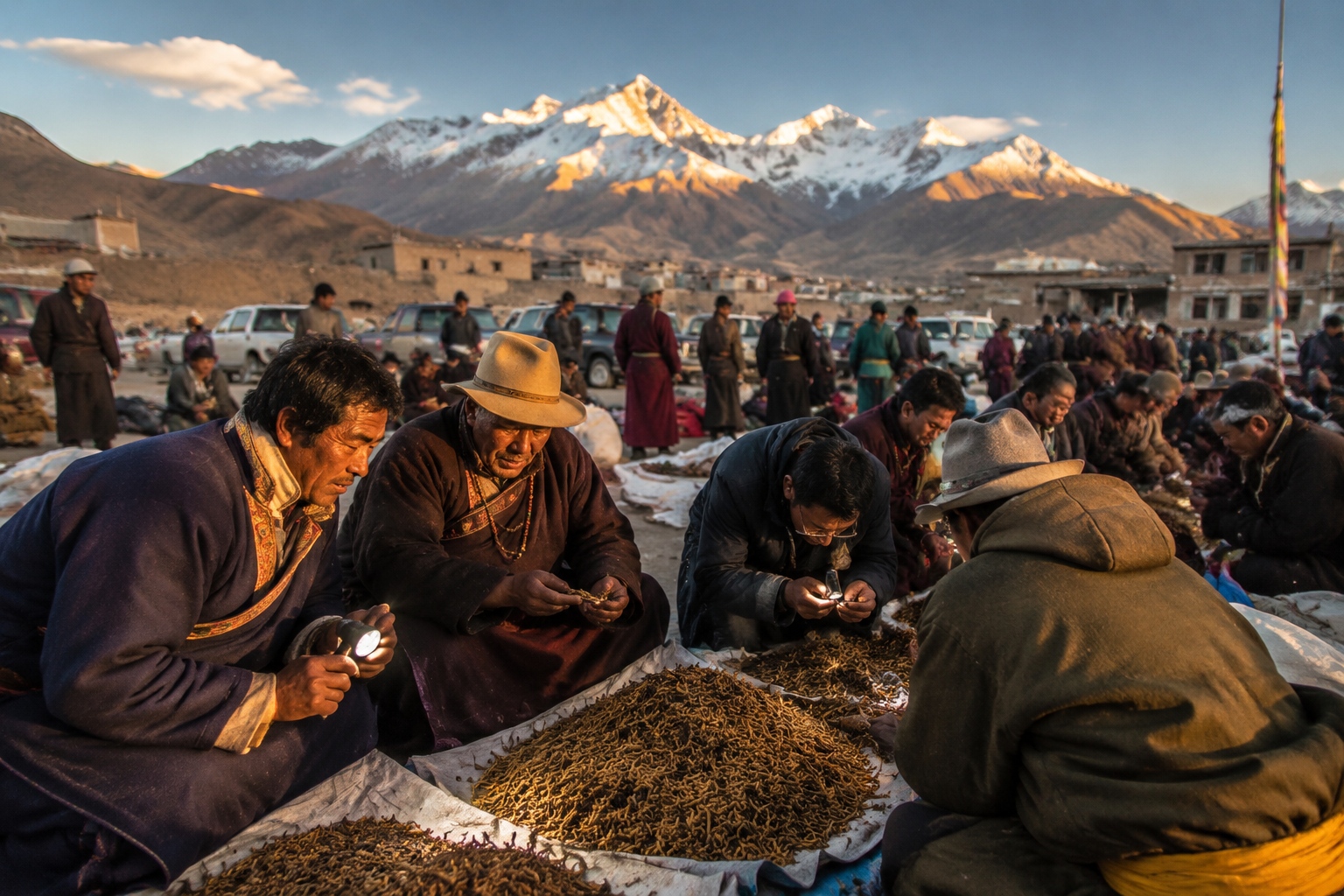
At 5:30 in the morning, the town of Yushu in Qinghai Province is still dark, but the open-air market is already crowded with herders and buyers. Sellers sit on dusty tarps, each with a small stack of dried, dark-brown objects that look like twigs with a yellowish base. Buyers kneel, shine flashlights through magnifying lenses, and inspect each piece carefully. Bargaining happens with hand gestures and short murmurs. A deal is struck at 80 yuan per gram, and the seller pulls out a smartphone to show a QR code. The buyer scans it and collects his purchase. No cash, no receipt—just another early transaction in China’s “soft gold” trade.
What Is Cordyceps?
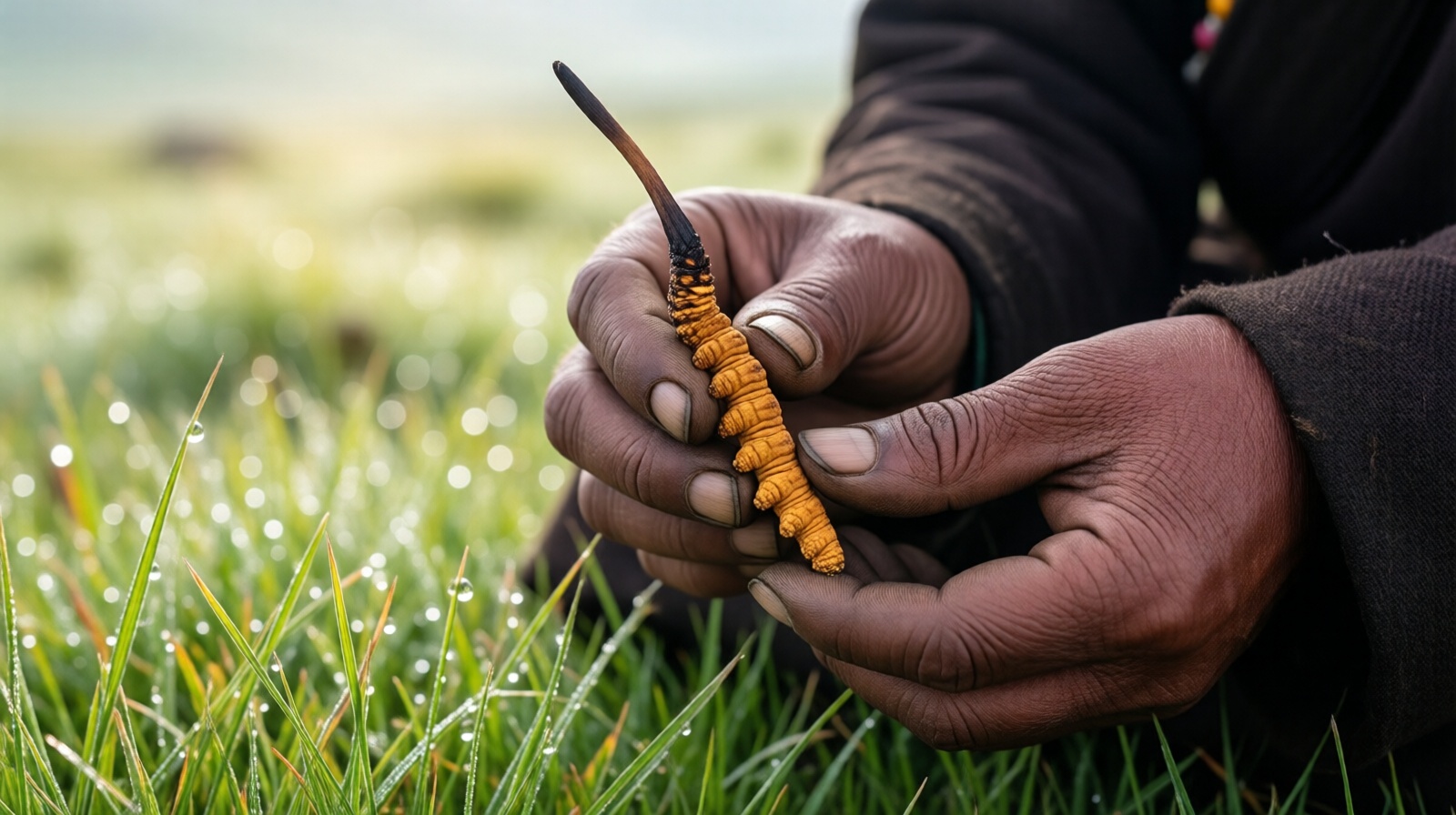
The object of this frenzy is the caterpillar fungus, or dong chong xia cao in Chinese, meaning “winter worm, summer grass.” It is the result of a fungal infection that kills ghost moth larvae underground. The fungus hardens the caterpillar into a mummified shell and sends a dark stalk through the soil in spring. Found only on high-altitude grasslands across the Tibetan Plateau and parts of the Himalayas, it has been a staple in Chinese medicine for centuries, praised as a tonic for energy, kidney function, and immunity. In recent decades, growing wealth in China and rising global awareness have pushed demand—and prices—to extraordinary heights. Top-quality specimens can sell for more than 100,000 yuan per 100 grams, making it pricier than most precious metals by weight. Small wonder locals call it “soft gold.”
The Backbreaking Harvest
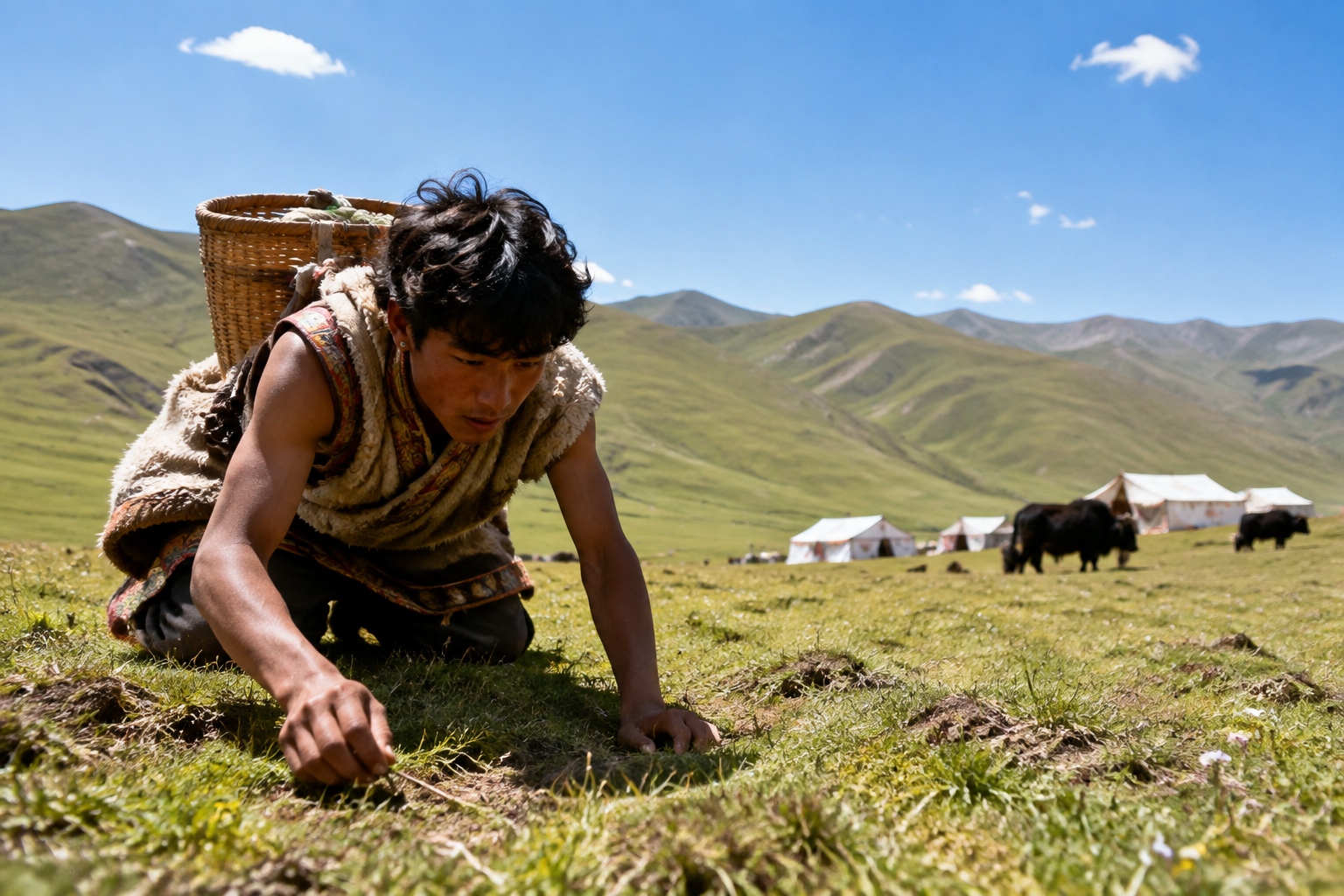
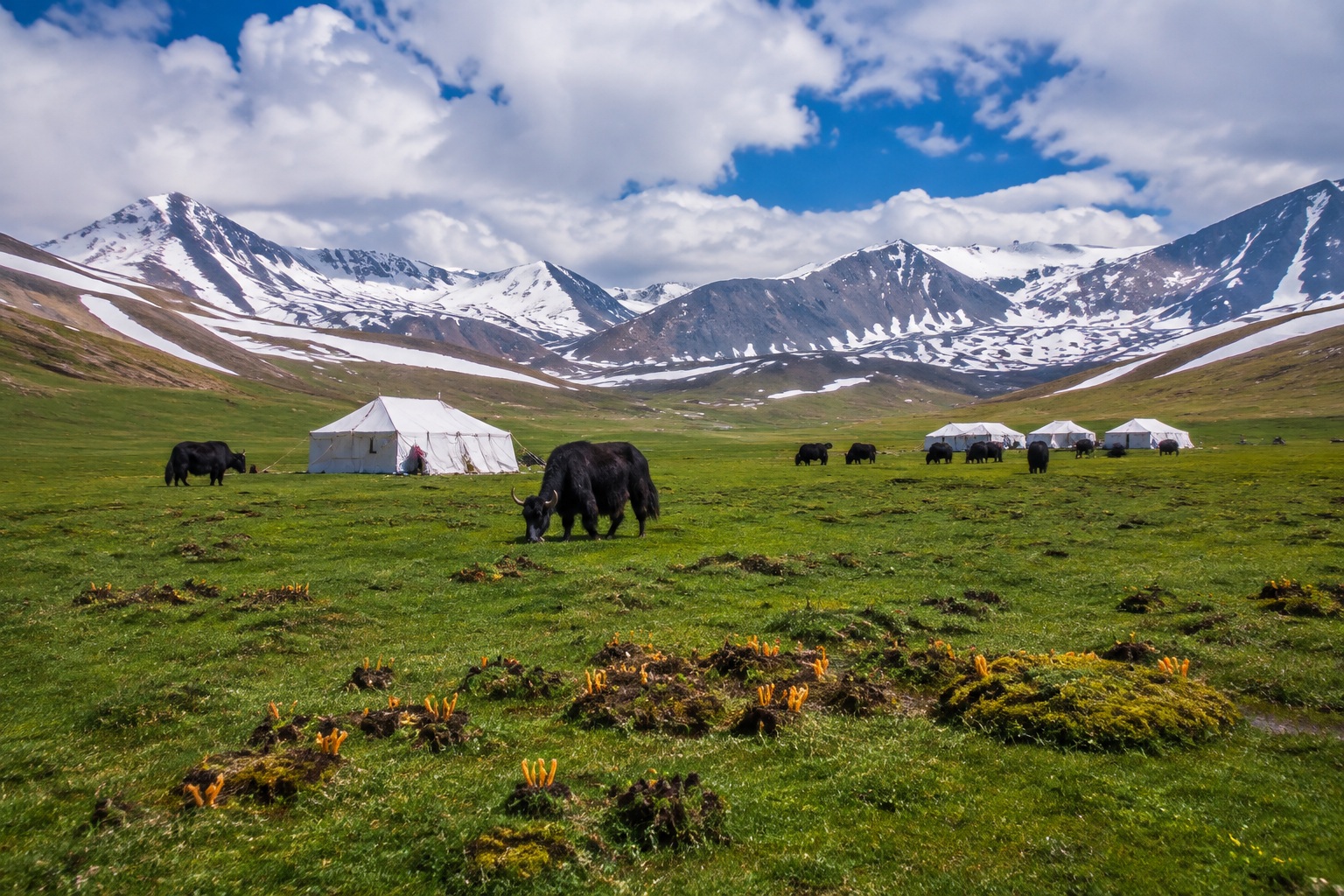
Every May and June, families like Tashi Yangjen’s load their pickups with tents, food, and warm clothes, then drive hours to the high pasture where they will camp for the season. Tashi, 42, is up at dawn, crawling on his knees over the frozen grass. He has to spot a stalk that is only a few centimeters tall and often the same color as the dried grass around it. “You might look for an hour and find nothing,” he says, “then the next minute there it is.” On a good day, he finds twenty roots; on a bad day, only five. The work is hard on the body, and it is not unusual to see pickers wrapped in bandages for their knees and wrists. Yet the rewards are life-changing.
Last year, Tashi collected about 1,500 roots. At an average of 60 yuan each, he made 90,000 yuan—more than double what he would earn from selling yaks all year. This is why entire villages have shifted their seasonal calendar around the harvest. Children are allowed leave from school; hotels and shops in Yushu fill with traders; even the biggest cities on the plateau empty out.
A Rural Economic Boom
The cash influx has transformed the region. In the villages around Yushu, many families have replaced their black yak-hair tents with brick houses with metal roofs. Motorcycles and pickup trucks now line the dusty streets. Parents can afford to send their children to better schools in town, and clinics have more equipment. “Before cordyceps, we sold yaks and wool, but we rarely had cash,” says Drolma, a mother of three. “Now my son is studying in a boarding school, and we can pay his fees without borrowing.”
But wealth is uneven. A strong and experienced picker can earn five times as much as an elderly or injured neighbor. The harvest also attracts thousands of outsiders—migrant workers from lower altitudes who camp on the grassland and compete for the same roots. This has led to occasional conflicts with local communities, who see themselves as rightful owners of the resource. Some towns have imposed restrictions, requiring permits or limiting access, but enforcement remains uneven.
From Grassland to City Shop
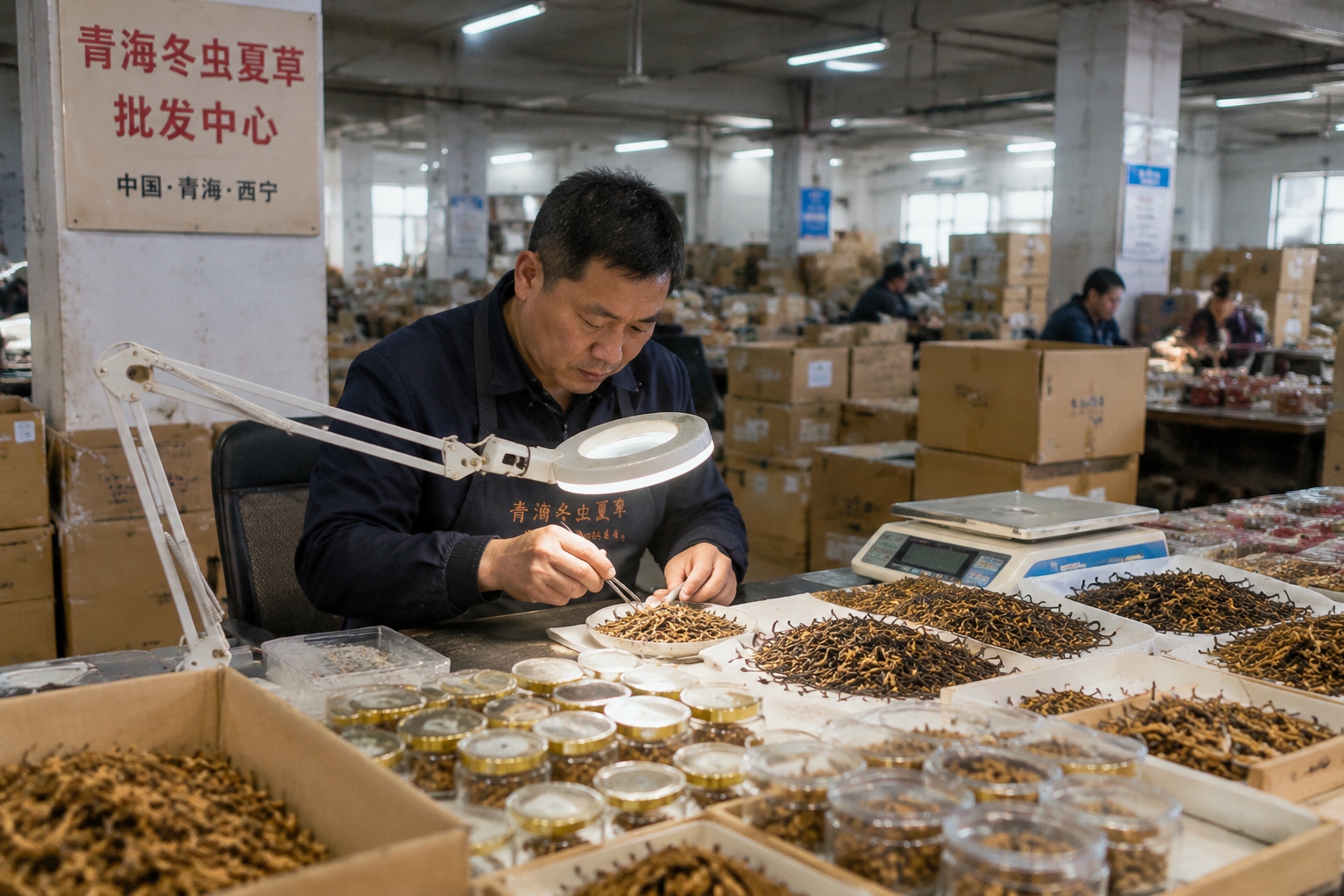
After the local market, cordyceps moves quickly up the supply chain. Small traders collect the roots from herders and sell them to wholesalers in cities like Xining and Chengdu. There, the roots are sorted by size, color, and shape. Straight and thick specimens with a visible caterpillar body are the most prized. They are then packed into gift boxes or sold loose to high-end retailers. In Beijing or Shanghai, a single premium root can cost 300 yuan—three times what a herder received. The industry has even spawned a craft of “repairing” broken roots: workers use a paste of flour and adhesive to piece together fragments, a practice that is hard to spot and makes a fake look whole.
Fake cordyceps is a real hazard. Some sellers mix in roots of similar-looking plants or use lead wire to make them heavier. Buyers have developed tricks like checking the color, the feel of the root, and even using UV light to spot chemical additives. The trade is unregulated enough that both herders and consumers face risks.
The Environmental Price
The boom has come at a cost. Intense harvesting has depleted the fungus in some areas, and the trampling of thousands of pickers compresses the fragile alpine soil. Climate change is another threat, as warmer winters have reduced the habitat of the ghost moth. Local governments have responded with permit systems and seasonal limits. In Qinghai, collectors must carry a “cordyceps collection certificate,” and the season is limited to about 45 days. Some villages have been given exclusive rights to their grasslands, turning pickers into stewards. They now rotate their picking areas and sow grass seeds to repair damage. It’s a slow process, but it has given some hope.
Not everyone follows the rules. On the remote grasslands, illegal digging still happens, and tension between herders and outsiders simmers. Scientists are also watching carefully; some have warned that without stricter conservation measures, the wild resource could collapse in a few decades.
Herders on the Front Line
For people like Tashi, the dilemma is personal. He is proud of the home cordyceps helped him build, but he also sees the damage. “The grass is thinner than when I was young,” he says. “If we are not careful, there will be no worm for our children.” To adapt, he has teamed up with seven neighbors to form a cooperative. They hike the mountain together, pool their roots, and sell directly to a buyer from Chengdu, skipping two layers of middlemen. They have also fenced off part of their pasture to let it recover. Such initiatives are increasingly common across the plateau.
The rest of China shows no sign of losing its appetite. During the Lunar New Year holiday in 2021, one major e-commerce platform reported cordyceps sales of over 1 billion yuan. Luxury health stores offer it in velvet-lined boxes. Online, influencers post videos about how to choose the best roots. Demand remains strong, even as supplies tighten.
An Uncertain Future
The long-term outlook is unclear. Cordyceps cannot yet be grown artificially, although scientists are trying to culture the fungus lab. New ecological restoration policies, such as China’s “ecological red lines” that restrict development in sensitive areas, may help preserve grasslands, but their effect on the fungus is still unknown. For herders, the future is about more than the worm. Tashi is already saving to start a small guesthouse in town, hoping to capitalize on the growing number of tourists who come to see the plateau and its unique landscapes. “The worm may not last forever,” he says. “We must think about other ways to live on this land.”
Conclusion
Winter worm, summer grass—the name captures the two faces of life on the Tibetan Plateau: tradition and change, nature and commerce. Cordyceps has brought unprecedented wealth to a herding culture that once lived on the edge of survival. It has built houses, paid school fees, and given families a stake in the modern world. But it has also exposed them to market volatility, environmental degradation, and a fragile dependence on one small root. How they navigate this challenge will shape not only their lives but the very landscape they call home. As Tashi says with a shrug, “Like us, it survives by adapting.”
Start the discussion at forum.chinacomes.com