

Introduction: The Last Light in the Mountains
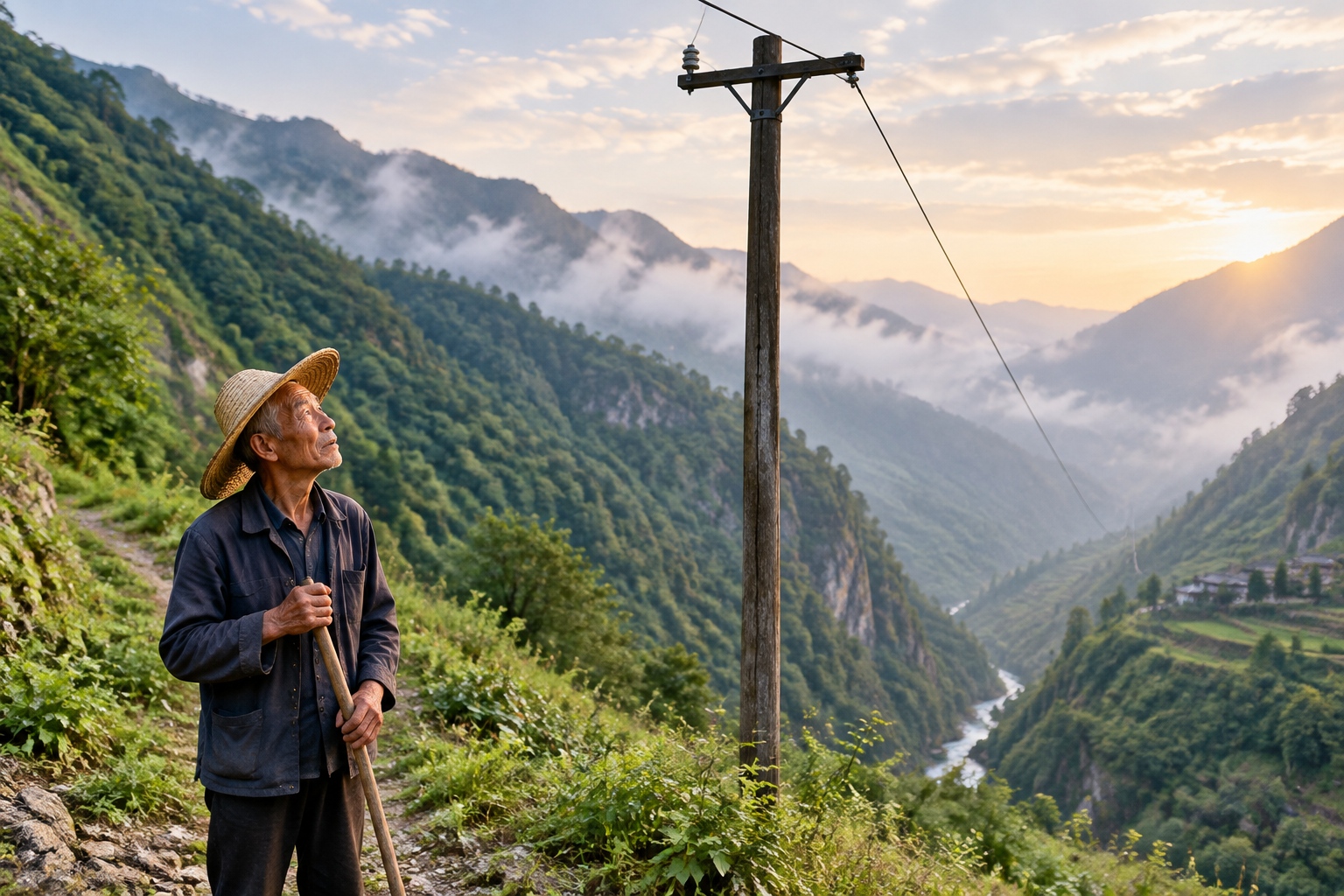
In October 2020, a 78-year-old farmer named Yang Guozhong living in a remote valley of Sichuan province watched his son flip a switch for the first time. A bare bulb hanging from a wooden beam flickered once, then steadied into a warm glow. Yang’s home had been the last household in China without grid electricity. That single bulb marked the end of a 70-year national campaign to bring power to every citizen.

Today, China claims a 99.9% electrification rate across its vast territory, from the snow-covered peaks of Tibet to the desert oases of Xinjiang. But this achievement didn’t happen overnight. It was a relay race passed through generations of engineers, policymakers, and local workers. This article retraces the key phases of China’s electrification journey, using hard data and real-world stories to show how the country turned a basic human need into a national mission.
Phase 1: The First Sparks (1949–1978)
In 1949, the newly founded People’s Republic of China had an installed power capacity of only 1.85 GW (roughly that of a small European country today), and most of it served coastal cities. Rural areas, home to 80% of the population, were almost entirely dark. The government’s first Five-Year Plan (1953–1957) prioritized heavy industry, but a parallel effort began: building small hydropower stations in villages. By 1957, more than 500 small hydro plants had been built, lighting up about 10,000 villages.
Progress was slow. In 1978, only about 40% of rural households had electricity. The problem was geography: China’s population is scattered across mountains, plateaus, and islands, making grid extension extremely expensive. Per capita electricity consumption was just 260 kWh per year, compared to over 8,000 kWh in the United States.
Phase 2: The Grid Goes Rural (1978–2000)
Deng Xiaoping’s reform and opening-up in the late 1970s boosted economic growth, and with it, demand for electricity. The government launched the “Rural Primary Electrification” program in 1983, aiming to electrify 100 counties by 1990. It succeeded, and then expanded. By 1995, about 70% of rural households were connected.
But the remaining 30% were the hardest. In the mountainous province of Yunnan, villagers often carried generators on their backs for days, crossing rivers on rope bridges. A 1995 World Bank report noted that China’s rural electrification program was “one of the largest and most ambitious in the developing world,” but warned that the cost per connection in remote areas could exceed $1,000 – a huge sum for a country still lifting itself from poverty.
China’s answer was to combine state investment with local participation. Provincial power companies were formed, and the central government provided subsidies for grid extension. By 2000, about 95% of rural households had access, though many still faced frequent blackouts and low voltage.
Phase 3: The Last Mile (2000–2020)
The 21st century brought a new challenge: quality and reliability. China’s GDP was growing at double digits, and factories in coastal cities demanded stable power. But the government didn’t forget the remaining 5% in the most remote areas. In 2006, it launched the “National Village Grid Extension Project,” with a budget of over 100 billion yuan (about $15 billion).
Engineers faced extreme conditions. In Tibet, some villages sit at 4,500 meters above sea level, accessible only by foot or yak. Crews had to haul steel poles and cables up mountains, often working in thin air. In the Xinjiang desert, they laid thousands of kilometers of line across sand dunes. In the islands of Zhejiang, they laid submarine cables.
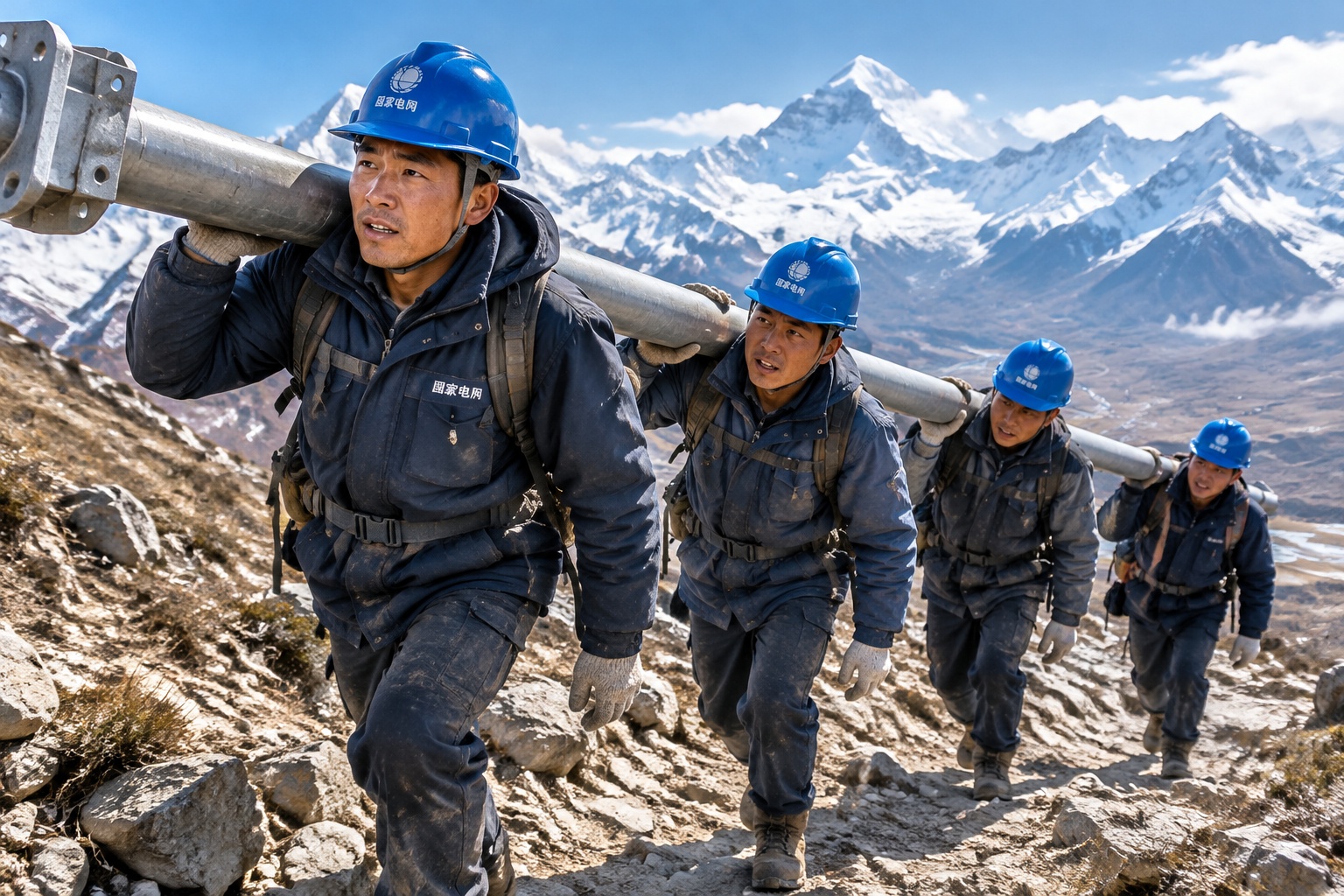
The most dramatic push came between 2015 and 2020. China’s State Grid announced a “Last-Homehold Electrification” campaign, targeting 354,000 households in remote areas. The campaign used a mix of grid extension, small solar panels, and micro-hydro systems. By 2018, China had essentially achieved universal electricity access, according to the International Energy Agency (IEA). The final milestone came in October 2020, when the last household in Sichuan was connected.
Phase 4: Beyond Light – What Electricity Brought
Electricity is not just about light bulbs. Once power arrived, villages transformed. In the remote village of Dazhai in Guizhou province, a grandmother named Lin Aiying told a reporter: “Before, we used kerosene lamps. Children couldn’t study at night. Now my grandson watches TV and does homework with a desk lamp.”
Beyond households, electrification powered economic development. Small factories, water pumps, telecommunications towers, and clinics all depend on electricity. In the mountainous region of Liangshan, Sichuan, where the last household was connected, the local government reported that household income rose by 30% in the three years after electrification, thanks to electric irrigation and small businesses.
Seventy years of relentless effort: China’s electricity grid now spans over 12 million kilometers of transmission lines, enough to circle the Earth 300 times. The country’s installed power capacity reached 2.7 TW in 2023, the largest in the world. But the real achievement lies in the fact that even the most remote grandmother can now turn on a light.
Conclusion: A Playbook for Development
China’s electrification story is not just a technical achievement; it’s a playbook for how a developing country can achieve universal access to a basic service. The key ingredients: sustained political commitment, a mix of grid and off-grid solutions, state investment combined with local labor, and a willingness to tackle the hardest terrain last. Other developing nations – from Sub-Saharan Africa to South Asia – can learn from China’s experience. The journey took 70 years, but it proves that with enough persistence, the light can reach every corner.
Start the discussion at forum.chinacomes.com