

A Brush with the Sacred
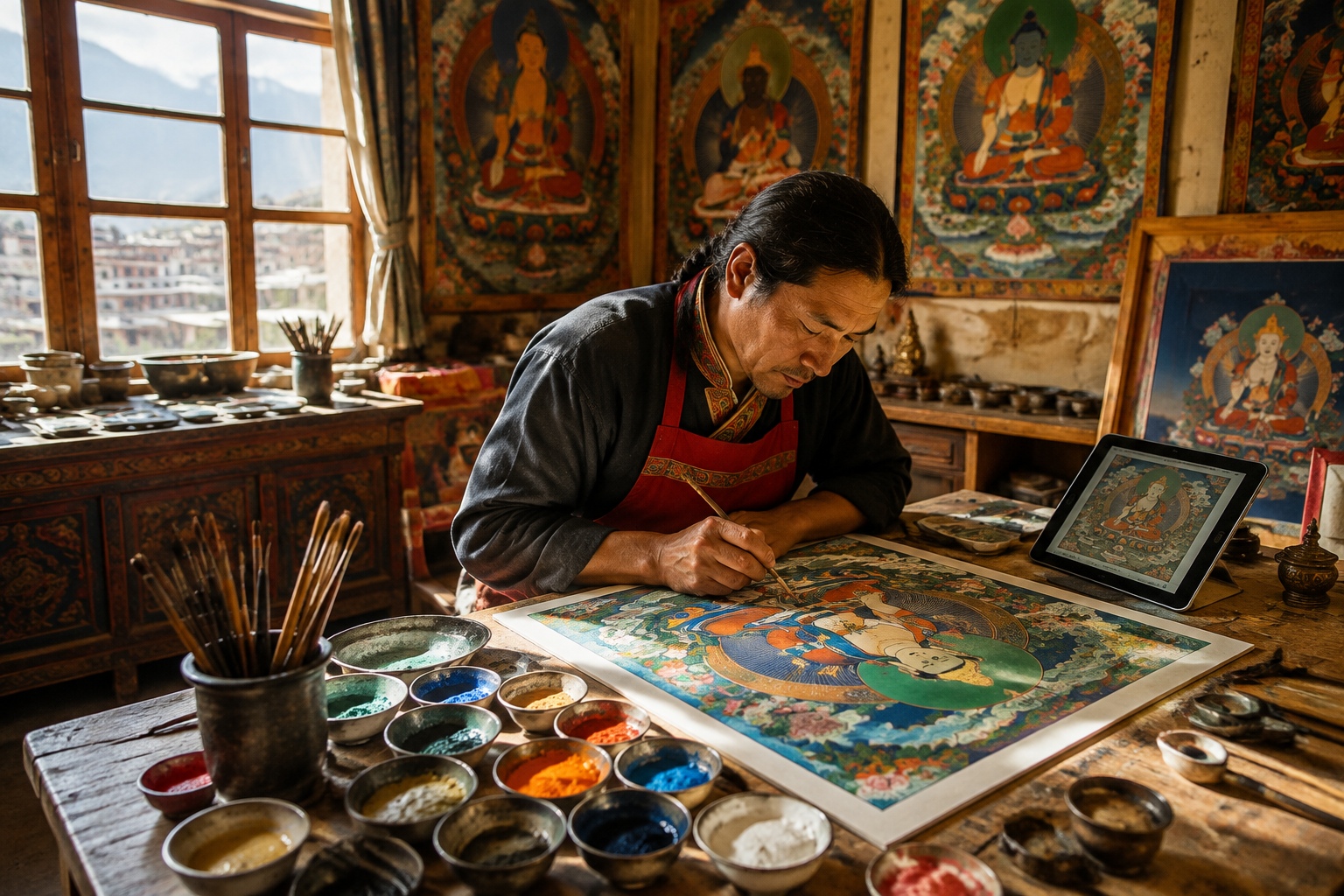
On a quiet street in Lhasa, 32-year-old Tsering Pelmo sits cross-legged on a wool cushion, her brush tracing the outline of a bodhisattva’s face on stretched linen. Sunlight filters through the window, catching the gold leaf she has just applied. To her right, a tablet glows with a digital sketch of the same design—her draft, now ready to be transferred to fabric. This blend of ancient technique and modern tools is increasingly common among Tibetan artists today.
The Art of Thangka: A Spiritual Geometry
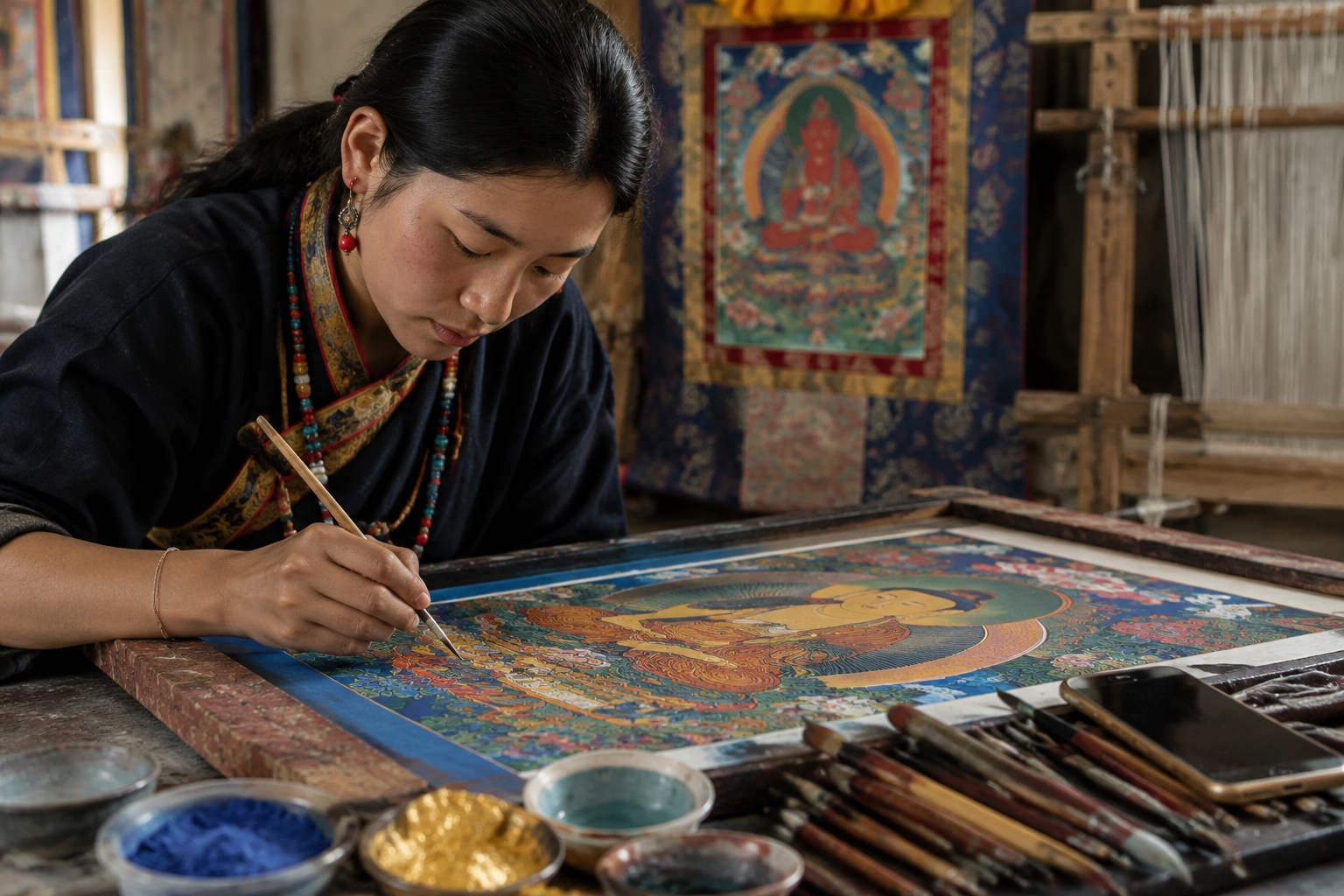
If you have ever stood before a Byzantine icon or a medieval altarpiece, you know the feeling a thangka can evoke. These intricate Buddhist paintings depict deities, mandalas, and scenes from the life of the Buddha, using precise iconometric rules that have remained unchanged for centuries. The canvas is stretched on a wooden frame, coated with a mixture of chalk and animal glue, then polished with a stone until smooth. Pigments are traditionally made from minerals like lapis lazuli and cinnabar, mixed with yak glue and water. Gold leaf adds a luminous, otherworldly quality.
But thangka is more than decoration. For many Tibetans, it is a form of meditation—painting each stroke is an act of devotion. The artist must memorize the exact proportions and symbolic meanings: a lotus seat for purity, a flame halo for wisdom, a sword for the cutting of ignorance. It is not unlike the discipline of a medieval manuscript illuminator.
New Paint, Old Images: How Thangka Is Evolving
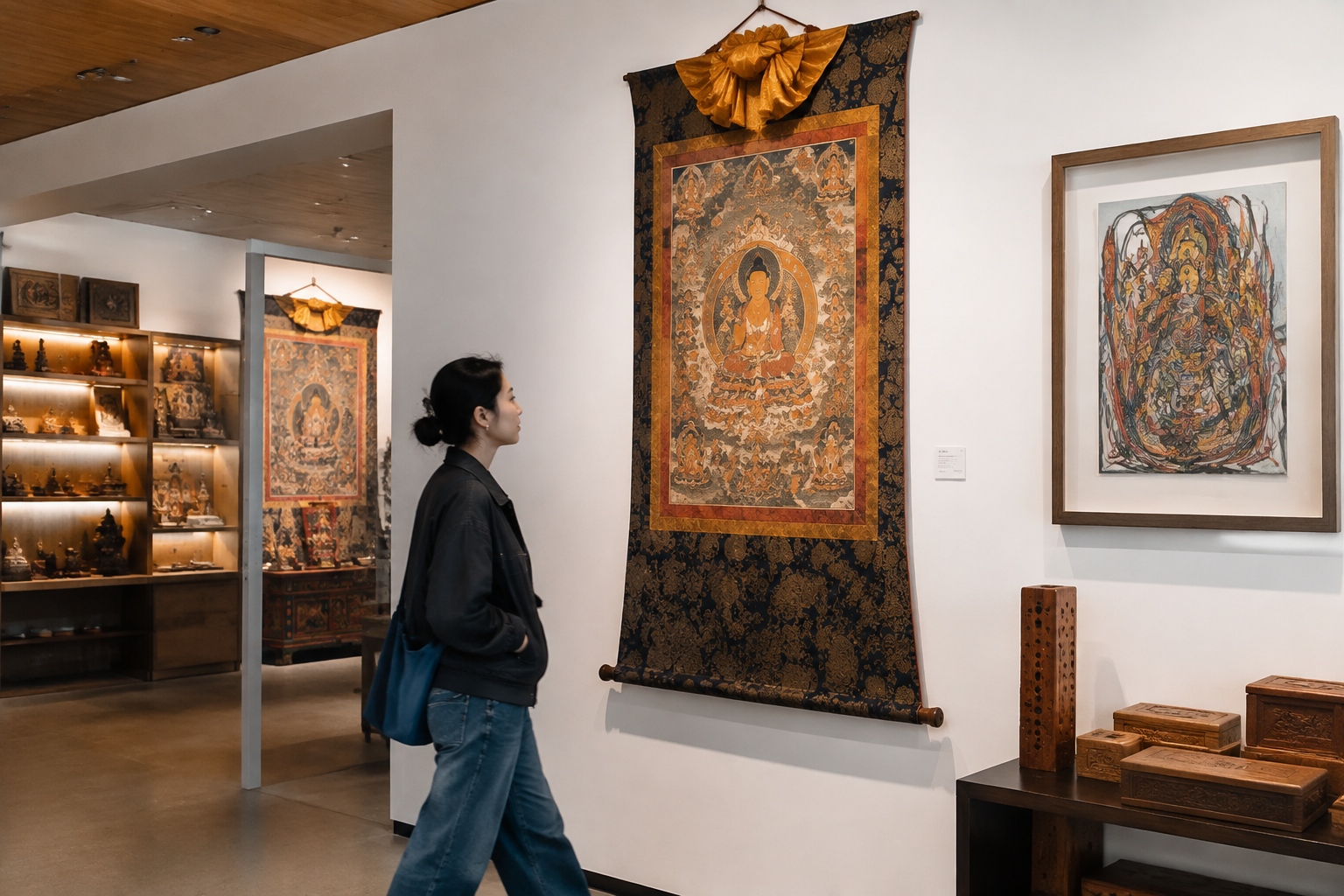
Traditionally, thangkas were commissioned by monasteries or wealthy families for religious purposes. But over the past two decades, the market has changed. Tourists and collectors now buy thangkas as art, and a growing number of contemporary Tibetan artists are exploring new styles—larger canvases, abstract backgrounds, even materials like acrylic and spray paint. Some are collaborating with fashion designers in Shanghai or exhibiting in galleries in London and New York.
One driver of this change is the Chinese government’s push to preserve intangible cultural heritage, which includes funding for training schools and workshops. In Lhasa, the Tangka Academy has trained more than 1,000 students since 2015, many of whom now sell their work online. Social media platforms like Xiaohongshu and WeChat have allowed artists to skip traditional middlemen and reach buyers directly. A high-quality thangka can range from a few hundred to several thousand U.S. dollars, depending on size and detail.
Tibetan Incense: From Monastery to Modern Shelf
If thangka is a visual meditation, Tibetan incense is an olfactory one. For centuries, monks and laypeople have burned incense made from a secret blend of herbs, woods, and spices—juniper, pine, saffron, clove, and sometimes over thirty other ingredients. Traditionally, it is used to purify a space, aid concentration, and accompany prayer. The scent is earthy and smoky, quite different from the sweet florals of French perfume or the subtle woods of Japanese incense.
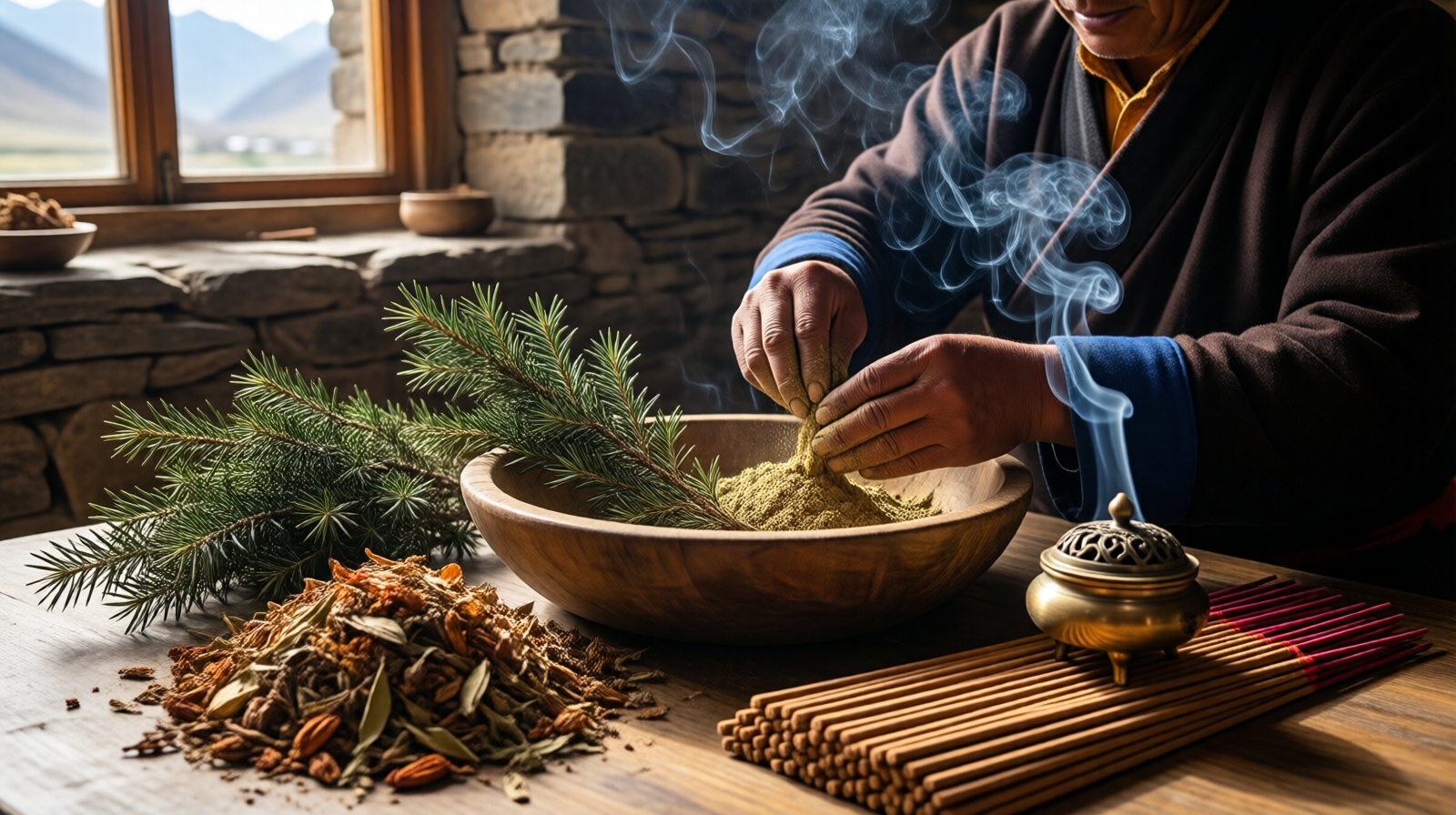
Today, that monastic formula is entering the global fragrance market. A handful of companies in Tibet and Sichuan province now produce high-end incense products for export. Some have partnered with perfumers in Paris to create fragrance lines that layer traditional Tibetan ingredients with modern accords. You can find Tibetan incense in artisan shops in Shanghai, on luxury e-commerce platforms like Net-A-Porter, or in boutique spas in California. The appeal is not just the smell, but the story: a craft that has survived on the roof of the world, now brought to a quiet living room in Brooklyn.
Craftsmanship in the Age of E-Commerce
What makes this revival sustainable? One answer is e-commerce. Platforms like Taobao and JD.com host thousands of virtual shops selling thangkas and incense. Live-streaming is especially popular: during a single three-hour session, an artisan in Lhasa might paint a small thangka while answering questions from hundreds of viewers. This direct interaction builds trust—buyers can see the material being used and the hand techniques involved.
Another answer is tourism. In 2023, Tibet welcomed over 20 million domestic and international visitors, according to official statistics. Many visitors take home a small thangka or a box of incense as a meaningful souvenir. Local cooperatives train young Tibetans in craft skills, providing jobs in areas where traditional work is limited. The result is that what might have become a dying art is now a vibrant, growing industry.
If You Are New to This World
If you are traveling to Tibet or to cities like Chengdu and Beijing, you can experience these crafts firsthand. In Lhasa’s Barkhor Street, you can watch artists paint thangkas in open storefronts and inhale the scent of burning incense wafting from temples. You can buy a small thangka for your home—even if you are not Buddhist, its meticulous details and calm symmetry can anchor a room.
For those who cannot travel, online platforms make it easy to explore. Search for “Tibetan thangka art” or “Tibetan incense natural” and you will find hundreds of sellers, many with detailed videos of their process. Just be aware of quality: authentic thangkas are painted by hand, and the pigment texture should look slightly uneven under close inspection. Genuine Tibetan incense is made with natural ingredients, so it will not have the harsh chemical burn of synthetic air fresheners.
A Living Heritage, Not a Museum Piece
Standing in Tsering Pelmo’s studio, where a half-finished thangka edges alongside a laptop, I am struck by how naturally the old and new coexist. She tells me, “Painting is a practice. Whether I use a pencil or a tablet, the intention is the same—to bring the image to life and out into the world.” That world is expanding. Thangka and incense are no longer sealed in the past; they are being carried by a new generation who know how to preserve what is sacred while making room for what is next.
For a traveler from Europe or America, the experience is less about exoticism and more about seeing how a craft can evolve. Just as Gothic cathedrals have been restored with modern engineering, Tibetan arts are being renewed with digital tools and global markets. The result is not a watered-down version of tradition, but a vivid reminder that craftsmanship is always alive when it is in the hands of the passionate.
Start the discussion at forum.chinacomes.com