

Introduction: The Noodle Puller Who Brought a Philosophy to Life
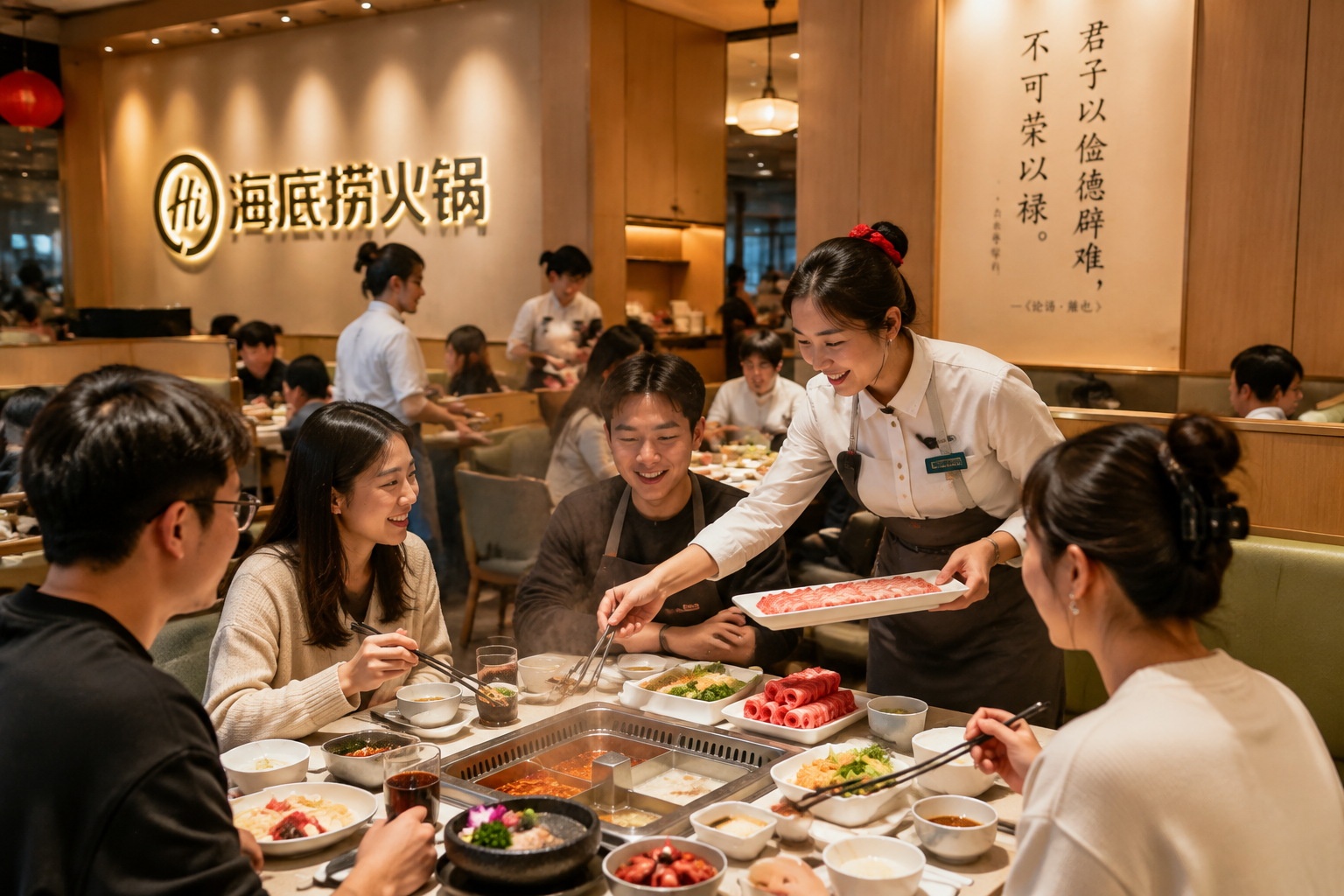
Imagine walking into a restaurant where the staff greets you with genuine smiles, offers to take care of your phone screen with a disinfectant wipe, and even brings you a small fan if you look warm. At Haidilao, China’s most famous hot pot chain, this isn’t exceptional service—it’s the baseline.
What drives this level of attentiveness? Many observers point to the company’s unusual management system, which delegates huge authority to frontline staff: waiters can give free meals, managers can approve discounts up to thousands of dollars, and every employee knows they are trusted to “do the right thing.” But where did this culture come from?
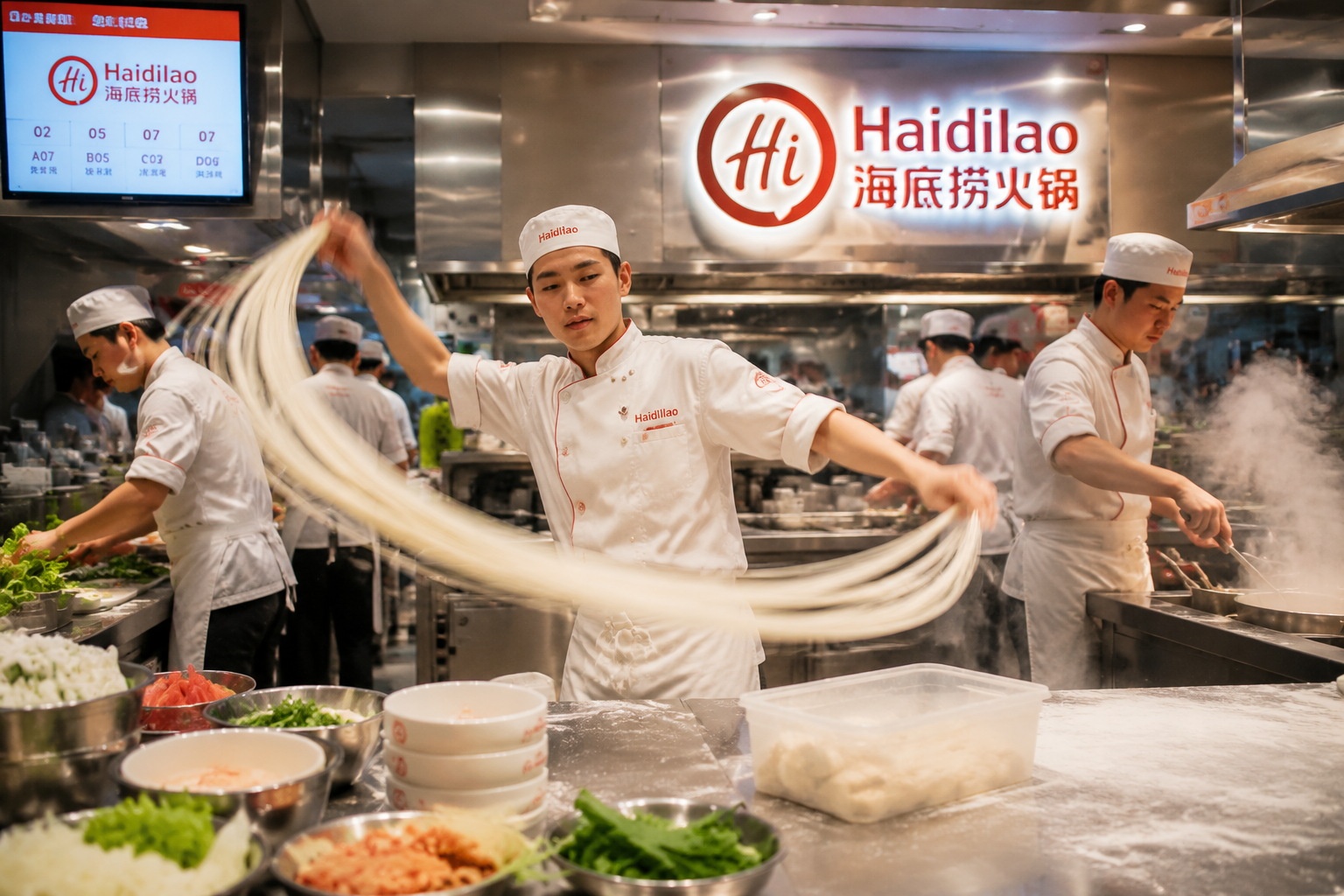
The answer, according to founder Zhang Yong, lies in a few simple words from the ancient philosopher Confucius: “Do not do to others what you do not want done to yourself” (己所不欲,勿施于人). Zhang, a former noodle puller with no business degree, built a billion-dollar empire by applying this 2,500-year-old principle to every aspect of his company.

The Confucian Roots of ‘Service as Care’
In the West, service excellence is often framed through efficiency, speed, or upselling. In China, however, the concept of ren (仁, benevolence) has shaped social expectations for millennia. Haidilao operationalizes this philosophy by treating employees not as cogs, but as family. The company provides dormitories with air conditioning, regular family visits, and even a dedicated team to handle employee wedding planning. When staff feel cared for, they naturally extend that care to customers.
Zhang Yong famously said: “The customer is not the only boss. The employee is also the boss.” This mirrors Confucius’s teaching that a ruler should first cultivate virtue in himself before expecting it from others. Translated into corporate language: managers must serve the staff, so the staff can serve the guests.
This isn’t just feel-good rhetoric. In 2023, Haidilao reported revenue of over 41 billion RMB (about $5.7 billion USD) from 1,374 restaurants worldwide. Customer satisfaction surveys consistently rank it above 90%. And employee turnover—a chronic problem in China’s service industry—is significantly lower than the industry average.
How Confucian Quotes Show Up on the Floor
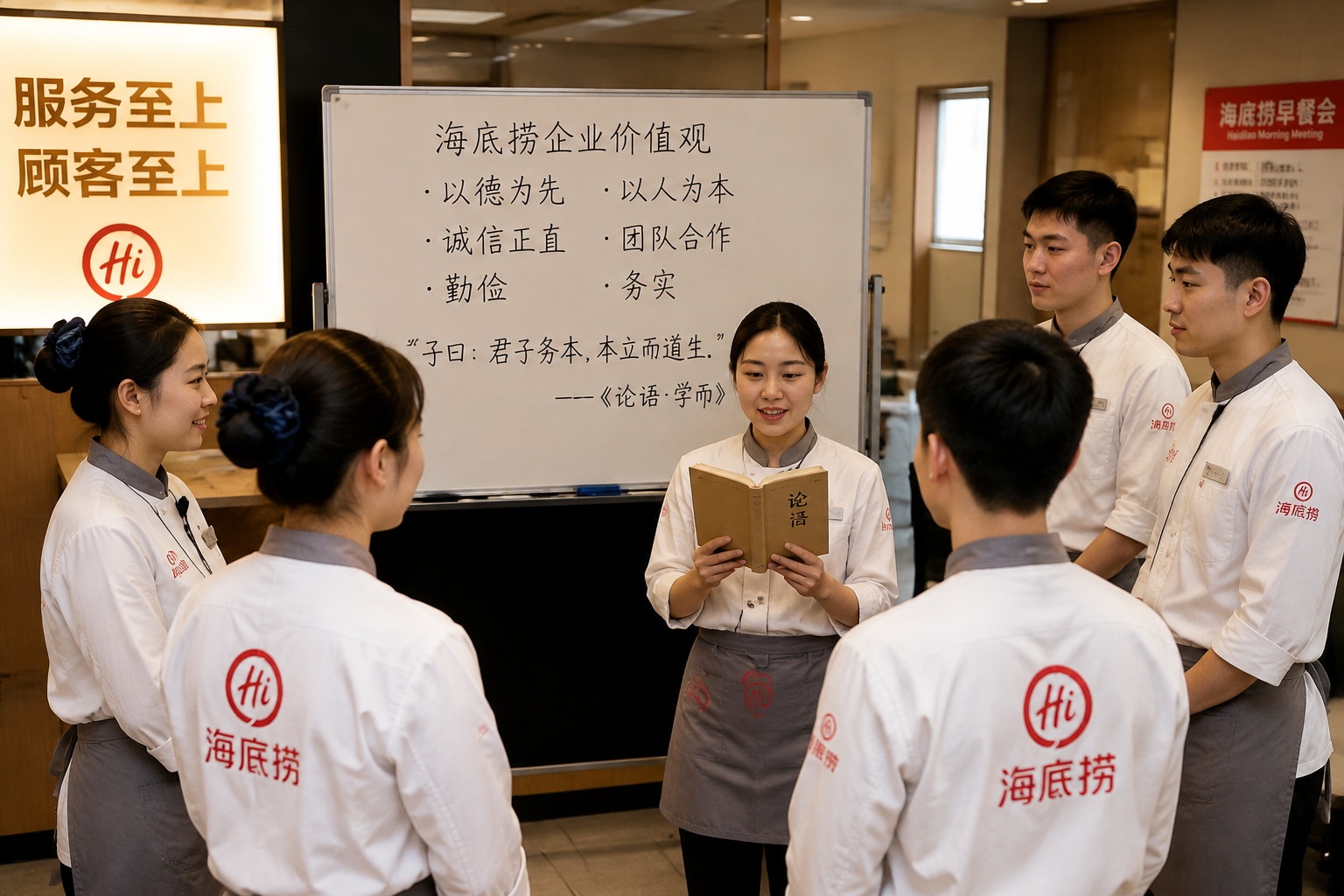
Before every shift, some branches read aloud passages from the Analects during morning meetings. Handbooks reference Confucian ideals of zhong (loyalty) and shu (reciprocity). But the real impact is in the decision-making autonomy. A server at Haidilao can instantly order a birthday cake for a regular customer or refund a complaint without asking a manager. This empowerment is rooted in the Confucian belief that people are inherently good and capable of right action if given trust and moral guidance.
One famous story: a customer once complained that the free snacks at the waiting area were too limited. The next day, the store manager had expanded the selection. The first line of Haidilao’s employee manual reads: “If the customer is reasonable, we are not good enough. If the customer is unreasonable, we are still not good enough.” This echoes Confucius’s humility before the other.
A $1 Billion Empire Built on Ancient Wisdom
Critics might say Haidilao’s success is due to its spicy broth, quality ingredients, or aggressive expansion. While all those matter, the core competitive advantage remains the service culture—a culture that cannot be copied by a competitor simply by reading a manual. Competitors like Dianduoduo and Xiabuxiabu have tried to mimic Haidilao’s service, but none have matched its consistency across thousands of stores.
The reason is that Haidilao’s culture is not a set of rules but a shared belief system, reinforced daily through rituals, incentives, and storytelling. Every employee knows the story of Zhang Yong himself: from a noodle puller earning 10 RMB a day to a billionaire who still eats in the staff canteen. That narrative is Confucian in its emphasis on moral cultivation and leading by example.
Is Confucius the only factor? Of course not. Haidilao also uses data analytics to track customer preferences, invests heavily in supply chain logistics, and markets its brand with savvy social media campaigns. Yet without the philosophical foundation, the company would be just another hot pot chain. The Confucian quotes—whether read aloud or simply embodied—are the invisible ingredient that turns broth into loyalty.
Conclusion: What Other Businesses Can Learn
Haidilao’s story is a case study in how ancient wisdom can drive modern business success. For foreign readers trying to understand China, it offers a window into why relationships (guanxi) and trust matter more than contracts in many Chinese companies. The next time you walk into a Haidilao and see a waitress pouring tea with both hands (a Confucian gesture of respect), remember: behind that simple act lies a philosophy that has shaped China for millennia—and now shapes one of its most remarkable business success stories.
So, could a $1 billion hot pot chain exist without Confucius quotes? Perhaps, but it wouldn’t feel the same.
Start the discussion at forum.chinacomes.com