


A Question from the Coffee Machine
At 6 p.m. in a Shenzhen tech company, the break room hums with the sound of a coffee machine and the clatter of mugs. A group of engineers sits around a small table, chatting about their day. When one of them, a young developer named Wei, mentions that his project has hit a snag, his teammates don’t jump in with criticism or solutions. Instead, the senior engineer, Zhang Jie, simply says, “You’ve been working hard. Let’s take a look tomorrow together, maybe we can figure it out.”
Tom, a British expat who joined the team a year ago, watches this interaction with quiet fascination. Back in London, his old team would have praised directness—someone might have said, “We need to fix this now, what’s the plan?” But here, the response feels more… gentle. It’s not about avoiding the problem; it’s about protecting the person while solving it. Later, Tom asks Wei, “Why did no one push you to work overtime tonight?” Wei shrugs and says, “They cared about me, not just the project. That’s how we do it.”
That “how we do it” is not a management buzzword. It’s an ancient idea, still breathing in the air of modern Chinese offices: the idea of ren (仁), often translated as “benevolence” or “human-heartedness.” It’s a concept most Chinese people haven’t formally studied, yet it guides them in the smallest interactions—especially in that humble, shared space called the break room.
What Is “Ren”? More Than Just Being Nice
Confucius lived more than 2,500 years ago, and his teachings have shaped Chinese society in ways both visible and invisible. The core of ren is often summed up with a phrase even Chinese schoolchildren recognize: 己所不欲,勿施于人—”Do not do to others what you would not want done to yourself.” But ren is not just a negative rule. It’s also about actively putting yourself in someone else’s shoes, understanding their feelings, and responding with warmth. It’s a relational concept: you exist as part of a web of people, not as an isolated individual.
This contrasts with the more individualistic workplace cultures common in many Western countries, where boundaries are clear, and work relationships are often more task-focused. In a U.S. or German office, saying “I respect your privacy” might mean not asking about a colleague’s personal troubles. In many Chinese offices, the opposite is true: asking “Are you tired? Did you eat?” is a sign of care, not intrusion. Ren is about recognizing that human connection is part of the job.
Nowhere is this more visible than in the break room, that accidental stage for daily rituals of care.
The Break Room’s Unwritten Rules: Ren in Everyday Moments
Walk into any Chinese office break room around 3 p.m., and you’ll likely see a box of cut fruit or a bag of snacks on the table. Someone brought it—not for a meeting, just for anyone to grab. This is not random generosity; it’s an expression of ren. By sharing food, you’re saying, “I thought of you, I want you to feel good.” When someone is busy, a colleague might quietly place a cup of tea next to their keyboard. No words are exchanged, but the message is clear: “I see you, I care.”
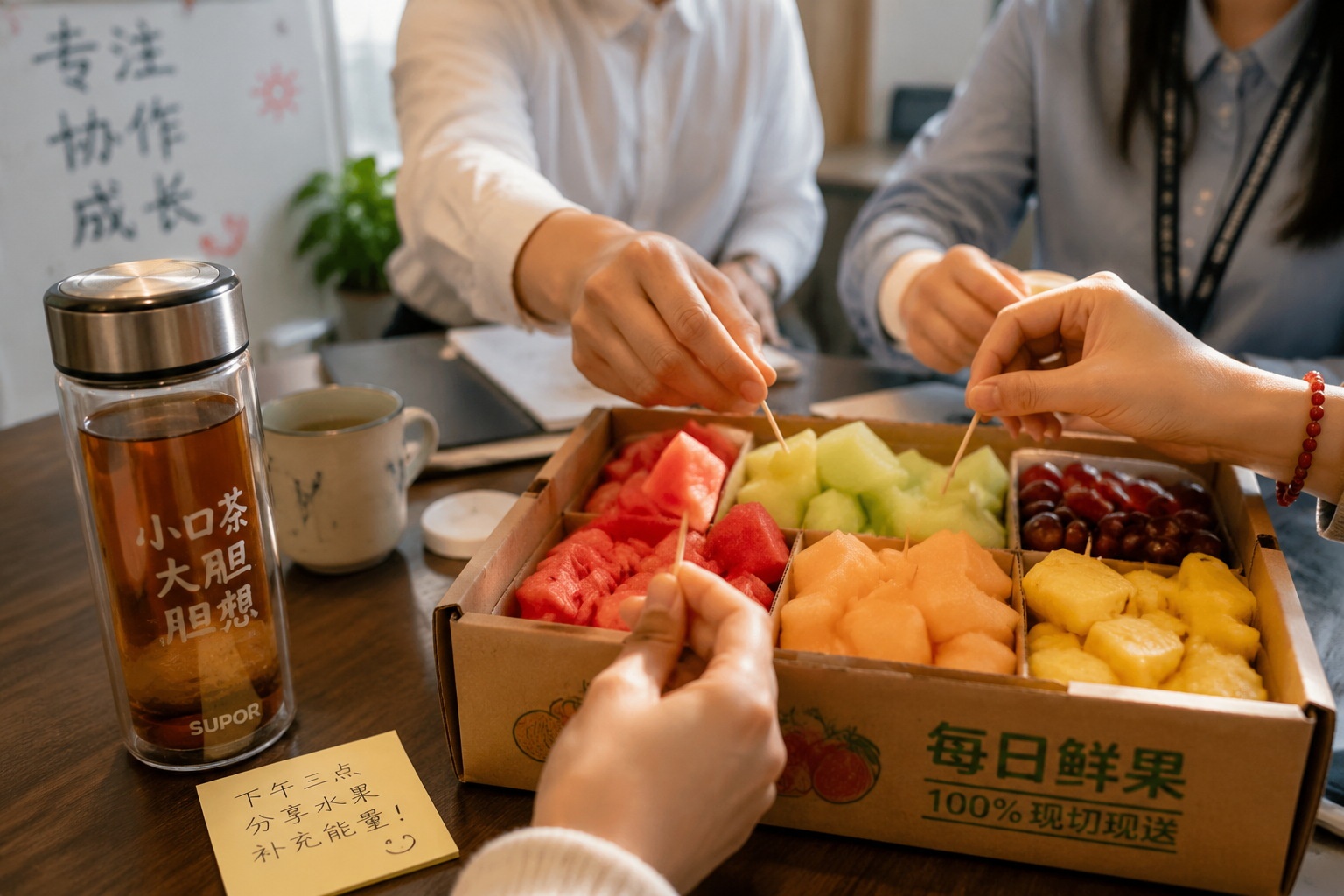
These small gestures seem trivial, but they form the social glue. One day, Li Mei, a marketing manager, was having a rough week—her child was sick, and she was juggling deadlines. Her teammates noticed she was quieter than usual. Without being asked, one took over her client call, another said, “Don’t worry about the report; I’ll draft it tonight.” Li Mei later told me, “This is what ren looks like in our office. We don’t leave anyone to struggle alone.”
For newcomers, the care is even more intentional. When a fresh graduate joins, someone often voluntarily shows them around, explains the unspoken rules, and invites them to lunch. It’s not part of the onboarding program; it’s just what people do. The new person feels welcomed, and that welcome is an act of ren—thinking about how they might feel lost, and acting to make it easier.
In the Meeting Room: Ren as a Soft Communication Tool
Break rooms are for gentleness, but what about meetings, where ideas clash and deadlines loom? Here, ren takes on a subtler form. Chinese workplace communication often values harmony over confrontation. That doesn’t mean people don’t disagree—it means they do it with care for the other person’s “face” (mianzi). Instead of saying “Your plan is wrong,” you might hear, “Your plan has a lot of merit, but I wonder if we could also consider this alternative?” It’s a way of protecting the relationship while still moving forward.
Take a recent project delay I witnessed. A team had promised a client a software release, but one developer made a mistake and the timeline slipped. In many workplaces, the response would be to point fingers. Here, the project manager gathered the team, said, “We’re all under pressure, let’s figure out how to support each other,” and they collectively worked out a solution. The mistake was not ignored, but the person who made it wasn’t humiliated. The focus was on fixing the problem together—a direct application of the Confucian idea that relationships matter as much as results.

This is not to say friction never happens. Arguments occur, voices rise, and people complain. But the underlying pull is often toward repairing the bond. The ren approach is not about being a pushover; it’s about long-term cooperation. It’s the workplace version of “I’ll give you space to save face today, and you’ll do the same for me tomorrow.”
Young Workers Redefining Ren: From Endless Competition to Human Touch
What about China’s Gen Z and millennial workers? Are they rejecting these ancient ideas as outdated? Actually, many are redefining them. The old ren was sometimes tied to rigid hierarchy and even “involution” (excessive competition). Today’s young professionals are pushing back against 996 culture and unpaid overtime. They still value community, but they want it on their own terms.
In a remote work setup, where people can’t casually share snacks, ren has found new expressions. Colleagues send WeChat messages like “Remember to eat lunch” or “Take care of yourself, you sounded tired.” They might start a meeting with a few minutes of personal check-ins, asking about family or hobbies. The care travels through screens, adapting to new tools.

A 26-year-old designer I know told me, “I don’t worship Confucius, but I do care about my coworkers. When I talk to friends, we see ren as just being a decent human being with emotional intelligence.” She and her peers reject the idea that ren means sacrificing yourself for others. Instead, they’re creating a healthier balance: being kind does not mean letting yourself be exploited. This redefinition keeps the essence—empathy and mutual support—while discarding the parts that foster burnout.
A Cup of Tea in the Break Room: The Resilience of a Civilization
Back in the Shenzhen break room, Tom finally asked Zhang Jie about it. “Is this Confucius? I thought he was really ancient.” Zhang Jie laughed. “He is. But his ideas are like this tea—they’ve soaked into the water, so you don’t see the leaves, but it tastes like tea.” That’s ren in modern China: invisible, yet everywhere. It’s present when a colleague quietly covers for you, when a manager says “we” instead of “you”, when a team celebrates a success without singling out a hero.
You don’t need to know Confucius to recognize these moments. If you look around your own office—whether in Lagos, Berlin, or Austin—you’ll find similar acts of human warmth. Ren is not a uniquely Chinese invention; it’s a universal truth about how people want to be treated, patiently waiting to be noticed. The tea might be strong in China, but it can brew anywhere.
Start the discussion at forum.chinacomes.com