

A Night Class in a County Clinic
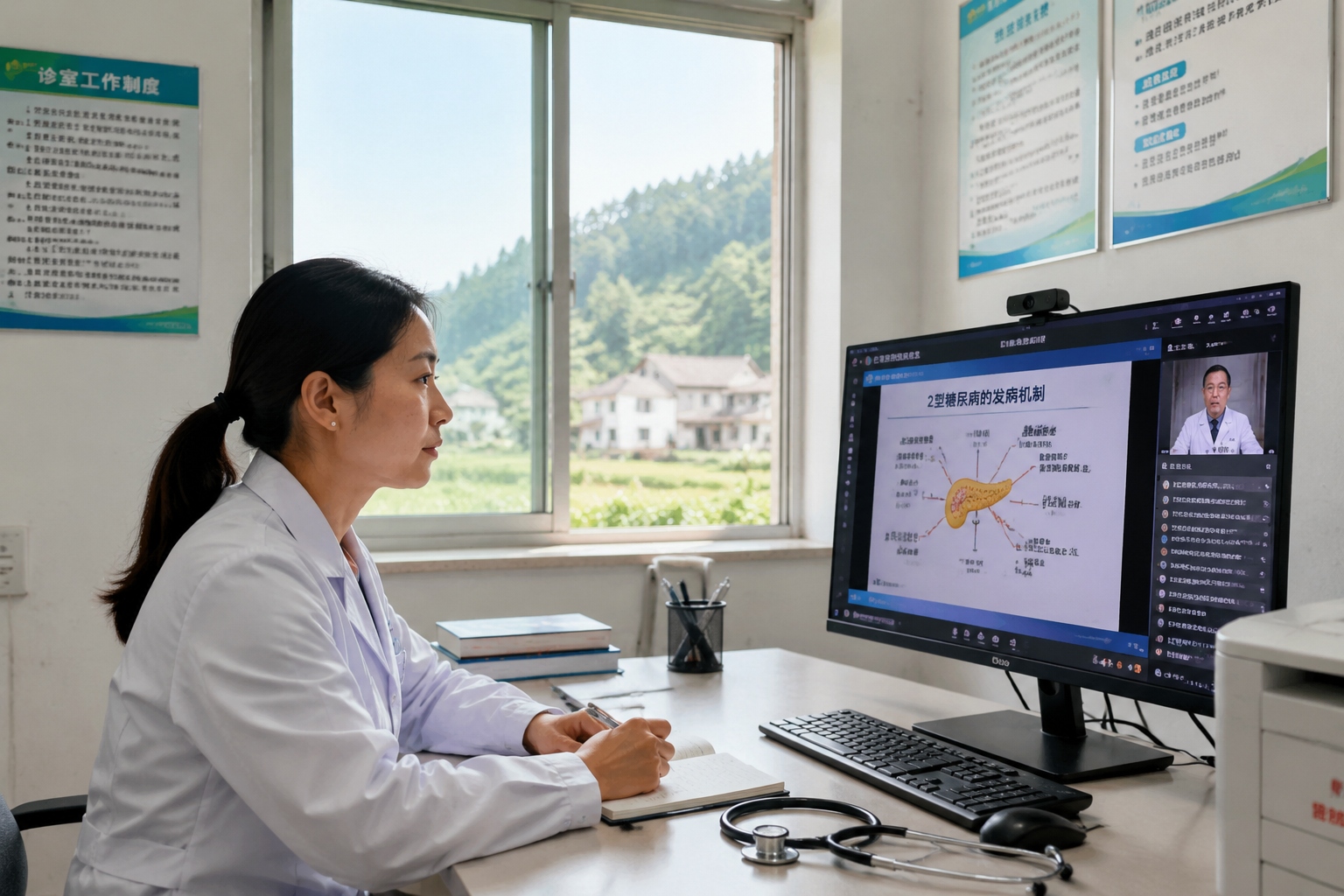
At 7:30 pm on a Tuesday, Dr. Wang Li, a 34-year-old general practitioner in a township health center in Yunnan Province, sits down in front of a computer in her small office. She is not seeing a patient, but she is about to learn how to better treat one. Tonight’s online session, part of China’s national continuing medical education (CME) program, focuses on early recognition of sepsis in rural emergency settings.
The class is live-streamed from a provincial hospital in Kunming, 300 kilometers away. A senior intensive-care specialist walks through real cases, showing lab results and ultrasound clips. Wang Li types a question into the chat box: “What if we don’t have a lactate test at 2 am?” Within two minutes, the instructor answers. This is not a one-off webinar—it is part of a structured curriculum that Wang Li, like millions of other Chinese doctors, must follow every year.
The Scale of the Upskilling Machine
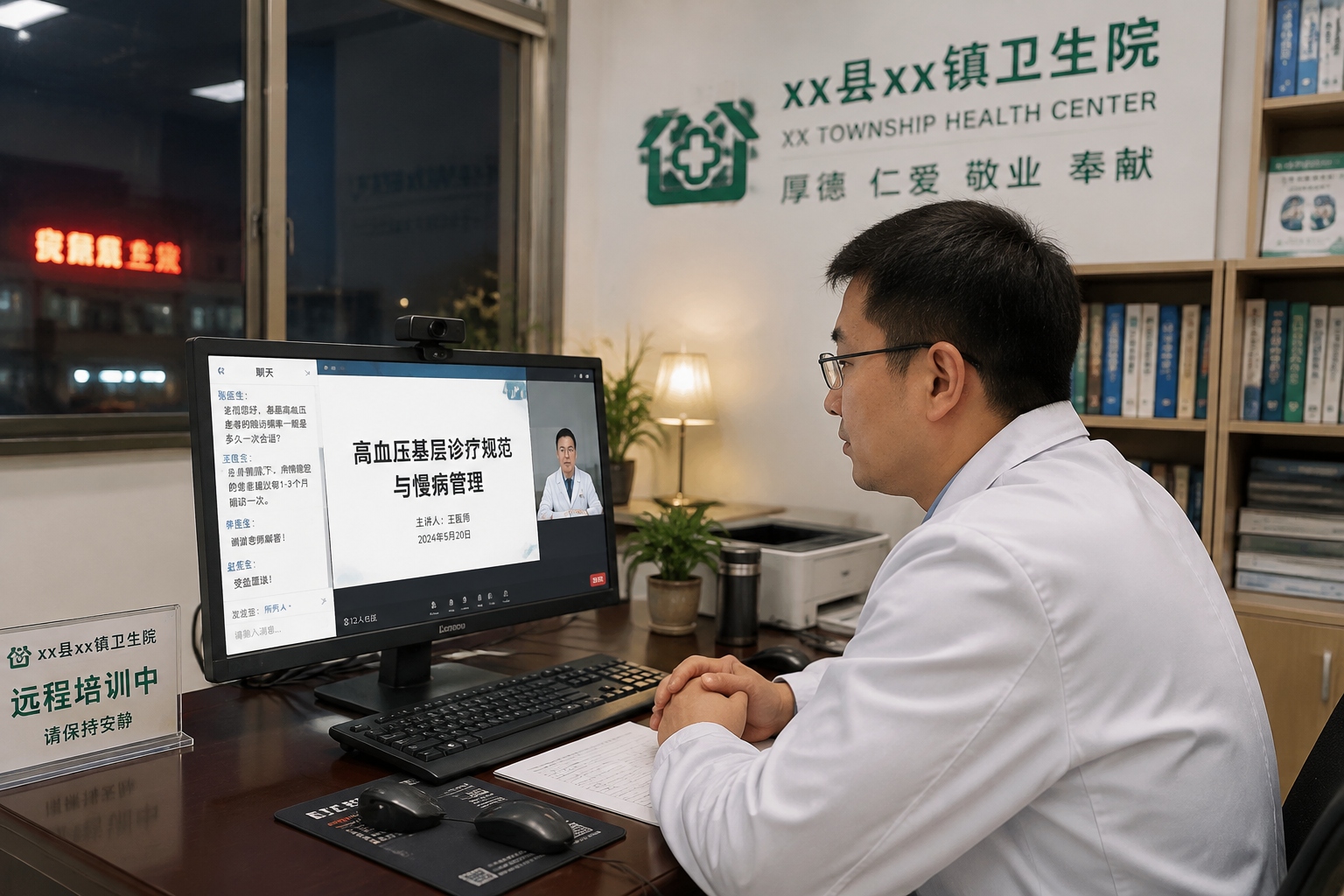
China’s CME system is not new—it has been mandatory for licensed physicians since 2000. But the last five years have seen a dramatic shift from in-person lectures to digital platforms. According to the National Health Commission, over 60% of the country’s 4.4 million licensed doctors now complete their required 25 CME credits online. For rural doctors, that figure is even higher, because traveling to city hospitals for weekend seminars is often impractical.
One of the largest platforms, the National Continuing Medical Education Network, hosts more than 10,000 courses per year. Topics range from updated hypertension guidelines to hands-on training on ultrasound-guided needle placement. The courses are not just videos: many include live Q&A, case quizzes, and even virtual reality simulations for surgical procedures.
From Indifference to Necessity
Local health officials interviewed for this article recall that when online CME was first introduced, many older rural doctors ignored it. “They said, ‘I’ve been treating coughs and colds for 30 years, what can a computer teach me?'” says Dr. Zhao Min, director of a village clinic in Hebei Province.
That attitude changed when the system integrated practical follow-ups. Now, after completing a module, a doctor must submit two de-identified patient cases that apply the new knowledge. A remote mentor reviews the cases and provides feedback. This closes the loop between learning and doing. Zhao Min notes that her clinic’s antibiotic prescription rate dropped by 18% in the year after she and her colleagues completed a course on antimicrobial stewardship.
What Actually Works on the Ground
To make online education relevant, provincial health commissions design curricula around local disease patterns. In coastal Fujian, more courses address snakebite and seafood allergy; in mountainous Gansu, trauma and altitude sickness get priority. The central government encourages this localization through its “Internet + Medical Education” initiative, which aims to connect every township health center to a city-level teaching hospital by 2025.
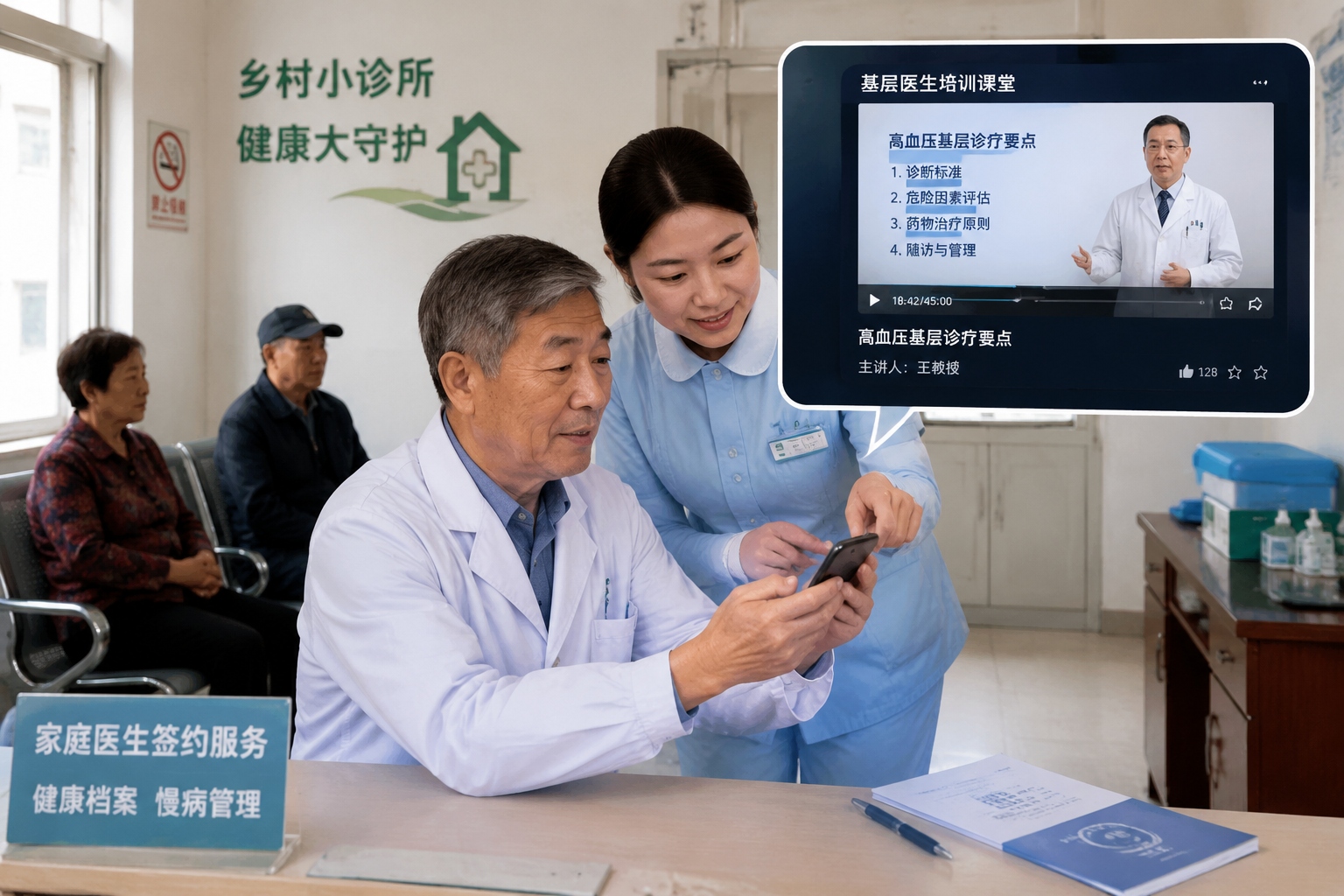
Technological hurdles remain. Some remote clinics have unstable internet, and older doctors struggle with the apps. To solve this, several provinces have set up “teacher stations”—nurses or younger colleagues who help older physicians navigate the platform. Others use mobile data subsidies to lower the cost for rural doctors.
Measurable Results
Data from a 2023 pilot program in Sichuan Province shows that township doctors who completed a 6-month course on emergency ECG interpretation correctly identified acute myocardial infarction in 92% of test cases, compared with 61% before the training. A similar program in Anhui Province reduced misdiagnosis of childhood pneumonia by 25% within a year.
These numbers do not make headlines, but they save lives. For patients in small towns, the benefit is simple: when a doctor has recently practiced recognizing a rare side effect or a tricky X-ray, the quality of care improves without the patient having to travel anywhere.
Lessons for Other Countries
China’s experience offers a practical playbook for any country struggling to keep rural doctors skilled. Three takeaways stand out:
Make It Mandatory but Flexible
The 25-credit requirement creates a habit. Flexible timing—doctors can complete modules after clinic hours or on weekends—makes it achievable.
Mix National Standards with Local Content
A unified platform sets the baseline, but local health bureaus can adapt modules for diseases common in their regions. This balances quality with relevance.
Close the Loop with Real Cases
Learning is reinforced when doctors apply knowledge to their own patients and get feedback. The case-submission requirement has been key to changing behavior, not just checking a box.
The Next Screen
Dr. Wang Li closes her laptop at 9 pm. Tomorrow she will see a patient with the same signs of early sepsis described in the lecture. She feels more confident recognizing it, and she has a phone number for the Kunming mentor she met through the chat box. “The screen doesn’t replace experience,” she says. “But it brings good experience closer.”
Start the discussion at forum.chinacomes.com