
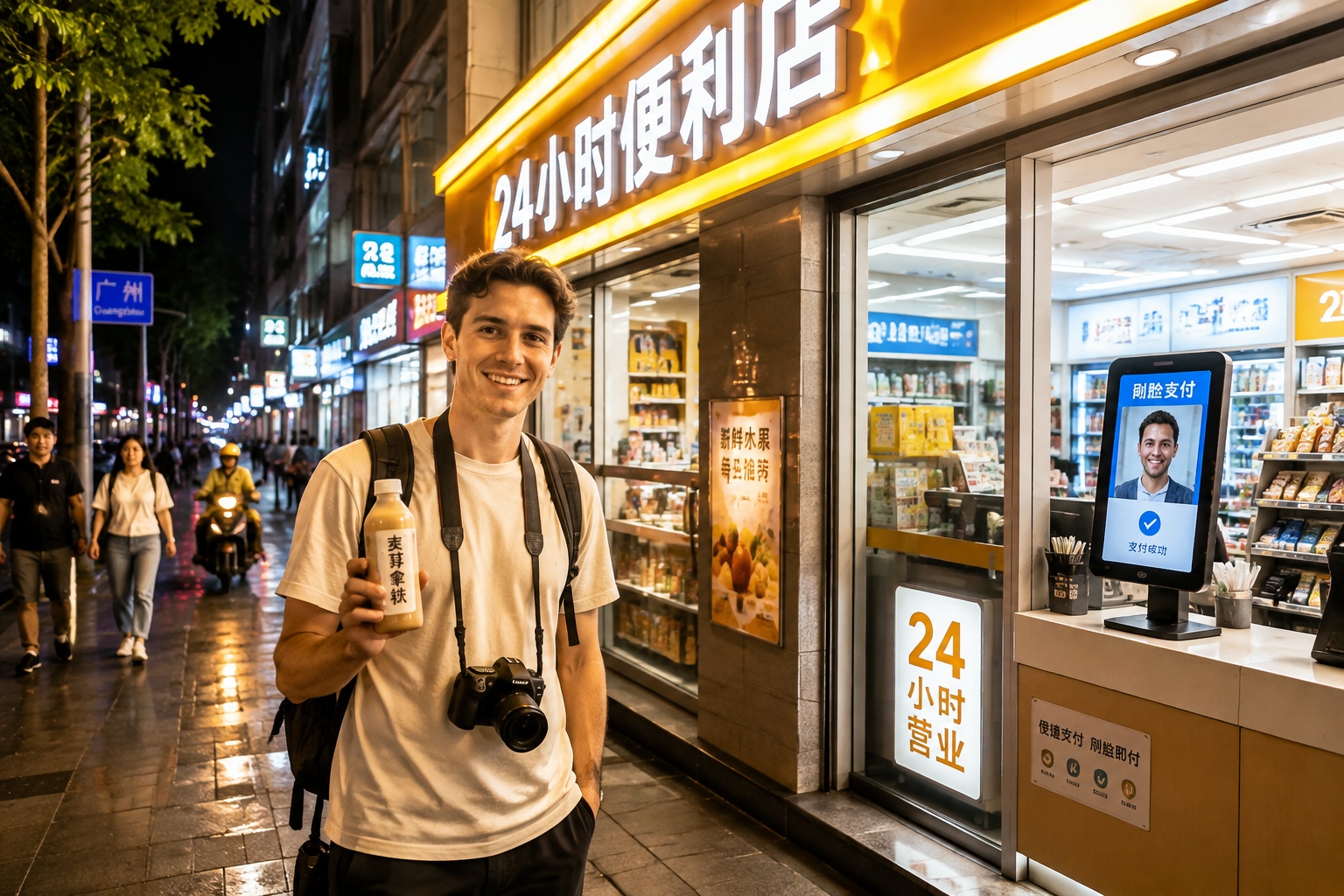

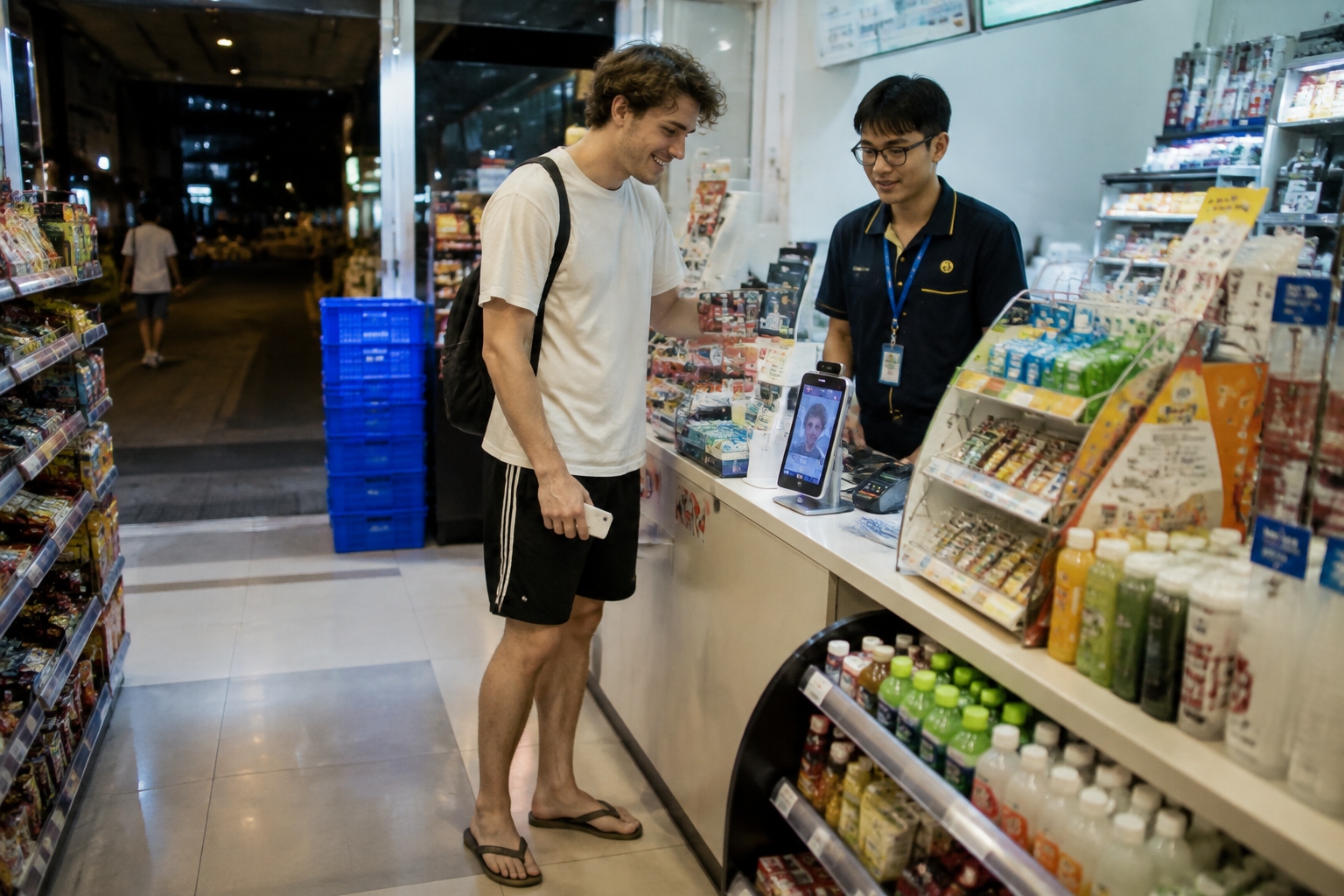
It was almost midnight when British vlogger Josh Curtis realized he had locked himself out of his hotel in Guangzhou. He was wearing shorts, flip-flops, and had left both his phone and wallet inside the room. Most people would have been stranded. But Josh walked into a 24-hour convenience store, picked up a pack of noodles, a bottle of water, and a banana. At the counter, he simply looked into a small camera — and the screen read “Miao, payment successful.” The cashier didn’t even ask for a phone.
That was the moment Josh, who runs a travel channel with 1.2 million followers, decided to record an entire series about Guangzhou. His first video, titled “I Paid with My Face at 2 AM,” has racked up 8 million views across platforms. In the comments, people asked the same question over and over: “Is this really China?”
Not a Single Card or Bill
What surprises most foreign visitors is how far cashless payments have gone. In Guangzhou, mobile payment services like Alipay and WeChat Pay have been mainstream for years. Almost every store, street stall, and taxi driver accepts QR code scans. But the city has taken it one step further: facial recognition payment, which lets you pay with a glance, is now common in convenience store chains, supermarkets, and metro stations.
“I’m not a fan of tech that makes life complicated,” Josh says in his second video. “But this felt like magic. You walk into a store, pick up a drink, nod at a camera, and leave. No phone, no card, no change.”
It’s not just about convenience. Facial recognition payment is also making life easier for elderly residents who struggle with smartphone screens, and for parents carrying sleeping children. A 68-year-old woman named Auntie Chen told Josh that she used to rely on her daughter for everything. “Now I just look at the machine and I can buy vegetables myself,” she said.
Where the Staff Are Optional
On his third day, Josh visited an unmanned convenience store in the Tianhe CBD area. The entire shop is run by a system of smart shelves, cameras, and a single gate that opens after you scan a QR code. You pick what you need, the sensors identify the products, and the system charges your account automatically when you leave.
“I grabbed a packet of chips, put it in my backpack, and walked out. The app showed I was charged exactly 5.8 yuan — around 80 cents,” he explained. “No checkout, no lines. It felt like stealing, but then I remembered this is how they do it here.”
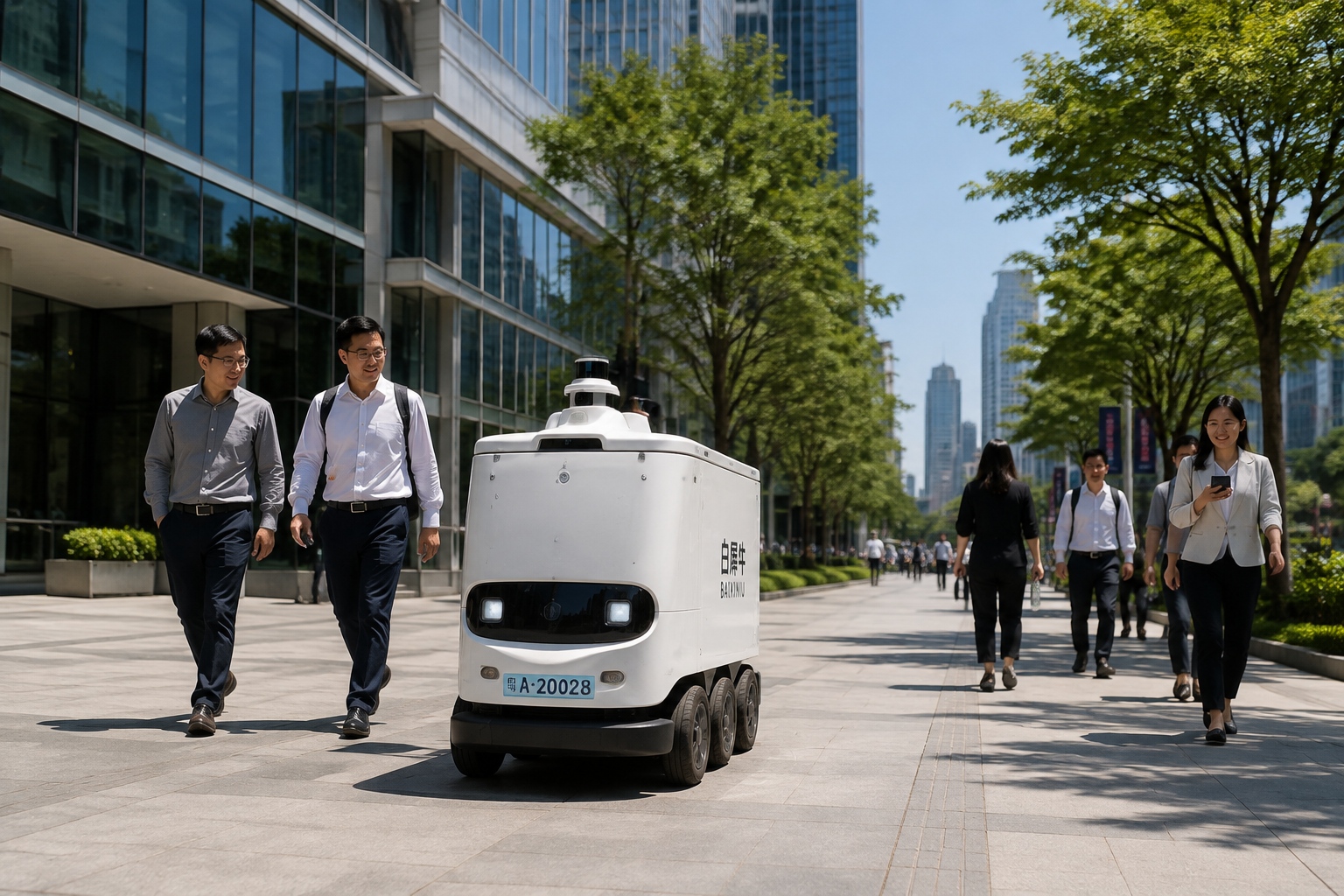
In the same district, he also spotted delivery robots rolling along the sidewalk. They look like small cargo boxes on wheels, carrying takeaway meals from restaurants to office buildings. One robot even crossed the road safely, waiting for a green light along with pedestrians.
A Metro System That Knows Your Name
Like many first-time visitors, Josh initially struggled with the metro. But he quickly discovered that Guangzhou’s subway network is far more advanced than standard transit systems. It supports facial recognition entry at over 100 stations, which means you can walk through the gate without tapping a card or phone. The cameras recognize your face, connect it to your payment account, and deduct the fare automatically.
“I timed it. From the entrance to the train platform, it took me 3 seconds fewer than my friend who had to tap his card,” Josh joked in a vlog. The system also provides real-time data on train congestion, helping passengers find less crowded carriages. In 2024, Guangzhou became one of the first cities in China to test full-row driverless taxis in the Huangpu district.
Nightlife Beyond Bars and KTV
For many foreign bloggers, the biggest shock is how active Guangzhou is after 11 p.m. In many Western cities, convenience stores lock their shutters by 10 p.m., and getting food after midnight usually means ordering cold pizza from a greasy takeaway place. Here, you can buy hot noodles, fresh fruit, flowers, and even over-the-counter medicine at 2 a.m. — all without speaking to a human if you don’t want to.
The combination of facial recognition payment, 24-hour delivery apps, and a dense network of small shops creates a level of urban convenience that Josh compares to “a version of Tokyo, but faster.” A nearby vending machine even sells hand-pulled noodles, cooked in the machine in under two minutes.
“I’m from London. If I want a hot meal at 2 a.m., my options are limited. Here, you can get a full Cantonese dinner delivered to a park bench,” he says, laughing.
But It’s Not All Drones and Robots
What stood out to Josh wasn’t just the high-tech side. It was how old and new live side by side. In the older neighborhoods, like Liwan and Yuexiu, you still see elderly men playing mahjong in the shade, small paper signs on storefronts, and cash being counted over wooden counters. The “future” is not uniform. It coexists with the everyday.
“The thing that made me feel like I was in the future wasn’t the robots,” Josh says in another video. “It was the fact that nobody seems impressed by them. A grandma next to me at a noodle shop paid with her face — and then went back to bargaining with the seller over the price of a bag. That’s the real future: technology so embedded in normal life that you stop noticing it.”
At the same time, he’s careful not to romanticize everything. Some residents complain about the number of cameras and privacy concerns. Others say the shift to facial recognition makes them uneasy, even though they use it anyway because it’s convenient. “It’s not a perfect world,” he says. “But it’s a world that works.”
What Foreign Bloggers Take Back Home
For Josh and many other creators, Guangzhou offers a new way to talk about China. They come expecting skyscrapers and neon lights — and they do find those. But what leaves a deeper impression is how the city uses technology to solve ordinary problems: waiting in lines, paying for a bottle of water, finding an empty seat on the train.
“The future isn’t a flying car,” Josh concludes, standing in front of a wet market in the morning light. “It’s walking out of a convenience store at 2 a.m., having paid with your face, and feeling like you’ve done this your whole life.”
Start the discussion at forum.chinacomes.com