

Introduction: A New Home in Orbit
On the evening of September 21, 2023, a screen in a Beijing elementary school was showing something unusual: a live feed from space. Three Chinese astronauts, or taikonauts, were floating in the Tianhe core module of the Tiangong space station, doing a science demonstration for millions of students. One of them, Wang Yaping, who had already taught from space in 2013, played with a water ball that wobbled in microgravity. The kids laughed and gas. It felt like a normal school day, except the teacher was 400 kilometers above Earth.
That scene is now part of everyday life in China. But it was not always this way. For decades, China was locked out of the world’s most visible space project. To understand why Beijing spent over a decade building its own space station, you have to look back at a door that never opened.
The Door That Didn’t Open
In the late 1980s and early 1990s, the United States and Russia (then the Soviet Union) started talking about a joint space station. Europe, Japan, and Canada joined. The plan was ambitious: a permanently crewed laboratory orbiting Earth, shared by many nations. China, which had launched its first satellite in 1970 and was developing human spaceflight, expressed interest in joining.
The answer was a firm no. The main reason was geopolitical. In 1993, the United States Congress voted to prohibit cooperation with China on any space project that involved American technology or funding. The ban, written into law as part of the Defense Appropriations Act, still exists today. It effectively blocked China from the International Space Station (ISS). Chinese officials later recalled that they were treated more as rivals than partners.
That rejection stung. But it also became a powerful push. In 1992, China had just approved the Project 921 plan, a three-step human spaceflight roadmap. The first step was to launch a crewed spacecraft. The second was to build a small space laboratory. The third was to assemble a full space station. The ban by the U.S. only made the third step more urgent.
From Dongfanghong to Shenzhou: The Long Build-Up
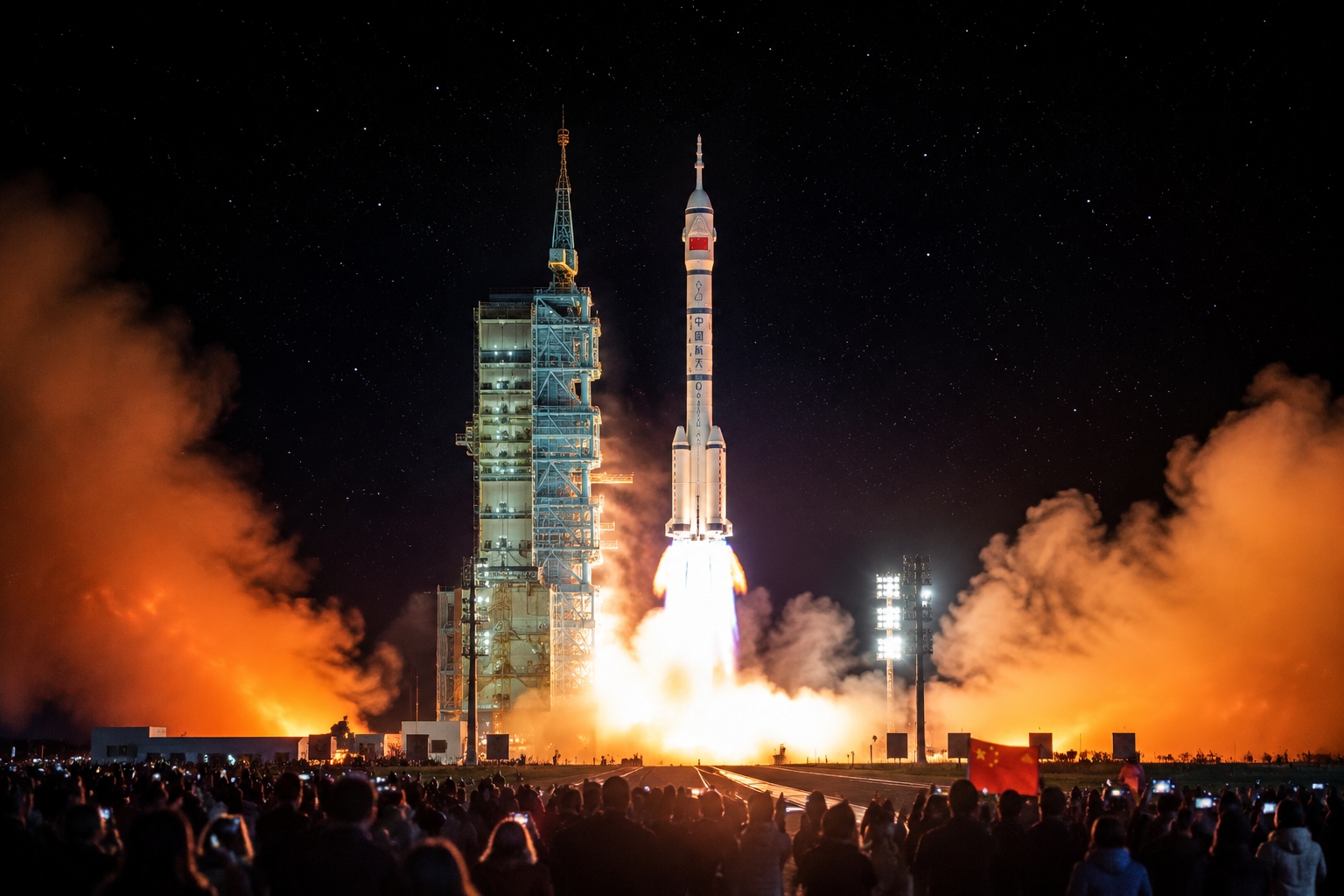
China’s track record in space goes further back than many people think. In 1970, the Dongfanghong-1 satellite beeped the song “The East Is Red” from orbit, making China the fifth country to launch a satellite. Then came a quiet period. It wasn’t until 1999 that the first Shenzhou spacecraft flew uncrewed. The big milestone arrived on October 15, 2003, when Yang Liwei became the first Chinese astronaut in space. He spent 21 hours circling Earth and returned safely, landing in a remote grassland in Inner Mongolia. A small step for China, but a giant bound for its space program.
Over the next decade, China moved steadily up the learning curve. In 2008, Zhai Zhigang performed the country’s first spacewalk. In 2011, the Tiangong-1 laboratory module was launched, followed by dockings with Shenzhou spacecraft. In 2016, Tiangong-2 hosted two astronauts for a month, testing life-support systems and mid-term stays. These were all rehearsals for the final act: a permanent modular station.
Why Go It Alone? The Logic of Self-Reliance
Given the enormous cost, some outside observers have questioned why China didn’t just buy rides on the ISS or join a commercial venture. The answer is layered.
First, there is the legal wall. The 1993 U.S. law, known as the Wolf Amendment after its sponsor, forbids NASA from using federal funds to cooperate with China. There is no easy way around it. Even if some countries wanted to allow Chinese astronauts into the ISS, the U.S. veto made it nearly impossible.
Second, self-reliance is a core value in Chinese strategic thinking. Over decades, China has learned that key technologies cannot be trusted to supply chains that can be cut off. From semiconductors to GPS, the pattern is the same: if it’s critical, you build it yourself. A space station is critical for national prestige, for scientific research, and for future deep-space missions. Relying on foreign partners would carry too much risk.
Third, the economic and technological spillovers are real. Developing a space station forced China to master rocket engines, life support, automated docking, robotic arms, and long-duration human adaptation. These skills filter down to satellite manufacturing, materials science, and even commercial aerospace. Entire supply chains have grown up around the program, creating jobs and innovation.
And there is a more practical point: the ISS is aging. It has taken multiple cracks, leaks, and maintenance issues. It is expected to be retired by 2030. When that happens, the only crewed station left in low Earth orbit might be China’s Tiangong. China isn’t just building a station for the sake of having one; it’s positioning itself as one of the few countries capable of maintaining a permanent human presence in space.
Tiangong in Action: What Has China Actually Achieved?
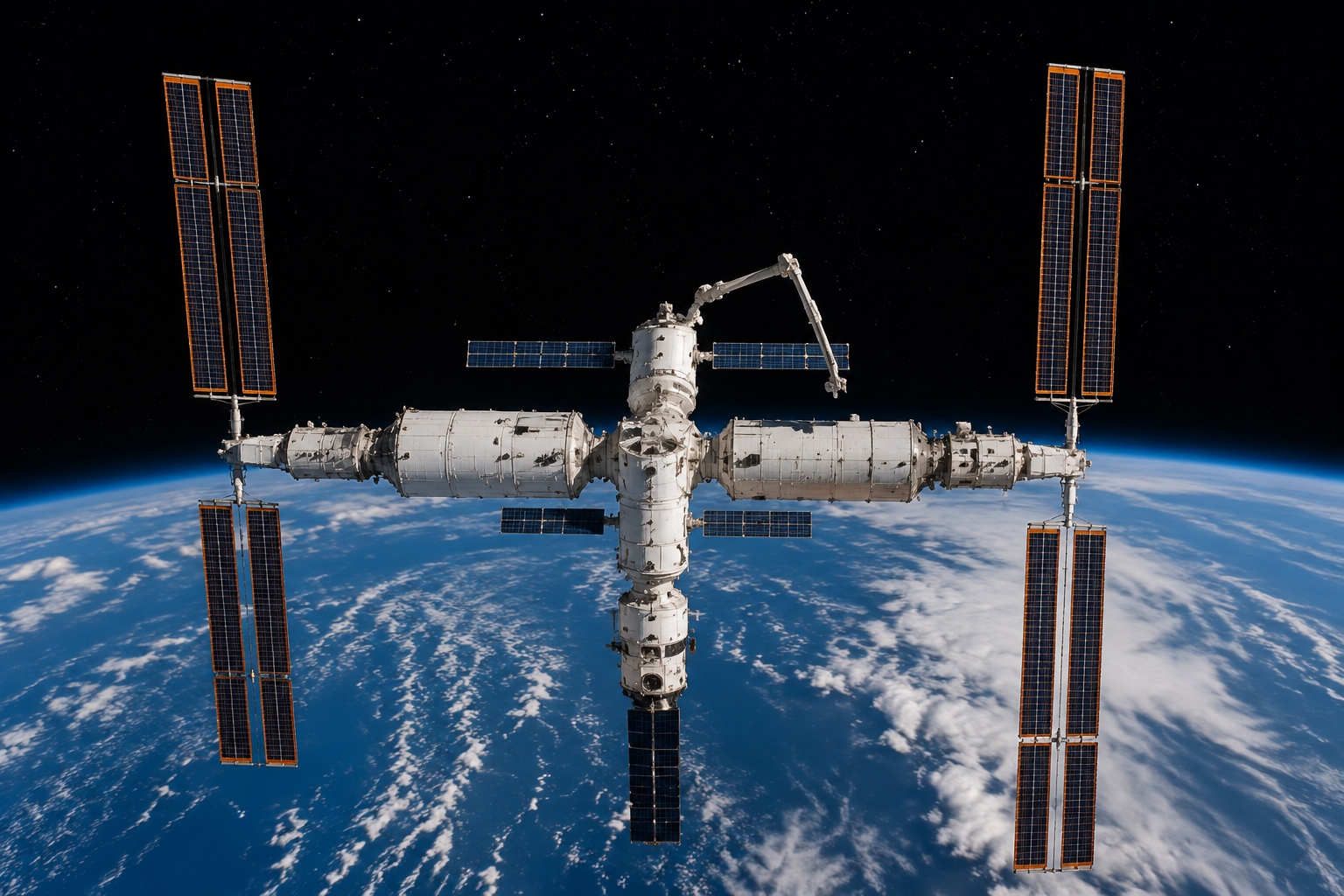
The current Tiangong station is a T-shaped structure, about one-fifth the mass of the ISS. Its core module, Tianhe, was launched in April 2021. Two lab modules, Wentian and Mengtian, arrived in 2022. The station is designed to host three astronauts for six-month shifts, like the ISS.
But Tiangong is more than just a smaller version of its predecessor. It is equipped with a robotic arm that can assist spacewalks and move payloads. It has a powerful solar array system. And it has a unique feature: the ability to extend the station with additional modules. There is even talk of adding a new module to expand to six crew members later this decade.
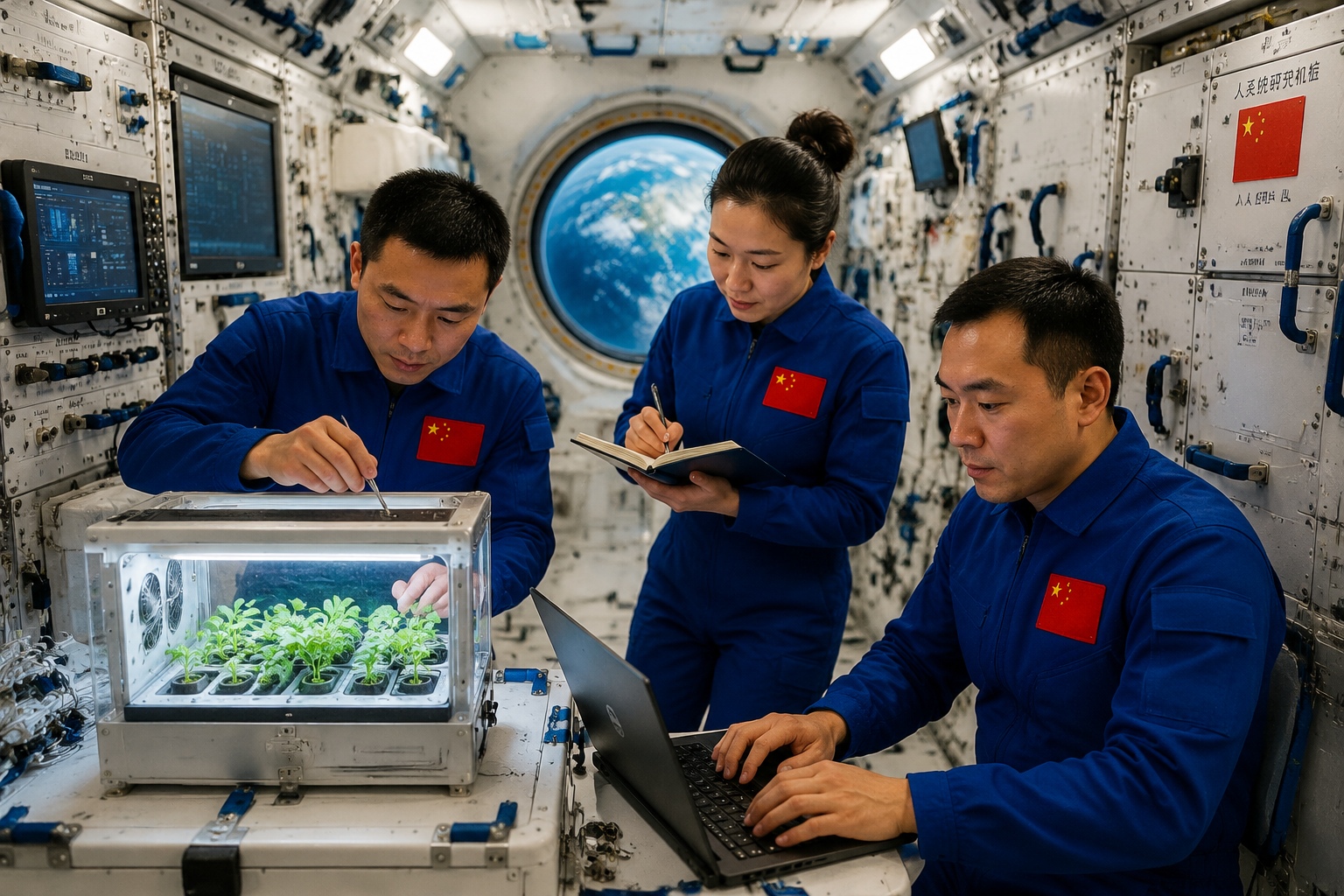
Science is the main purpose. Since the station became operational, Chinese astronauts have conducted experiments in life sciences, physics, astronomy, and material science. One area of focus is the behavior of fluids and combustion in microgravity, which could improve engine design on Earth. Another is growing food in space; the crew has cultivated rice and other crops, a stepping stone toward long-term space travel.
The station also opened its doors internationally. In 2019, the China Manned Space Agency announced that nine experiments from 17 countries (including Switzerland, Poland, Germany, India, and Russia) had been selected for the first batch of cooperative projects. The projects range from studying cancer cells in microgravity to testing heat-resistant materials. China has said it will continue to offer opportunities for foreign astronauts to visit Tiangong, though none have yet.
What Comes Next? The Future of Tiangong
Tiangong is designed for at least 10 years of operation, but its lifespan could be extended to 15 or more. Chinese engineers are constantly improving its systems. There are plans to launch a Hubble-class space telescope, called Xuntian, that will orbit near the station and dock with it for servicing. That could bring spectacular scientific returns.
Beyond low Earth orbit, China’s long-term vision includes a permanent lunar research station. In 2029 or early 2030s, China aims to land astronauts on the Moon. The space station is a training ground for those more ambitious missions. The same life support, long-duration crew management, and docking technologies tested on Tiangong will be essential for a lunar base.
For ordinary Chinese people, Tiangong is a source of quiet pride. It’s not just about rockets and astronauts. It’s about seeing your country do something that only two other nations (the U.S. and Russia) have ever done entirely on their own. School textbooks now include chapters on Tiangong. Space science is a growing field at universities. And the famous “space classes” from orbit are watched by millions of students, sparking curiosity about what lies above.
Conclusion: A Space Station for the World?
So why did China build its own space station? The short answer is because it had to. A combination of political exclusion, strategic caution, and a desire for self-respect pushed a determined nation to go it alone. In the process, China has developed a world-class space infrastructure that could become a valuable platform for the entire world once the ISS retires.
The station is a reminder that human progress isn’t a straight line. Sometimes, a closed door leads to a bigger window. Tiangong now stands as a visible sign of what is possible when a country decides to follow its own path, and it invites the world to look up, together.
Start the discussion at forum.chinacomes.com