

Introduction: The Vertical City
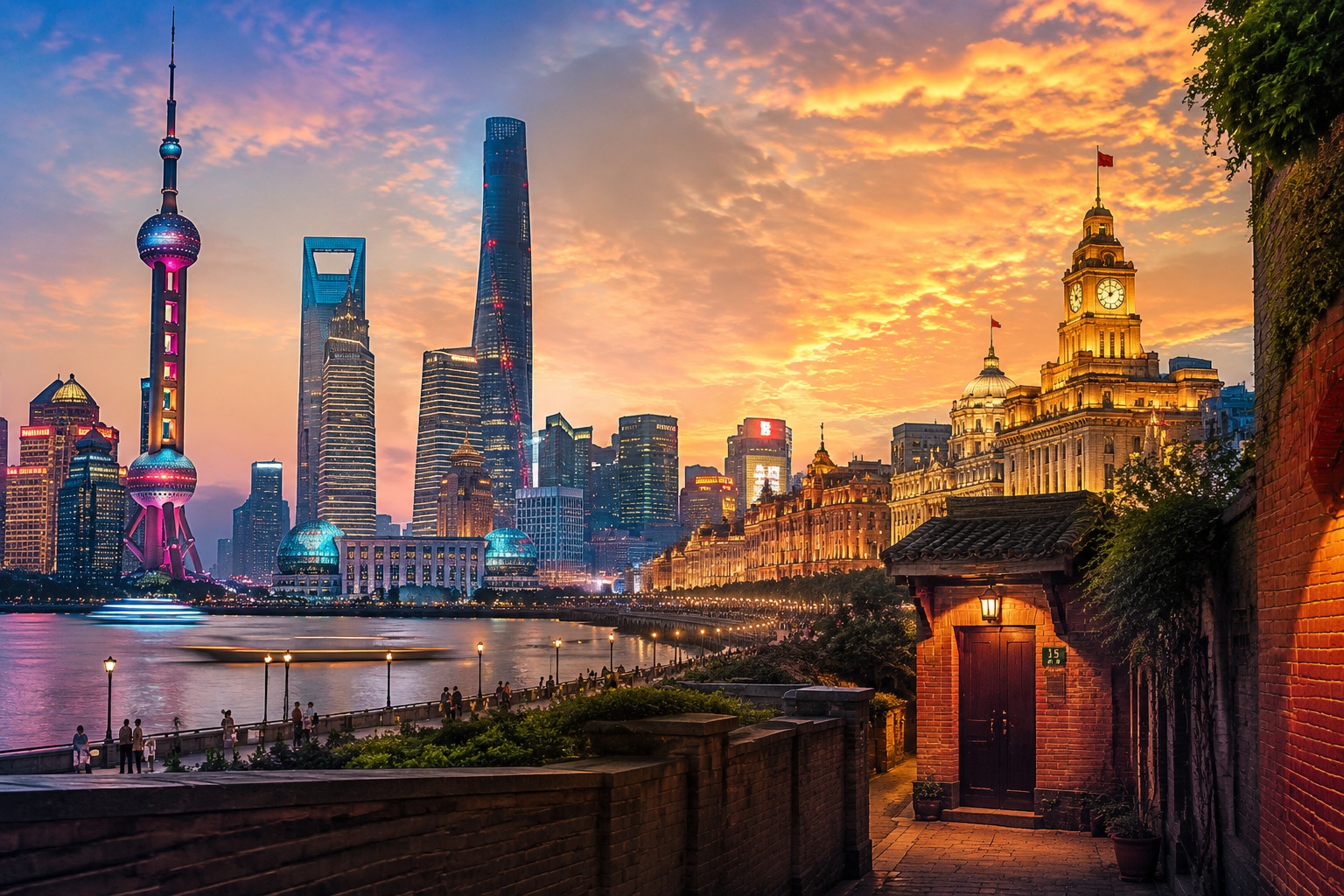
At 8 a.m. on a Saturday, the air on the 100th-floor observation deck of Shanghai Tower is still and thin. Below, the Huangpu River glints like a silver thread. To the east, the Pudong skyline rises in metallic waves — the Oriental Pearl Tower, the Jin Mao, the Shanghai World Financial Center. To the west, the Bund’s neoclassical buildings stand in a low, orderly line, their stone facades warmed by the morning sun. This is the Shanghai most tourists know: a city of extreme verticality and architectural spectacle. But the real Shanghai — the one worth exploring — lies not in the heights, but in the cracks between them.
From Glass to Granite: Crossing the River
Take the subway from Lujiazui to East Nanjing Road station, then walk toward the Bund. The transition is abrupt: within ten minutes, the mirrored glass of corporate towers gives way to the granite columns of the 1920s Customs House and the Peace Hotel. Here, the city’s rhythm changes. Tourists snap selfies against the backdrop of Pudong, but locals know to turn into the narrow alleys behind the main buildings.
On Fuzhou Road, a secondhand bookshop occupies the ground floor of a 1930s shikumen townhouse. The owner, Mr. Chen, 62, has been here for thirty years. “When I started, this whole block was residential,” he says, stacking yellowed paperbacks. “Now it’s all tea houses and boutiques. But the building’s bones haven’t changed.” He points to the original black-and-white floor tiles, worn smooth by decades of footsteps. This is the first layer of Shanghai’s hidden history: the everyday lives embedded in structures designed for a different era.
The Speakeasies: Behind Unmarked Doors
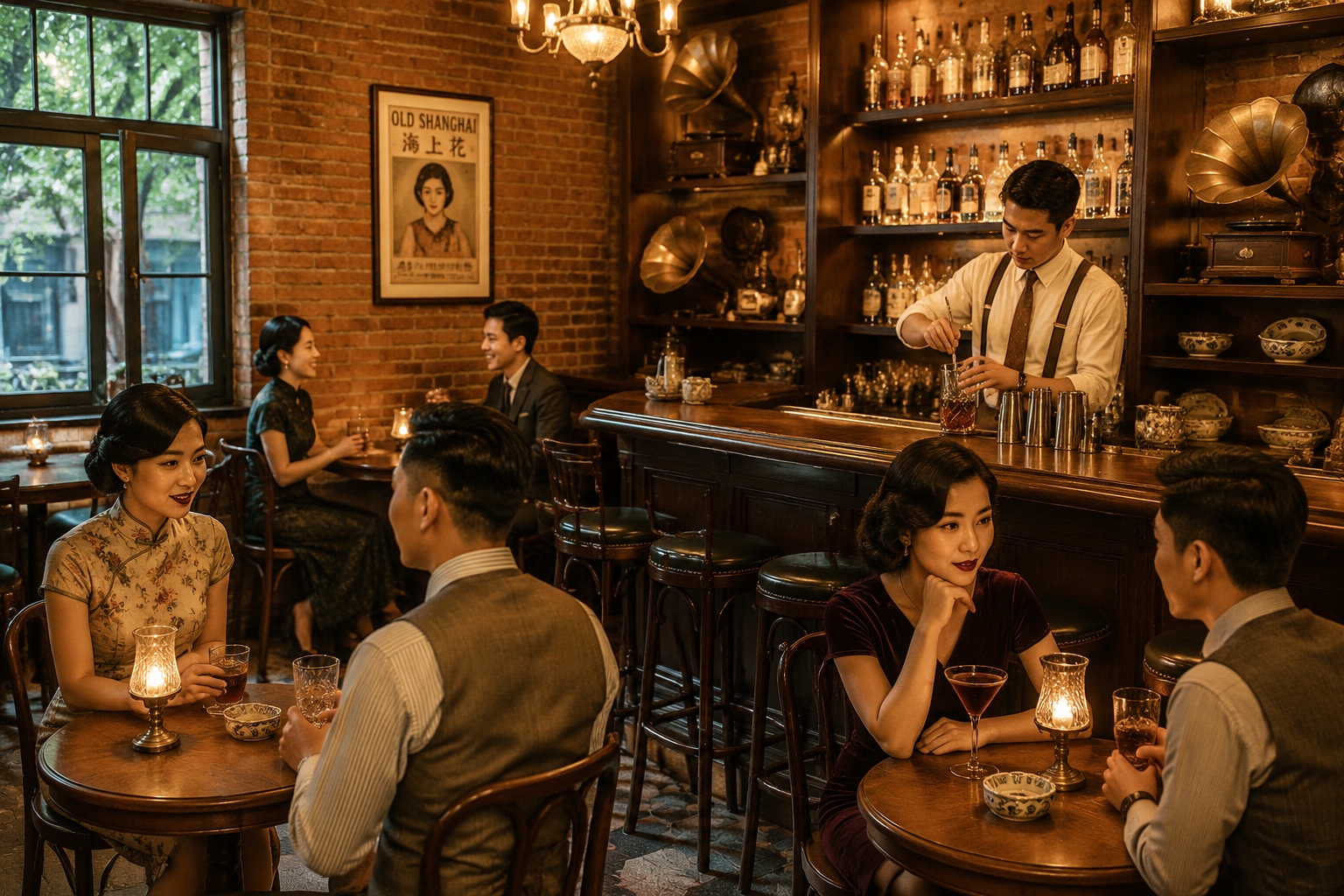
By late afternoon, the heat of the day fades, and the city’s nightlife begins to stir — not in the flashy nightclubs of the Bund, but in unmarked doorways along tree-lined streets in the former French Concession. One such place is Flask, a bar tucked behind a refrigerator door in a dark alley on Sinan Road. Inside, a dozen people sit on mismatched vintage chairs, sipping cocktails by candlelight. The walls are exposed brick, the shelves lined with 1920s gramophones and porcelain ashtrays. The bartender, Xiao Li, 29, explains: “The owner wanted to recreate a Prohibition-era speakeasy. The idea is that you have to know someone to find it.” Across town, in a lane off Jianguo West Road, another hidden bar occupies a former rickshaw garage. The original wooden beams remain, and the menu lists drinks named after Shanghai streets from the 1930s.
These spaces are not novelty acts — they are part of a growing movement to reclaim the city’s pre-1949 character. “After the cultural revolution, a lot of these buildings were forgotten,” says Xia, a 35-year-old architect who helped design one such bar. “Now, young creators are rediscovering them. They’re not just decorating; they’re matching the spirit of the place.”

The Walking Route: A Day of Layers
For a weekend itinerary that captures this contrast, start at the Shanghai Tower at 8 a.m., then take the river ferry (2 yuan) from Lujiazui to the Bund. Walk west through the old City God Temple area (avoid the crowds by sticking to side streets like Fuyou Road), then head into the French Concession via Xintiandi (but skip the malls — explore the adjacent shikumen lanes instead). Lunch at a hidden courtyard restaurant on Wukang Road, then spend the afternoon browsing the independent bookstores and galleries on Anfu Road. At dusk, visit one of the speakeasies (Flask or the Garage Bar) for a pre-dinner drink. Dinner can be found in a grassroots food alley like Dingxiang Night Market, where vendors sell everything from grilled oysters to stinky tofu. End the night at a jazz bar on Maoming South Road, where a septet plays 1930s standards in a room lined with mahogany panels.
Living Between Eras: A Young Professional’s Story
I meet 27-year-old Grace at her office — a converted 1920s warehouse on Suzhou Creek. She works for a design studio that occupies the top floor. “Every morning I walk past old cotton mill machines that are now art installations,” she says. “My desk is under a steel truss that used to support a spinning loom. It’s weirdly inspiring.” Grace, like many young Shanghainese, inhabits a city where the old and new are in constant negotiation. “My parents grew up in lane houses without private bathrooms. Now I live in a high-rise but work in a heritage building. The city doesn’t let you forget where it came from.” She shows me a photo on her phone: her grandmother standing in front of the same warehouse in the 1950s, when it was a state-owned textile factory. “She would never believe I’m sitting here with a MacBook.”
Balancing Heritage and Growth
Shanghai’s simultaneous embrace of skyscrapers and preservation is no accident. Since the 1990s, the municipal government has designated over 1,000 historic buildings as protected, while allowing selective redevelopment. The result is a patchwork: entire blocks of lane houses have been demolished, but others — like the Xintiandi complex — have been restored as commercial hubs. Critics argue that gentrification erodes authenticity. Yet for many residents, the middle ground is workable. “You can’t freeze a city in amber,” says Professor Li, an urban historian at Fudan University. “But you can keep its memory alive by repurposing its structures. The speakeasy trend is a grassroots version of that — ordinary people choosing to inhabit history.”
As night falls, I take a final walk along the Bund. The lights of Pudong flicker across the water, and the old buildings along the riverbank glow amber. A wedding party poses for photos on the steps of the Customs House, the bride’s white dress stark against the granite. Behind her, through a side door, I glimpse a narrow staircase leading up — to offices, apartments, maybe another unmarked bar. Shanghai never stops revealing itself, layer by layer.
Start the discussion at forum.chinacomes.com