
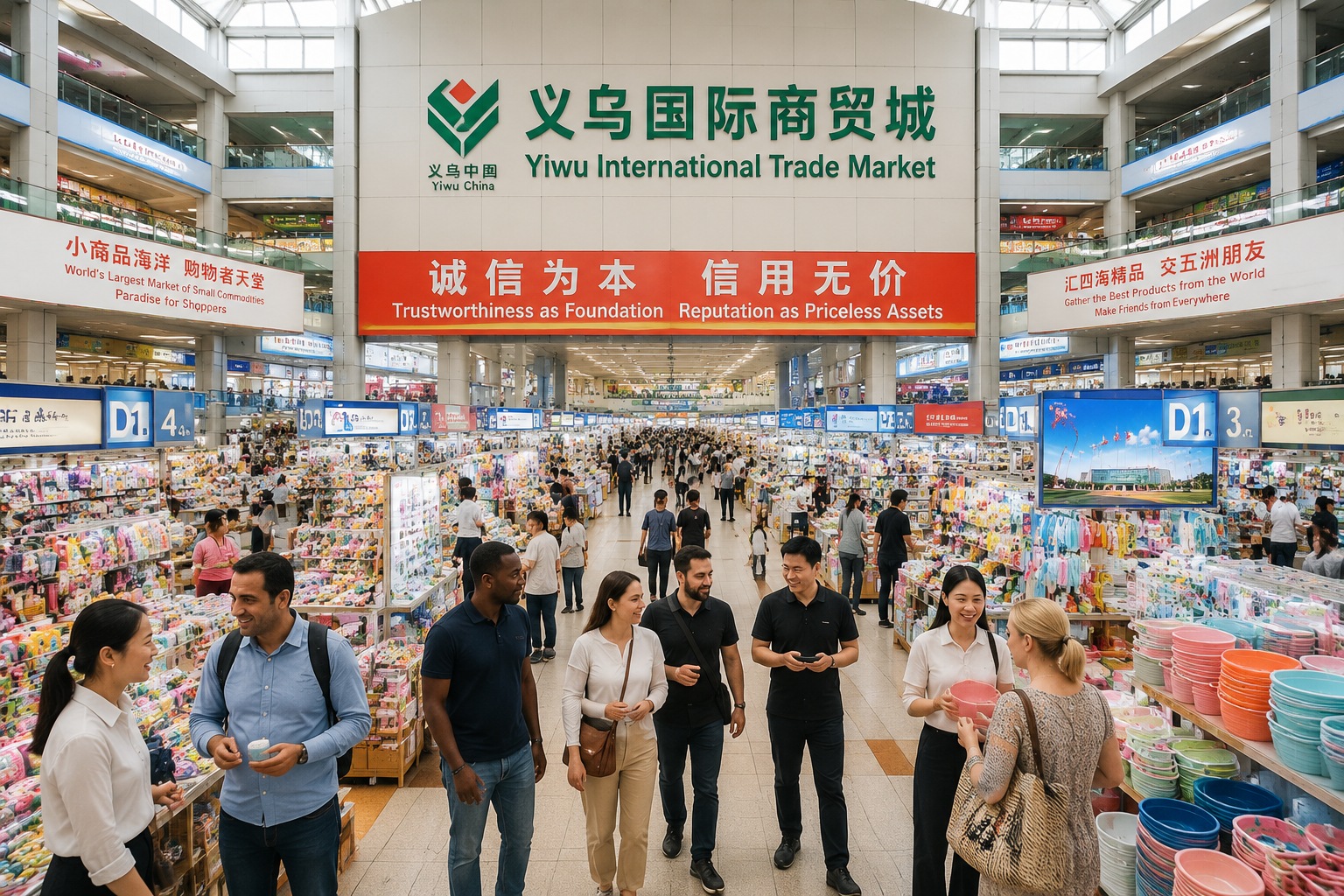

A Morning in Yiwu
At 8 a.m., the Yiwu International Trade Market begins to hum. In the bustling alleys of the market, a Russian man in his 40s, Ivan, sips a cup of Chinese soy milk before studying his clipboard. He is here to buy electric toothbrush heads, stainless steel thermoses, and a small mountain of colorful fridge magnets. He will send them to Moscow, where his family runs a wholesale business.
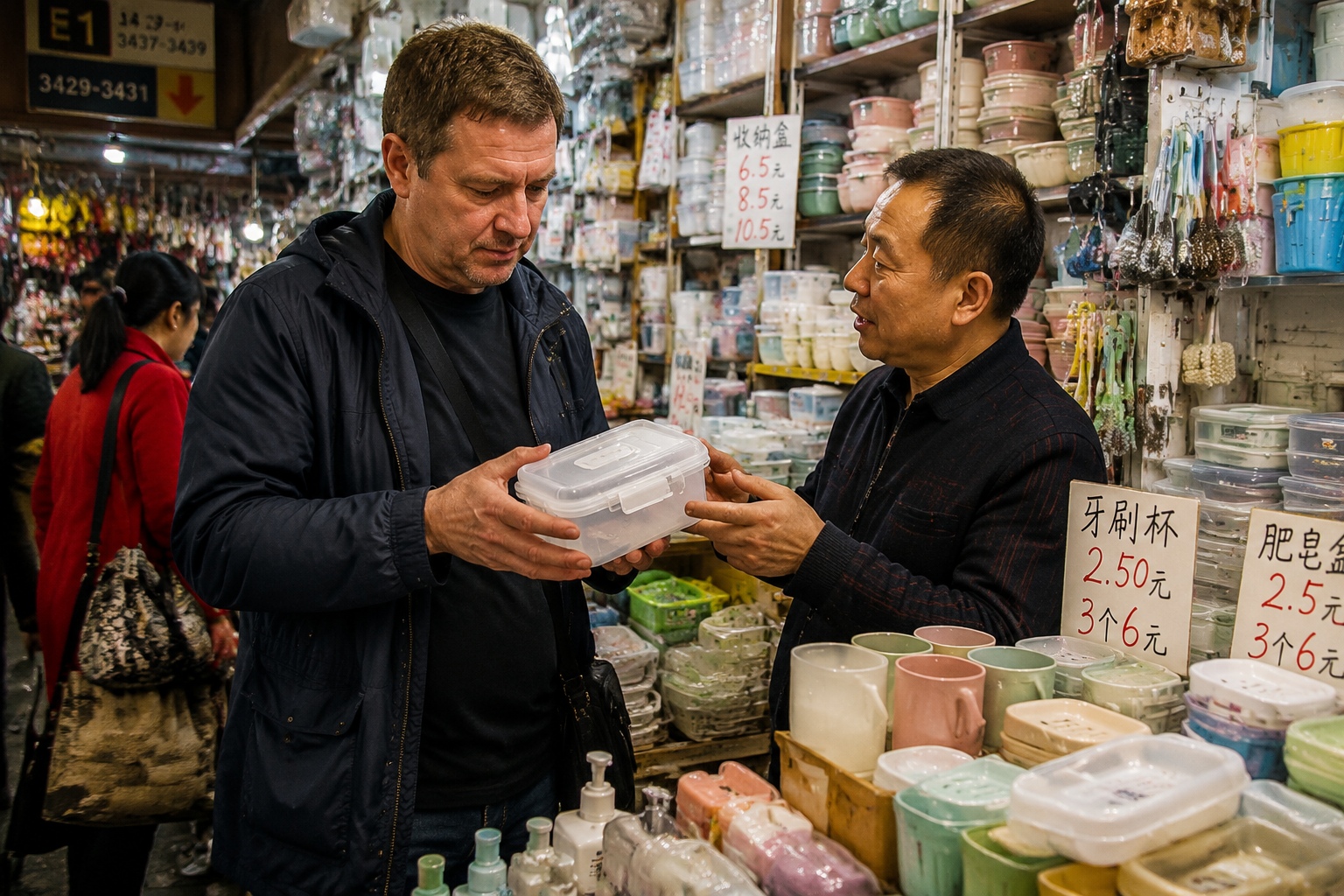
Ivan is one of thousands of foreigners who live in Yiwu, a city in eastern China’s Zhejiang province that calls itself the world’s small-commodity capital. If you have ever bought a souvenir at a fair, a holiday decoration at a dollar store, or a phone case from an online marketplace, chances are it passed through Yiwu.
Where the World Comes to Shop
Yiwu’s main market is enormous — a complex of several buildings with tens of thousands of booths. Walking through it, you hear a dozen languages: Arabic, Russian, Spanish, Hindi, French. More than 10,000 foreign traders are based in the city, and many more come and go. According to local authorities, goods made in the region are exported to over 200 countries.
What’s unusual is not just the scale, but how accessible it is. Unlike a typical B2B trade show, you don’t need to be a big company to buy here. You can order 100 items or 100,000. Vendors are used to small orders, and they will happily wrap a single dozen in bubble wrap and cardboard. That flexibility has made Yiwu a magnet for small entrepreneurs around the world.
Who Are the Foreigners?
There is no single Yiwu foreigner. There are Middle Eastern merchants who have been here for 15 years, African traders who fly in and out, Latin American buyers who discovered Yiwu through social media, and a large Eastern European community. For many, Yiwu is not a stopover; it’s home. They run eateries, shops, and logistics companies. They send their children to local schools. They argue with taxi drivers about fares in passable Chinese.
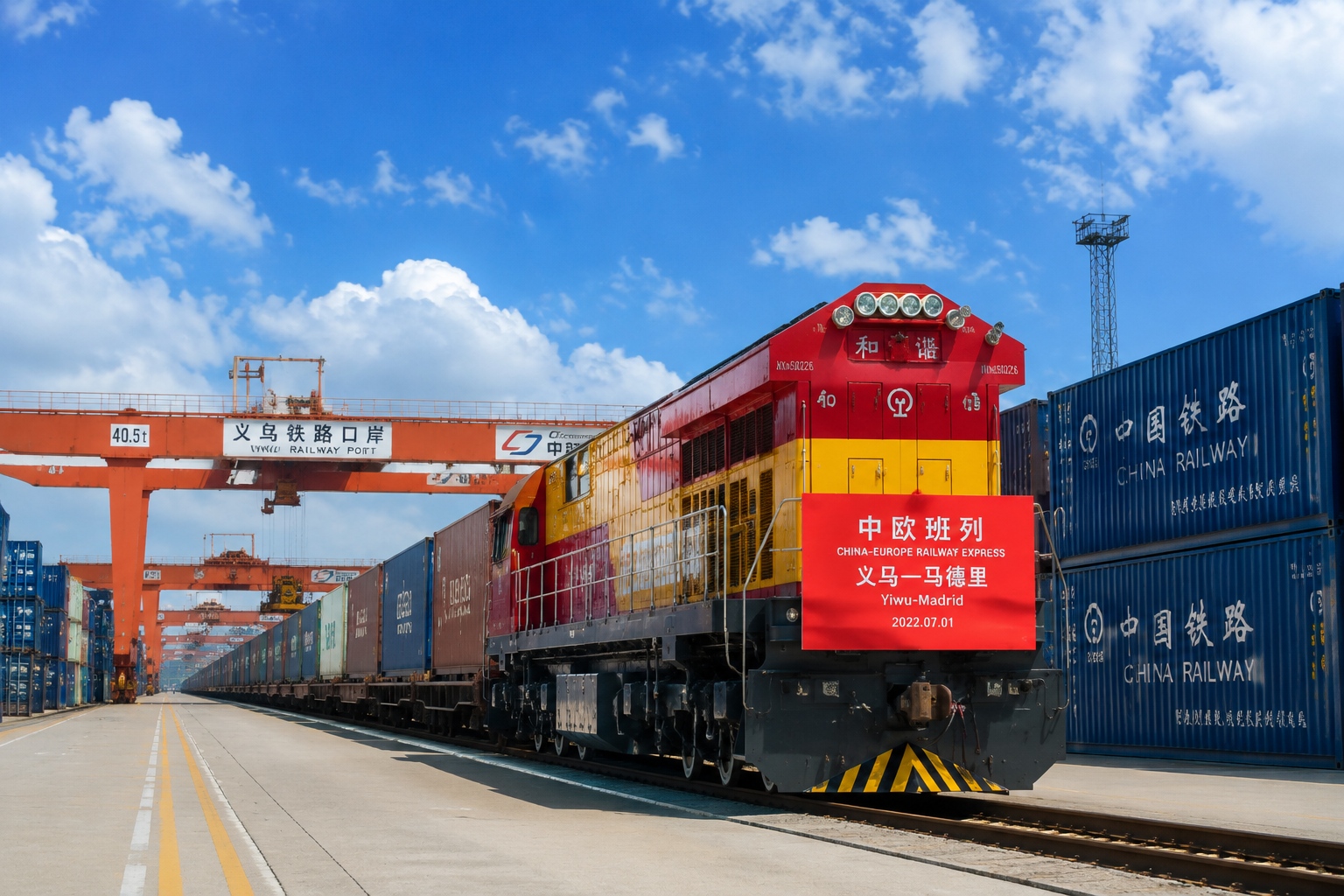
One visible group is from the post-Soviet space. Russian, Ukrainian, Kazakh, and other traders often specialize in consumer goods that were once manufactured at home but now come from China. The nickname “From Yiwu to Moscow” isn’t just an expression. On a railway line stretched over 10,000 kilometers, container trains carry daily cargo between the two cities. What once took weeks by sea now takes about half that by rail.
How Business Gets Done
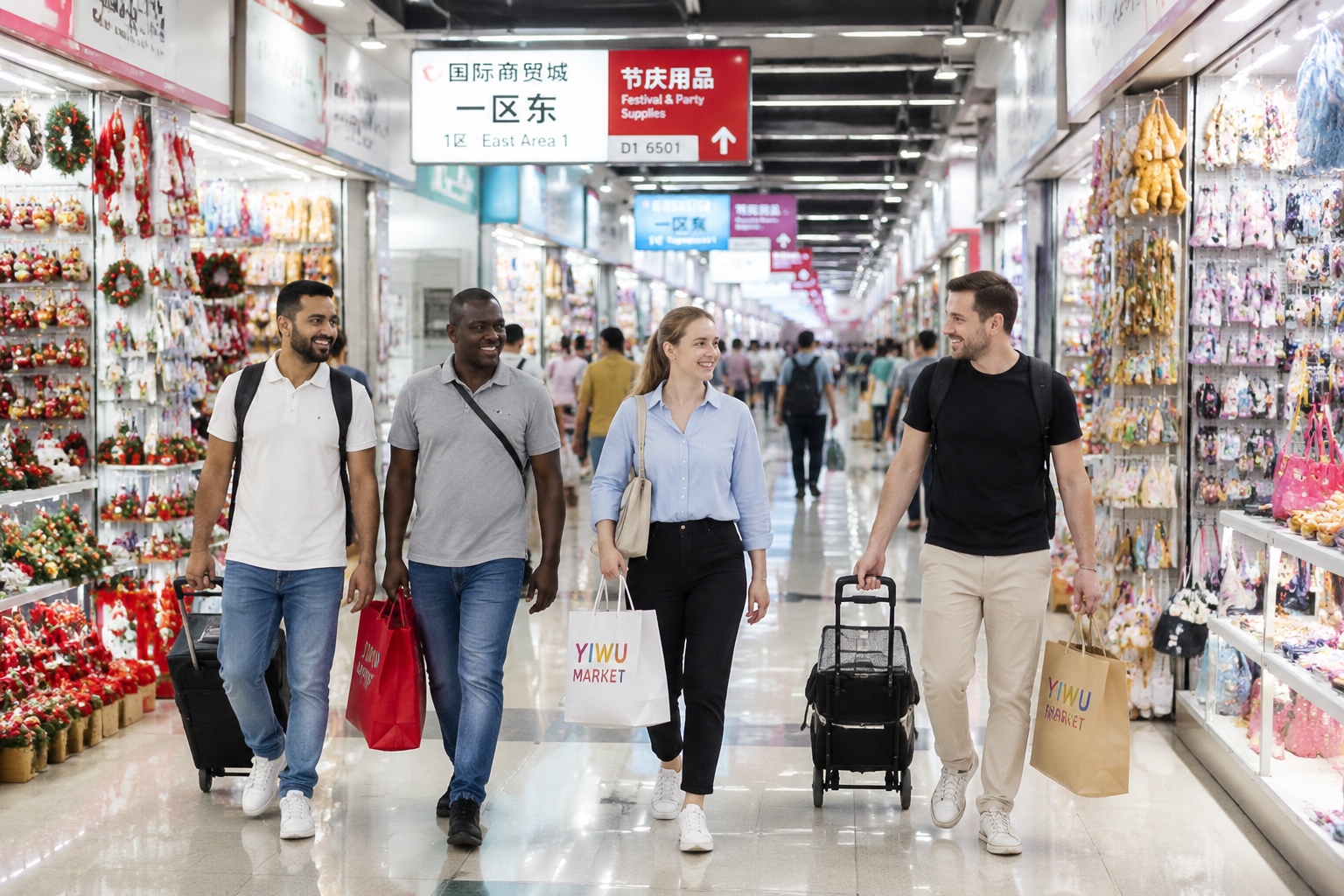
If you’re from Europe or the US, the pace and habits of trade here may surprise you. In Yiwu, transactions are often sealed with a handshake and a WeChat message. Many vendors accept payments through Chinese mobile apps, even from foreign buyers. It’s common to negotiate in a mix of simple English, Chinese words, and a calculator screen.
A local trading company might help you find a supplier, inspect the goods, and arrange shipping. But many foreigners prefer to work directly with factory owners. They learn the geography of the market as if it were their own neighborhood.
Consider Ahmed from Egypt. He came to Yiwu in 2010 with an idea — to sell festival lights in Cairo. He started by walking up and down the market’s lantern section, comparing prices and quality. Today, his small company ships regular containers to Egypt. He says the hardest part wasn’t procurement, but understanding Chinese customs and norms.
Living Like a Local
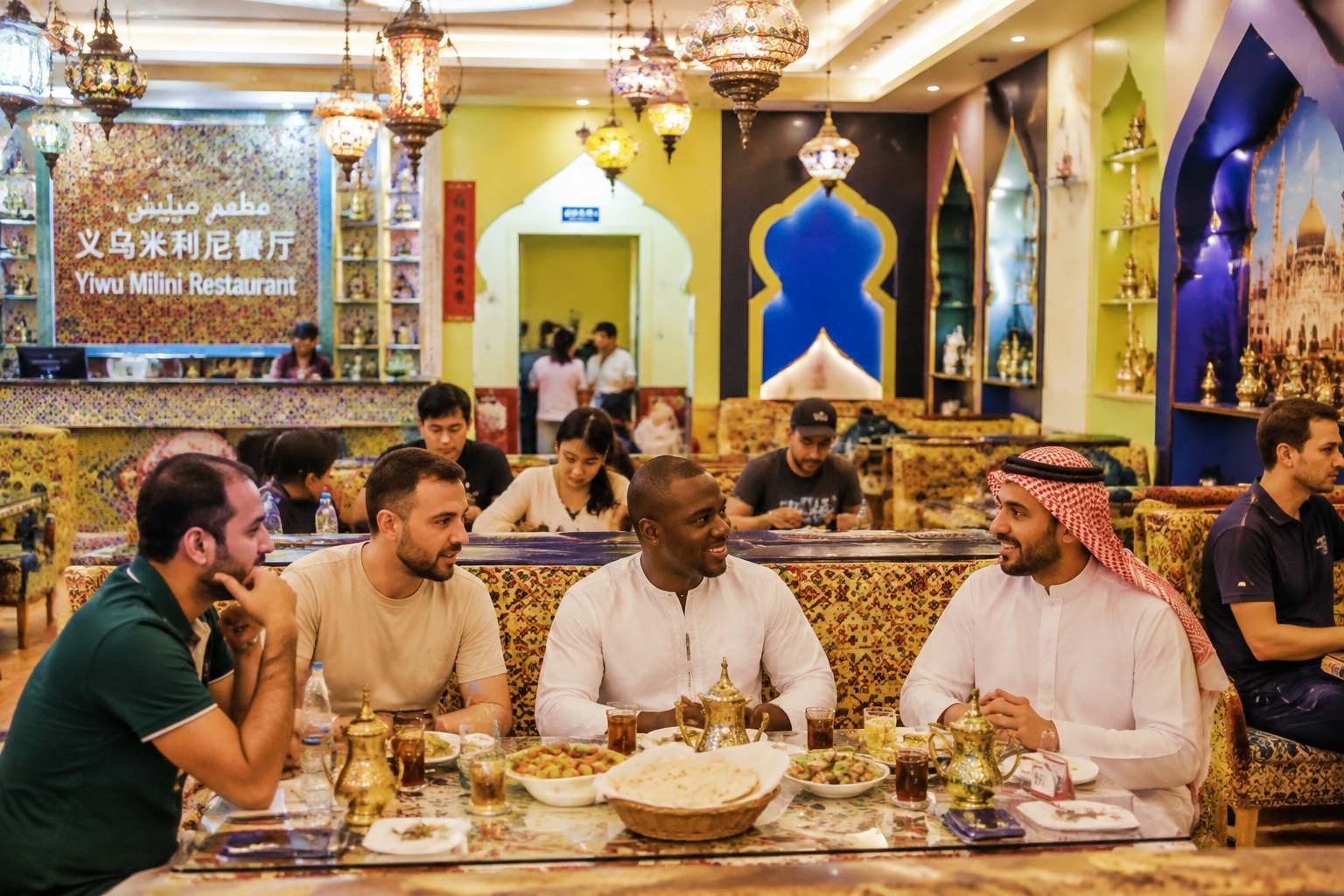
Life in Yiwu is convenient for a city of its size, but for foreigners it has its own learning curve. The food is a delicious struggle if you’re not used to Sichuan pepper or stinky tofu. Finding non-Chinese groceries was once a challenge, but now there are international shops run by traders themselves. On Qihang Street, Middle Eastern restaurants and halal food vendors line the sidewalks, and you can hear calls to prayer at certain hours.
It takes time to get used to the rhythm of Chinese retail. Malls close at 9:30. People ride electric scooters under umbrellas in light rain. The concept of ‘face’ matters in business. As one seller explained, ‘If I give you a price, I don’t expect you to haggle to the last cent. It feels like you don’t trust me.’ Such cultural norms are not in any guidebook, but they are essential.
Foreigners also find that China’s digital ecosystem is different. Almost everything in Yiwu runs through WeChat: payments, scheduling, translation, even social interactions. You cannot easily open a bank account without a lot of paperwork. But once you have your phone set up, everything is remarkably fast. In many ways, it’s a glimpse into a future where cash has almost disappeared.
The Railway to Moscow
The China-Europe Railway Express has changed the game for traders. From Yiwu, a freight train can reach Moscow in about 15 days, compared to 45 days by sea. During the pandemic, when air cargo prices soared, the trains became a lifeline. The route not only carries goods, but also people and ideas. Some traders now travel by train to and from Europe, a journey that offers a strange, slow-motion glimpse of the Eurasian landmass.
For Russian importers, the rail link means more than speed. It allows them to order time-sensitive goods like seasonal fashion or electronics parts without risking months of delay. One Russian woman noted that before the direct service, she had to use shipping agents in Vladivostok. Now, she checks her cargo’s location in an app, almost like tracking a taxi.
Realities and Frictions
Not everything is smooth. Language barriers still trip people up. Local police require foreign residents to register within 24 hours of arrival. Visa rules have tightened over the years, and not every trader can get a multi-year residence permit. Competition is fierce, and margins are thin. Some foreigners come, fail, and leave.
Yet the overall picture is one of remarkable integration. In Yiwu, you can meet a shopkeeper who greets you in three languages, a Catholic Lebanese family celebrating Chinese New Year, and a group of Nigerian musicians performing at a local café. The city is not a perfect multicultural utopia, but it is a working model of how small-scale global trade brings people together.
What’s Next?
Yiwu’s story is part of China’s larger transformation. As the country shifts from manufacturing goods to creating them, the small-commodity capital is also upgrading. There are more design studios, more Chinese brands, and more collaborations between foreign buyers and local suppliers. The next time you buy a ‘Made in PRC’ trinket, remember that behind it may stand a trader who started in a foreign land, in a market that never sleeps, with a dream as common as it is extraordinary: to make a living by connecting worlds.