

Meet the Camel Toy Seller
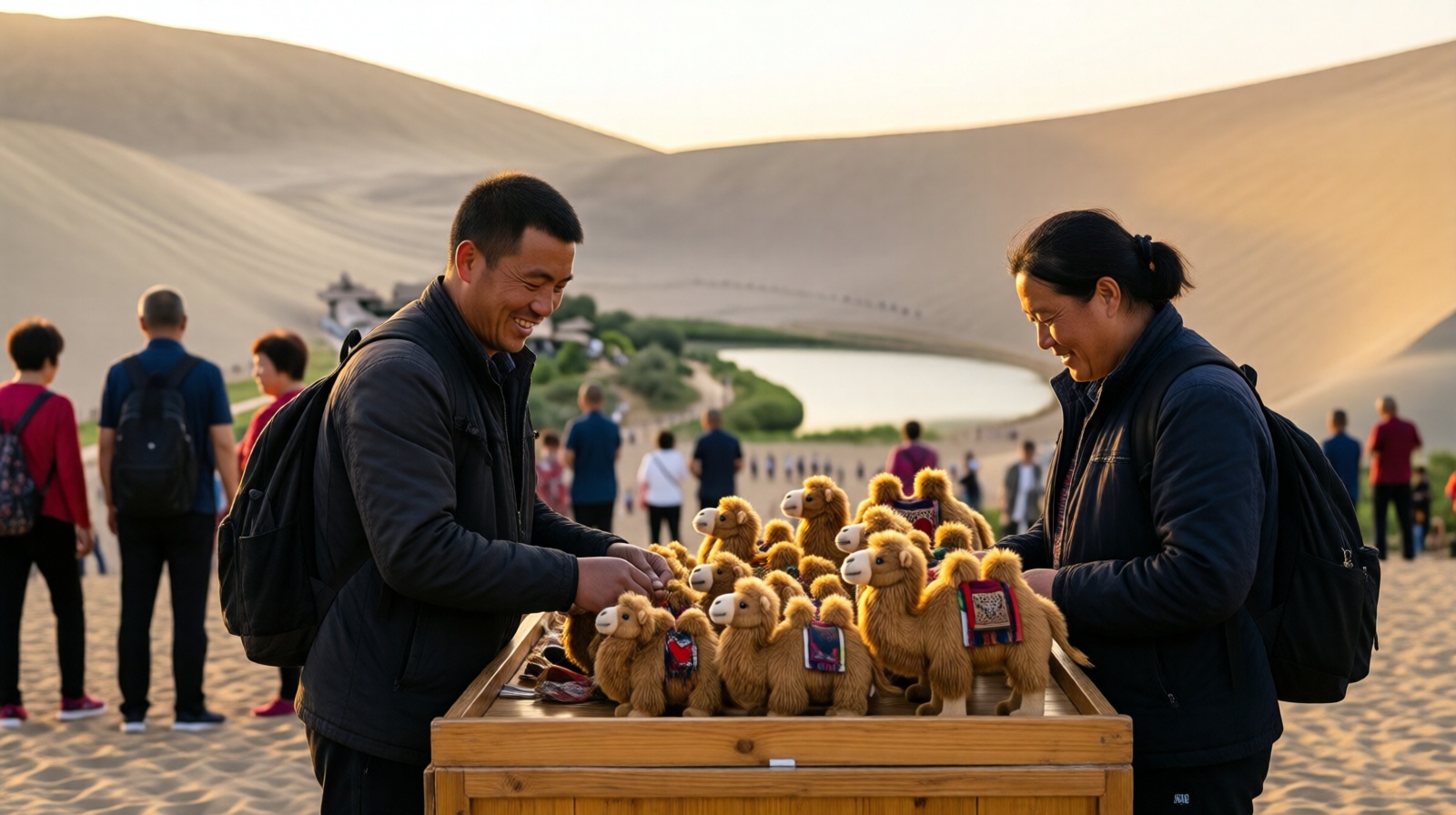
On a warm September morning, Li Ming is setting up his small wooden stand at the edge of the painted desert. He stacks plush camels in neat rows, adjusting their tiny bells so they catch the sunlight. Within an hour, a family from Shanghai stops by and buys three. Li Ming smiles, then turns to greet a group of tourists from France who are more interested in the miniature sand bottles.
Li Ming has been selling souvenirs here for six years. In peak season, he can pull in 6,000 to 8,000 yuan a month – nearly twice what he earned as a hotel receptionist. “The street is our office,” he says. “Tourists come with excitement, and it’s my job to send them home with a piece of that feeling.”
Dunhuang’s Tourism Boom: Beyond the Mogao Caves
Dunhuang sits at the edge of the Gobi Desert, far from any major Chinese city. For decades, its fortune depended on the Mogao Caves, a UNESCO World Heritage site with stunning Buddhist murals. But today, tourism has spread far beyond the caves. The Singing Sand Dunes and Crescent Lake – the iconic oasis shaped like a half-moon – draw millions of travelers each year.
According to local tourism authorities, Dunhuang received over 20 million visitors in 2019, a number that has grown steadily since. Even during the pandemic, domestic travelers kept the industry alive. The city has transformed from a sleepy stopover into a year-round destination, with spring and autumn now just as busy as summer.
A Night in the Desert: The Camp Owner’s Story
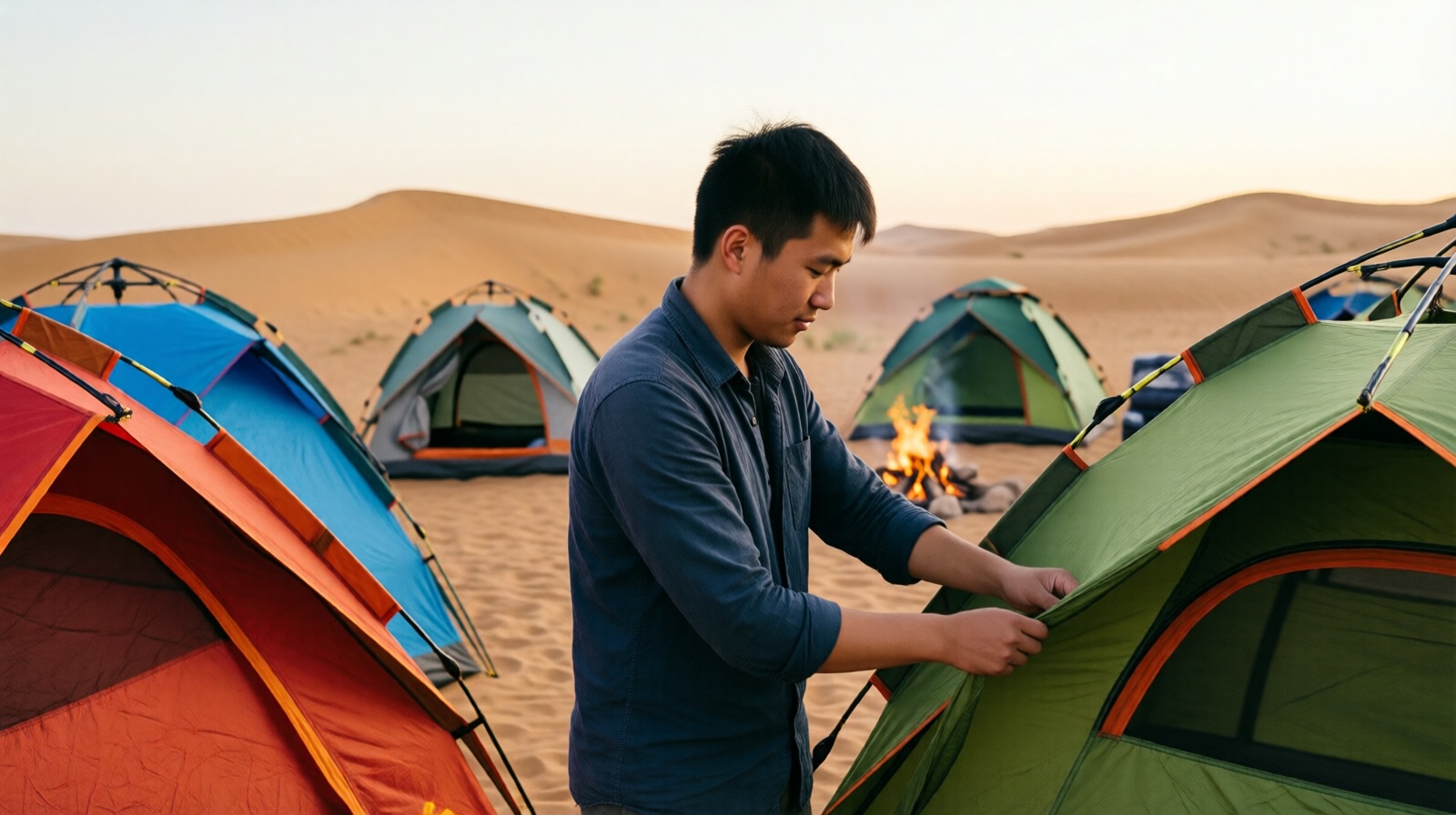
Zhang Hao, 34, runs a desert camp on the outskirts of town. He was a truck driver a decade ago, but saw how his cousin made money renting tents to backpackers. Now his camp offers 50 tents, a bonfire, camel rides at sunset, and a simple dinner of local noodles and roasted lamb. During busy weekends, he turns away groups almost every night.
“My customers aren’t just Chinese young people. I’ve hosted families from Germany, South Korea, and even Brazil,” Zhang says. He invests heavily in safety – guiding lights, first-aid kits, and a strict rule about respecting the dunes. “The desert can be dangerous, but it’s also incredibly generous to those who treat it well.”
How Tourism Money Flows into the Local Economy
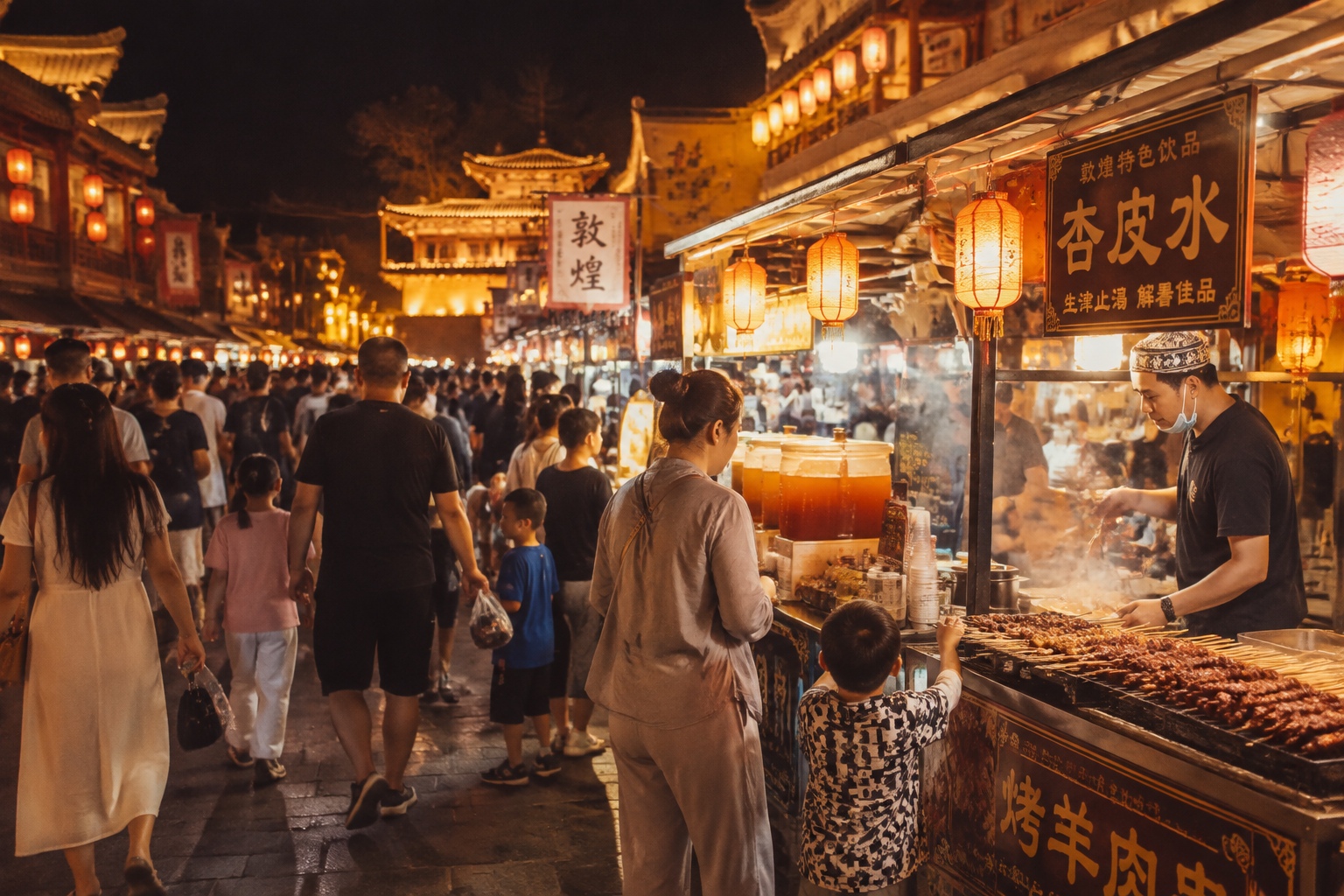
The tourism boom has created a web of small businesses beyond the camps and souvenir stands. Women in nearby villages make dried apricots and Lanzhou-style sour plum drinks for sale at roadside stalls. Farmers now grow watermelons and grapes for the seasonal rush. Young designers in Dunhuang have launched studios that produce silk scarves and hand-painted postcards inspired by Mogao murals.
One local pastry shop, owned by a retired teacher, started selling “Mogao Cave cookies” – small cookies shaped like lotus buds and topped with edible gold dust. For six weeks every autumn, she can earn more than her old monthly salary.
The Challenges Behind the Glow
Tourism is not all smooth sand. The region faces serious water shortages, so hotels and camps must carefully manage their consumption. The fragile desert ecosystem requires strict limits on how close you can ride a camel to the dunes. And for vendors like Li Ming, competition is fierce. “Every spring, new stands appear. You have to keep innovating – better designs, better prices, better stories.”
The pandemic also reminded everyone how fragile the industry can be. Even now, business dips during sandstorms and holidays that fall awkwardly. But local officials have tried to smooth the curve by promoting shoulder-season travel and offering tax breaks to small operators.
Tips for Visiting Dunhuang as a Conscious Traveler
If you plan to visit, respect the place that feeds so many. Buy directly from local vendors rather than resort stores. Ask about the origin of handmade goods. Carry a refillable water bottle – every bottle of plastic you save matters in the desert. And when you meet Li Ming, negotiate gently. He’ll remember you with a smile.
For desert camps, book at least two days ahead during holidays. And never stray beyond the marked paths; the dunes shift faster than you’d think.
Closing: The Street That Teaches Us About Change
Behind the crowded boardwalk and the camel parades is a human story of adaptation. Li Ming used to sleep in a cramped room near the dunes. He now rents a small apartment in town and sends his daughter to piano lessons. Zhang Hao plans to open a second camp with a solar-powered shower system next year.
When you stand at Crescent Lake and watch the sun set, remember that the people selling you bottles of sand are part of a living economy. They are not just vendors; they are the heartbeat of a desert that has learned to offer its beauty, one souvenir and one campfire at a time.
Start the discussion at forum.chinacomes.com