

Morning Tea: The City Wakes Up Slowly
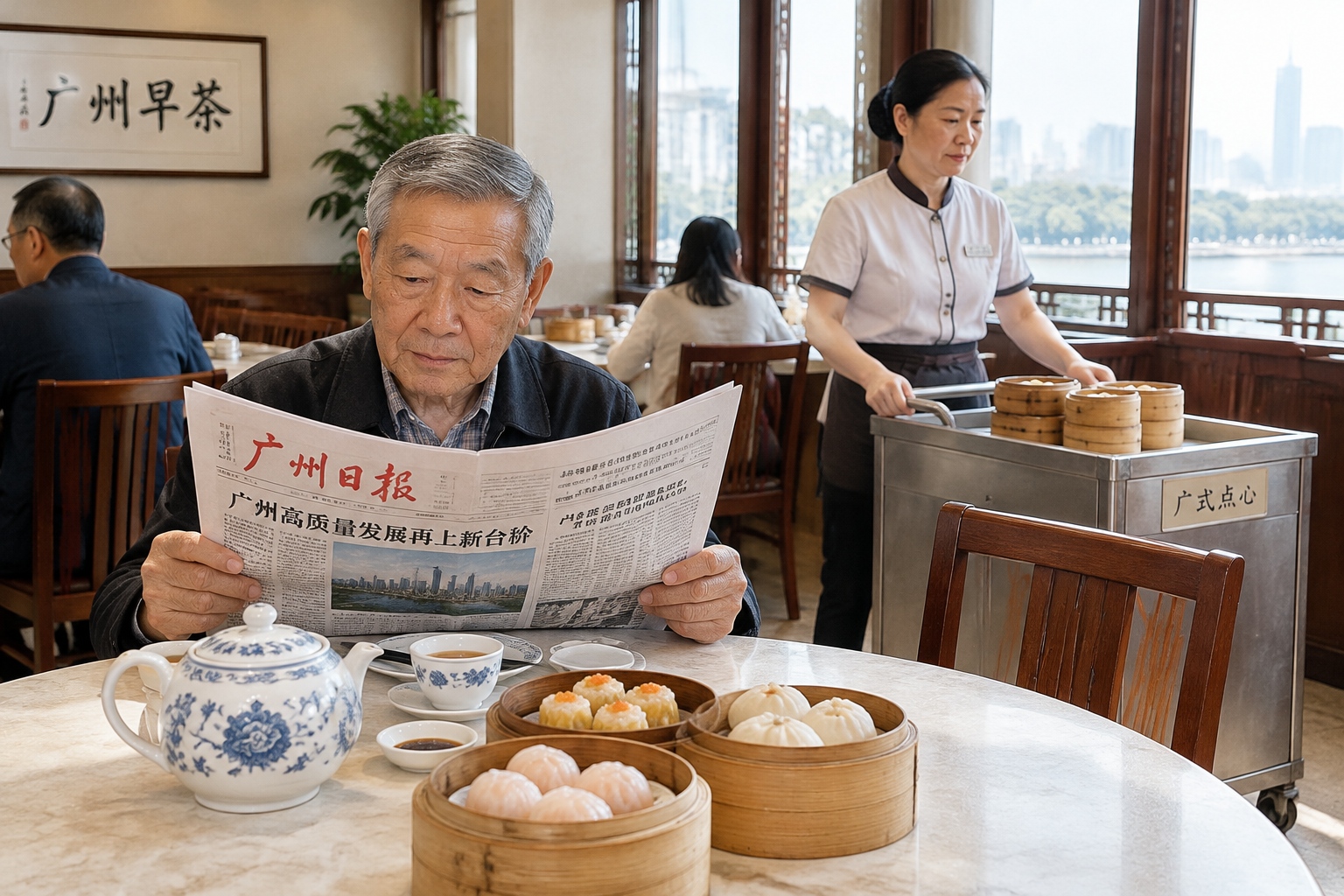
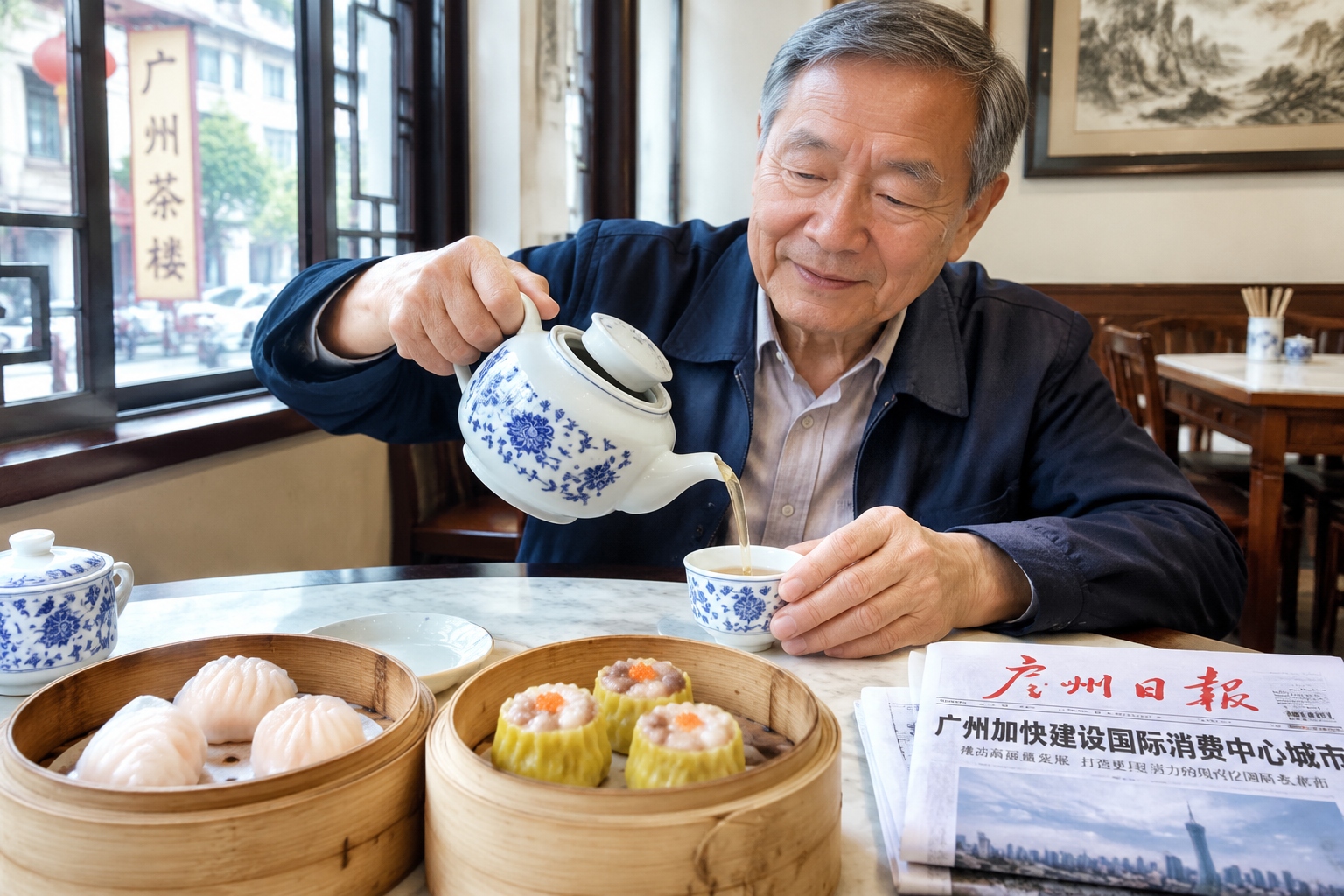
At 8:15 on a Tuesday morning, the third floor of a teahouse in Liwan District is already loud. Not with conversation, but with the clatter of porcelain lids and the squeak of stainless steel carts. A man in a faded polo shirt sits alone at a round table, a folded Yangcheng Evening News beside his teacup. He pours himself a second pot of pu’er, lifts the lid of the teapot, and leaves it slightly askew—a silent signal for a refill. A waitress in a black apron pushes a cart past him, calling out the contents in a quick Cantonese rhythm: har gow, siu mai, cheung fun.
This is yum cha—morning tea. For many older Guangzhou residents, it is not a meal but a daily appointment with the city. They arrive before 8 a.m., order two dishes and a pot of tea—known as yum yi zhong yi, or “one cup, two pieces”—and stay until the lunch menu appears. The food is simple: steamed shrimp dumplings with translucent skins, pork and shrimp siu mai topped with a single pea, rice noodle rolls slick with soy sauce. A breakfast for one costs around 30 to 50 yuan (about $4 to $7).
The pace is the point. Nobody hurries. The cart ladies know the regulars by their tea order. A retired teacher named Uncle Chen tells me he has been coming to the same teahouse for 17 years. He reads the paper, chats with the table next to him, and leaves around 11:30. “It’s cheaper than a psychologist,” he says, and laughs.
Urban Villages: Where the City Breathes Sideways
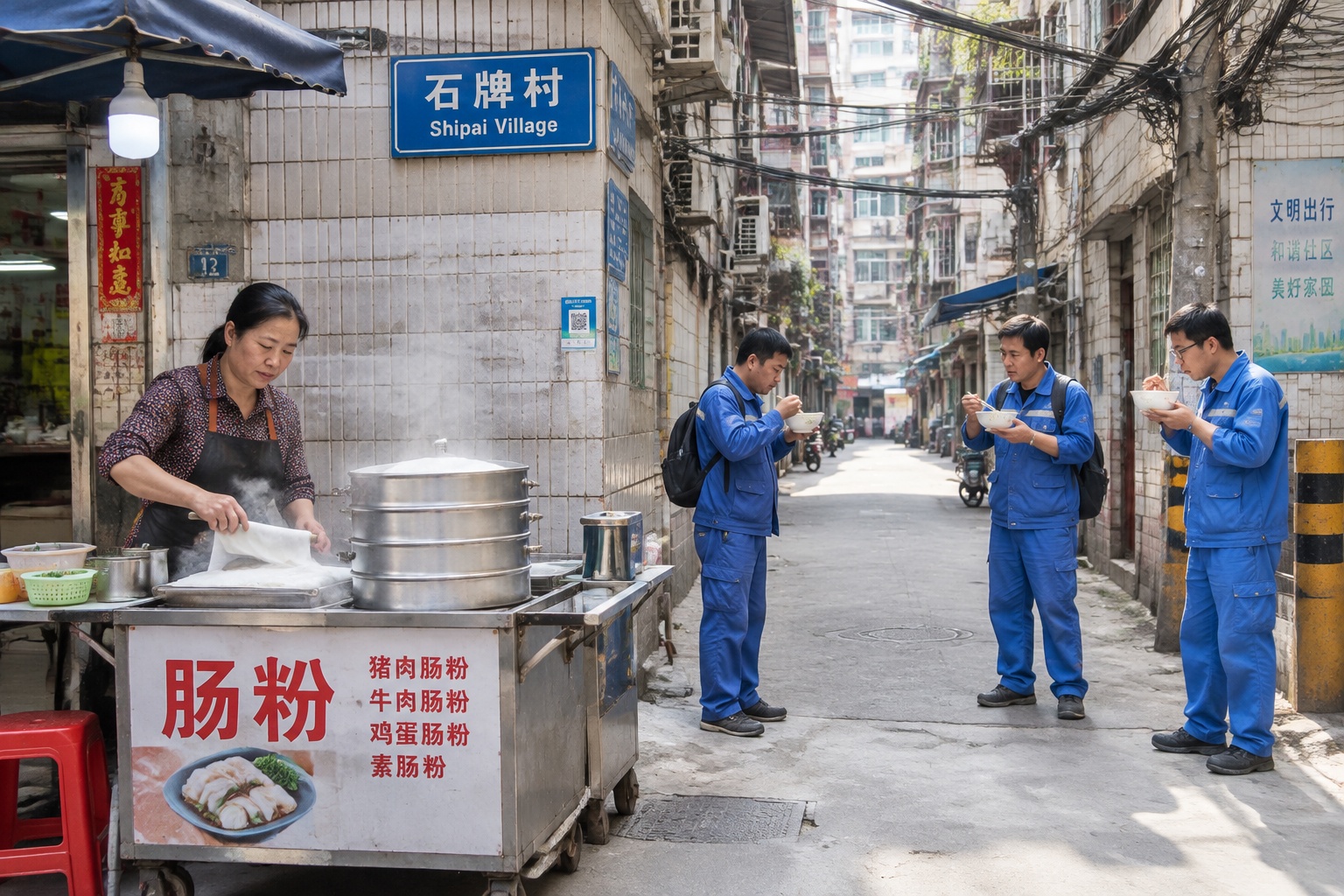
Two kilometers north of that teahouse, the streets narrow. This is Shipai Village, one of Guangzhou’s many chengzhongcun—urban villages. These are old rural settlements that the city grew around. Farmers knocked down their ancestral homes and built five- or six-story concrete blocks, packing them so tightly that neighbors can shake hands across the alley. Locals call them “handshake buildings.”
In the narrow lanes, daylight arrives late. Electrical wires crisscross overhead like a messy web. Air conditioners drip onto the pavement. The smell of sewage mixes with the sharp aroma of laundry detergent and frying oil. But rent here is cheap: a single room with a bathroom goes for 600 to 900 yuan a month, compared to 3,000 yuan for a similar space in a modern apartment complex. For a young delivery worker or a recent graduate, this is the only way to live near the city center.
At 7 a.m., a woman named Xiao Liu pushes her rice noodle cart to the corner of a lane. She steams cheung fun—rice noodle rolls—on a cloth stretched over a metal drum. A plain roll costs 5 yuan. Add egg and pork, 7 yuan. Her customers are mostly men in blue uniforms, construction workers and couriers, who eat standing up, holding the warm plastic container in one hand and a phone in the other. Xiao Liu has been here for six years. She says the village is quiet during the day and loud at night, when the young renters come home and the barbecue stalls open.
Herbal Tea: Bitter Medicine for a Humid Climate
Guangzhou sits in the Pearl River Delta, where summer humidity hovers above 80 percent and temperatures often exceed 35°C (95°F). Locals call this shi re—damp heat. It makes you sluggish, thirsty, and prone to sore throats. The traditional Cantonese response is liang cha—herbal tea.
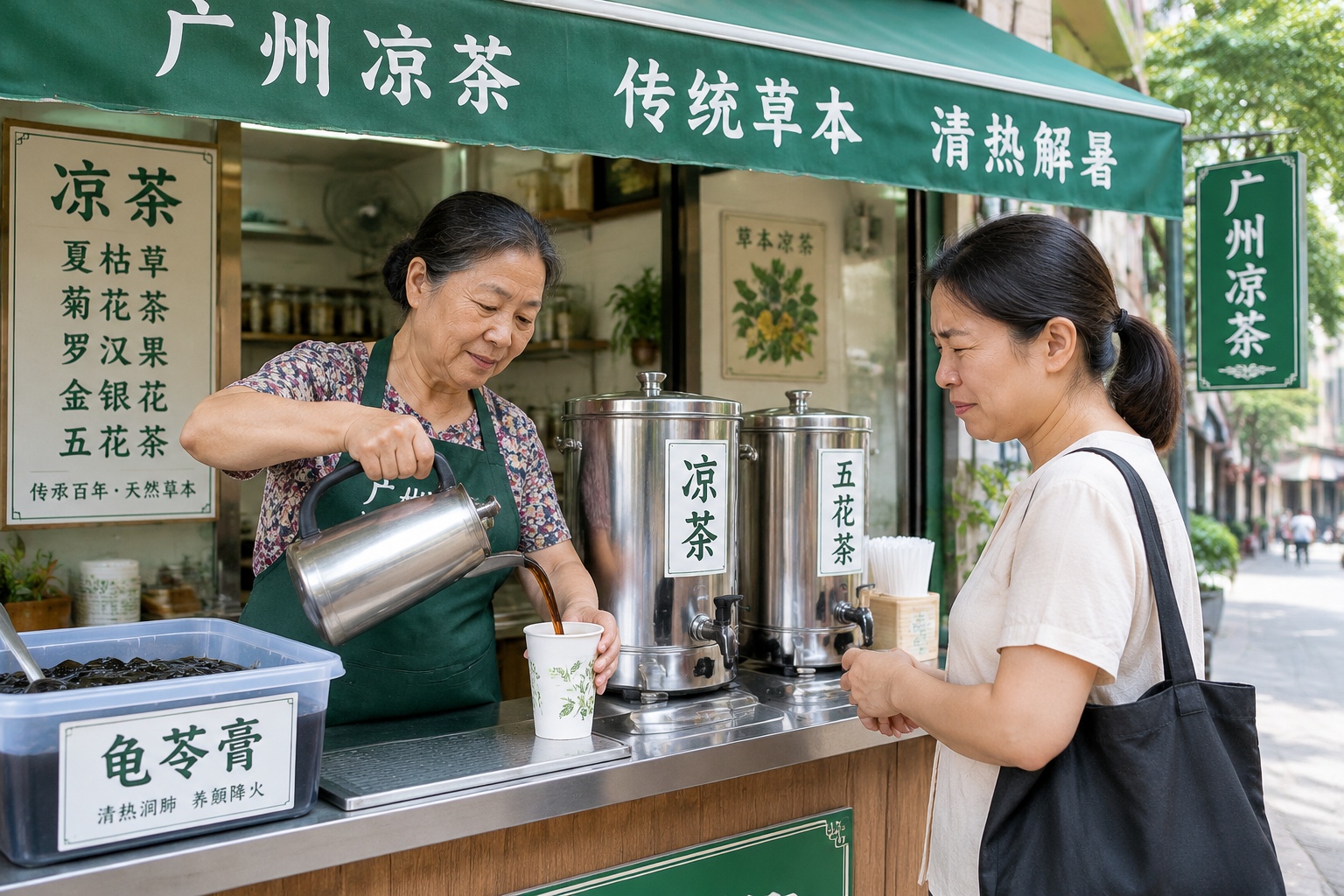
On a side street off Zhongshan Road, a small shop with a green awning sells nothing but herbal tea. No chairs, no decorations. Just a row of stainless steel urns and a stack of paper cups. A woman in her 60s, Auntie Fang, runs it. She pours a dark, almost black liquid from one urn. It smells like earth and dried roots. The taste is aggressively bitter. I wince. She smiles and hands me a piece of preserved plum. “Drink it fast,” she says. “It’s good for your liver.”
The tea is made from a mix of herbs: honeysuckle, chrysanthemum, selfheal, and others that change with the season. A cup costs 3 to 5 yuan. Nearby, a plastic tub of guiling gao—turtle jelly, though most modern versions contain no turtle—sits in a cooler. It’s a black, gelatinous dessert served with honey or syrup. It tastes herbal and slightly sweet. Locals believe it cools the body and clears the skin.
Herbal tea shops are not trendy. They are not designed for Instagram. But they persist because the climate demands it. In a city where air conditioning is a luxury for some and a necessity for all, a 4-yuan cup of bitter tea is a small, affordable act of self-care.
Night Markets: Wok Hei and Sweet Soup
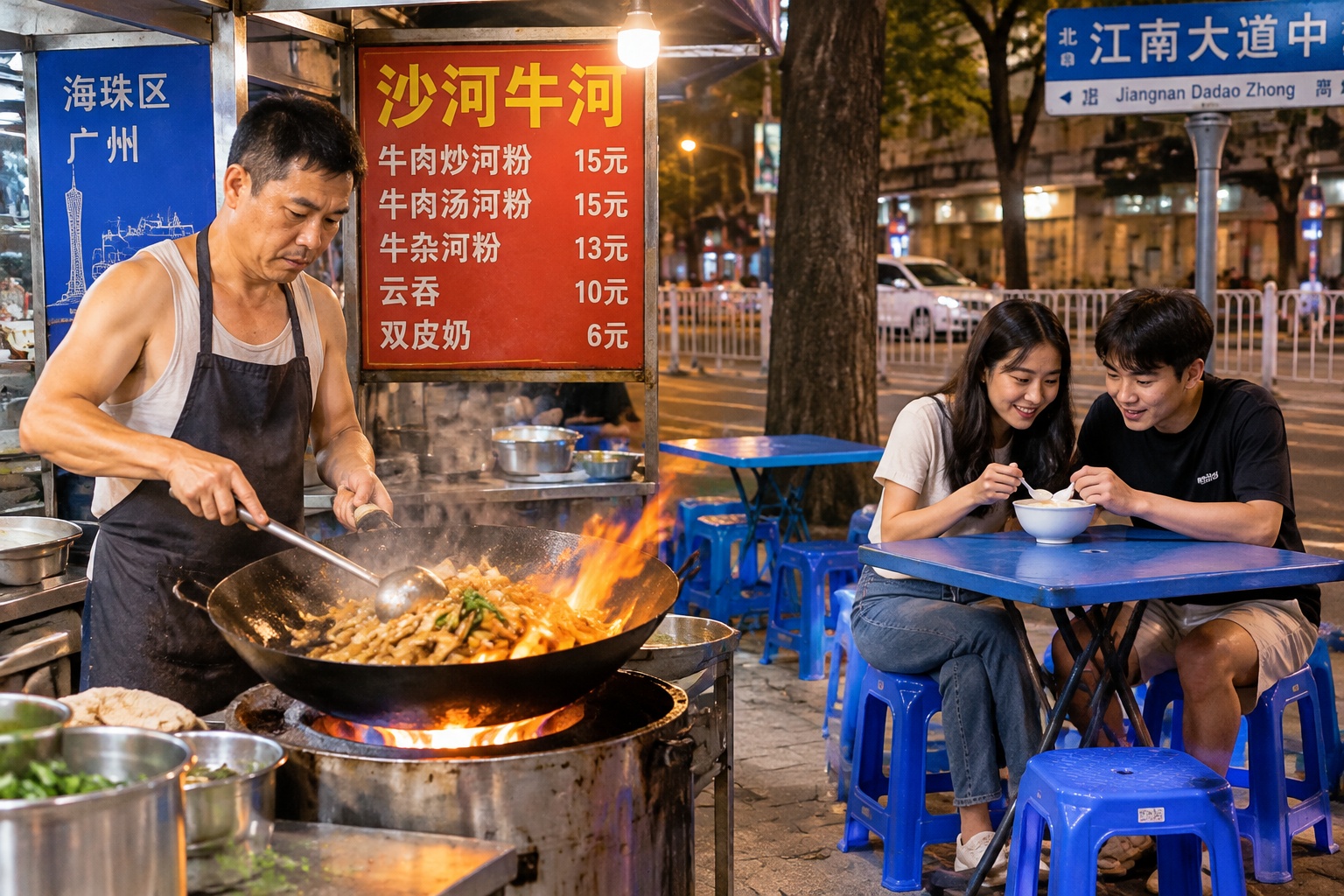
By 10 p.m., the heat has finally broken. On Baohan Straight Street in Haizhu District, plastic tables and stools spill onto the pavement. This is da pai dong—open-air food stalls. A man in a tank top stands behind a roaring wok, flipping rice noodles with beef and bean sprouts. The flame licks the side of the wok. The smell of charred soy sauce—wok hei, the breath of the wok—fills the air. A plate of beef hor fun costs 18 yuan.
Next door, a dessert shop sells shuang pi nai—double-skin milk. It’s a simple custard made from water buffalo milk, egg whites, and sugar, steamed until a thin skin forms on top. A bowl costs 12 yuan. Young couples share one, spooning carefully. Others order hong dou sha—red bean soup—or zhi ma hu—black sesame paste. The shop stays open until 1 a.m.
This is the other side of Guangzhou’s food culture. Morning tea is for the retired. Late-night stalls are for everyone else: taxi drivers, nurses coming off shift, students cramming for exams, and programmers from nearby tech parks. The city is not a party town. It doesn’t have the flash of Shanghai or the nightlife of Bangkok. But it feeds people well, at all hours, for prices that don’t hurt.
The Logic of the City: Pragmatic and Generous
What connects a teahouse, a handshake building, a bitter tea shop, and a late-night wok? A certain approach to urban life that Guangzhou has perfected over centuries. It is pragmatic. It values function over form. It is also remarkably inclusive. You can be a retired teacher, a delivery worker, a young entrepreneur, or a migrant from another province. The city doesn’t ask too many questions. It offers you a place to sit, a bowl of rice noodles, and a cup of tea.
The food reflects the climate and the economy. Morning tea is slow because the heat demands slowness. Urban villages are dense because land is expensive and newcomers need cheap housing. Herbal tea is bitter because the humidity is real. Night stalls are cheap because the city never fully sleeps.
For a visitor, the easiest way to understand Guangzhou is not to visit the Canton Tower or the opera house. It is to sit in a teahouse for two hours, walk through a village alley at dusk, drink a cup of something bitter, and then eat a plate of noodles at midnight. The city will explain itself.
Start the discussion at forum.chinacomes.com