

A Plate of Mountain Cloth
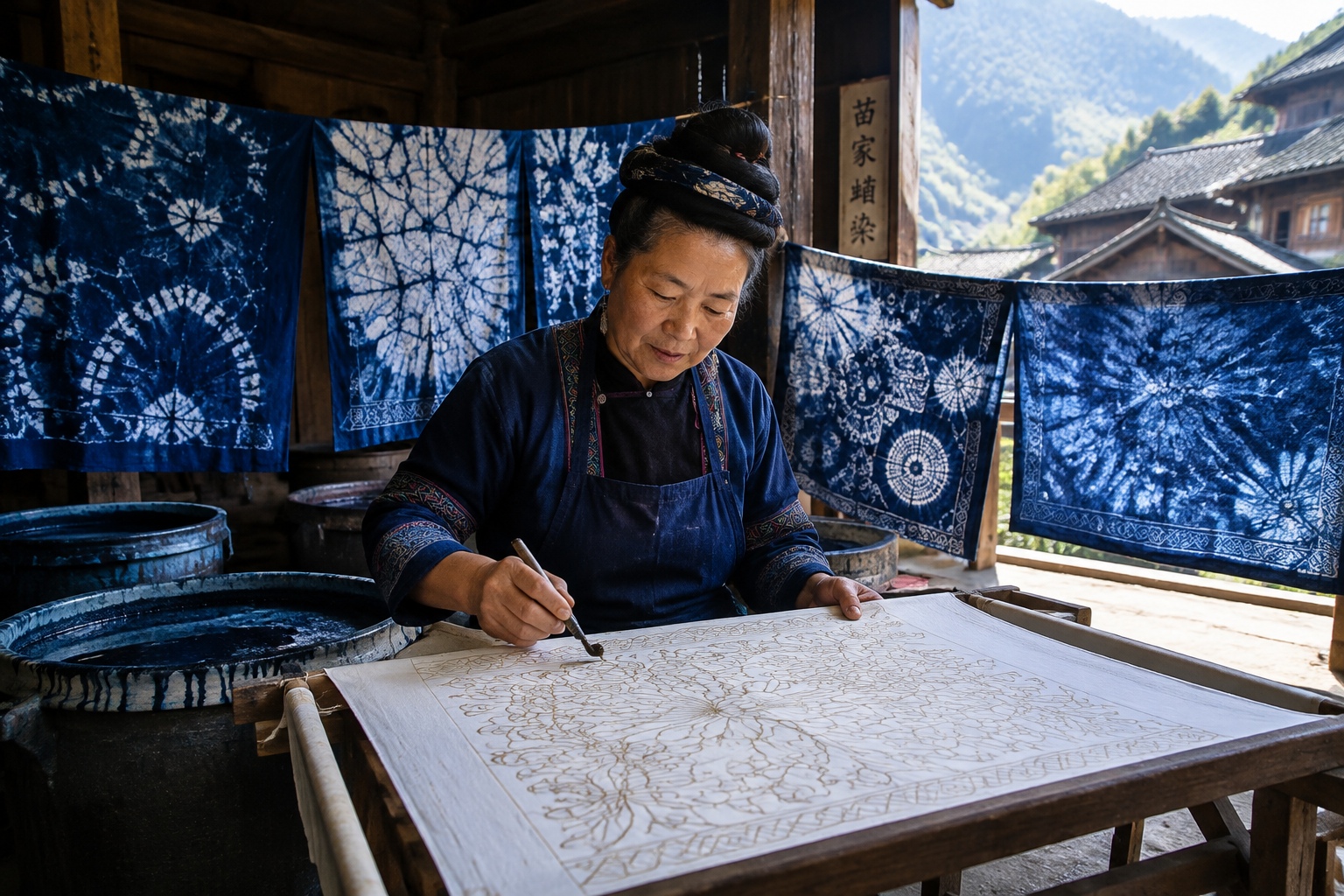
On a windy morning in Danzhai, a county in Guizhou Province, I watched an artisan named Yang Mei pull a piece of white cotton out of a vat of deep blue liquid. The cloth was ordinary, but when she rinsed it in a stream of clear water, a pattern emerged — spirals, birds, and leaves, all in white on a blue background. The most striking part? Dozens of fine, jagged lines that looked like broken ice fragments.
‘This is what we call bing wen,’ she explained, rubbing the fabric. ‘No one draws these lines. They come from the wax.’
In the West, batik is often associated with Indonesia. But in southwestern China, among the Miao, Buyi, and Ge people of Guizhou, wax-resist dyeing has been practiced for over a thousand years. The method creates a distinctive texture: the fabric is painted with melted wax, dyed in plant-based indigo, and then boiled to remove the wax. What remains is a blue cloth with white patterns — and those unexpected, beautiful cracks that have become a signature of Guizhou batik.
What Is Wax-Resist Dyeing?
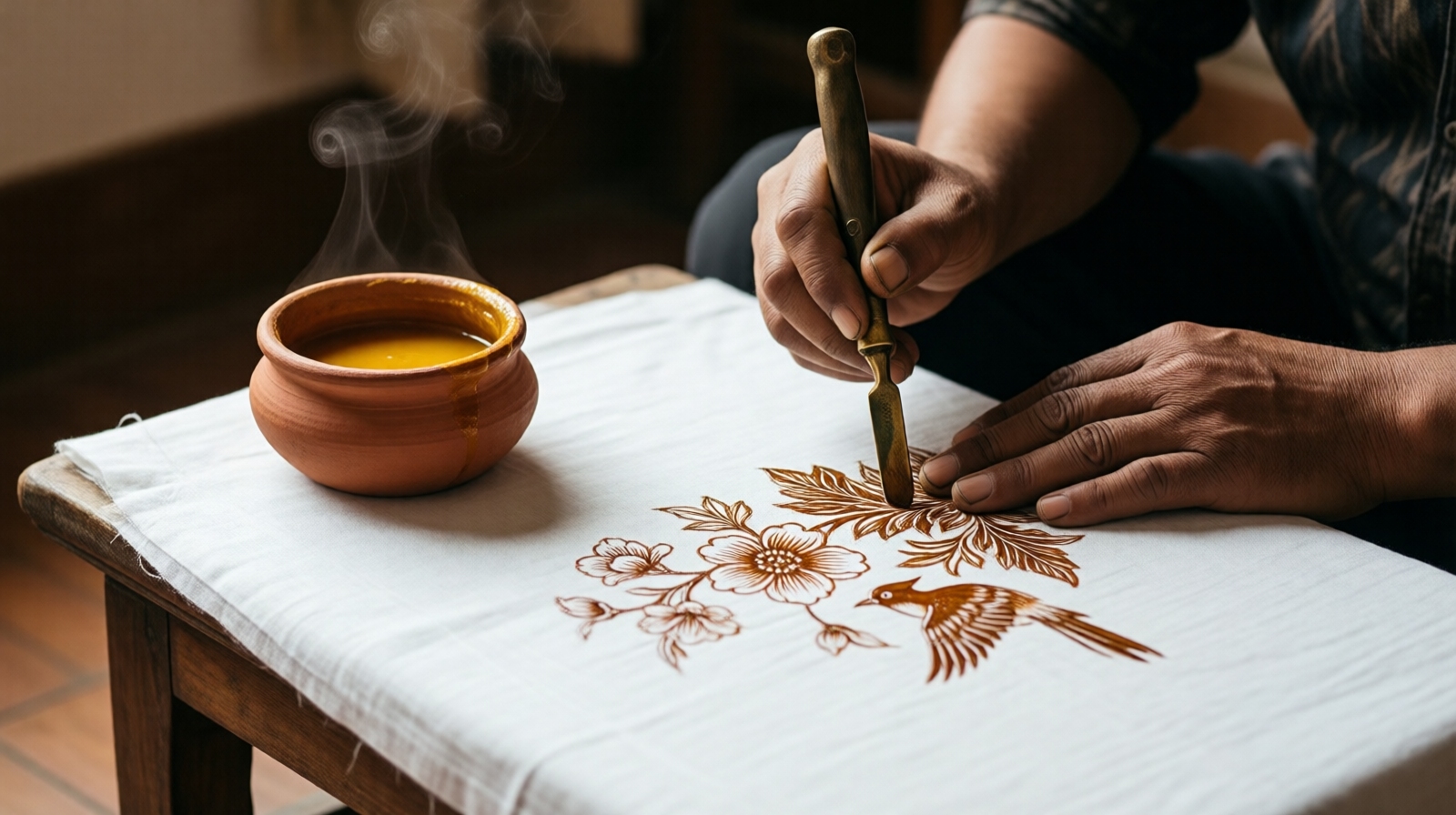
Batik is a ‘resist’ technique. The idea is simple: wax is water-repellent. When you cover parts of the cloth with wax, those parts keep their original color. Then you dye the whole piece. The uncovered areas absorb the dye; the waxed areas stay white.
In Guizhou, artisans traditionally use beeswax or a blend of beeswax and pine resin. They heat it in a small pot until it turns liquid, then use a special bronze knife with a narrow spout to draw patterns on the cloth. Because the wax cools quickly, the artist has to work fast. Each stroke is deliberate. It’s a bit like writing with a ballpoint pen that freezes as soon as it leaves the tip.
The Plant Dye: Indigo
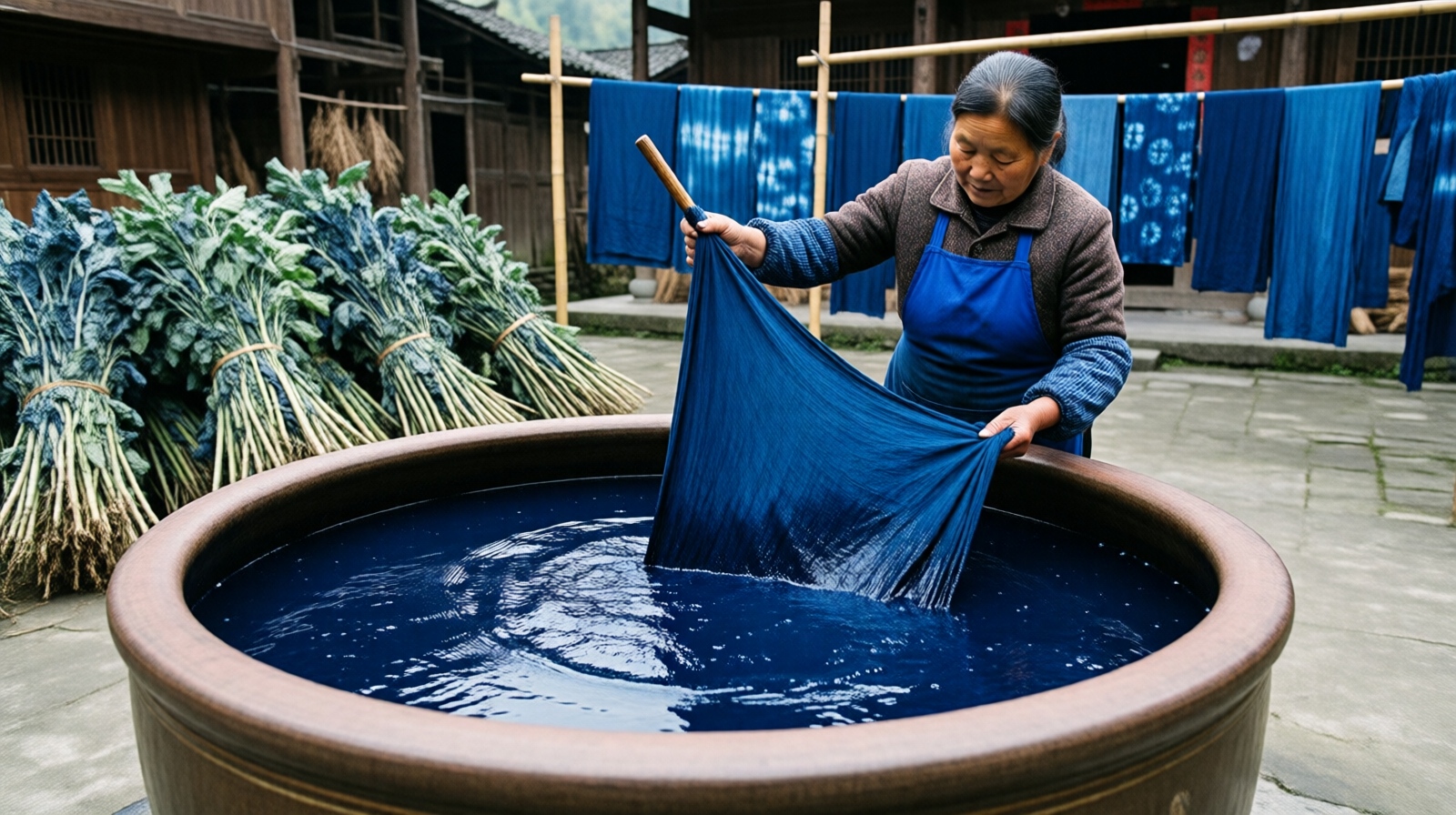
The blue in Guizhou batik nearly always comes from indigo — not the synthetic kind, but the real plant. The most common source is Strobilanthes cusia, a leafy plant known locally as ban lan gen. In the mountains, farmers grow it in small terraced fields. After harvesting, the leaves are soaked in water and fermented for days. The liquid turns a dark green, and after adding lime, a blue precipitate forms. That sediment is dried and turned into a paste — the dye.
Indigo is tricky because it is not soluble in water. To make it work, the dye must be reduced, meaning oxygen is removed. Artisans keep the vat at a specific temperature and add natural reducing agents, such as a mixture of rice wine and ash water, or even a bit of honey. The chemical process is ancient: the insoluble indigo transforms into ‘leucoindigo,’ which stays dissolved in the alkaline solution. When the fabric is dipped in, then lifted and exposed to air, the oxygen causes it to oxidize back into the deep blue pigment, locked inside the fibers.
This is why indigo dyeing is a ritual of patience. The cloth is dipped multiple times, each time a little darker. Yang Mei dipped her cloth seven times that morning. ‘Every dip is a risk,’ she said, laughing. ‘If you pull it out too early, the color is too light. Too late, and the wax might crack too much.’
How the Cracked Ice Forms
So where do the cracks come from? The answer is movement — but controlled through temperature and pressure.
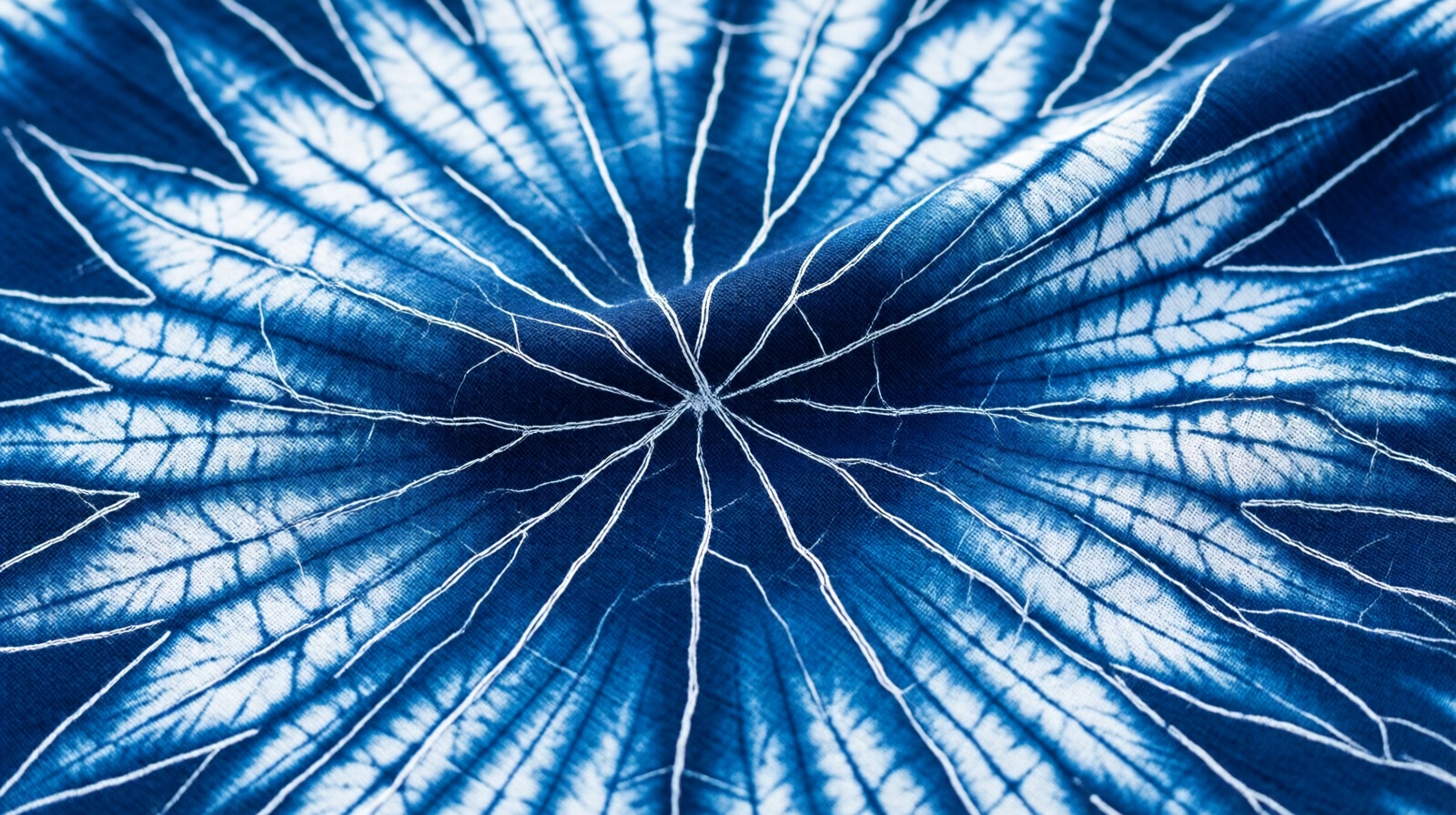
After the wax is applied and cooled, it becomes hard and brittle. But the cloth remains flexible. When an artisan folds, crumples, or stretches the fabric — often intentionally before dyeing — the brittle wax breaks. The cracks vary in size and direction. Many are microscopic; some are as wide as a hair. When the cloth goes into the indigo vat, the dye seeps into those cracks, creating the fine lines.
The effect is not random. An experienced batik artist can control the size of the cracks by adjusting temperature and handling:
- Heat and humidity: If the workshop is warm and damp, the wax becomes softer and less prone to large cracks. On dry, cold days, the wax snaps easily, producing long, dramatic lines.
- The amount of wax: A thick layer of wax cracks less readily but gives bolder lines. A thin layer creates tiny, web-like veins.
- Folding technique: Some artisans fold the cloth into pleats and press it, creating parallel crack lines. Others crumple it in a ball for a spiderweb effect. The choice depends on the design.
In the old days, the cracks were seen as imperfections. Later, generations learned to embrace them as an enhancement. ‘Cracked ice is the soul of wax dyeing,’ says Liu Yong, a batik master in Anshun. ‘Each piece is unique because you can never repeat the exact same cracks. It’s like a fingerprint of the moment.’
From the Mountains to the City
Guizhou batik is no longer just a craft for villagers. In the past decade, it has found its way into fashion, interior design, and contemporary art. Young designers in Shanghai and Beijing source hand-dyed cloth from Guizhou cooperatives. Dozens of workshops have opened in provincial towns, offering two-hour classes for travelers.
Back in Danzhai, a so-called ‘Intangible Cultural Heritage Town’ has turned the village into a living museum. Every weekend, tourists crowd around the artisan stalls. But the resident craftspeople are also adapting. Some now dye T-shirts and sneakers, while others experiment with naturally colored cotton and new plant materials, such as walnut bark and Chinese gallnut.
‘We used to make batik only for festivals and funerals,’ Yang Mei told me as she folded a finished piece. ‘Now, it’s a way to bring money home. My son’s school fees come from this cloth.’ Her phone buzzed — an order from a boutique in Shanghai. ‘They want the cracks,’ she said with a smile. ‘They always want the cracks.’
How to See It Yourself
If you want to see Guizhou batik up close, the best places are Danzhai, Anshun, and Kaili. Most villages welcome visitors, though it helps to have a local guide or a tour that includes a workshop visit. The process is not just a spectacle; it’s a lesson in chemistry, material culture, and sustainability. Plant dyes, local wax, and human hands work together to create something that no machine can replicate.
And if you look closely at the blue-and-white cloth, you’ll see that every crack tells a story of temperature, motion, and time. That’s the real magic of Guizhou batik — nature’s accidents, harnessed by careful hands.
Start the discussion at forum.chinacomes.com