
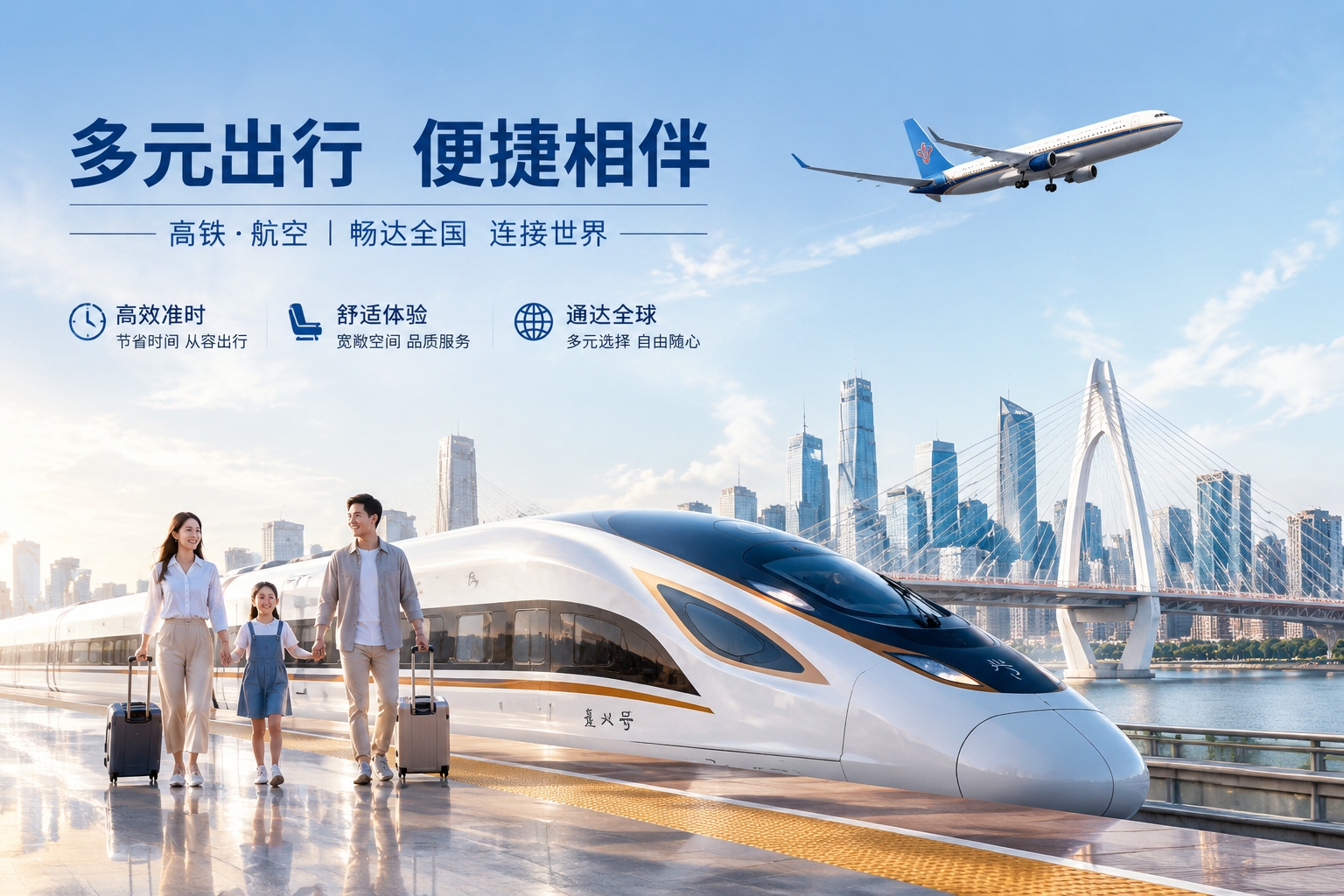

Spoiler: High-Speed Rail Often Wins
Imagine you need to travel from Shanghai to Nanjing – about 300 kilometers apart. By high-speed train, the journey takes exactly 1 hour and 1 minute from Shanghai Hongqiao to Nanjing South. By plane, the flight itself is only 50 minutes, but when you factor in the 2-hour airport arrival and security, the 40-minute transfer to the city center at both ends, and the average delay of 30 minutes, the total door-to-door time easily exceeds 4 hours. This is the reality of domestic travel in China: for trips under 800 km, high-speed rail consistently beats flying in total time, cost, and stress.
Time Comparison: The Real Clock
We compared the real-world schedules for Shanghai to Nanjing (300 km), Beijing to Shanghai (1200 km), and Guangzhou to Shenzhen (100 km). For each, we calculated total door-to-door time including travel to the station/airport, check-in boarding, actual journey, and travel to final destination. Here’s what we found:
- Shanghai to Nanjing (300 km): High-speed rail: 1 hour 45 minutes (including 30 min to station, 15 min security, 1 hour train, 0 min to city center as station is central). Flight: 3 hours 50 minutes (including 1 hour to airport, 2 hours check-in/security, 50 min flight, 1 hour from airport to city).
- Beijing to Shanghai (1200 km): High-speed rail: 4 hours 50 minutes (including 1 hour to station, 15 min security, 4.5 hours train, 20 min to city). Flight: 4 hours 30 minutes (including 1 hour to airport, 2 hours check-in, 2 hours flight, 30 min to city). Note: even at this distance, flying is only slightly faster in total time.
- Guangzhou to Shenzhen (100 km): High-speed rail: 52 minutes (including 30 min to station, 10 min security, 12 min train). Flight: Not practical – the shortest commercial flight would be over 3 hours total.
As the distance increases, the advantage of flying narrows, but for trips under 500 km, high-speed rail is clearly faster in real-world terms.
Process: 15 Minutes vs. 2 Hours
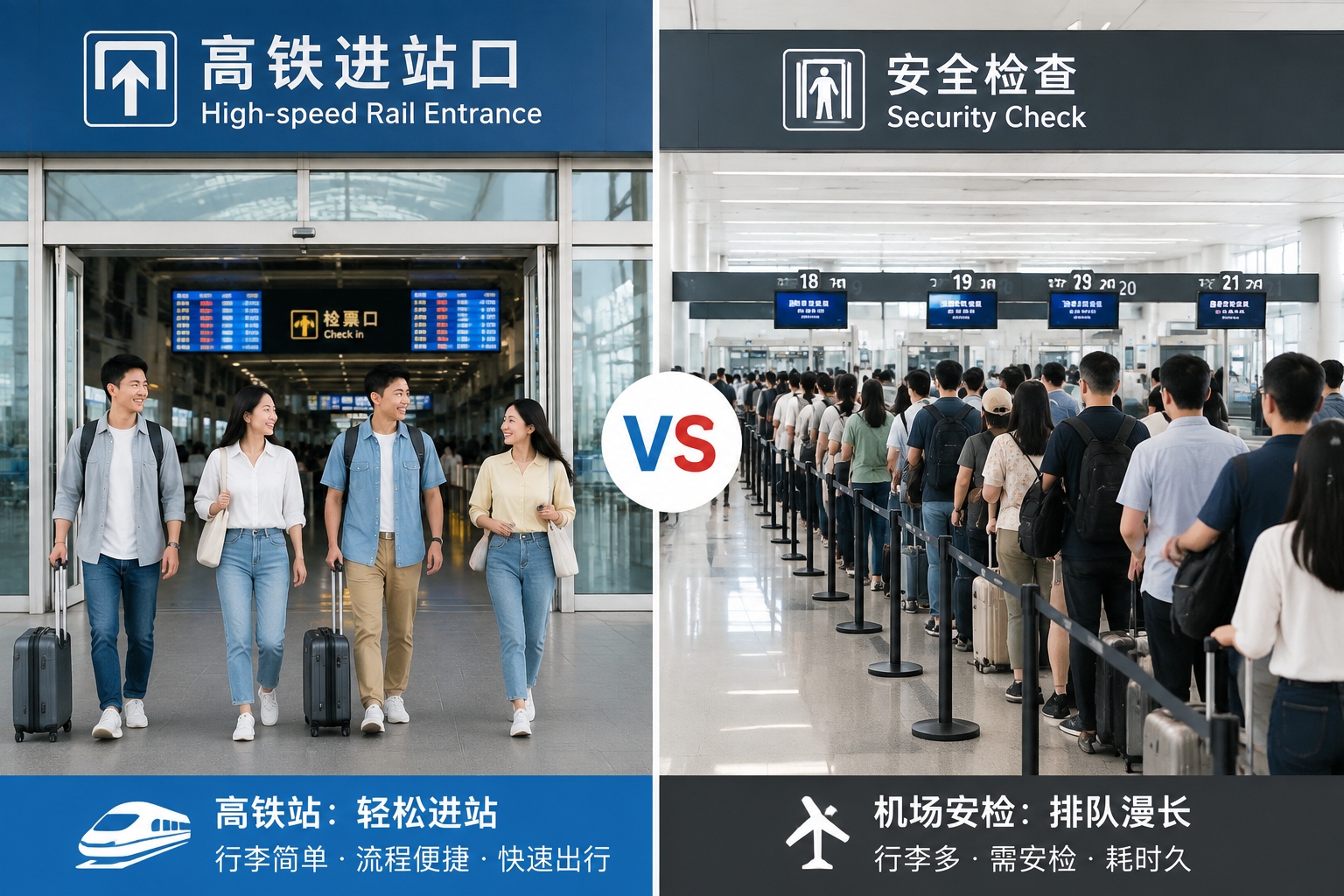
The biggest time difference comes from the pre-boarding process. At a Chinese high-speed rail station, you can typically enter with just your ID card and a quick security scan. No need to arrive more than 15-20 minutes before departure. Most stations are integrated into city subway systems, making access easy. In contrast, domestic flights require arrival at least 1.5-2 hours before departure, check-in (though online check-in reduces time), baggage drop (if needed), and security screening. Airports are often located far from city centers, adding significant travel time.
Comfort and Reliability
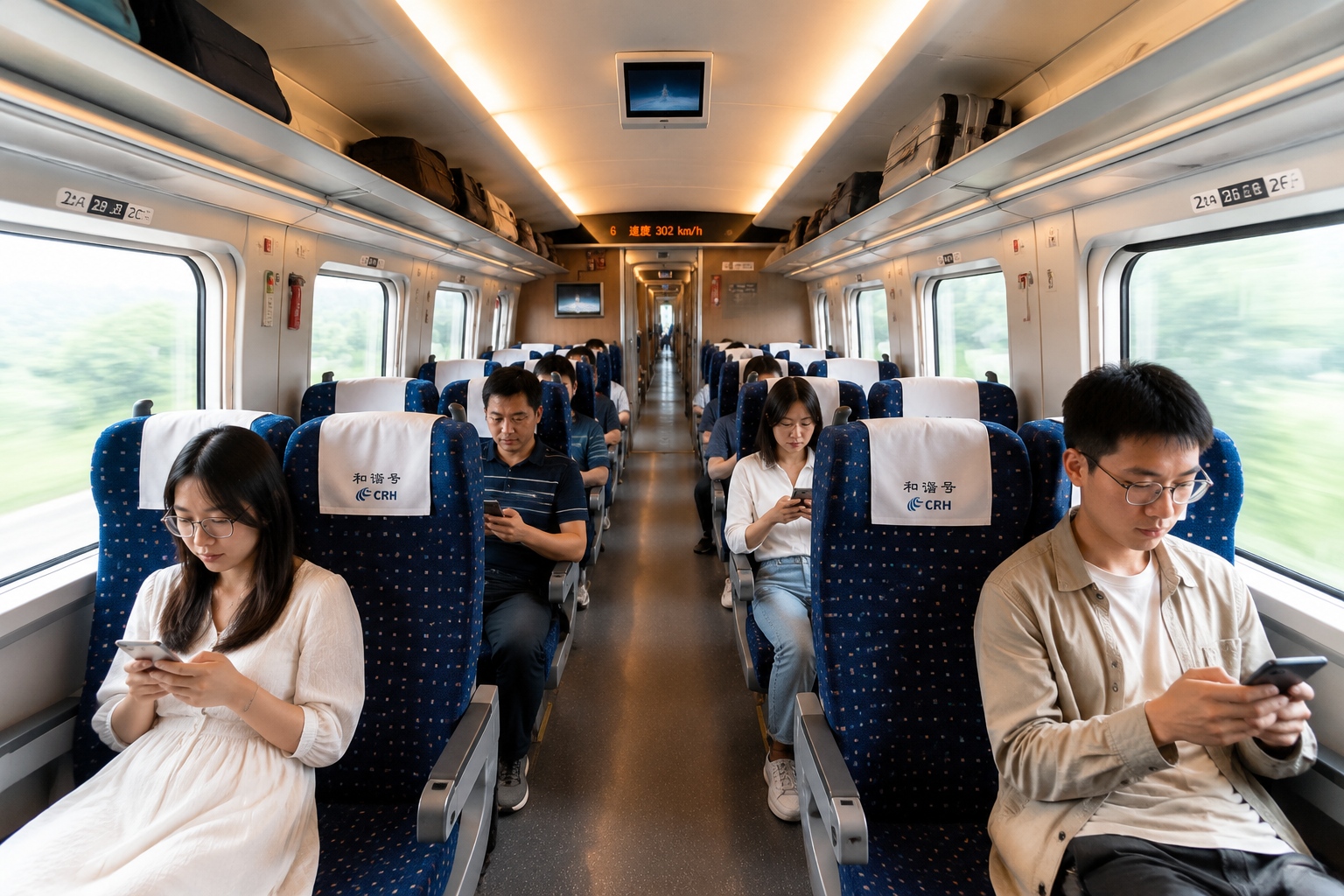
High-speed trains in China offer spacious seats with ample legroom – even second class (comparable to premium economy on a plane). Trains have reliable Wi-Fi, power outlets, and quiet carriages. The ride is smooth and you can stand up, walk around, and buy food from the dining car. Punctuality is excellent: China’s high-speed rail network boasts a 99% on-time rate, while domestic flights average around 80-85% (with many delays due to weather or air traffic control). When delays do occur, trains are more transparent and offer easier rebooking or refunds.
Flights, on the other hand, offer faster speed over long distances, but seating is cramped (especially in economy), and there are restrictions on luggage size, liquids, and electronic devices. In-flight entertainment is limited on many domestic flights. The biggest advantage of flying is the ability to cover very long distances (over 1500 km) in under 3 hours of air time, but the total time disadvantage often cancels out.
Hidden Costs
Let’s talk money. A Shanghai-Nanjing high-speed train ticket (second class) costs around 145 RMB ($20). A flight on the same route costs about 500-800 RMB ($70-110) including taxes and fees. Additionally, airport transfers can cost 100-200 RMB in metro/taxi, while high-speed rail stations are usually accessible by subway for 5-10 RMB. For a family of four, the savings with highs-speed rail on just the Shanghai-Nanjing trip would be around 1,500-2,000 RMB in total. Even for longer distances like Beijing-Shanghai, a second-class high-speed ticket is about 600 RMB, while a flight can be 800-1,200 RMB.
Decision Guide: Who Should Choose What?
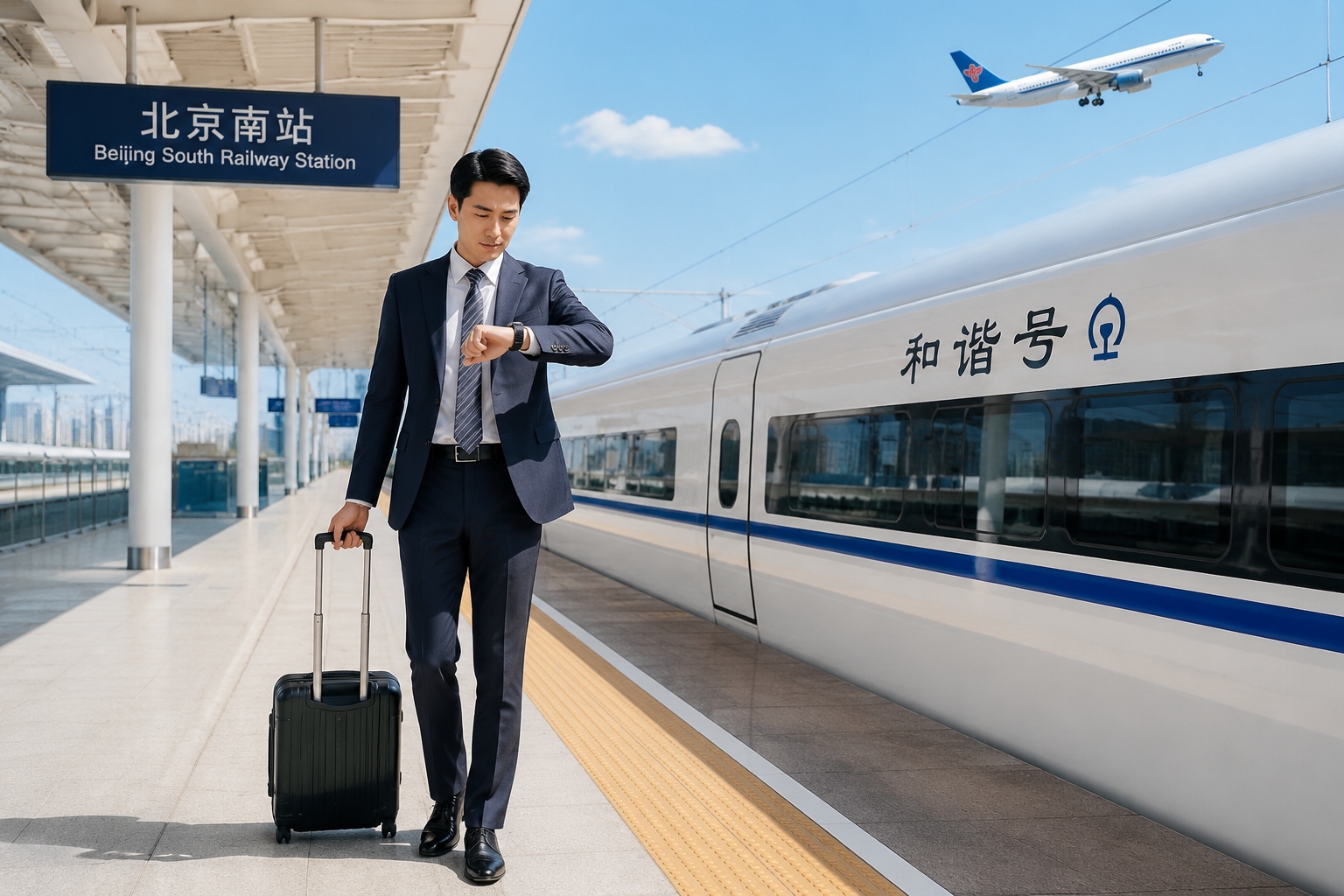
Business travelers on a tight schedule: For trips under 800 km, choose high-speed rail for reliability and central station locations. For trips over 1000 km, consider flights if you need to save air time, but account for possible delays.
Tourists: High-speed rail offers a comfortable, scenic journey and often arrives in the city center, saving time for sightseeing. Plus, you can bring more luggage.
Families with young children: High-speed rail is far easier – kids can move around, there’s more space, and toilet facilities are better. Avoid flights when possible.
Budget travelers: High-speed rail is usually cheaper, especially for shorter trips. Book second class for the best value.
Conclusion: For most medium-distance travel in China, high-speed rail is the smarter choice. But if you’re crossing half the country, flying can save time – just be prepared for the extra hours at airports.
Start the discussion at forum.chinacomes.com