
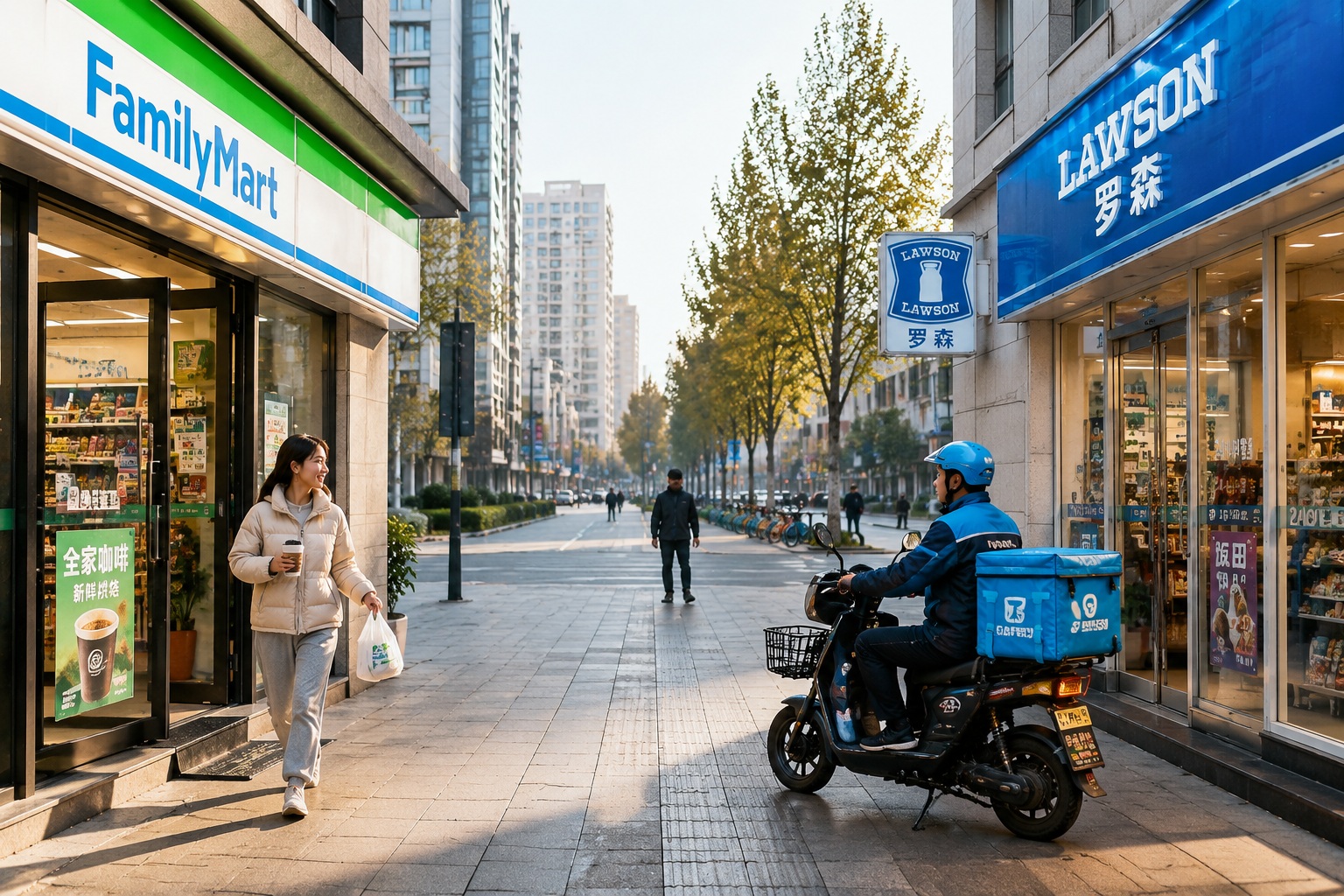

At 7:30 on a damp Tuesday morning, Li Xin rushes into the Lawson store next to her office in downtown Nanjing. She grabs a can of iced latte from the fridge, asks the clerk to warm her pork bun, collects a package that arrived via courier and is stored behind the counter, then pays her monthly electricity bill at the self-checkout kiosk. Before she leaves, she also prints a document for later that day. Total stops: one. Total time: about four minutes.
This is not an exotic routine. Across Chinese cities, millions of people use convenience-store chains like FamilyMart (originating from Taiwan in the 1980s) and Lawson (from Japan) as an extra room of their home, office and community hub. They usually go there to pick up milk and snacks, but what happens in that tiny space tells a larger story about urban life in China today.
A Very Different Kind of C-Store
If you visit a 7-Eleven or a convenience store in many western cities, you probably expect hot dogs slowly rotating under a heat lamp or a shelf of overpriced snacks. China’s international chains have evolved into something else.
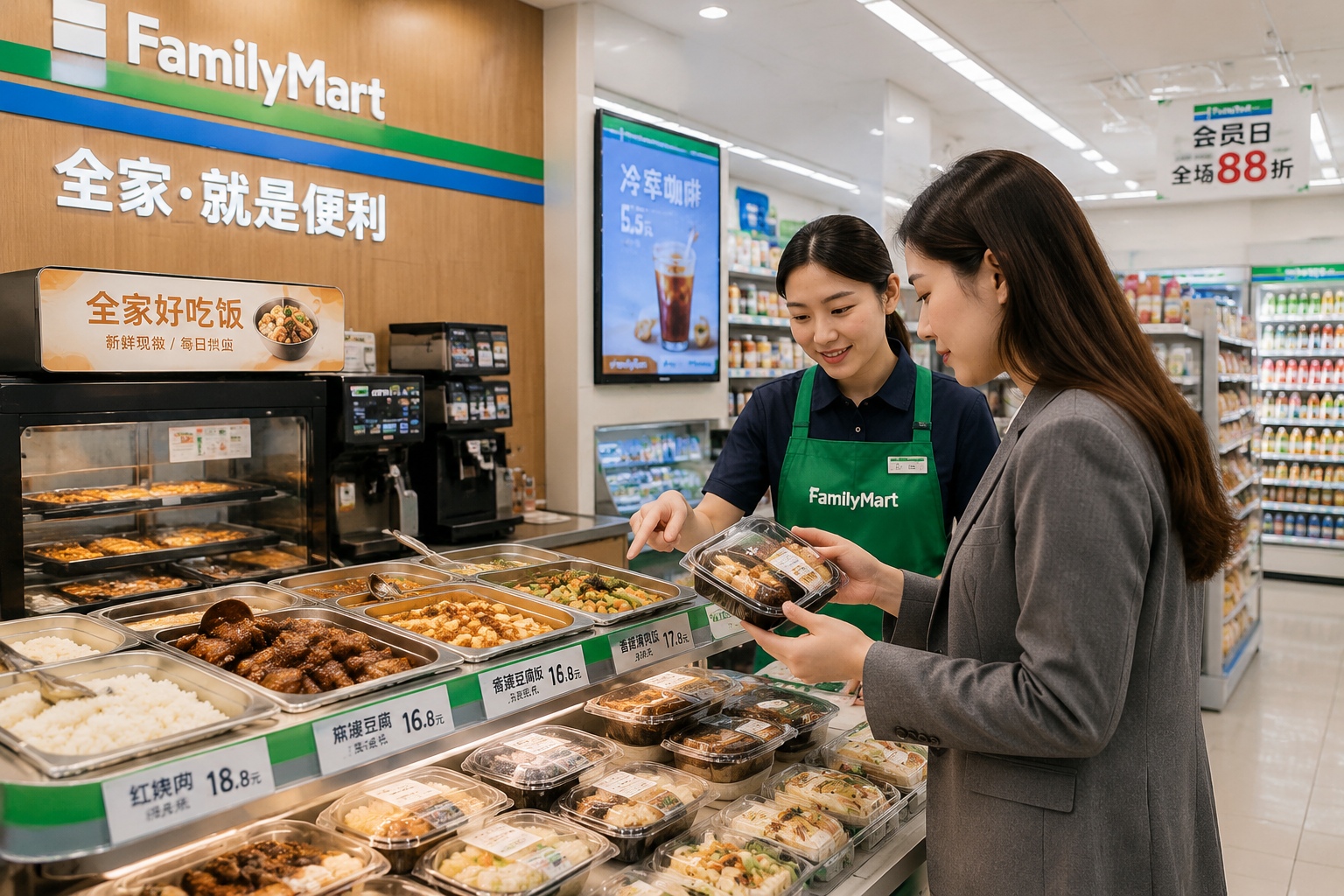
A standard FamilyMart in Shanghai is about 100 square meters — larger than many American minimarts — and it looks more like a compact fresh-food market. A display of rice rolls, dough sticks, fried dough and steamed buns sits next to the entrance in the morning. By lunchtime, the hot food counter is full of silver trays with braised pork, spicy diced chicken, scrambled eggs with tomato, and steamed cabbage. A fridge behind it stocks dozens of bento boxes and sandwiches in plastic packaging.
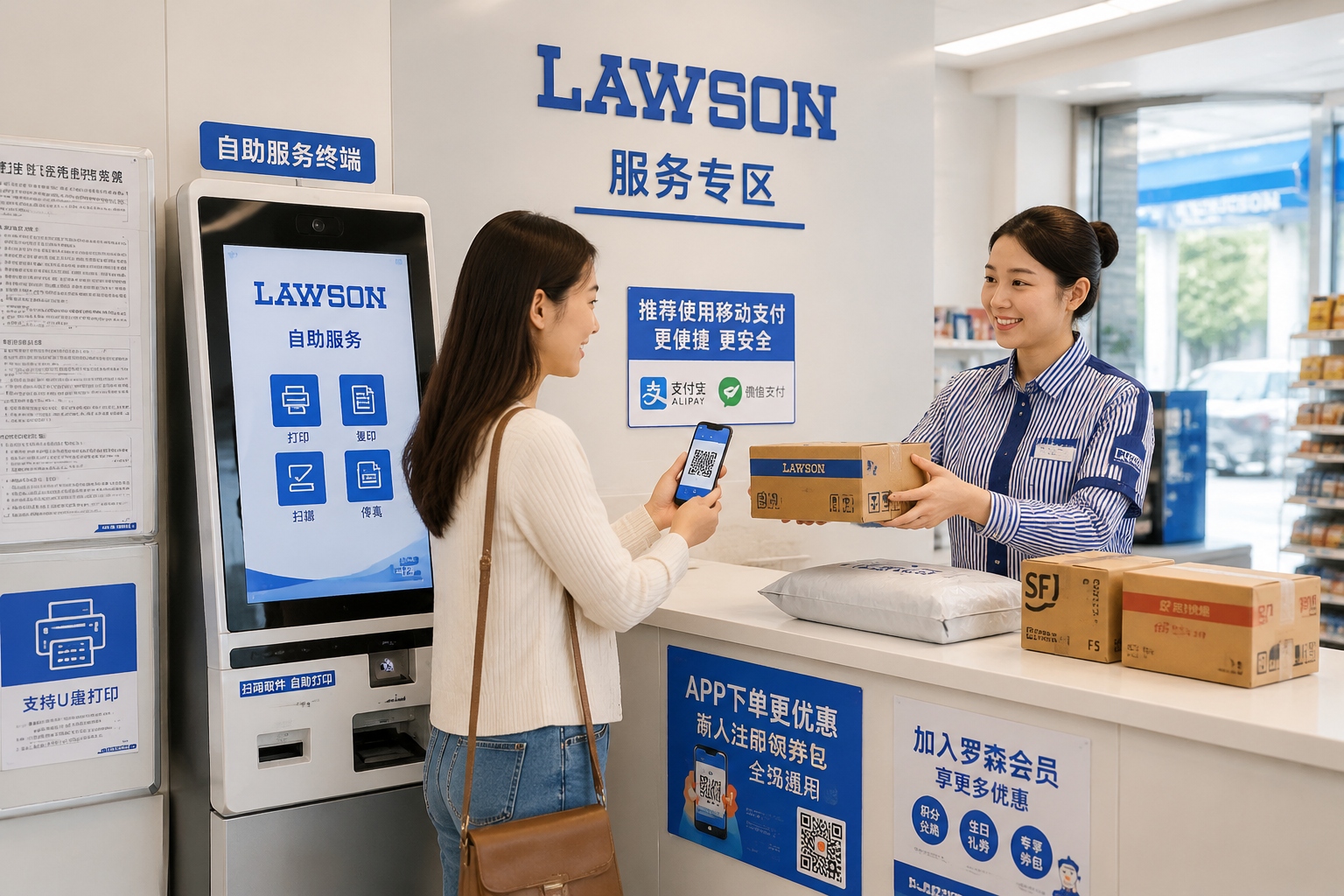
Around the room, there are racks of snacks, drinks, toiletries and daily essentials. But the most telling corner is the service zone: coffee machine, self-checkout, an ATM, a photo printer, and sometimes even a device to top up transit cards.
These stores are also localised to fit Chinese habits. Lawson stores in Beijing sell hot soy milk and jianbing-inspired wraps. FamilyMart stores in Chengdu offer rice with mapo tofu and sometimes Sichuan peppercorn ice cream. That’s a long way from the standard snack aisles in Japan or the US.
Why People Rely on Them
The biggest surprise for many newcomers is not the food — it’s how much you can actually get done. At the till, you can pay water, electricity, gas and mobile phone bills. In many cities, the same register can handle transportation cards or scan a QR code to pay for a parking ticket. Touchscreens let you buy movie and high-speed train tickets. Printers can copy official documents, contracts or ID scans. Even some e-commerce returns can be dropped off at the checkout counter.
One of the most-used features is parcel pickup. With thousands of shops inside residential and office compounds, FamilyMart and Lawson have become pop-up logistics points. Delivery drivers often leave up to a dozen packages at a store counter. When you come in to buy milk, you scan a code on your phone to claim the parcel. It saves people from waiting at home or missing a delivery in a city where you are rarely in one place for long.
For young professionals, these shops function like a second office. A graduate student may sit by the window with a cup of ¥4 coffee and read her laptop. A group of colleagues might buy a fried chicken platter to share at 10 p.m. because all nearby restaurants are shut. Even if you don’t buy anything, you can ask the staff to heat up a meal you brought from home.
Food That Beats Expectations
You may roll your eyes at the idea of buying a supermarket microwave meal. But in China, convenience stores have invested serious money into ready-to-eat food. Freshly cooked hot dishes are prepared in central kitchens and delivered daily or multiple times a day, especially in big cities.
A typical Lawson lunch box could be braised chicken with rice, a fried pork cutlet with curry sauce, or a vegetarian noodle dish. The quality is better than many legacy fast-food chains. For about ¥15 (just over US$2), you get a decent portion of rice, protein and vegetables. FamilyMart is famous for its “warm box” bentos and seasonal snacks like crab sticks or chilli potato.
Local players such as Bianlifeng raised the bar with algorithm-driven pricing and hot food cookers. FamilyMart and Lawson responded with fresher deliveries and more daily options — sometimes even locally sourced ingredients. This competition benefits customers. The result: eating a hot, filling, healthy-ish lunch in a c-store is now completely normal for white-collar workers.
For travellers, these stores are a lifesaver. If you land in Beijing at 11 p.m., Lawson is often the only spot for a proper warm snack before taking a late ride home. Even without a kitchen, you can eat something that feels like home cooking.
Open All Night: A Safe Haven for Night Workers
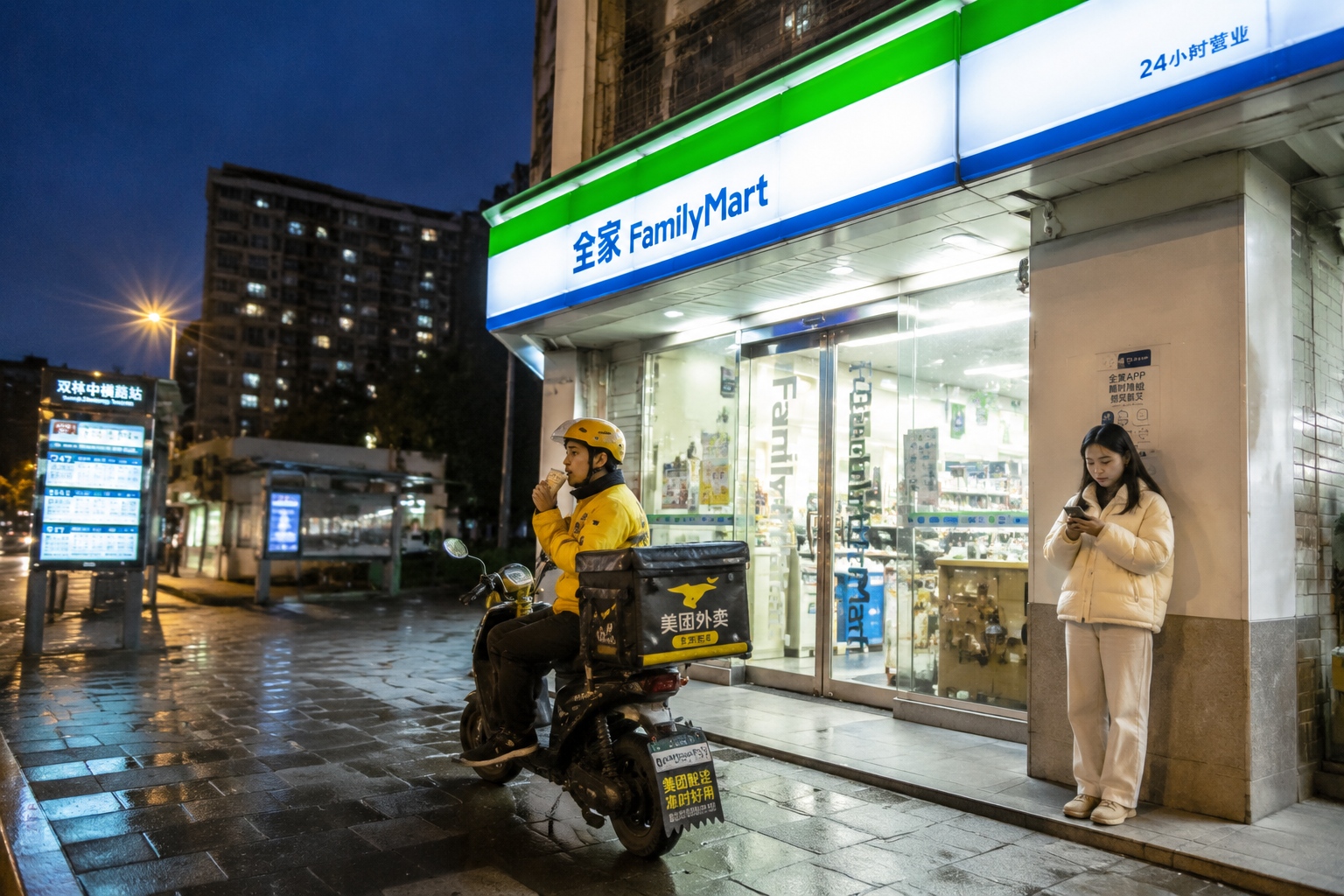
One underrated role of convenience stores is providing a 24/7 public space in a city that never closes. In many Chinese cities, these are among the only businesses with lights on after midnight, besides fast-food outlets and some restaurants.
For delivery riders who finish a late schedule, night-shift nurses, security guards or students pulling all-nighters, the store is a small shelter. You can get hot instant noodles, an energy drink, or simply stand next to the warm coffee machine. Some stores have a small table and benches. You might see a courier using the free Wi-Fi to charge a phone while finishing a discounted late-night snack.
The store staff often know their regular clients. Some overnight cashiers will chat with a tired rider or help a lost traveller navigate to a nearby hotel. Though small, this creates a peculiar form of urban companionship.
It also helps students during exam season. Libraries close early, but many university neighborhoods have far fewer late-night food options. A 2 a.m. stop for hot soy milk and a rice ball can break the frustration.
What This Tells Us About China’s Urban Life
Convenience stores in China are successful because they fit into how cities actually function. Many Chinese urbanites have long commutes, work long hours and live in smaller apartments with limited pantries. Rather than cooking a full meal every evening, they buy fresh prepared food on the way home. Instead of waiting at home for a package, they grab it from a locker on the corner.
China’s mobile-payment culture makes it seamless. You can order and pay for a coffee using Lawson’s mini-program while you are still in the elevator. When you arrive, it is waiting on the counter. Some stores use smart shelves and automatic discounts to tempt you into grabbing an extra snack.
That doesn’t mean everything is perfect. Staff often work long shifts, sometimes 8–10 hours with little seating, and high rent pressures margins. Smaller independent shops find it harder to survive. Yet these challenges don’t stop the format from becoming daily infrastructure.
The Bottom Line
China has absorbed a Japanese format and given it its own temperament. A Chinese c-store isn’t a copy-and-paste; it’s a micro-mirror of a mega-city that values speed, reliability, and surprising warmth. The next time you step into a FamilyMart or Lawson in Shanghai, skip the instant noodles and spend a couple of minutes watching the flow. That mother paying a water bill, that delivery worker eating a bento in silence, that student collecting a parcel — they show what modern urban life feels like in the world’s most populous urban country.
Start the discussion at forum.chinacomes.com