
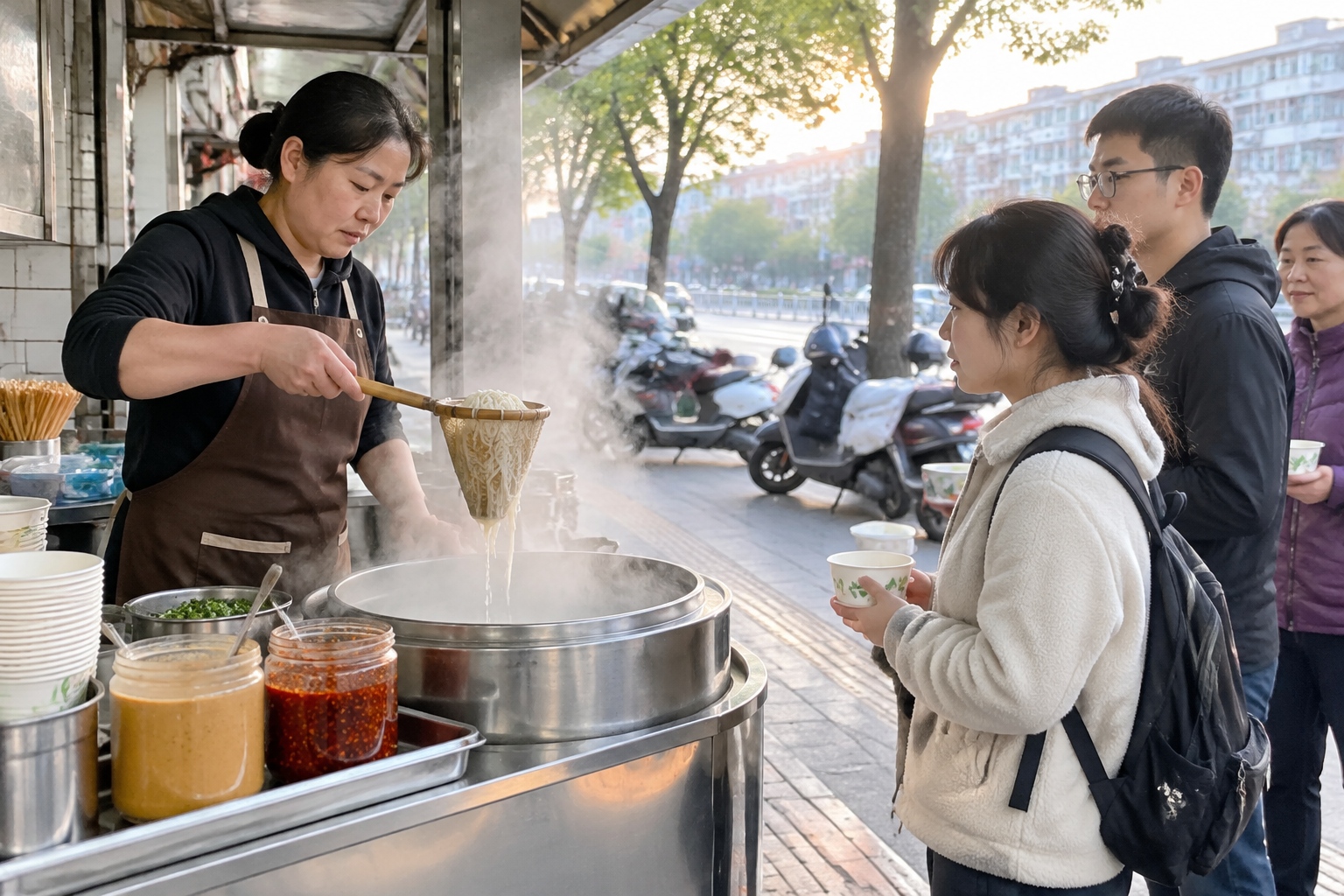

6:47 AM — The Breakfast Stall on Minzhu Road
The sesame paste is already thinning in the bowl when the first customer steps up. It is 6:47 on a Tuesday morning in Wuchang, and the woman behind the stall has been here since five. She lifts a handful of cooked noodles, drops them into a bamboo strainer, dunks it into boiling water for eight seconds, shakes it twice, and tips the noodles into a paper bowl. Sesame paste, soy sauce, chili oil, chopped scallion, pickled radish. The customer stirs it with chopsticks while standing, one foot on the curb, the other on the street.
This is guo zao — literally “passing breakfast” — and in Wuhan it is not a meal you sit down for. It is a meal you eat on the way to somewhere else.
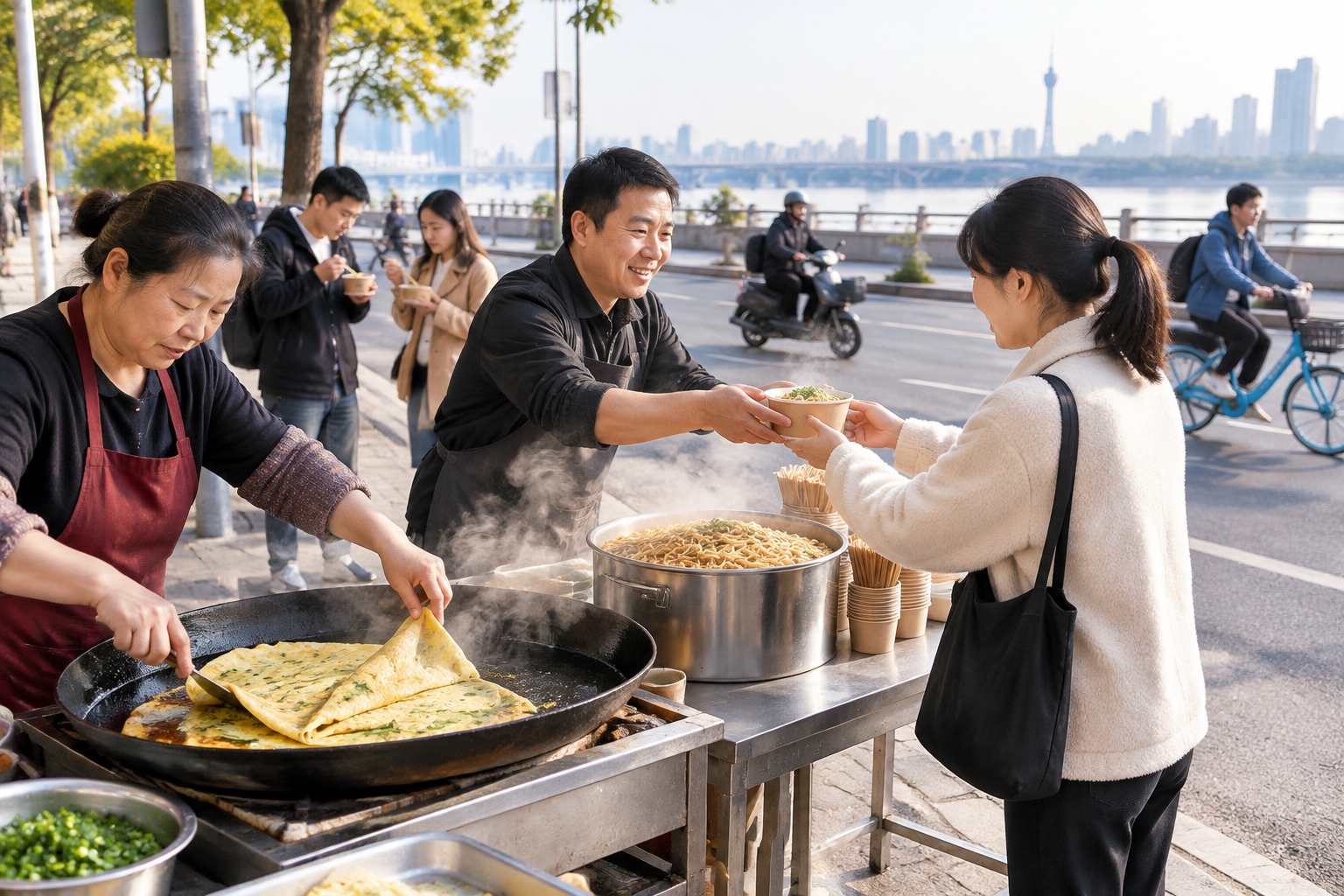
Hot dry noodles, or reganmian, are the anchor of the morning. But they rarely travel alone. A few steps away, another vendor is folding doupi — a sticky rice and mushroom filling wrapped in a thin layer of mung bean and egg batter, pan-fried until the edges crisp. Next to that, a pot of danjiu simmers: fermented rice wine with a beaten egg swirled in, served warm and slightly sweet. The classic order is all three. Noodles for weight, doupi for texture, danjiu to wash it down.
Nobody lingers. The average guo zao lasts seven minutes. Office workers in shirtsleeves balance bowls on scooter seats. A grandmother feeds a grandchild from the same pair of chopsticks. A taxi driver parks half on the sidewalk, eats standing, and is gone before the light changes. The pace is not rude. It is just that the day is already moving, and breakfast is part of the commute.
7:30 AM — The Ferry Across the Yangtze
The Wuhan Yangtze Ferry has been running since 1900. It is not a tourist attraction, though tourists ride it. It is public transit — cheaper than the subway, faster than the bridge at rush hour, and the only way across the river that lets you feel the river.
At 7:30, the Wuchang-to-Hankou boat is packed. Electric scooters roll on first, their riders in helmets and windbreakers. Then the pedestrians: nurses in scrubs, students with backpacks, a man carrying a live chicken in a cardboard box. The deck smells of diesel and river water. The morning fog has not lifted, and the far bank is a grey smear of towers.
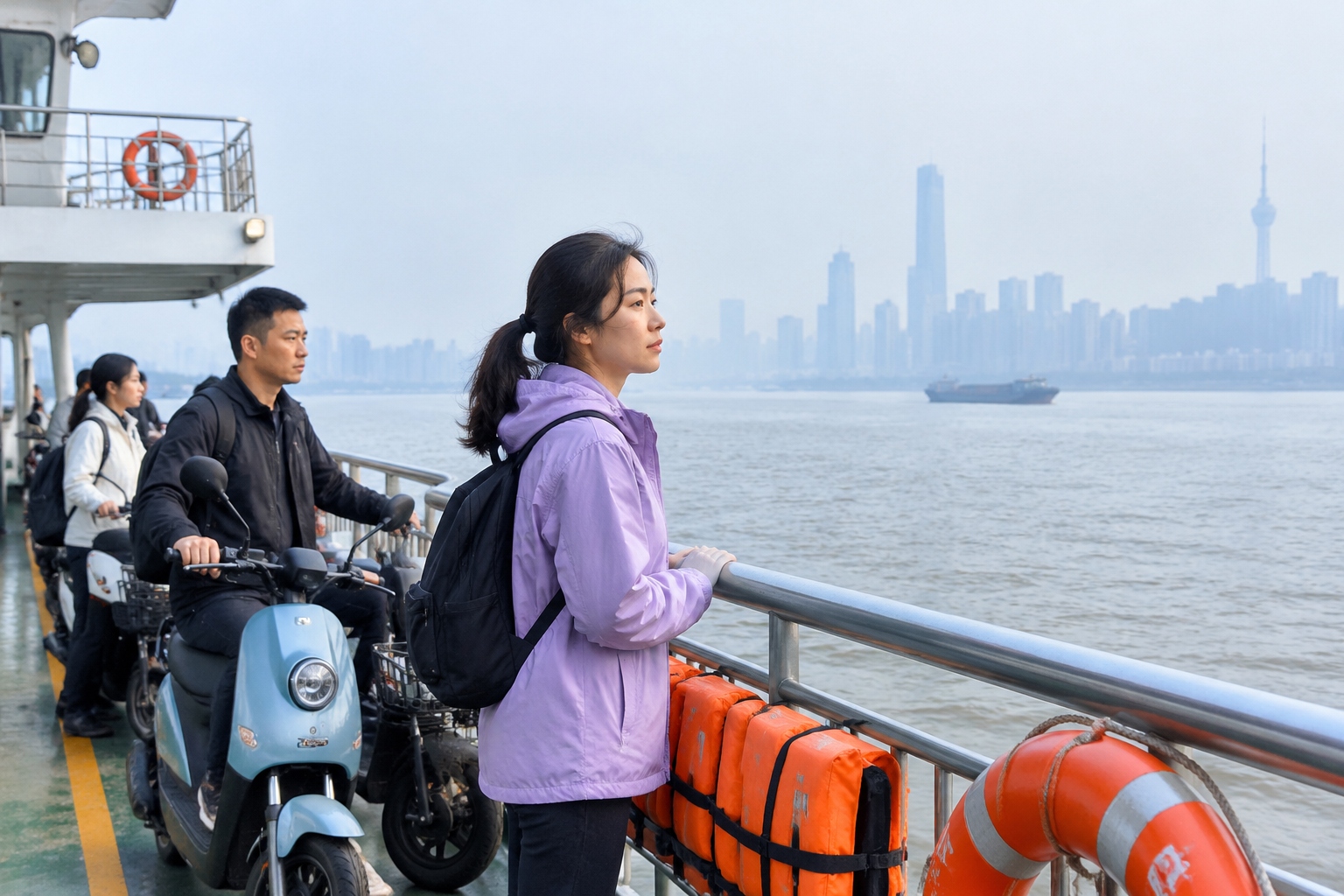
Crossing takes about fifteen minutes. Regulars know where to stand — on the bow, facing the wind, phone in hand but not always looking at it. A woman in her fifties tells me she has taken this ferry to work for twenty-two years. She has watched the skyline on the Hankou side grow from warehouses to glass towers. “The boat is the same,” she says. “The city on the other side is not.”
The ferry costs two yuan. It runs every twenty minutes. Nobody claps when it docks. This is not a cruise. It is a commute, and the commute is the point.
Why Wuhan Is Called the “River City”
Wuhan sits where the Han River meets the Yangtze, splitting the city into three historic towns: Wuchang, Hankou, and Hanyang. For most of its history, the river was not a backdrop — it was the main road. Goods, people, and ideas moved by boat. The dockworkers, the boatmen, the merchants who shouted across the water — they built a culture that values speed, directness, and getting on with it.
That is where the city’s reputation for bluntness comes from. Wuhan people are often described as shuang kuai — straightforward, no-nonsense, quick to speak their mind. It is not aggression. It is a habit born from a place where the river was always moving and you had to move with it. If you stood still too long, the boat left without you.
You can still feel it. Ask for directions and you will get a full sentence, not a polite shrug. Order food and the vendor will tell you what to order, not wait for you to decide. There is a warmth in it, but it is a warmth that assumes you can keep up.
8:00 PM — The Riverbank Exhales
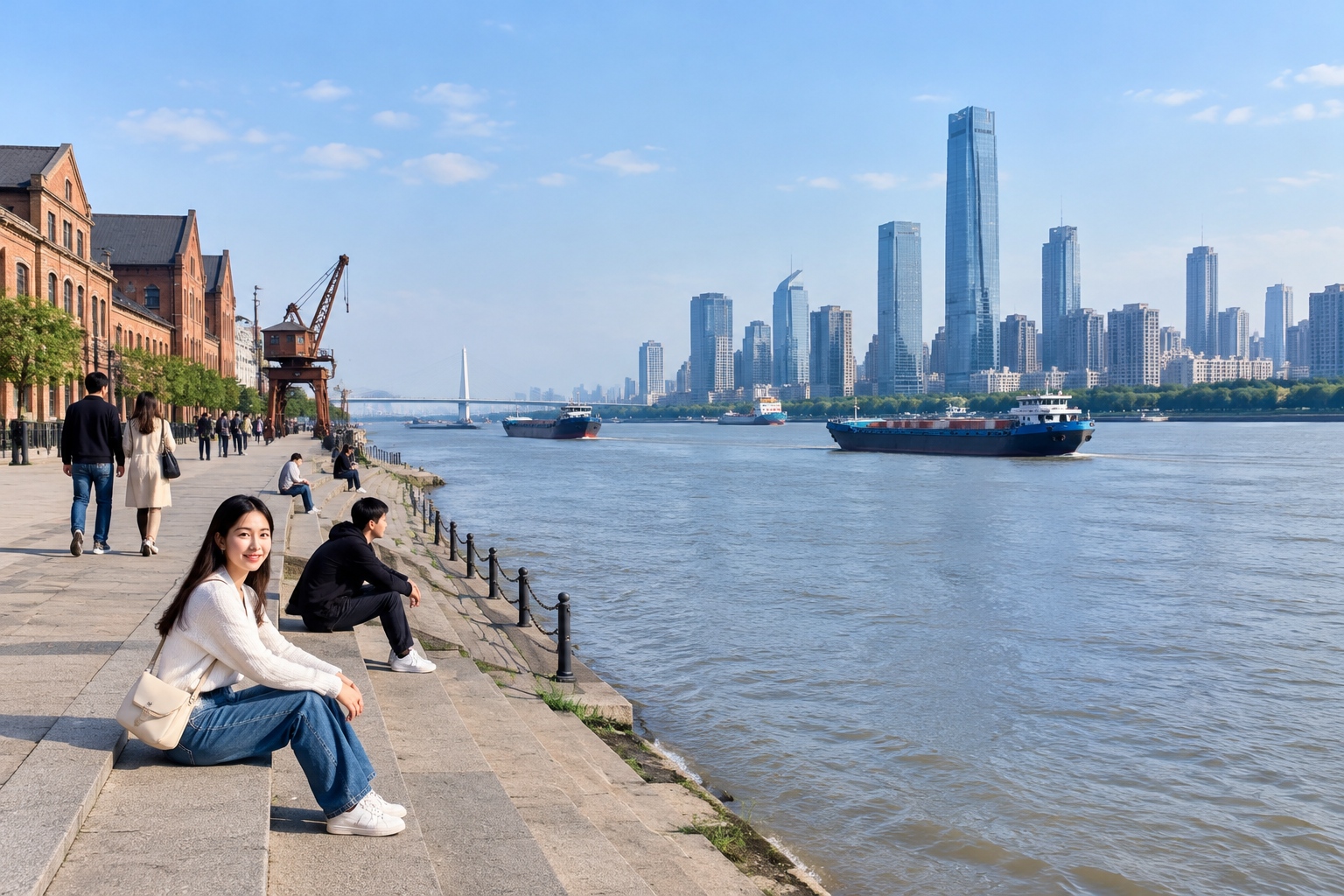
By evening, the same river that carried the morning commute turns into something else. The Wuhan Yangtze Riverbank Park runs for kilometers on both sides of the water. At 8 PM, it is a stage.
On the Hankou side, near the Jianghan Road area, a group of women in their sixties and seventies dance to a portable speaker. The playlist is a mix of 1990s Mandopop and recent viral hits. A few meters away, a man walks three dogs at once — a corgi, a golden retriever, and something small and fluffy that refuses to move. Teenagers sit on the stone steps facing the water, sharing earbuds. A couple argues quietly in the shadow of a floodlight. A food vendor sells cold noodles and bottled water from a cart with a hand-painted sign.
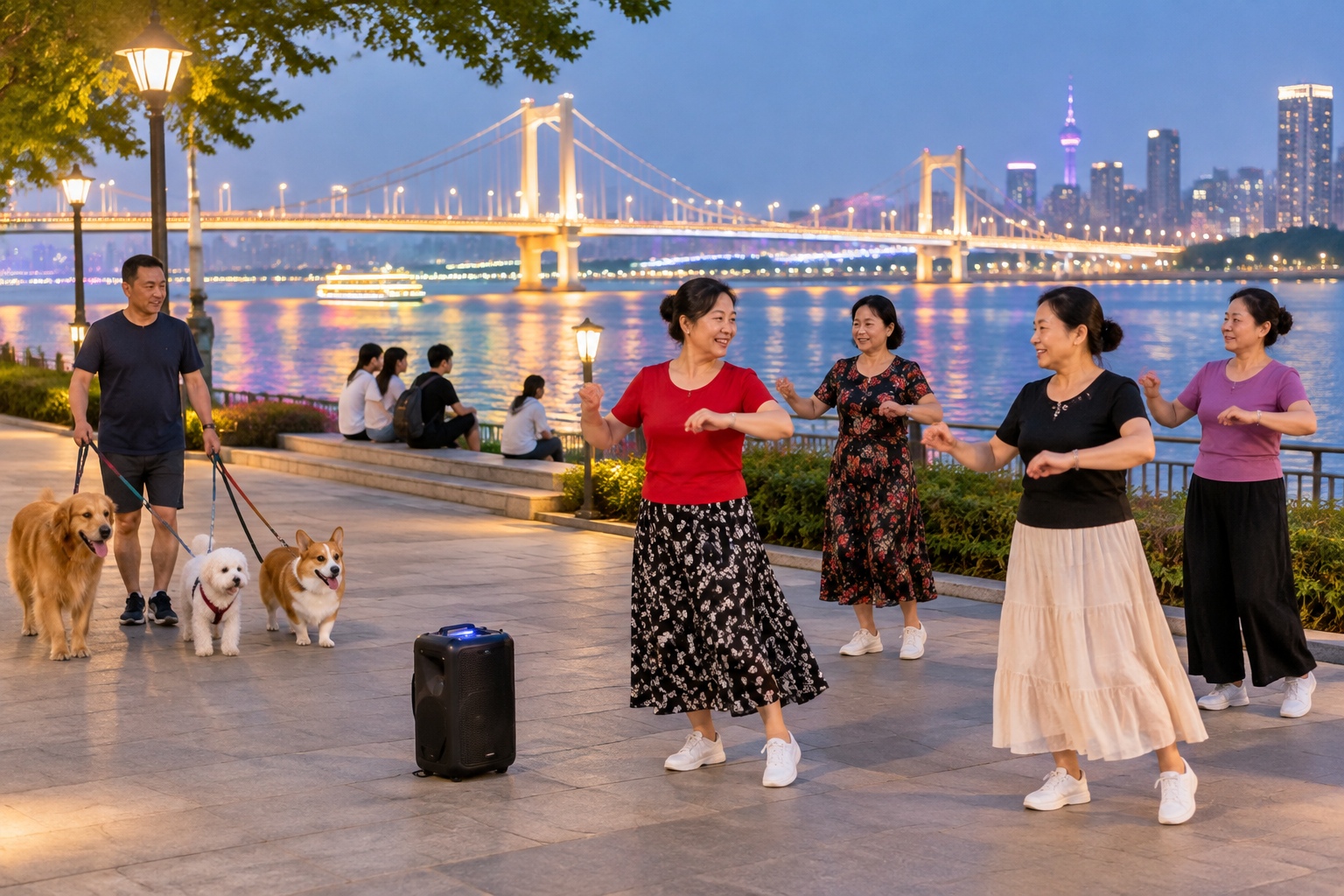
Nobody is performing. This is not a night market built for tourists. It is a public space used the way public spaces are supposed to be used: by people who live here. The lights on the bridges come on at 8:30. The river turns from grey to black to a ribbon of reflected orange. The city does not quiet down. It just changes key.
One River, One Day
Wuhan is a city of eleven million people, a major industrial and tech hub, home to some of China’s largest universities and a growing startup scene. But the things that shape daily life here are older and simpler. A bowl of noodles eaten standing up. A ferry that costs less than a bottle of water. A riverbank where you can dance, walk a dog, or sit and say nothing at all.
The Yangtze does not just run through Wuhan. It sets the clock. Morning is for crossing. Afternoon is for working. Evening is for the bank, for the breeze, for the slow return to yourself. If you want to understand the city, you do not need a museum. You need a Tuesday. You need to wake up early, eat standing, and take the boat.
Start the discussion at forum.chinacomes.com