
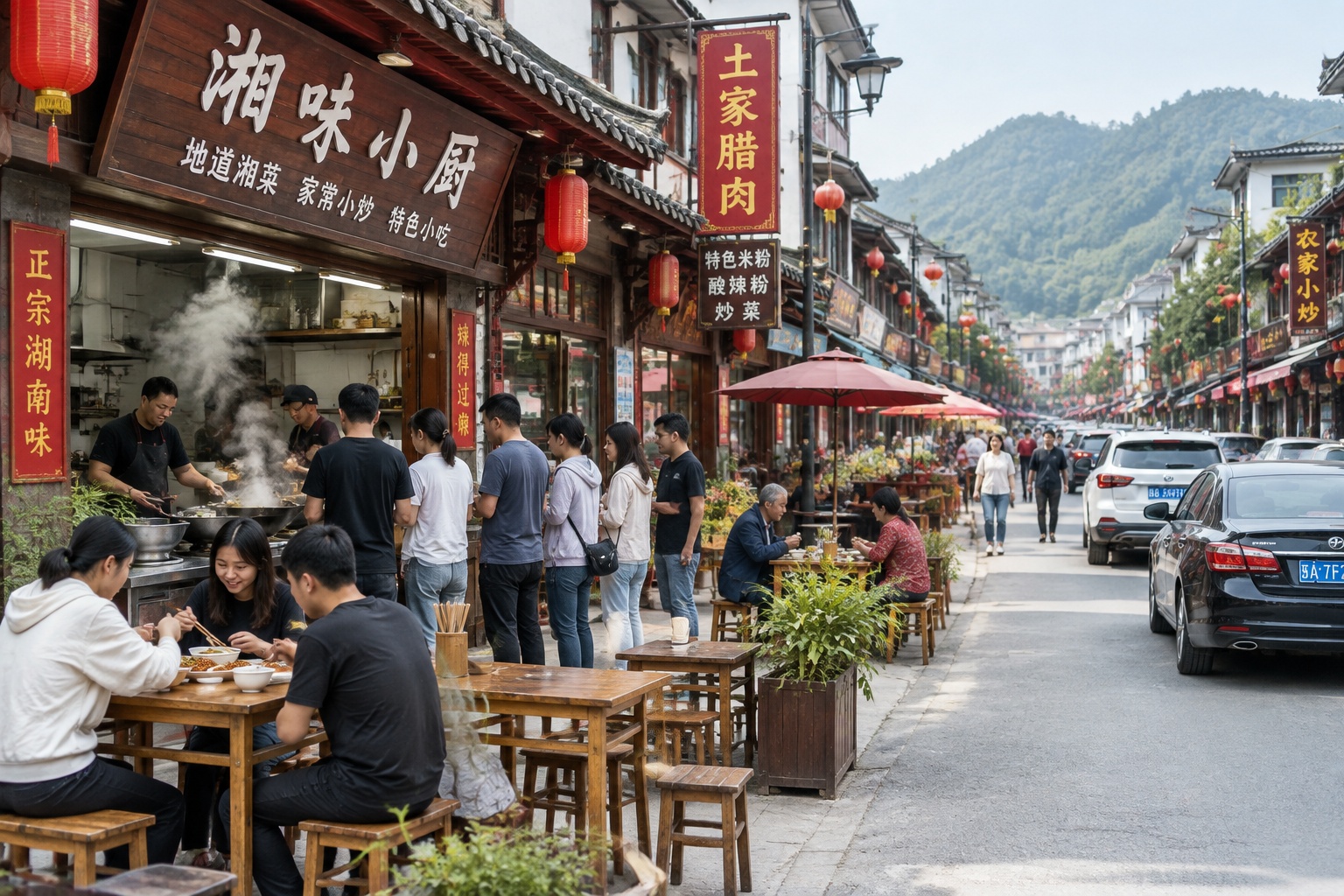

A Weekend Queue in a Small Hunan Town
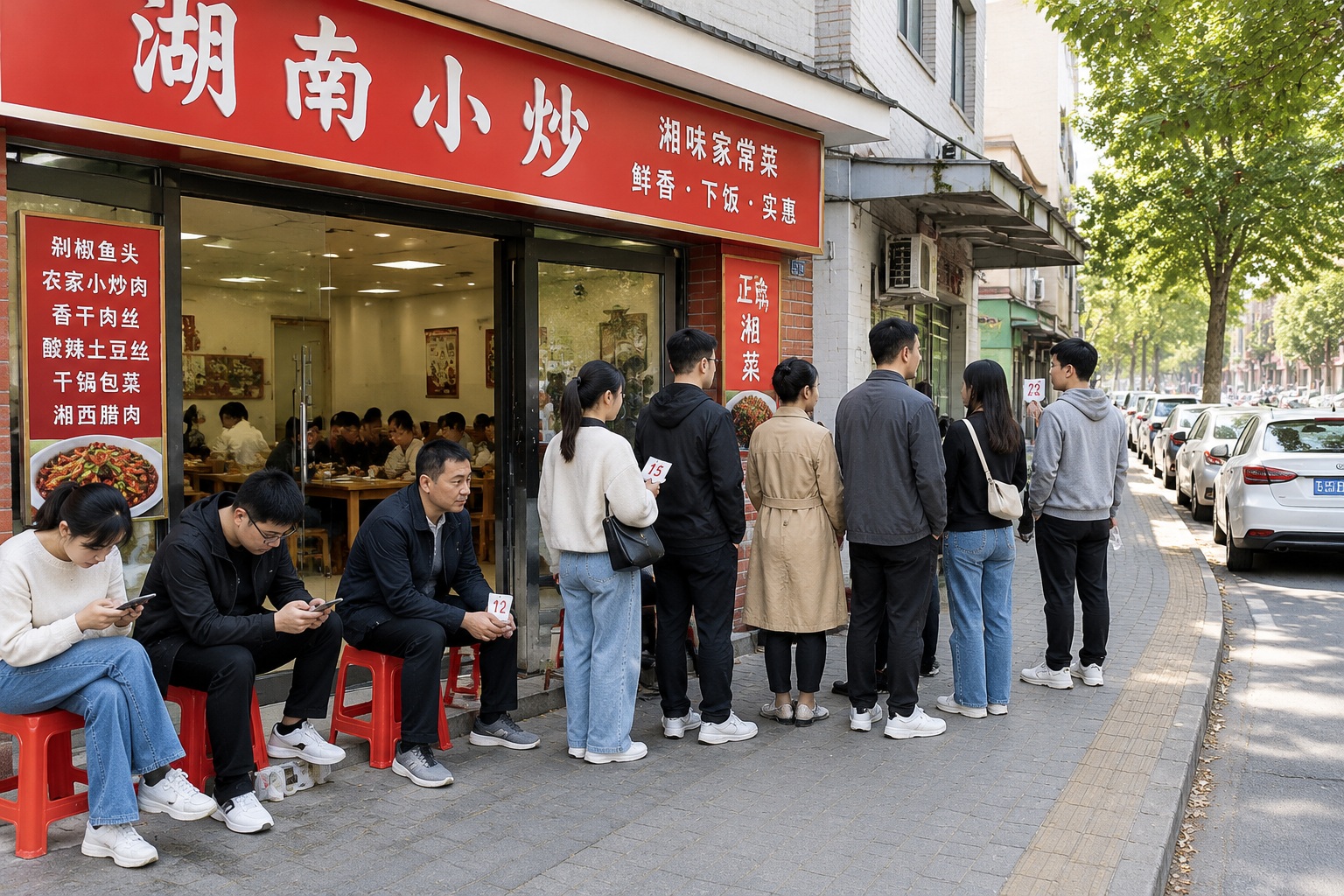
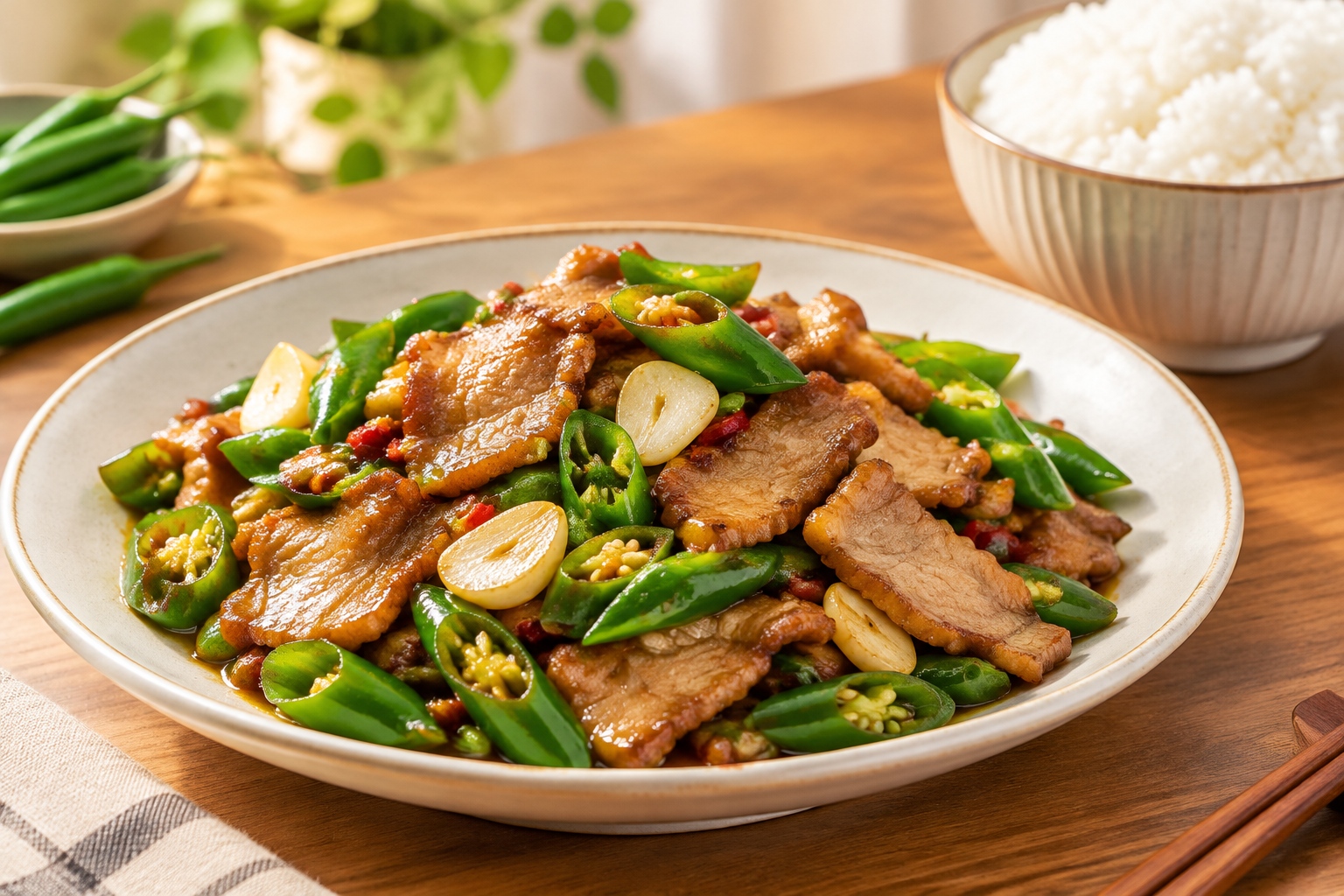
It’s just past noon on a Saturday in Ningxiang, a county-level city in Hunan Province, and the main street of the old town is already packed. Cars with license plates from Changsha, Xiangtan, and even Guangdong are squeezed into every available spot. Outside a modest restaurant with a red sign, dozens of people wait on plastic stools, clutching numbered tickets. They’re here for one thing: a plate of chili fried pork.
This isn’t the Hunan cuisine you might find in a mall food court. The pork comes from Ningxiang’s famous spotted pigs, raised on local farms. The chilies are a specific variety grown in the surrounding hills. The dish is cooked in a roaring wok, the meat sliced thin, the peppers blistered, the whole thing fragrant with garlic and fermented black beans. It costs about 68 yuan (around $9.50) and is meant to be eaten with bowls of steamed rice. For many locals, it’s the taste of home. For visitors, it’s a reason to drive two hours.
The Dish That Made a Street Famous
Chili fried pork, or la jiao chao rou, is a staple of Hunan cooking. But the version served here has become a brand in itself. The key is the pork—Ningxiang spotted pig, a breed with a long history in the region. The pigs are fattier and more flavorful than commercial breeds, and local chefs say the meat holds up better to high heat.
The preparation is simple but demanding. The pork belly and lean meat are sliced separately, then stir-fried with fresh green chilies, garlic, and a splash of soy sauce. The fat renders, the chilies soften, and the whole dish comes together in less than three minutes. The result is spicy, savory, and slightly smoky—a perfect partner for rice.
What makes this particular street special is that it has become a pilgrimage site for the dish. Over the past five years, more than 30 restaurants have opened along a 500-meter stretch, most of them specializing in the same handful of dishes. On weekends, they serve an estimated 2,000 plates of chili fried pork a day. The street has its own WeChat group where owners share tips and coordinate parking.
Before the Crowds: A Street Left Behind
Ten years ago, this street looked very different. Like many small towns in inland China, Ningxiang saw its young people leave for jobs in Shenzhen, Guangzhou, or Changsha. The old street, once a market hub, had empty storefronts and faded signs. “It was quiet,” recalls Liu Wei, a 45-year-old restaurant owner who grew up nearby. “Only old people stayed. By 8 p.m., you could hear a pin drop.”
Liu’s family ran a small noodle shop that barely made ends meet. In 2016, his father, a former chef, decided to try something different: they would focus on one dish—chili fried pork—using the best local pork they could find. They borrowed money to renovate the shop and put up a new sign. The first few months were slow. Then a local food blogger wrote about them, and customers started coming from Changsha.
From One Restaurant to an Entire Street
The success of Liu’s restaurant didn’t go unnoticed. Other families began opening their own chili fried pork joints. The local government, seeing an opportunity, paved the street, added parking spaces, and built a small visitor center. Today, the street is a self-contained ecosystem. There are restaurants, of course, but also stalls selling dried chilies, cured pork, and locally made rice wine. A few families have turned their homes into guesthouses. A courier station at the end of the street ships vacuum-sealed chili fried pork to customers across the country.
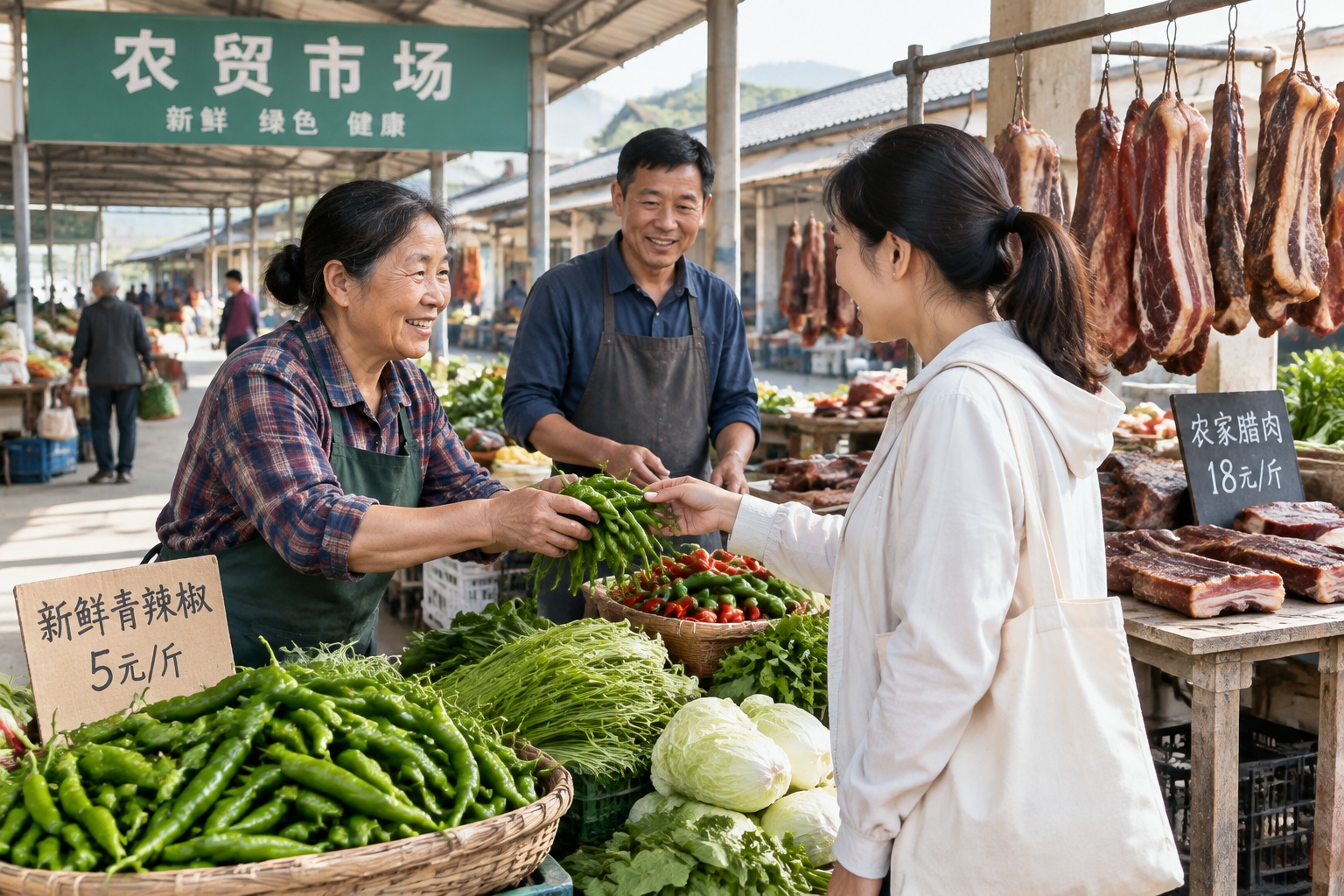
The supply chain reaches deep into the countryside. Every morning, farmers from nearby villages bring fresh vegetables and pork to a makeshift market behind the street. The spotted pigs are raised on small farms within a 20-kilometer radius. One farmer, Zhang Guiqin, says she sells about 30 pigs a month to the restaurants, up from just five a few years ago. “I used to worry about finding buyers,” she says. “Now they call me.”
Social media has amplified the street’s reach. On Xiaohongshu, China’s answer to Instagram, there are over 10,000 posts tagged with the street’s name. Young visitors pose with plates of chili fried pork, the steam rising in the frame. A video of a chef flipping the wok has been viewed 2 million times. “We didn’t plan for this,” says Liu. “But it helps.”
The People Behind the Boom
For many locals, the food street has brought unexpected income. Liu’s restaurant now employs 12 people, including two chefs and six servers. A server named Xiao Chen, 24, returned from a factory job in Dongguan two years ago. She earns 4,500 yuan a month plus tips—less than her factory wage, but she lives at home and saves on rent. “I prefer this,” she says. “I’m not a machine.”
Down the street, a vendor named Auntie Li sells homemade pickled radish and chili sauce. She makes about 300 yuan a day on weekends. A taxi driver, Mr. Wang, says he can earn an extra 200 yuan on Saturdays by shuttling visitors from the bus station. Even the local courier, a young man named Xiao Zhou, has seen his parcel volume triple. “Mostly food,” he says. “People want a taste of home.”
Young entrepreneurs are also getting in on the action. A 27-year-old named Li Na started a small business selling vacuum-sealed chili fried pork online. She sources pork from her uncle’s farm and uses her grandmother’s recipe. Last year, she sold 10,000 packages. “I never thought I’d come back,” she says. “But there’s a future here now.”
The Challenges of Success
But the boom has its downsides. With so many restaurants selling the same dish, competition is fierce. Some owners have cut prices, leading to thinner margins. Others worry about standardization—will the dish lose its soul if it’s made for tourists? “We use the same recipe, but every cook has a different hand,” says Liu. “That’s part of the charm, but it’s also a problem.”
Rents on the street have risen sharply. A small storefront that rented for 2,000 yuan a month in 2018 now goes for 8,000. Some original residents have moved out. Traffic on weekends can be a nightmare, with cars blocking narrow lanes. The local government has imposed parking restrictions and hired traffic wardens, but residents complain about noise and garbage.
Environmental pressure is growing. The restaurants generate large amounts of food waste and smoke. A local official says they are considering installing air purification systems, but the cost is high. Some residents have complained about the smell. “It’s become a tourist zone, not a neighborhood,” says one elderly woman who declined to give her name.
Seasonality is another issue. Summer is peak season, but winter can be slow. During the Chinese New Year, the street is packed, but in February, it’s nearly empty. Some restaurants close for weeks at a time.
What This Means for Other Small Towns
For outside observers, the story of this street might sound like a classic case of food tourism reviving a main street. In the U.S. or Europe, a famous chef or a viral dish can put a small town on the map. But the Chinese county version has its own dynamics. The supply chain is local, the government is actively involved, and the customer base is largely domestic—people driving from nearby cities for a weekend meal.
Unlike Napa Valley or Tuscany, where wine tourism developed over decades, this transformation happened in just five years. It was driven not by a single celebrity chef but by a cluster of family businesses. And it was accelerated by domestic tourism, which has boomed as Chinese travelers explore their own country.
It’s also a story about rural revitalization. As China’s big cities grow more expensive, small towns are looking for ways to keep their young people. Food is one answer. “We don’t have factories or mines,” says Liu. “But we have this dish. It’s our resource.”
Evening on the Food Street
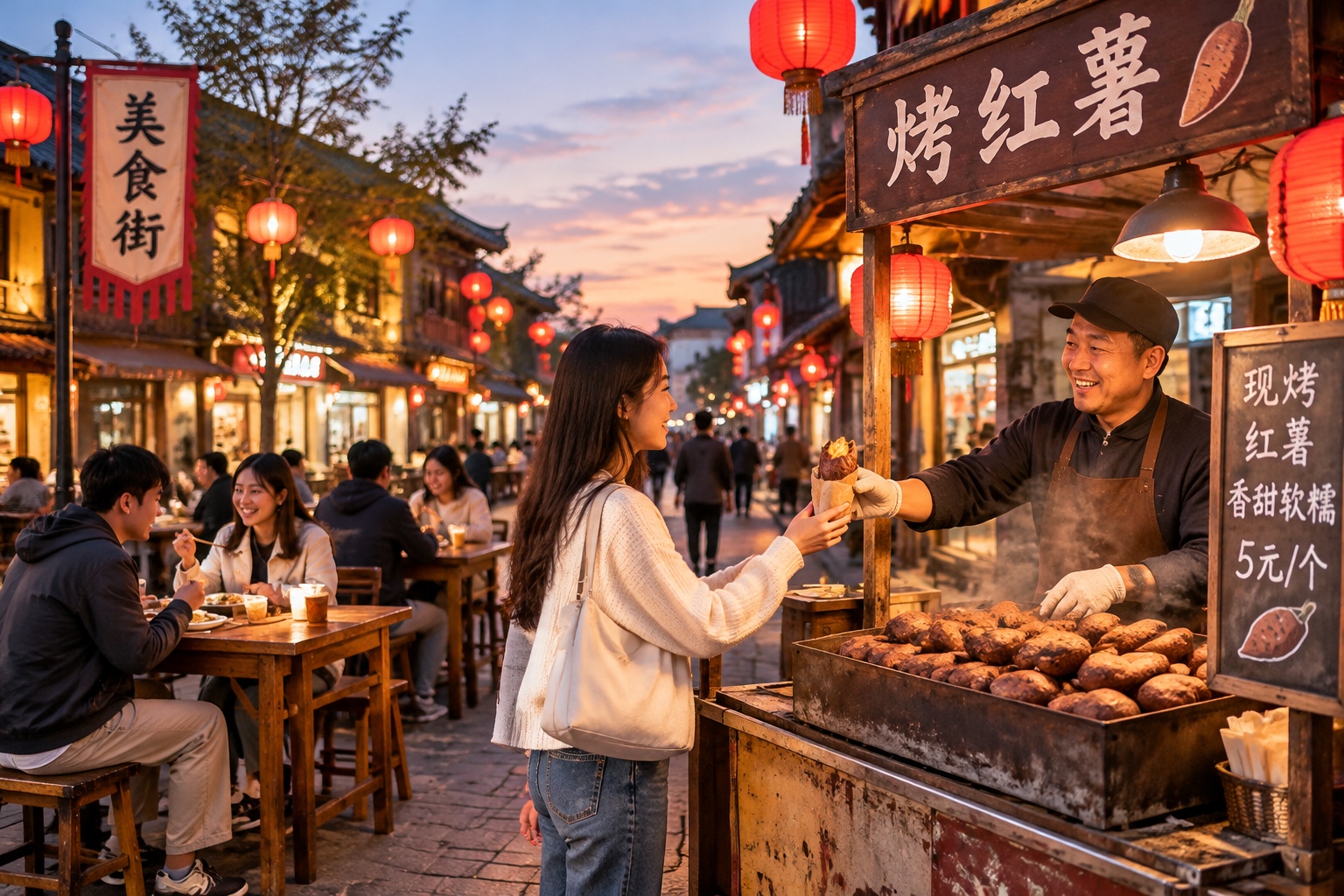
By 7 p.m., the street is lit up with red lanterns and neon signs. The lunch crowd has gone, but a new wave of diners arrives for dinner. In Liu’s restaurant, the woks are still firing. A family from Changsha finishes their meal and packs two vacuum-sealed portions to take home. The servers clear tables, stacking bowls and chopsticks. Outside, a vendor sells roasted sweet potatoes. The air smells of chili and smoke.
Tomorrow, the cycle will repeat. The farmers will bring their pigs, the chefs will sharpen their knives, and the first customers will arrive by 11 a.m. It’s not a grand story, but it’s a living one. And for this small town, that’s enough.
Start the discussion at forum.chinacomes.com