
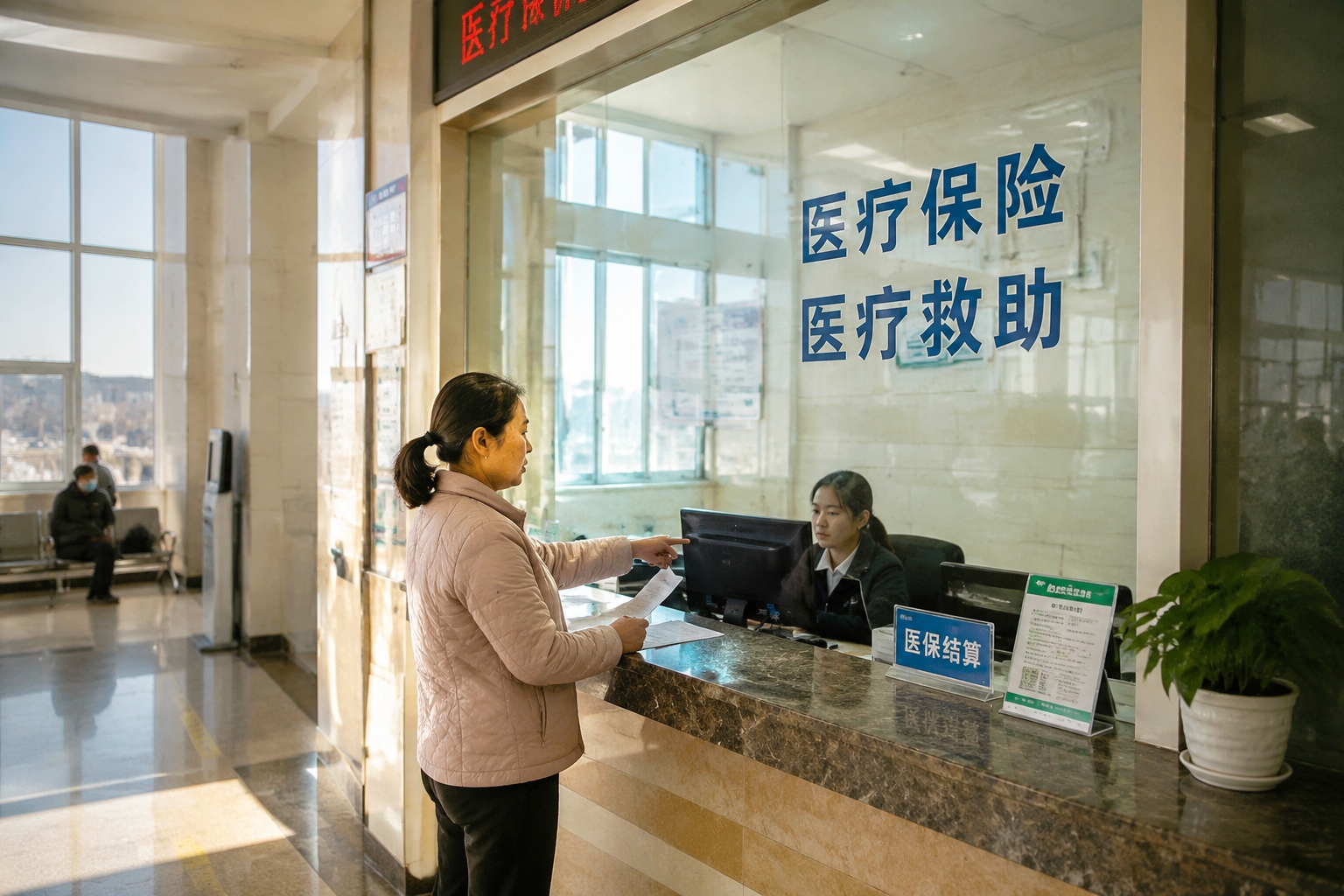

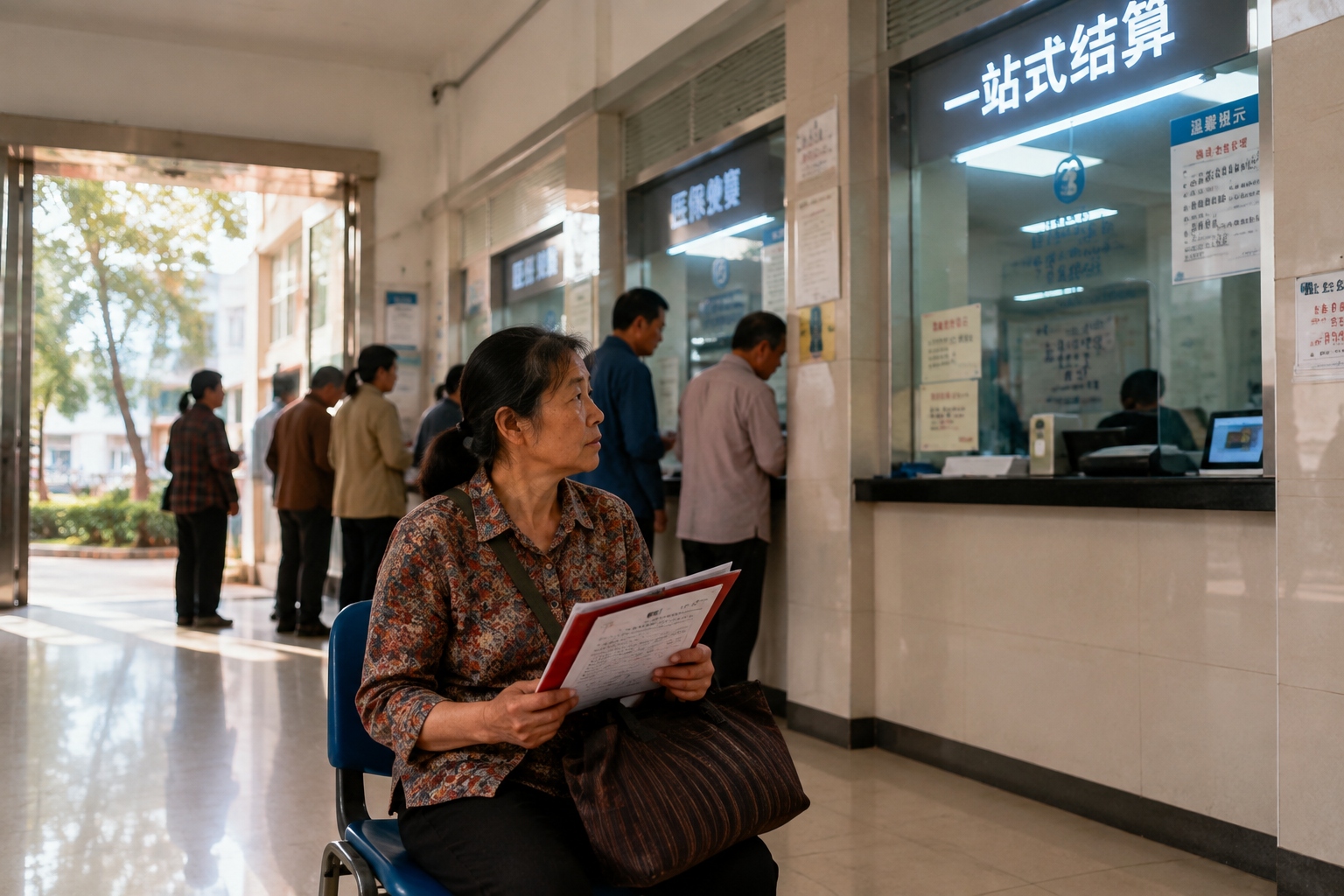
Inside the county hospital in eastern Henan, Wang Xiuyun sits on a plastic chair near the row of cashier windows. It is early February, and the waiting room smells of disinfectant and steamed buns from a vendor outside. She has just checked her husband’s settlement sheet for the third hospital stay in four months. The total is 120,000 yuan. The final out-of-pocket number is 15,000 yuan. A gray-haired woman next to her leans over. "How did you manage?" she asks. Wang nods toward the window. "Medical assistance paid what we couldn’t."
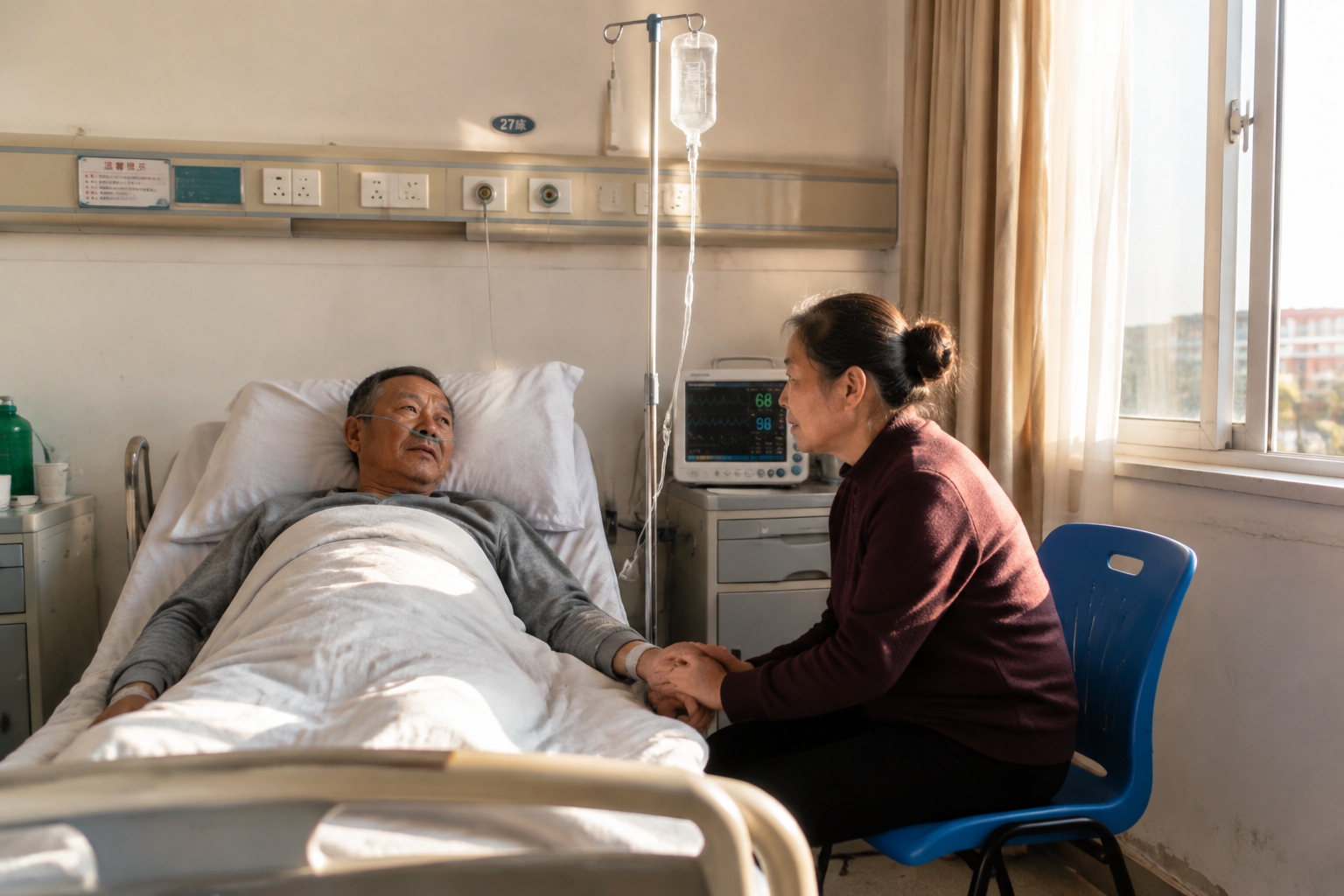
Wang’s husband, a retired cement factory worker, has diabetes and chronic kidney disease. In October, he was also diagnosed with colon cancer. Surgery, chemotherapy, and a stay in the intensive-care unit pushed the bill quickly toward six figures. The family had only about 30,000 yuan in savings. "If we had to pay the full amount, we would have sold the house," she says, not as a metaphor but as a plan they had discussed.
China’s basic health insurance now covers more than 95 percent of residents. But having insurance does not mean being safe. Reimbursement rates vary by treatment, hospital level, and whether a drug is on the approved list. A serious illness can still leave a family with an out-of-pocket bill that swallows several years of income. Medical assistance is the last layer after insurance—a government-funded program that helps people who cannot pay for the care they need.
What Is Medical Assistance?
Medical assistance is managed by the National Healthcare Security Administration, the same agency that runs basic health insurance and the supplementary catastrophic-illness scheme. It is funded through government budgets at every level. The program has three jobs: to help low-income families afford insurance premiums, to reduce their out-of-pocket costs for outpatient visits, and to cover part of the remaining bill after a hospital stay.
The people it helps are carefully defined. They include the extremely poor, families receiving the minimum living allowance, those lifted out of poverty but still monitored, and people who meet an income test after a medical emergency. In some places, the system can also reach families who are not officially poor but have been pushed into hardship by a large hospital bill.
Before 2021, each province ran its own assistance system with different rules. Then the State Council issued a national guideline that pushed for clearer standards and a simpler application process. Most of the work has been integrated into offices that already handle routine health-insurance claims, which has made the process faster and less paper-heavy.
Applying: From Written Forms to a Single Screen
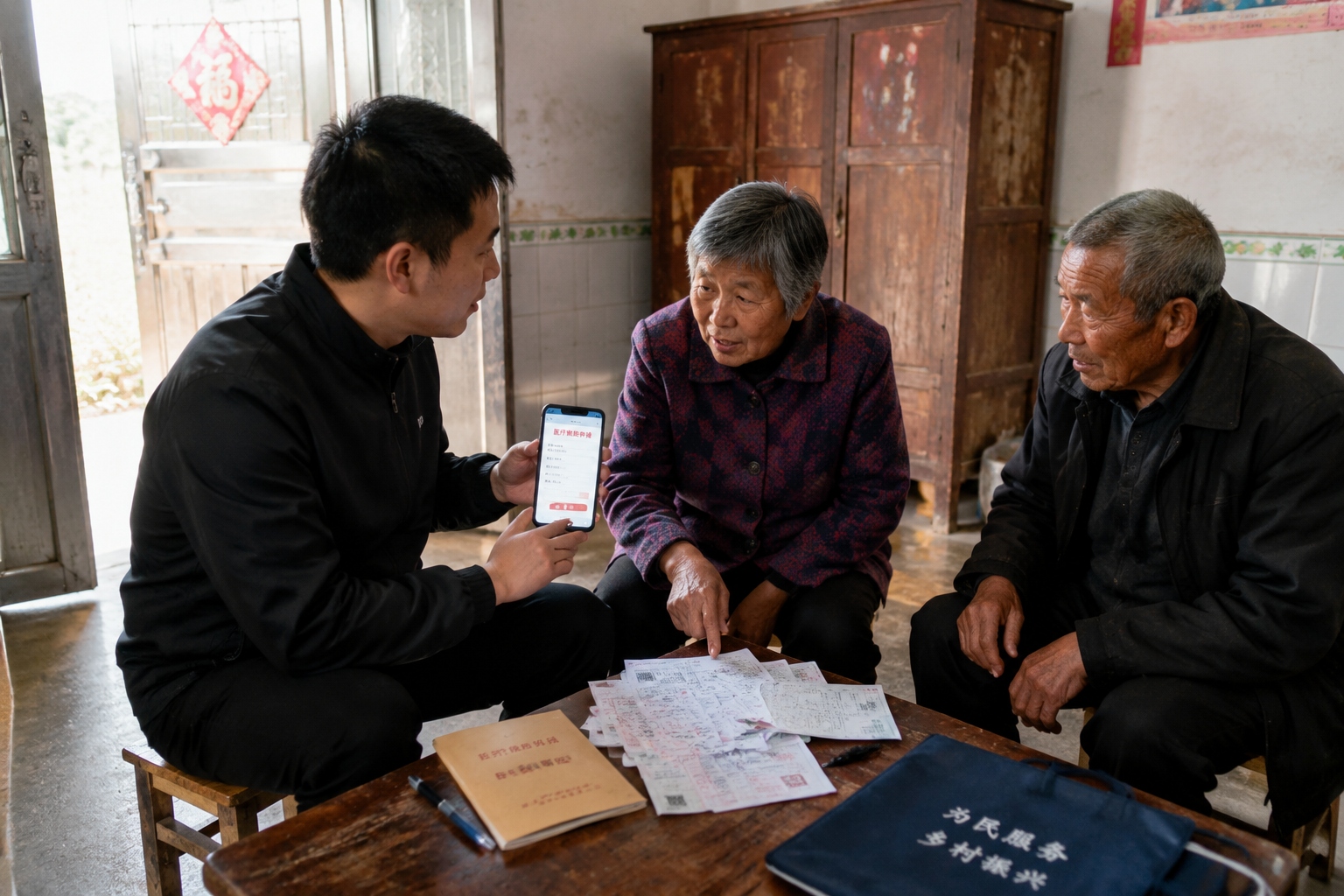
For Wang Xiuyun, help came through a village cadre. In December, an official from her village visited twice, took photos of their kitchen and family bank-card statements, then submitted a digital application on a phone. "I didn’t have to go to the county office," she says. "They used my son’s salary data and the housing registry to confirm we were below the income line."
Within a week, her husband’s name was added to the local medical-assistance database. From that point, every new hospital visit automatically triggered a third-payment calculation. The settlement desk could see it in the same computer system used for insurance.
The system is designed to work at the point of care. When a patient is discharged, the basic insurance takes its share, the catastrophic-illness scheme takes another cut, and if the patient is on the assistance list, the remaining balance is recalculated on the same screen. The patient pays only the final amount. Over four months, Wang’s husband received about 40,000 yuan in medical assistance, according to the settlement record she keeps in a red paper folder.
What the Numbers Show
To make sense of the figures, consider a hospital bill of 100,000 yuan. Basic health insurance might cover about 60 percent. Catastrophic illness insurance usually pays half of what remains. Then medical assistance can cover part of the leftover, reducing a family’s final bill to 10 percent or less of the original amount.
The exact ratio changes province by province and by the income level of the patient. In urban Shanghai, assistance is more generous than in a rural county in Gansu. What does not change is the basic logic: the closer a family is to the poverty line, the more help they get.
Wang’s settlement sheet illustrates the logic. On a 120,000-yuan bill, basic insurance and catastrophic insurance covered about 65,000 yuan, medical assistance added roughly 40,000 yuan, and the family paid 15,000 yuan—about 12 percent of the total.
Gaps That Remain
Wang’s story is not everyone’s story. In the same hospital, a woman named Liu Yan was waiting for her husband, who had just finished a round of chemotherapy for leukemia. The family had paid 23,000 yuan out of pocket. She only heard about medical assistance two days earlier, from a nurse. "No one called me," she said. Liu’s husband is a farmer whose income is just above the minimum-living-support line, which means he is not automatically on the assistance list. To apply, she has to provide years of bank statements, tax records, and proof of her son’s employment. The paperwork is heavy, and the result is uncertain.
The program also varies widely by location. Provincial budgets affect the level of support; wealthy coastal regions can offer higher reimbursement rates than the interior provinces. And the rules for reimbursable expenses are tied to the insurance catalogue. Some expensive drugs, especially newer cancer therapies, are not listed. If a doctor prescribes one, the patient pays full price, and assistance will not help because the treatment is not logged in the system.
These limits are real, and they explain why the system still struggles to stop catastrophic spending in the most extreme cases. A 2021 study in Health Policy and Planning found that, although medical assistance reduced out-of-pocket payments, it was less effective in counties with weak administrative capacity.
The Government Is Trying to Fill the Holes
Since 2021, the central government has asked local agencies to move from passive receipt of applications to active screening. The insurance database can now flag any patient whose out-of-pocket costs cross a local threshold. For example, in many counties, the threshold is equal to the annual "basic living standard" for an adult. Once crossed, the system sends a message to the town’s social-assistance office, which then contacts the patient or family.
In villages that are still on the post-poverty monitor list, these checks are linked to the same digital system used by agricultural and rural officials. A family might receive a call from a township officer saying, "We see you have spent 4,000 yuan this year—you might qualify for assistance." This proactive approach has cut the number of missed applications in several pilot provinces.
The 2021 guideline also created a new category called "assistance for catastrophic-illness households"—people not officially poor but whose medical expense pushed them into a difficult situation. They can apply even if their income is above the minimum allowance. The definition of "catastrophic" is linked to local costs, so a family can trigger it in different ways.
Officials at the hospital settlement desk say they see the effect every day. Chen Fang, a staff member who did not want to use her real name, points to a stack of receipts. "Five years ago, many of these families would have left the hospital still owing money or returned home to sell furniture. Now," she says, "the number of people who can pay and leave has gone way up."
Back at the Window
Wang Xiuyun pockets the final receipt and stands up. She will go home, stir-fry some vegetables, and prepare dinner for her husband, who is still weak after surgery. They are not rich, but they did not sell the house. The next round of chemotherapy is in three weeks. In the past, that thought would have made her feel sick. Now she only says, "We will just pay the small part and go."
The safety net is not perfect. It is built on local budgets, databases, and the willingness of a nurse to mention the word "assistance." But for families like Wang’s, it is the difference between bankruptcy and survival.
Start the discussion at forum.chinacomes.com