

It Doesn’t Work Like the West
At 8:45 p.m. in Chengdu, a delivery rider named Zhang Yu is on his scooter, one hand on the handlebar, the other holding his phone. His newest order is for “Sichuan Province, Chengdu City, Wuhou District, Guixi Street, Xiaohongjia Huayuan, Building 23, Unit 2, Room 1304.” He knows the xiaoqu—the gated residential compound—but now he’s trying to figure out which of the identical-looking buildings is Number 23. He calls the customer: “Hi, I’m at Building 12. Is the side gate open?” This small drama happens millions of times every day across China. The address system works—but only if you understand the logic behind it.
The Layers of a Chinese Address
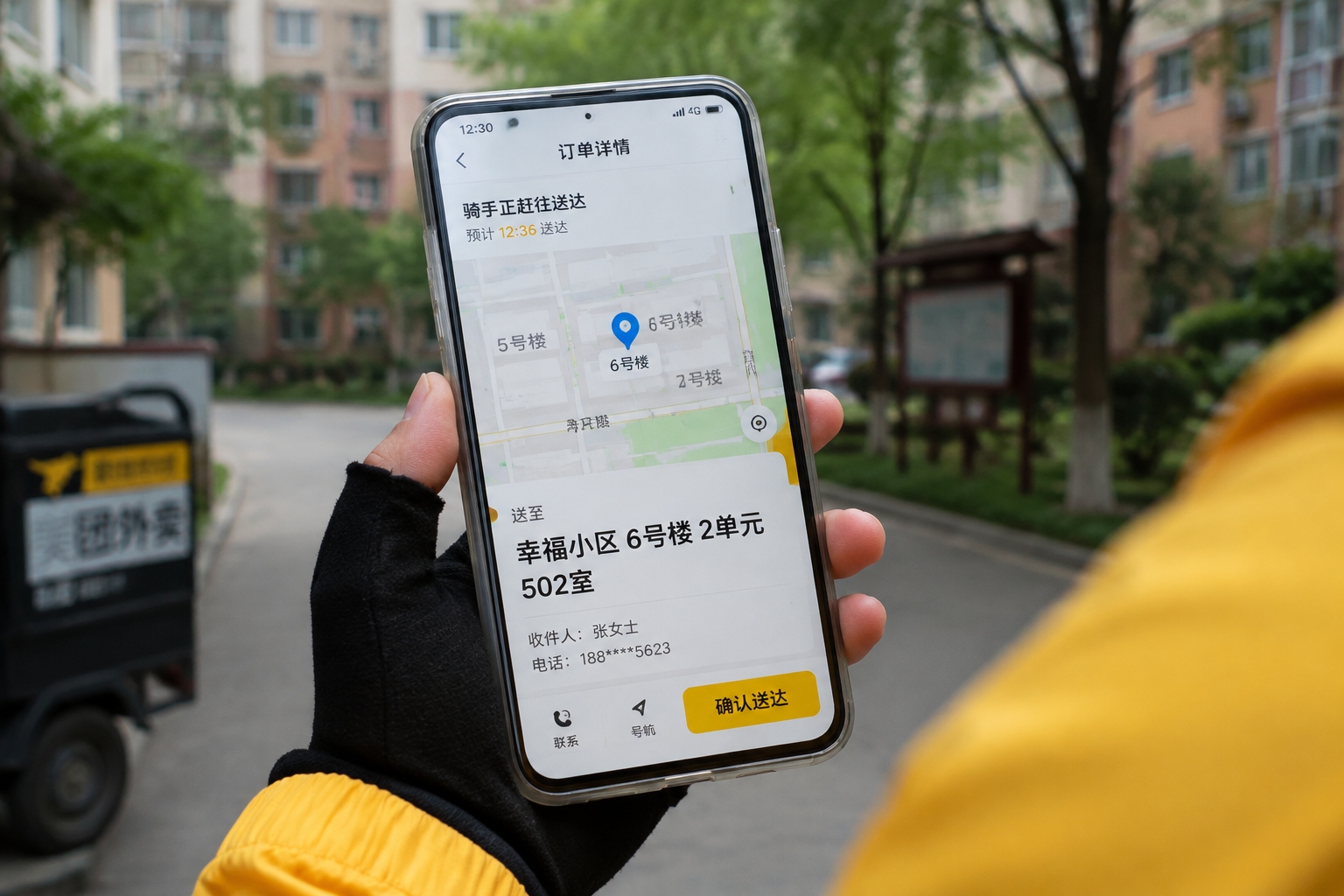
A complete Chinese address reads from largest to smallest: province, city, district, street, xiaoqu name, building number, unit number, and room number. For example: Sichuan Province, Chengdu City, Wuhou District, Guixi Street, Xiaohongjia Huayuan, Building 23, Unit 2, Room 1304. Let’s break it down.
Province, City, and District
These are administrative divisions. A district (区) in a major city can have over a million residents. The street (街道) is technically a subdistrict, but in daily speech it’s often a vague pointer, like saying “the Chelsea area” of New York.
The Xiaoqu: The Perfect Address Engine
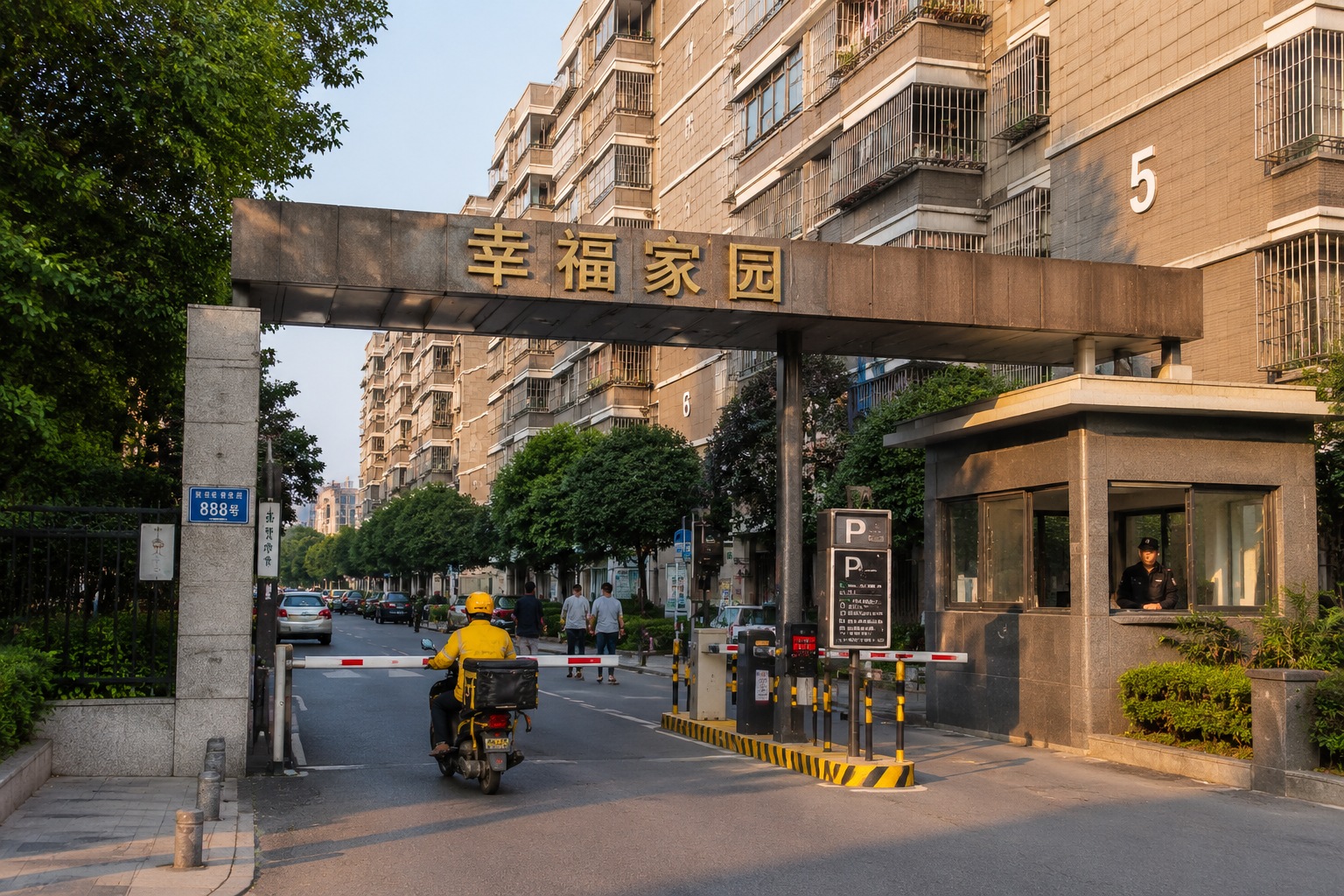
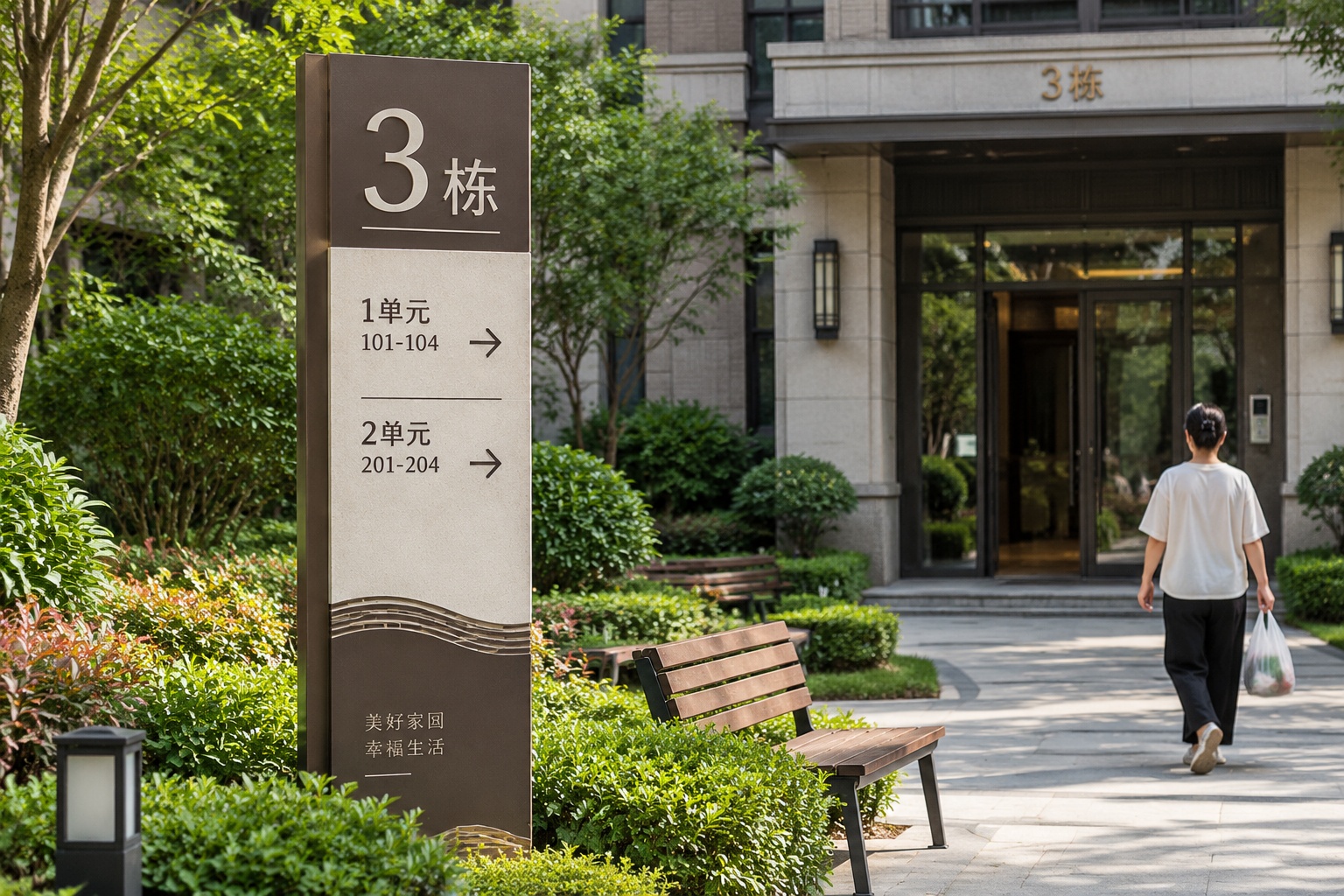
The xiaoqu (小区) is a gated residential compound. It can be as small as four buildings or as large as fifty. It has a name, a fence, a main gate, sometimes a security guard, and often a few small shops. Inside, buildings are marked with numbers, and each building has multiple vertical entrances called danwei (单元). Each unit has a number, and each floor has rooms numbered sequentially. The room number 1304 means the 13th floor, room 04. This system is remarkably consistent across China, which is why delivery apps and mapping services can pinpoint a location down to the exact door.
Why the Xiaoqu Outshines the Street Address
In many countries, you’d say, “I live at 1254 Main Street.” In China, street names and numbers exist, but people rarely use them for residential addresses. Why? Because streets are long and don’t give enough context. A street number might indicate a building, but that building could be set far back from the road, hidden behind a wall and a guard post. The xiaoqu, on the other hand, is a compact, named community that everyone in the neighborhood knows. If you tell a taxi driver, “I’m at the intersection of Guixi Street and Middle Ring Road,” he’ll probably shrug. But if you say “the Xiaohongjia Huayuan xiaoqu,” he’ll nod and drive you straight to the gate.
How Delivery and Takeout Depend on This System
China’s food-delivery speed is legendary—often 30 minutes from tap to table. This relies heavily on the xiaoqu address structure. When you order on Meituan or Ele.me, the app automatically fills your xiaoqu name, and you pick from a list of buildings and units. The rider can use the map to get to the compound, but the last hundred meters are crucial. Is the building in the second section? Which gate is open? Does Building 7 face the small playground? These details are often settled by a quick phone call or a voice message. Both sides know the drill, and it works remarkably well.
Map Search vs. Mouth Directions
Digital maps have caught up with the xiaoqu system. On Baidu Maps or Amap, you can type “Xiaohongjia Huayuan 23-2-1304” and get a precise pin. The maps even show internal roads and building footprints. But when you ask a local how to find a friend’s apartment, you won’t hear any coordinates. Instead, you’ll get a stream of landmarks: “Come in through the south gate, turn left at the red brick wall, walk past the basketball court, and it’s the second building on your right.” This verbal map is organic and personal—and it’s why people still call each other when they’re close.
Practical Advice for Foreigners
If you’re new to China, here’s how to keep your sanity:
- Store your address in Chinese. Copy it from your rental agreement or use a translating app. You’ll need to show it to taxi drivers, delivery people, and even the hospital.
- Take a photo of the xiaoqu’s gate sign. Most gates display the name in large characters. The photo also helps when you’re lost.
- Use food-delivery and ride-hailing apps as a guide. For ride-hailing, you can set your own pickup pin—just walk to the nearest gate and stand under a recognizable sign.
- Learn the order: xiaoqu, building, unit, room. If you mix it up, locals will still figure it out, but it speeds things up if you say “Building 23, Unit 2, Room 1304” rather than “1304, 2, 23.”
- Don’t be shy about asking for help. Chinese people are generally eager to assist foreigners, especially if you make an effort with a few words of Chinese.
The Xiaoqu as a Mini-Society
Once you understand the address, you unlock a social layer. A xiaoqu isn’t just rows of concrete—it’s a community. Inside, you’ll see grandparents minding toddlers on a playground, retirees playing cards around a stone table, and a fruit vendor who knows everyone’s order. The gatekeeper greets residents by name. Many xiaoqu have their own preschool, gym, and even a small pond with koi. This is how Chinese cities are constructed: thousands of self-contained islands, each with its own rhythm. The address system is a reflection of that urban design.
So the next time you’re in China and hear a driver ask “Which gate?” take it as a clue to the local geography. The numbers will guide you, but the people will show you the way to your door.
Start the discussion at forum.chinacomes.com